
How Fashion Brands Build Relationships With Retail Buyers
Quick Answer
Fashion brands build relationships with retail buyers by making the buyer’s job easier: presenting a clear collection, offering commercially realistic pricing, providing accurate product information, communicating professionally, delivering on time, and supporting sell-through after the order is placed.
A retail buyer does not only decide whether a product looks good. The buyer must judge whether the product fits the store’s customer, margin structure, seasonal calendar, merchandising plan, and inventory risk. For a growing fashion brand, this means buyer relationships are built through reliability as much as creativity.
A strong buyer relationship usually develops in stages: targeted outreach, professional presentation, honest commercial discussion, clear order terms, dependable delivery, post-delivery support, and thoughtful reorder planning. The goal is not to pressure a buyer into one order. The goal is to become a brand the buyer can trust season after season.
Why Retail Buyer Relationships Matter in Fashion Wholesale
Retail buyer relationships matter because wholesale fashion is built on trust, timing, and commercial judgment. A buyer may discover a brand through Instagram, a showroom, a trade event, a recommendation, or a digital wholesale platform, but the decision to place an order usually depends on whether the buyer believes the brand can perform in a real retail environment.
A strong product can start the conversation. It rarely closes the relationship alone.
Buyers are responsible for assortments that must sell within a limited season, under budget constraints, with customer expectations already in mind. They need to think about delivery windows, price architecture, category balance, markdown risk, brand mix, sizing, inventory depth, and how the product will sit on the shop floor or product listing page.
This is why emerging brands often misunderstand buyer hesitation. A buyer may genuinely like the collection but still delay the order because the line sheet is incomplete, the delivery timing is vague, the wholesale price leaves little margin, or the brand cannot explain which products are likely to sell best.
In wholesale, being attractive is not enough. The brand also needs to be buyable.

What Retail Buyers Actually Do
A retail buyer selects products for a store, boutique, department store, e-commerce platform, concept store, or retail chain based on customer demand, brand positioning, sales potential, margin, inventory plan, and seasonal strategy.
In smaller boutiques, the owner may also act as the buyer. In larger retailers, buying may be handled by category buyers, merchandising teams, planners, or buying directors. Their responsibilities can include assortment planning, vendor selection, budget allocation, order negotiation, stock level decisions, sell-through analysis, and markdown planning.
This matters because brands often approach buyers as if they are simply taste-makers. Taste is part of the role, especially in fashion. But buyers are also commercial decision-makers. They must protect the store’s cash flow, stock productivity, and customer promise.
A buyer reviewing a new label will often think through questions like:
- Does this brand fit our customer?
- Does the price make sense next to our current assortment?
- Is the product differentiated enough to justify adding another vendor?
- Can the brand deliver on time?
- Will the product photograph well online?
- Can our staff explain the product easily?
- Is there reorder potential?
- What happens if the product sells slowly?
When a fashion brand understands this perspective, outreach becomes more respectful and more effective. The conversation shifts from “Please stock my brand” to “Here is how this collection can work for your customer and your business.”
Start With the Right Buyer, Not Just Any Buyer
The first step in building retail buyer relationships is targeting the right buyers. A brand should not send the same pitch to every boutique, department store, marketplace, or concept shop it can find.
Buyer fit is strategic. A premium resortwear label, a modest fashion brand, a sustainable basics line, a children’s occasionwear label, and a streetwear accessories brand each need different retail environments. The wrong buyer may ignore the outreach, or worse, place an order that weakens the brand’s positioning.
Before contacting a buyer, a brand should study the store carefully. Look at its current brands, price range, customer profile, visual merchandising, product categories, values, location, online presentation, and discount behavior. If the store already carries many brands in the same category, the brand must understand what would make its collection meaningfully different. If the store does not carry that category at all, the brand needs a stronger reason for why the buyer should consider it.
A practical buyer-fit review can include:
|
Buyer Fit Factor |
What the Brand Should Check |
Why It Matters |
|
Customer profile |
Age, lifestyle, spending level, style preference, climate, occasion |
Shows whether the product has a natural audience |
|
Price positioning |
Current retail price range in the store |
Helps avoid pitching products that are too high or too low |
|
Brand mix |
Existing labels, category gaps, competing products |
Reveals whether the collection adds something useful |
|
Retail format |
Boutique, department store, online retailer, concept store, marketplace |
Affects order size, product content needs, and operational expectations |
|
Discount culture |
Frequency and depth of markdowns |
Protects brand perception and margin strategy |
|
Category logic |
How the store organizes products and stories |
Helps the brand present a relevant assortment |
The point is not to over-research forever. The point is to avoid generic outreach. Buyers receive many pitches. A brand that clearly understands the store has a better chance of earning attention.
Prepare Before Outreach
A buyer relationship begins before the first email is sent. If the brand is not ready to answer basic wholesale questions, the outreach may create interest but fail to move forward.
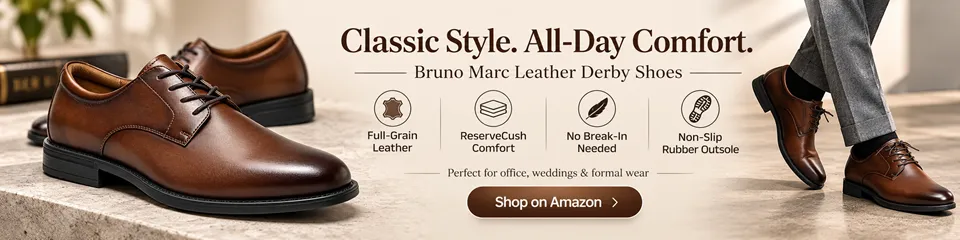
At minimum, a fashion brand should prepare a buyer-ready collection, wholesale price list, line sheet, product images, size information, minimum order quantity, delivery window, payment terms, and contact details. A brand may also prepare a short buyer deck, lookbook, brand story, press mentions, stockist list, or sell-through highlights if available.
A line sheet is especially important because it gives buyers the product and order information needed for wholesale decisions. In fashion, a line sheet commonly includes product images or sketches, SKU numbers, style names, sizes, colors, materials, wholesale price, order minimums, delivery information, and contact details. line sheet definition and common contents
A good line sheet is not a mood board. It is a buying tool.
The Buyer-Ready Material Checklist
Before outreach, prepare the materials that reduce buyer friction:
- Short brand introduction
- Clear wholesale line sheet
- Current lookbook or campaign images
- Product photos on plain background
- Size chart and fit notes
- Fabric composition and care instructions
- Wholesale price and recommended retail price
- Minimum order quantity or minimum order value
- Delivery window and order deadline
- Payment terms
- Shipping and return terms
- Contact person and response channel
This list may feel basic, but many emerging brands miss one or more of these details. When the missing detail is important to the buyer, the relationship loses momentum.
How to Approach Retail Buyers Professionally
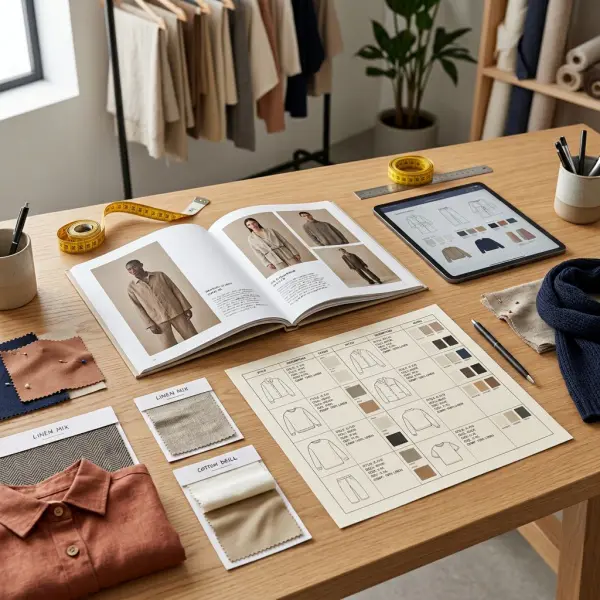
Fashion buyer outreach should be specific, concise, and relevant to the retailer. A buyer does not need a long emotional story in the first message. They need to know who the brand is, why it fits their store, what the collection offers, and how to review it quickly.
A strong outreach email usually includes five things: a brief introduction, a relevant reason for contacting that retailer, a clear product or category focus, a link or attachment to buyer materials, and a simple next step.
The tone should be confident but not pushy. Buyers are busy, especially around market appointments, buying seasons, trade shows, and internal assortment planning. A brand that respects their time signals professionalism.
What a Good Buyer Pitch Should Communicate
A practical buyer pitch should answer the buyer’s first questions without overwhelming them:
- What kind of brand is this?
- What product category is being offered?
- Why is it relevant to this store?
- What is the retail price range?
- When is the collection available?
- Where can the buyer view the line sheet or samples?
- What is the requested next step?
Specificity helps. Instead of saying, “Our brand would be perfect for your customers,” explain the fit: “Our linen separates sit in the same summer lifestyle space as your resort edit, with retail prices from $90 to $160 and delivery available from early April.”
That kind of sentence does more work than a paragraph of vague enthusiasm.
How to Build Trust in the First Buyer Meeting
The first buyer meeting should help the buyer understand the collection quickly, commercially, and honestly. It is not only a design presentation. It is a business conversation.
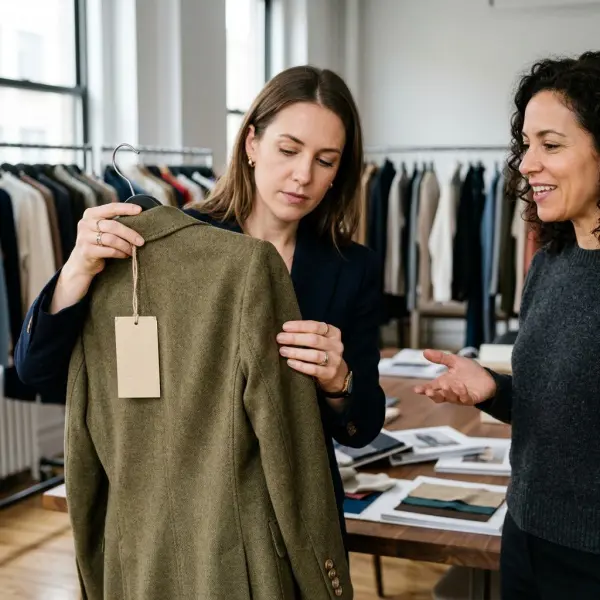
Start with the brand’s positioning in one or two clear sentences. Then explain the collection structure: key categories, price range, hero styles, core replenishable items, seasonal statement pieces, and delivery timing. If the buyer is reviewing samples, guide them through the range in a logical order rather than showing pieces randomly.
Buyers often appreciate when brands identify the most commercial styles. This does not weaken the creative story. It shows that the brand understands retail. For example, a designer may say, “This jacket is the visual statement piece, but the strongest reorder potential is likely in these two trouser styles because the fit is consistent and the price point sits below our outerwear range.”
That kind of honesty builds confidence.
What Buyers Need From the Conversation
A useful buyer meeting should clarify:
- Brand positioning
- Customer fit
- Product categories
- Wholesale and retail price range
- Bestselling or most commercial styles
- Fabric and fit details
- Delivery window
- MOQ and order terms
- Reorder possibility
- Support materials for selling
Do not hide operational limitations. If a color is limited because fabric stock is small, say so. If a style cannot be reordered after the season, explain it. If production lead time is eight weeks, do not promise four weeks to make the order sound easier.
In retail buying, overpromising is remembered.
The Role of Product Storytelling in Buyer Relationships
Product storytelling helps buyers understand why the collection matters, but it must be connected to retail value. A story that does not help the buyer sell the product is not enough.
For fashion brands, useful storytelling may include design inspiration, material choice, production method, fit concept, styling versatility, craft detail, local sourcing, community relevance, or customer problem. The story should make the product easier to explain on the shop floor or product page.
For example, saying “This dress is inspired by coastal living” may sound pleasant, but it is not very useful. A stronger buyer-facing version would be: “This dress is designed as a travel-friendly resort piece, using a mid-weight linen blend that gives structure without feeling too stiff. It can be merchandised with sandals for daytime or jewelry for evening resort styling.”
That gives the buyer language they can use.
The most effective product story usually connects three elements:
|
Story Element |
Buyer-Relevant Question |
Example |
|
Design reason |
Why does this product exist? |
A lightweight overshirt designed for transitional weather |
|
Commercial use |
How can the retailer sell it? |
Works as layering, office casual, or travel outerwear |
|
Customer benefit |
Why would the shopper buy it? |
Easy to style, breathable, polished without feeling formal |
Storytelling should support the sale. It should not replace the order details.
Digital Wholesale Relationships Still Need Human Clarity
Digital wholesale tools can make buyer relationships more efficient, but they do not remove the need for trust. A buyer may discover a brand online, review a digital catalog, watch collection videos, and place orders through a platform, but the same questions remain: Does the product fit the customer? Is the data accurate? Can the brand deliver? Will the product sell?
Digital wholesale has expanded access and improved remote buying workflows, but it also creates challenges because buyers cannot always feel fabric, check drape, inspect construction, or assess color accurately through a screen. Vogue Business has reported that digital showrooms and wholesale tools can improve access and data use, while still struggling to fully replace tactile product evaluation. digital wholesaling benefits and complications
That means fashion brands should treat digital wholesale assets as serious sales materials, not secondary files. Poor images, missing product videos, inconsistent size information, or unclear delivery terms can make the brand look risky.
For digital buyer relationships, brands should prioritize:
- High-resolution product images
- Fit images on models where relevant
- Detail shots for fabric, trims, and construction
- Short videos showing movement or drape
- Clear product descriptions
- Accurate size and measurement information
- Easy-to-read wholesale price and order terms
- Fast response to buyer questions
A buyer may not expect a small brand to have expensive digital infrastructure. But they will expect clarity.
Follow-Up Without Becoming Pushy
Good follow-up is one of the most underrated parts of buyer relationship building. Many brands either follow up too aggressively or disappear too quickly.
A professional follow-up should be timely, specific, and useful. If the buyer has reviewed the collection, the next message should not simply ask, “Any update?” It should offer something that helps the decision: a revised line sheet, bestseller note, delivery reminder, sample availability, product image pack, or answer to a question discussed in the meeting.
A simple follow-up rhythm may look like this:
|
Timing |
Follow-Up Purpose |
Example Focus |
|
1–2 days after meeting |
Thank the buyer and recap key points |
Collection link, price range, delivery window |
|
5–7 days later |
Support decision-making |
Bestselling styles, suggested buy, sample reminder |
|
Before order deadline |
Create urgency without pressure |
Final order date, limited fabric, production cutoff |
|
After no response |
Close politely or keep door open |
Future season, new range, smaller test order |
The best follow-ups show that the brand listened. If the buyer was concerned about price, address price architecture. If they asked about fit, send fit notes. If they liked one category more than another, suggest a focused assortment.
Follow-up should feel like account support, not chasing.

How Delivery Reliability Strengthens Buyer Trust
Delivery reliability is one of the strongest relationship builders in wholesale fashion. A buyer can forgive a small brand for being new. It is much harder to forgive a missed delivery window that affects a seasonal floor set, campaign launch, or online drop.
Fashion retail depends on timing. Swimwear delivered after peak summer, outerwear delivered late into winter, festive collections arriving after the holiday selling period, or school uniforms delayed past back-to-school demand can all create real commercial damage.
This is why brands should communicate delivery dates carefully. A delivery window should be based on actual production capacity, material availability, finishing, quality control, packing, and shipping time. If uncertainty exists, it should be explained early.
Current fashion supply chains face pressure from climate disruptions, geopolitical risk, freight issues, tariffs, and regulatory changes. Vogue Business has noted that fashion supply chain resilience in 2026 is tied to adaptability, visibility, traceability, and stronger collaboration across the value chain. fashion supply chain pressures in 2026
For buyer relationships, the implication is simple: do not make delivery promises based only on hope. A realistic delivery promise protects the relationship better than an optimistic one.
Support Sell-Through After the Order
A wholesale relationship becomes stronger when the brand supports sell-through, not just shipment. Sell-through refers to how much of the ordered stock actually sells to consumers within a given period. Buyers care about it because it affects reorder decisions, markdown risk, and future budget allocation.
A brand can support sell-through in practical ways. It may provide product images, styling notes, staff training, social media assets, size guidance, merchandising suggestions, or information about the story behind the product. For online retailers, clean product data and accurate descriptions are especially important.
Support does not need to be complicated. A small brand can send:
- Product descriptions written for retail use
- Fabric and care notes
- Styling suggestions
- Model and size reference notes
- Short brand story copy
- Best product pairings
- Social media images approved for retailer use
- Reorder availability updates
This support helps the buyer sell with more confidence. It also shows that the brand understands the retailer’s work after the purchase order is signed.
Use Buyer Feedback Without Losing Brand Direction
Buyer feedback is valuable, but it should not control every creative decision. A good buyer may offer sharp insight into fit, price sensitivity, color performance, size demand, or customer objections. That feedback can improve future collections.
But brands should interpret feedback carefully. One boutique’s customer may not represent the entire market. One weak color in one region may perform well elsewhere. One buyer’s request for a lower price may not fit the brand’s positioning or cost structure.
The most useful feedback is usually pattern-based. If several buyers mention that sleeve length is difficult, the issue may be real. If multiple retailers reorder the same trouser, that style may deserve core status. If buyers admire a statement piece but do not order it, the product may be strong for branding but weak for wholesale volume.
A brand should track feedback across accounts:
|
Feedback Type |
What It May Indicate |
Strategic Response |
|
Repeated fit comments |
Pattern or sizing issue |
Review measurements and fit testing |
|
Strong interest but no orders |
Price, risk, or assortment mismatch |
Ask what blocked the buy |
|
Frequent reorder requests |
Core product potential |
Plan replenishment or continuity |
|
High returns |
Fit, product description, fabric expectation, or size clarity issue |
Improve product data and construction review |
|
Buyer asks for exclusivity |
Strong local demand or strategic opportunity |
Evaluate territory, volume, and brand control |
Buyer feedback should inform decisions. It should not push the brand into becoming unrecognizable.
How to Turn First Orders Into Long-Term Buyer Relationships
A first order is a test. A reorder is a stronger sign of relationship quality.
To turn a first wholesale order into a long-term relationship, the brand needs to manage the account after delivery. Confirm that the order arrived correctly. Ask whether the buyer needs additional product information. Share reorder deadlines before stock runs out. Review sell-through when the buyer is ready. Offer a preview of the next collection if the relationship is active.
Long-term buyer relationships are often built through small professional habits:
- Responding quickly and clearly
- Sending accurate documents
- Updating buyers before problems become urgent
- Honoring agreed terms
- Making reorders simple
- Sharing relevant product updates
- Respecting the buyer’s assortment strategy
- Being honest about stock limitations
- Learning from previous orders
The brand should also keep account notes. Record what the buyer ordered, what they liked, what they rejected, what price points felt comfortable, what sizes sold, and what concerns they raised. This makes the next conversation more personal and useful.
A buyer should not feel like the brand is starting from zero every season.

Common Mistakes When Building Buyer Relationships
The first mistake is sending mass pitches with no relevance to the store. Buyers can recognize generic outreach quickly. A better approach is fewer, better-targeted messages that explain why the brand fits that specific retailer.
The second mistake is leading with brand story before commercial clarity. Story matters, but buyers need product category, retail price, delivery window, and order information. If the buyer has to search for basic details, the pitch becomes harder to evaluate.
The third mistake is treating buyer silence as rejection too soon. Buyers may be reviewing budgets, waiting for internal meetings, preparing market appointments, or prioritizing current-season issues. Follow up professionally, but do not assume silence means no interest.
The fourth mistake is overpromising to win the first order. This can include unrealistic delivery dates, flexible terms the brand cannot afford, exclusive arrangements without clear volume, or custom product changes that disrupt production. The order may be won, but the relationship may suffer later.
The fifth mistake is ignoring the buyer after shipment. A brand that only communicates before payment feels transactional. A brand that supports the retailer after delivery feels like a partner.
These mistakes connect closely with broader distribution strategy. For deeper discussion of channel mismatch, discount conflicts, overexpansion, and unreliable fulfillment, see common distribution mistakes that limit fashion brand growth.
What Brands Should Verify Before Contacting Buyers
Before contacting retail buyers, a fashion brand should verify whether its collection, pricing, documents, production capacity, and communication process are ready.
This verification prevents wasted opportunities. A buyer may only give a new brand one serious look. If the first impression is disorganized, it can be difficult to restart the conversation later.
|
Readiness Area |
What to Verify |
Why It Matters |
|
Buyer fit |
Store positioning, price range, customer profile |
Prevents irrelevant outreach |
|
Collection clarity |
Hero styles, commercial styles, size range, color options |
Helps buyer build an assortment |
|
Pricing |
Wholesale price, retail price, margin, payment terms |
Protects both brand and buyer profitability |
|
Product documents |
Line sheet, lookbook, product photos, size chart |
Reduces buyer friction |
|
Delivery |
Production lead time, material availability, shipping plan |
Builds trust through realistic timing |
|
Communication |
Contact person, response time, follow-up system |
Shows professional account management |
|
Reorder plan |
Continuity styles, stock depth, production repeatability |
Supports long-term relationship |
This is not about looking like a large corporation. It is about being easy to work with.
Practical Relationship Strategy for Growing Fashion Brands
Growing fashion brands should build retail buyer relationships slowly and intentionally. A focused group of good-fit buyers is more valuable than a long list of weak accounts.
Start by identifying the retailers that truly match the brand. Prepare the materials before outreach. Send concise, relevant messages. Present the collection commercially. Follow up with useful information. Deliver exactly what was promised. Support sell-through. Learn from the buyer’s feedback. Then use that learning to improve the next season.
A simple relationship-building workflow can look like this:
- Research buyer fit.
- Prepare buyer-ready materials.
- Send targeted outreach.
- Offer samples, showroom review, or digital catalog access.
- Present the collection with commercial clarity.
- Confirm order terms in writing.
- Deliver on time.
- Support sell-through.
- Review buyer feedback.
- Plan reorder or next-season opportunity.
This workflow is not complicated, but it requires discipline. Many brands lose buyer momentum because they handle each step casually.
For brands that are still learning the wholesale foundation, it helps to revisit fashion wholesale business explained for growing brands before building a buyer outreach process.
FAQ: Fashion Brands and Retail Buyer Relationships
How do fashion brands find retail buyers?
Fashion brands can find retail buyers through store research, trade shows, showrooms, wholesale platforms, industry referrals, social media, local retail networks, press coverage, and competitor stockist analysis. The strongest approach is usually targeted research rather than mass outreach. A brand should identify retailers that already serve the right customer, price level, and product category. Once the fit is clear, the brand can contact the buyer with a concise introduction, line sheet, lookbook, and clear reason why the collection belongs in that store.
What should a fashion brand send to a retail buyer?
A fashion brand should send a short introduction, clear product category, reason for buyer fit, wholesale line sheet, lookbook or product images, price range, delivery window, and contact details. For serious wholesale conversations, the buyer may also need size charts, fabric details, care instructions, MOQ, payment terms, and sample availability. The goal is not to overwhelm the buyer with files. The goal is to provide enough information for a quick, professional first evaluation.
How often should a brand follow up with a buyer?
A brand can usually follow up a few days after the first message or meeting, then again before a relevant order deadline or buying window. The follow-up should provide useful information, not just ask for a response. For example, send a suggested assortment, bestseller note, updated line sheet, delivery reminder, or sample availability. If the buyer does not respond after several respectful attempts, the brand can close the loop politely and reconnect next season with a stronger reason.
What makes a retail buyer trust a new fashion brand?
A retail buyer trusts a new fashion brand when the brand is clear, consistent, and realistic. Trust comes from accurate product information, professional communication, reliable samples, clear pricing, realistic delivery windows, and honest answers about production capacity. Buyers also notice whether the brand understands their store and customer. A new brand does not need to be perfect, but it needs to show that it can manage a wholesale relationship responsibly.
Should fashion brands offer exclusivity to retail buyers?
Exclusivity can be useful in some cases, but it should be handled carefully. A buyer may ask for city, regional, category, or online exclusivity to protect their investment in the brand. The brand should evaluate whether the buyer can provide enough volume, visibility, and strategic value to justify limiting other opportunities. Exclusivity should be written clearly, with territory, duration, minimum order, sales target, and renewal terms defined.
What should brands do if a buyer likes the collection but does not order?
If a buyer likes the collection but does not order, the brand should ask politely what blocked the decision. The issue may be price, delivery timing, category overlap, budget, uncertain customer fit, or lack of reorder confidence. This feedback is valuable. The brand can use it to adjust future assortments, improve line sheets, refine pricing, or approach a more suitable buyer. A “not now” can still become a future relationship if the brand handles the conversation professionally.
How can small fashion brands compete for buyer attention?
Small fashion brands can compete by being specific, commercially clear, and easy to evaluate. They may not have the scale of established labels, but they can offer distinctive product identity, strong niche relevance, flexible communication, and carefully curated assortments. Buyers are often open to new brands when the product fills a gap and the brand reduces operational risk. Professional materials, realistic terms, and fast response times can make a small brand feel credible.
Why do buyers stop ordering from a brand?
Buyers may stop ordering because of weak sell-through, late delivery, inconsistent quality, poor communication, pricing issues, unclear inventory, high returns, or brand mismatch. Sometimes the reason is external, such as reduced budget or a shift in store strategy. Brands should review the account professionally and ask for feedback where possible. The goal is to understand whether the issue is product, operations, relationship management, or market fit.
Conclusion
Retail buyer relationships are built through repeated evidence of reliability. A beautiful collection may open the door, but clear product information, realistic pricing, timely delivery, thoughtful follow-up, and sell-through support keep the relationship alive.
For growing fashion brands, the most effective buyer strategy is not aggressive selling. It is professional partnership. Understand the buyer’s customer. Make the collection easy to evaluate. Be honest about capacity. Follow up with useful information. Deliver what was promised. Learn from the account after the order.
Wholesale relationships grow when buyers feel that working with the brand reduces risk, not adds to it. That is where trust begins.




Comments 0
Leave a CommentSend Comment
Anda harus Login terlebih dahulu untuk dapat memberikan komentar.