
Mesh Fabric Explained: Structure, Breathability, and Fashion Uses
Mesh fabric is one of those materials that looks simple until a designer starts working with it. Its defining feature is an open structure that allows air to pass through, yet two fabrics sold under the same name can behave very differently. One may feel soft and flexible enough for an athletic T-shirt, while another has the firmness needed for a bag pocket or the three-dimensional cushioning used in footwear.
For fashion brands and garment manufacturers, understanding mesh means looking beyond its visible holes. Fiber composition, knitting construction, fabric density, stretch recovery, and finishing all influence how the material performs. These details determine whether a mesh fabric is suitable for a breathable garment panel, a supportive lining, or a decorative layer.
This guide explains how mesh fabric is constructed, what makes it breathable, the main types used in fashion, and what apparel businesses should examine before selecting it for a collection.
Quick Answer: What Is Mesh Fabric?
Mesh fabric is a textile characterized by a network of yarns or filaments that creates regularly or deliberately spaced openings, allowing varying degrees of airflow, transparency, and flexibility. In apparel, mesh is commonly made using knitted constructions, particularly warp knitting or weft knitting, although other textile structures can also produce mesh-like materials.
Most commercial fashion meshes use polyester, nylon (polyamide), or blends containing elastane. Their properties depend on both the fibers and the fabric construction rather than the word "mesh" alone.
Open areas can make mesh suitable for ventilation in sportswear, lightweight linings, accessories, and layered fashion. However, greater airflow does not automatically mean better moisture management, durability, or comfort. A highly open mesh may snag easily, feel rough against the skin, or lose its intended shape if its yarns and construction are unsuitable.
For apparel businesses, the practical question is not simply whether a fabric is breathable. It is whether its combination of air permeability, stretch, stability, opacity, texture, and care performance matches the garment's intended use.
Understanding the Structure of Mesh Fabric
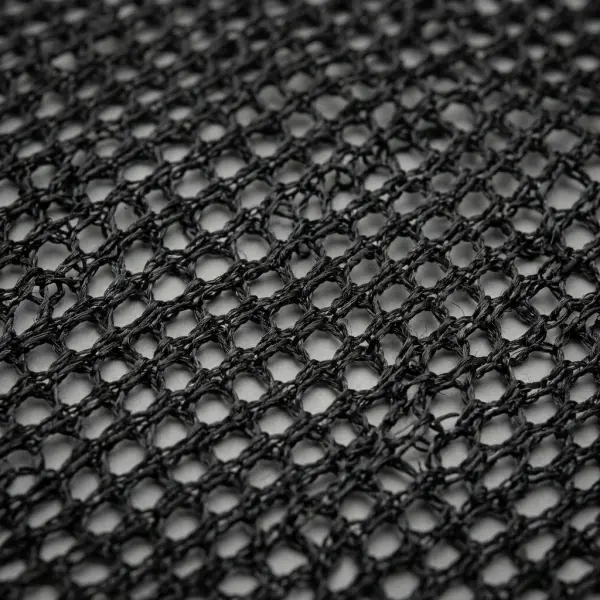
The distinguishing characteristic of mesh is the relationship between its yarn network and the spaces left between yarns. Unlike densely constructed textiles, in which openings may be difficult to see without magnification, mesh intentionally incorporates visible or structurally significant open areas.
These openings can take different shapes and sizes. Some are small and closely spaced, producing a fine surface that looks nearly solid from a distance. Others form larger geometric patterns, creating a visibly open fabric that becomes part of the garment's design.
The arrangement affects more than appearance. The size, distribution, and stability of the openings influence airflow, stretch, drape, and the way the material responds to washing or repeated movement.
Mesh Is a Structure, Not a Single Fiber Type
One common misunderstanding is treating mesh as a specific textile material in the same way as cotton or polyester. Mesh describes an open fabric construction or appearance, while polyester, nylon, cotton, and elastane describe fiber types.
A polyester mesh and a nylon-elastane mesh can therefore share a similar pattern of openings but have noticeably different handling characteristics. One may be relatively firm and dimensionally stable, while the other may stretch extensively and recover when tension is released.
This distinction matters in sourcing. A request for "black mesh fabric" gives a supplier little information about the required performance. A more useful brief identifies the fiber composition, construction, weight, stretch, and intended garment application.
Warp-Knitted Mesh
Warp-knitted mesh is produced using knitting systems in which multiple yarns are supplied predominantly along the length of the fabric. Machines such as Raschel knitting machines can create stable open structures with repeatable patterns.
Depending on the pattern and yarn selection, warp-knitted meshes may have good dimensional stability, relatively controlled stretch, and consistent openings. They are commonly considered for linings, footwear components, sportswear, and other applications where the fabric structure must maintain its shape.
That does not mean every warp-knitted mesh is stiff or inelastic. Different yarn arrangements and elastic components can produce substantial variations in flexibility, recovery, and handfeel.
Weft-Knitted and Engineered Mesh
Weft-knitted mesh is built from yarn loops formed primarily across successive courses. By combining knit, tuck, and miss-stitch arrangements, manufacturers can create openings of different shapes and densities.
This construction provides opportunities to develop flexible fabrics for close-fitting garments. Some engineered knitted materials incorporate more open regions in selected areas while maintaining denser construction elsewhere.
The result can be a fabric that balances targeted ventilation with coverage and stability. However, the actual performance still depends on stitch structure, yarn properties, fabric tension, and garment design.
These distinctions reflect the broader technical differences between warp and weft knitting described in textile engineering literature, including the Handbook of Textile Design and Engineering Textiles.
What Makes Mesh Fabric Breathable?
Mesh fabric can support breathability because its open spaces provide pathways for air to move through the textile. In general, the geometry and proportion of these openings influence how freely air can pass through, although yarn diameter, thickness, finishing, and the surrounding garment layers also matter.
A fabric with large visible openings will often allow substantial airflow. Yet visual appearance alone is not a reliable performance measurement. Two meshes that look similar may have different air permeability because of their yarn arrangement or finishing treatment.
Research on knitted sportswear materials reinforces the importance of construction. A 2022 study, Material and Structural Functionalization of Knitted Fabrics for Sportswear, examined relationships between textile structure, yarn characteristics, fabric mass, thermal resistance, and air permeability. Its findings illustrate why comfort-related performance cannot be attributed to fiber composition or openness alone.
Air Permeability Is Not the Same as Moisture Management
In clothing discussions, the word "breathable" is often used to describe several different material behaviors. For product development, those behaviors need to be separated.
Air permeability describes how readily air passes through a fabric under specified testing conditions. It is especially relevant when ventilation and air exchange are design priorities.
Water vapor transmission concerns the movement of moisture in vapor form through a textile or textile system. This affects how moisture generated by the body may escape, particularly when several clothing layers are involved.
Liquid moisture management describes what happens when liquid sweat contacts the fabric, including wetting, absorption, spreading, and movement through the material.
A mesh may provide excellent airflow but still manage liquid perspiration poorly. For example, an open polyester mesh made from relatively hydrophobic yarns may allow substantial air movement without distributing liquid moisture as effectively as a purpose-engineered wicking knit.
The distinction is reflected in industry testing methods. ISO 9237:1995 specifies a method for measuring fabric air permeability, while AATCC TM195 evaluates liquid moisture management properties. These methods address different performance characteristics.
The Effect of Hole Size and Fabric Density
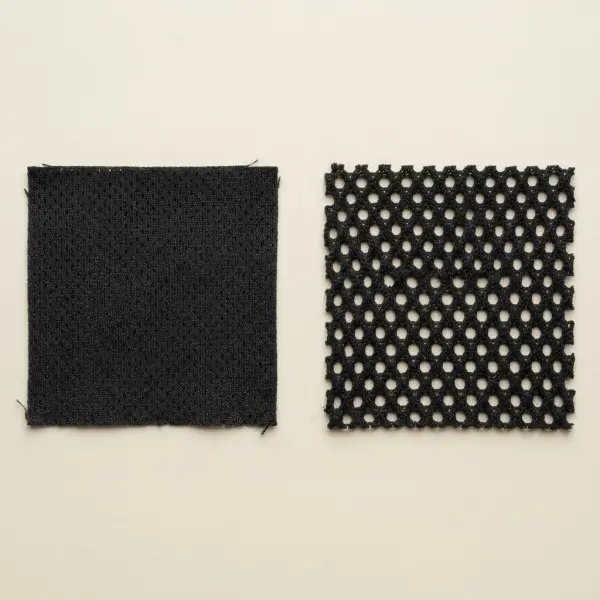
Mesh construction involves balancing the area occupied by yarns against the spaces between them. This relationship is sometimes described through fabric porosity or open-area characteristics.
Larger or more numerous openings can increase potential airflow, but the outcome is not determined by opening size alone. Fabric thickness, yarn arrangement, elasticity, and finishing can change the pathways air must follow.
There is also a mechanical trade-off. Increasing open area without appropriately adjusting yarns and construction may reduce coverage, snag resistance, or structural stability.
For a lightweight running top, generous ventilation may justify a relatively open structure. For an inner lining that must resist repeated abrasion against clothing or equipment, a finer and more stable construction may be more appropriate.
Stretch Changes the Open Structure
Stretch is particularly relevant to mesh made for body-hugging garments. When a knitted mesh is stretched, the geometry of its loops and openings can change, sometimes increasing the available pathways for airflow.
Researchers at Ghent University examined this behavior in a study titled Effect of Biaxial Stretch and Domestic Washing on Air Permeability of Elastic Knitted Fabrics for Sportswear. In the fabrics examined, air permeability increased significantly under biaxial stretch.
This does not establish that all mesh fabrics respond identically. It does show why brands should assess an elastic material under conditions that resemble actual wear, rather than relying exclusively on relaxed fabric samples.
Common Types of Mesh Used in Fashion
The term "mesh" covers several commercial fabric categories. Suppliers may use overlapping names, and those names do not always identify a standardized construction. Buyers therefore need to examine actual fabric specifications.
|
Mesh type |
Typical characteristics |
Common fashion applications |
|
Fine knitted mesh |
Small openings, lightweight appearance, variable stretch and transparency |
Sportswear panels, garment linings, layered tops |
|
Open knitted mesh |
Larger visible openings, pronounced texture and ventilation |
Fashion overlays, jerseys, casual garments |
|
Power mesh |
Elastic, relatively close-fitting construction; openness varies |
Lingerie support panels, shapewear components, performance garments |
|
Spacer mesh |
Three-dimensional construction with separated surface layers |
Footwear uppers, padded straps, bag components |
|
Decorative mesh |
Designed primarily for surface texture, transparency, or pattern |
Dresses, tops, accessories, fashion detailing |
|
Engineered mesh |
Strategically varied knit structure or yarn placement |
Performance apparel, selected footwear applications |
These are practical commercial categories rather than mutually exclusive technical classifications. A fabric may fit several descriptions at once.
Fine Mesh for Lightweight Apparel
Fine mesh can provide a relatively subtle open texture without the dramatic appearance of large holes. It is frequently suitable for areas where designers want some ventilation or visual lightness while preserving a smoother garment surface.
The fabric's handle matters as much as the opening size. A fine mesh made from stiff monofilaments may feel less comfortable against the skin than one made from softer multifilament yarns.
For intimate garments or lightweight tops, developers should test the surface against the body, particularly at seams, underarms, and areas exposed to friction.
Power Mesh for Stretch and Support
Power mesh is often associated with lingerie, shapewear, and close-fitting garments because it can combine stretch with controlled recovery. Many commercial versions use polyamide or polyester blended with elastane, although their constructions vary.
Its purpose is not necessarily maximum ventilation. A relatively dense power mesh may provide useful support or fit control while offering less airflow than a loosely constructed sports mesh.
Brands should therefore avoid treating the word "power" as a verified compression rating. Support depends on material force-extension behavior, garment pattern, panel placement, size grading, and how the fabric is assembled.
Spacer Mesh for Cushioning and Structure
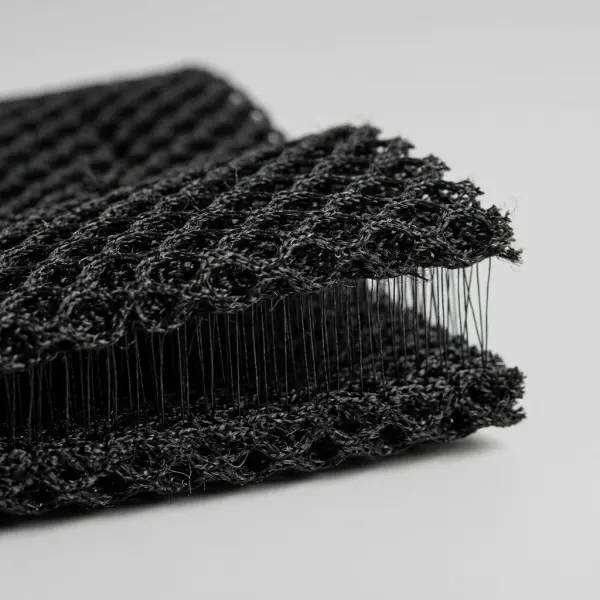
Spacer mesh differs from single-layer mesh because it contains two textile surfaces connected by yarns that create a three-dimensional space between them.
This construction can provide thickness, cushioning, and compressional resilience without using a conventional foam layer. It is useful in footwear uppers, backpack straps, and other products that benefit from a combination of airflow and structural volume.
However, spacer mesh performance varies considerably. Its resilience, compressibility, and air permeability depend on the surface fabrics, connecting yarns, and the geometry of the structure.
A study published through The Hong Kong Polytechnic University examined these relationships, demonstrating that spacer fabrics cannot be evaluated solely on the basis of their three-dimensional appearance.
How Fiber Composition Affects Mesh Performance
Mesh construction determines the arrangement of openings, but its fibers also influence how the finished textile behaves. For sourcing teams, the same mesh pattern made from different yarns should not automatically be treated as interchangeable.
Polyester and nylon are common in commercial apparel mesh because they can be processed into filament yarns suitable for knitted structures. Elastane may be added when designers need greater stretch and elastic recovery.
Natural fibers and regenerated cellulosic fibers can also be used in some open knitted structures, but the most appropriate composition depends on the intended garment and the textile manufacturer's capabilities.
Polyester Mesh
Polyester mesh is commonly used in athletic and casual garments, linings, and accessories. The fiber generally has low moisture absorption compared with many cellulosic fibers, which can support certain quick-drying applications.
That property does not mean every polyester mesh effectively wicks sweat. Liquid transport depends on yarn construction, surface chemistry, and finishing.
Polyester meshes may also differ in softness, dimensional stability, abrasion behavior, and resistance to snagging. These characteristics need to be verified at fabric level.
Nylon Mesh
Nylon, also called polyamide, is widely used in apparel where flexibility, strength, and a particular handfeel are required. Nylon mesh can be suitable for intimate apparel, performance garments, and selected accessories.
Certain nylon filament constructions offer a soft and smooth surface, while others are engineered for greater firmness or abrasion resistance. The final result depends on yarn type and knitted structure.
Nylon should not be assumed to be more durable than polyester in every mesh application. A comparison must account for the complete textile construction, not simply the generic fiber name.
Mesh With Elastane
Elastane is commonly incorporated into knitted fabrics to improve their capacity to extend and recover. In mesh, that can help maintain a close fit and reduce permanent deformation during repeated movement.
The percentage of elastane is only one part of the specification. Two fabrics with similar fiber percentages can differ substantially in stretch force, recovery, openness, and thickness.
For fitted sportswear or lingerie, developers need to evaluate the fabric at the intended wearing extension. A sample that looks sufficiently opaque and stable on a table may become more transparent or less supportive when stretched over the body.
Where Mesh Fabric Works in Fashion Products
Mesh is useful because a single structural principle can serve different design objectives. In one garment, it may be selected primarily for airflow; in another, it may add visual texture, stretch, or reduce the amount of solid fabric covering the body.
These functions should be considered separately during material selection.
Athletic Apparel and Training Clothing
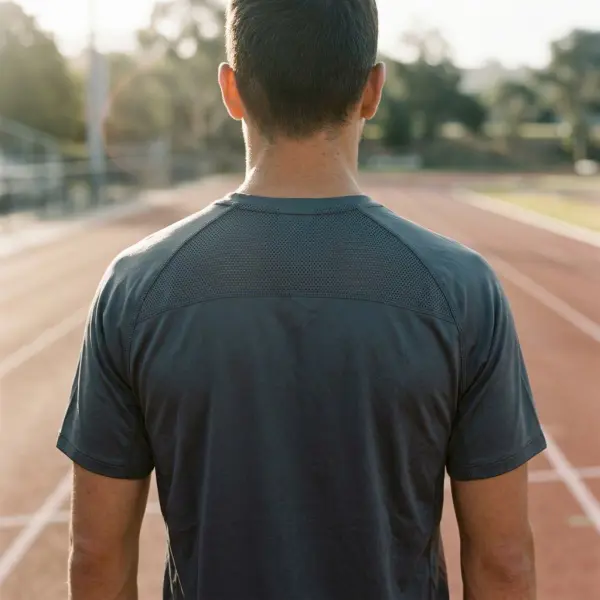
Mesh appears in running tops, training shirts, sports jerseys, shorts, and selected athletic linings. It may serve as the main textile or as a secondary panel positioned where ventilation is desired.
Consider a training shirt made from a conventional lightweight knit with a finer mesh panel across the upper back. The combination can provide different coverage and airflow characteristics within the same garment.
The benefits depend on how the panel interacts with the rest of the clothing system. A mesh insert covered by another impermeable layer may provide limited practical ventilation, while poorly positioned seams can create friction during movement.
Designers should therefore evaluate the whole garment rather than assuming that a breathable fabric automatically produces a comfortable finished product.
Lingerie and Intimate Apparel
Mesh can provide transparency, flexibility, and localized support in bras, underwear, and related intimate apparel. Fine meshes may be used as decorative overlays, while more stable or elastic constructions may perform structural roles.
These functions require different material behavior. Decorative mesh may prioritize appearance and softness, whereas support panels need dependable recovery and compatibility with the garment pattern.
Because intimate apparel is often worn directly against the skin, seam placement, edge finishing, stretch tension, and tactile comfort are especially significant.
Fashion Layering and Sheer Design
Designers also use mesh to create dimension and transparency. A mesh top worn over another garment changes the perceived color, silhouette, and texture without necessarily adding the same visual weight as an opaque textile.
The effect depends on the relationship between opening size, yarn color, background clothing, and lighting. A black fine mesh over a contrasting layer may appear more textured, while a more open construction can make the underlying garment highly visible.
For retail collections, this introduces both creative possibilities and communication responsibilities. Product photography should represent actual transparency, and descriptions should make clear when an item requires a separate underlayer.
Linings, Bags, and Accessories
Mesh is commonly useful in lining and pocket applications where visibility, lightness, and airflow are desired. Examples include interior bag compartments, pocket linings, and ventilated sections of accessories.
These products may create different performance demands from apparel. A bag pocket carrying keys or charging equipment can expose mesh to concentrated friction and snagging, while a garment lining needs an acceptable handfeel and movement against surrounding textiles.
The correct construction is therefore not necessarily the most open or lightest version available.
For a deeper look at how these functions differ across product categories, see why open-structure fabrics are used in sportswear, lingerie, and layering.
What Are the Main Advantages and Limitations of Mesh Fabric?
Mesh can make a product lighter, visually more open, or better ventilated, but each benefit introduces potential compromises. The scale of those compromises depends on yarn composition, construction, finishing, and use conditions.
|
Characteristic |
Potential advantage |
What brands should verify |
|
Open structure |
Supports airflow and visual lightness |
Actual air permeability and transparency |
|
Low fabric mass |
Can reduce fabric weight in suitable applications |
Strength, coverage, and garment durability |
|
Elastic construction |
Allows flexible fit and movement |
Stretch recovery and dimensional stability |
|
Surface texture |
Adds visual interest without heavy embellishment |
Snag resistance and tactile comfort |
|
Three-dimensional mesh |
Can provide cushioning and spacing |
Compression recovery and bulk |
|
Layering potential |
Creates texture and transparency |
Opacity, lining requirements, and customer expectations |
The greatest challenge is usually not discovering an attractive mesh sample. It is maintaining the expected balance of properties after cutting, sewing, wearing, and laundering.
Transparency and Coverage
Airflow and openness can be useful, but the same openings make certain meshes visibly transparent. This is not always a problem; in some designs it is intentional.
In other products, transparency can create fit or modesty concerns. Stretching a mesh may increase the apparent opening size, while light-colored fabrics can reveal more under certain lighting conditions.
Sample approval should include realistic wear conditions and the intended undergarments or linings.
Snagging and Surface Durability
Open structures can catch on hooks, jewelry, rough surfaces, or hardware. Snagging may displace yarns, distort openings, or create visible damage.
The likelihood varies with filament type, yarn texture, loop stability, and the size of the openings. A tightly engineered mesh may behave differently from a loose decorative construction.
Durability testing should resemble the intended use. For products subject to frequent friction, buyers may consider abrasion evaluation using applicable methods such as ISO 12947-2, alongside appropriate snagging assessments.
Limited Wind and Weather Protection
Open mesh is usually unsuitable as the main protective barrier when a garment must substantially restrict airflow, wind penetration, or rain entry. Its openings can allow moving air and water to pass through relatively freely.
This is not a defect when the garment is designed for ventilation. It becomes a problem when marketing promises weather resistance that the textile structure cannot provide.
Coatings, membranes, or additional layers may change the performance of a mesh-based assembly, but the resulting material system should be tested rather than described using the properties of untreated mesh alone.
How Mesh Affects Garment Construction
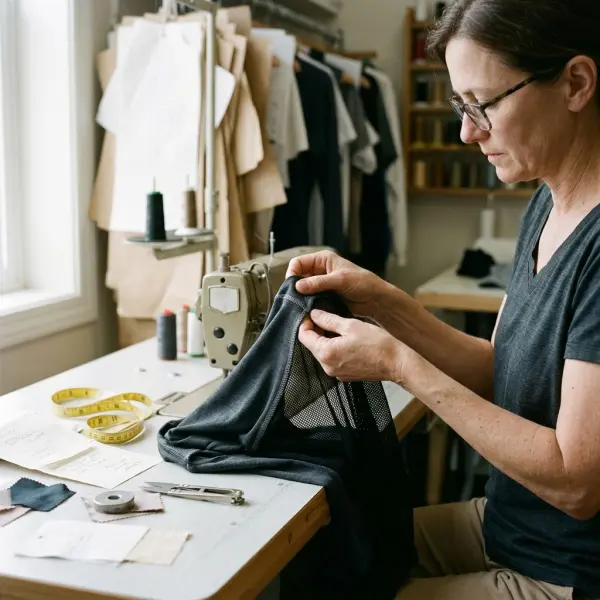
Mesh may look uncomplicated, but sewing open knitted structures requires attention to fabric movement and local stress. A design can use an appropriate material and still perform poorly if its construction method is incompatible with the mesh.
The primary concerns are controlling distortion during cutting, stabilizing necessary areas, and creating seams that suit the fabric's extension and thickness.
Cutting and Pattern Preparation
Lightweight mesh can shift during spreading and cutting, particularly when the fabric has substantial stretch or a slippery surface. If the cutting process introduces uneven tension, garment pieces may relax into different shapes after they are removed from the table.
Patternmakers should account for the fabric's direction of stretch, drape, and recovery. The same pattern used for a stable woven fabric will not necessarily produce equivalent fit in elastic mesh.
For visible open patterns, matching the direction and alignment of the openings may also affect finished appearance.
Seam Selection and Edge Finishing
Knitted mesh often requires seam constructions that tolerate the expected movement without cutting into the yarn network or creating uncomfortable ridges.
Depending on the textile, manufacturers may use overedge stitching, coverstitching, appropriate zigzag constructions, bindings, or stabilizing tapes. No single stitch type is correct for every mesh.
The chosen method should be evaluated for seam extensibility, strength, bulk, and appearance. Particularly open constructions may need additional reinforcement in high-stress locations.
Combining Mesh With Other Fabrics
Mesh is frequently sewn alongside more compact knitted or woven materials. The difference in stretch and stability between these textiles can create assembly difficulties.
For example, a highly elastic mesh insert attached to a stable fabric panel may pucker if both are fed through the sewing machine under inappropriate tension. It may also distort the garment shape during wear.
A better approach is to assess the full fabric combination during sampling, including seam construction and laundering, before confirming bulk production.
How Fashion Brands Should Source Mesh Fabric
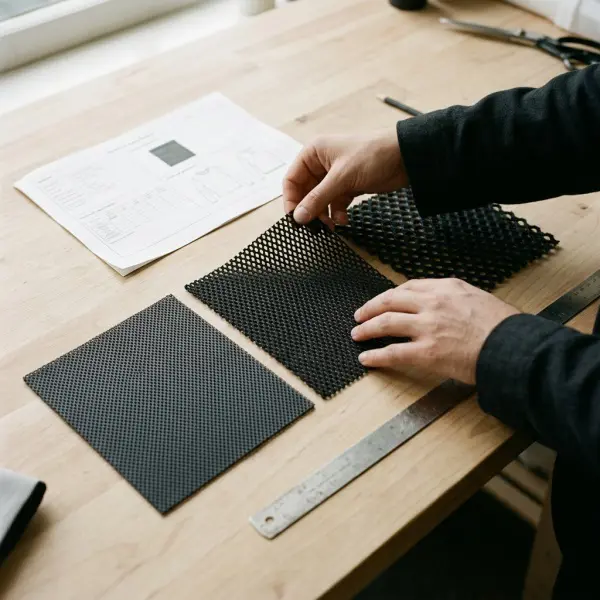
Mesh sourcing should begin with a clear product requirement. A manufacturer cannot reliably choose the right textile from aesthetic references alone, particularly when ventilation, stretch, and garment life are commercially important.
Before requesting bulk yardage, the development team should define the intended use and translate it into measurable or reviewable fabric characteristics.
Start With the Garment's Actual Function
The first question is whether the mesh will serve a functional, structural, or decorative role.
A performance top may prioritize airflow, softness, and moisture-related behavior. A bra component may require defined stretch resistance and recovery. A fashion overlay may place more emphasis on transparency, drape, and visual consistency.
These priorities determine which properties should receive the most attention during supplier evaluation.
For a new product, the development brief should establish the minimum acceptable performance rather than selecting a mesh solely because it resembles a reference photograph.
Build a Practical Fabric Specification
A useful mesh specification includes enough information for suppliers to propose comparable materials and for quality teams to confirm what was approved.
The following information is particularly relevant:
- Fiber composition: Polyester, nylon, elastane, or another specified blend.
- Construction: Warp-knit, weft-knit, spacer knit, or another accurately identified textile structure.
- Fabric weight: Mass per unit area, usually expressed in grams per square meter (GSM).
- Thickness and handfeel: Particularly important for linings, spacer meshes, and direct-skin applications.
- Stretch and recovery: Measured in relevant directions under agreed conditions.
- Opening characteristics: Desired mesh pattern, approximate opening dimensions, and appearance consistency.
- Air permeability: Test results where ventilation is a functional requirement.
- Color and finishing: Shade, dyeing or finishing treatments, colorfastness, and care requirements.
- Dimensional stability: Acceptable changes after specified washing and drying procedures.
- Usable width and production conditions: For marker planning, material consumption, and consistency across lots.
Specifications should also define acceptable tolerances wherever the property is critical. A target value without an agreed tolerance or test condition may still leave room for disputes.
Request Test Evidence Where It Matters
Mesh performance is strongly dependent on construction, so generic promotional terms such as "premium breathable" offer limited information for technical sourcing.
For air permeability, buyers can request testing against ASTM D737-18(2023) or ISO 9237. Results should be reviewed with the test conditions and units, rather than compared without context.
Where moisture handling is important, appropriate liquid moisture management or drying assessments may be useful. For repeatedly laundered garments, dimensional change can be evaluated using relevant procedures, including ISO 5077:2007.
A buyer does not need to request every available textile test for every product. The objective is to select tests that address actual failure risks and verify agreed requirements.
Evaluate the Total Cost, Not Only the Fabric Price
Material price per meter is not the same as the final cost of using that material in a garment.
An inexpensive mesh may require additional reinforcement, more careful handling, or a higher rejection allowance because of distortion or visible defects. A more stable alternative may reduce certain production difficulties, although it could carry a higher purchasing price.
These effects are product-specific. Brands should compare sample quality, cutting yield, sewing efficiency, defect rates, and expected durability before choosing a supplier on price alone.
Common Mistakes When Working With Mesh Fabric
Choosing Mesh Only Because It Looks Breathable
A designer may select a large-hole mesh expecting it to deliver excellent garment comfort. The mistake is assuming visual openness describes the entire thermal and moisture performance of the finished product.
If the fabric feels abrasive, dries poorly under the intended conditions, or is covered by an unsuitable lining, the garment may not meet expectations. Brands should test comfort-related properties and review the complete garment assembly.
Ignoring Recovery in Stretch Mesh
A stretch mesh may feel impressive during initial handling but recover inadequately after repeated extension. This can create sagging around garment openings, inconsistent fit, or deformation in support panels.
The issue often becomes visible only after wear simulation or repeated laundering. Sampling should therefore include relevant recovery assessments rather than relying on a single manual stretch test.
Using Decorative Mesh in High-Stress Areas
A visually attractive open construction may not withstand repeated tension or abrasion at pockets, straps, or fitted garment panels. The fabric may snag, distort, or tear when exposed to conditions beyond its intended design role.
This is particularly costly when the problem appears after launch through returns or customer complaints. Developers should match material strength and stability to the actual load and contact conditions.
Overlooking Opacity During Fit Testing
Mesh that appears acceptable on a flat table can become significantly more revealing when stretched or worn under bright lighting. Inaccurate photography may further distort customer expectations.
Testing opacity under realistic fit, movement, and lighting conditions is a simple way to prevent avoidable product dissatisfaction. Brands should also describe intended layering requirements clearly on product pages.
Treating All Mesh Suppliers as Interchangeable
Two suppliers may offer fabrics with similar photographs and generic names but different loop structures, yarn properties, and finishing processes. Switching between them without comparative testing can introduce inconsistency in handfeel, fit, or durability.
A supplier replacement should be treated as a material change that requires approval. The original reference sample, measurable specifications, and garment-level evaluation should guide the decision.
Important Technical and Sustainability Caveats
Mesh is sometimes associated with lightweight performance and material efficiency, but these characteristics do not automatically make it a more sustainable fabric choice.
A lighter mesh may use less material per unit area than a heavier textile, yet garment-level material consumption depends on pattern design, necessary layering, usable fabric width, cutting yield, and durability. An additional mesh lining can increase total material use rather than reduce it.
Similarly, recycled polyester or nylon mesh may use recycled inputs, but recycled content alone does not establish the overall environmental superiority of a finished product. Processing impacts, chemical treatments, production losses, durability, and end-of-life considerations still matter.
Blended mesh containing elastane or assembled with different textile layers can present additional recycling challenges, depending on the available collection and processing systems.
Brands should also be careful about related performance claims. An open mesh is not automatically ultraviolet protective, antibacterial, hypoallergenic, or suitable for sensitive skin. Those claims require appropriate material evidence and, where relevant, product-specific testing.
How Mesh Can Strengthen Fashion Product Development
Mesh creates opportunities for fashion brands to design garments with deliberately varied material behavior. Instead of using a single fabric across an entire product, developers can select different structures for ventilation, support, visual effect, and comfort.
The strategic benefit comes from assigning each material a clear function. A mesh panel should solve a product requirement or support a defined visual identity, rather than being added simply because open fabric looks technical or fashionable.
For smaller apparel brands, this does not require an extensive fabric development program. A focused sampling process can begin with a few clearly differentiated mesh options, consistent fit testing, and direct comparisons of production suitability.
The same principles apply to larger manufacturers, although their evaluation may involve laboratory testing, multiple suppliers, detailed material specifications, and repeatability assessments across production lots.
Material documentation also improves future collection development. Recording approved mesh compositions, weights, stretch behavior, construction details, and test results helps teams avoid repeatedly evaluating equivalent fabrics. It makes communication with suppliers more precise and gives designers a more dependable basis for reusing materials.
Ultimately, effective mesh development depends on aligning material structure with product purpose. When that relationship is clear, the fabric becomes a controlled design component rather than an unpredictable sourcing choice.
Frequently Asked Questions About Mesh Fabric
Is mesh fabric always made from polyester?
No. Polyester is common in commercially available mesh, but the term describes an open textile structure rather than a particular fiber composition. Mesh can be produced using nylon, polyester-elastane blends, other synthetic yarns, and selected natural or regenerated fibers.
For fashion businesses, composition matters because fibers influence handfeel, moisture absorption, care requirements, and aspects of durability. Still, fiber content alone does not determine performance. Two polyester meshes may have very different stretch and airflow characteristics because of their construction. When sourcing, buyers should request both the fiber specification and a representative physical sample.
Is mesh fabric breathable in hot weather?
Mesh can be suitable for hot-weather garments because its openings may allow air to move through the fabric, especially when the garment is exposed to airflow. However, comfort also depends on humidity, movement, moisture transport, fit, and the layers worn underneath.
A loosely fitted open mesh top may behave differently from a close-fitting elastic mesh worn beneath another garment. For apparel development, the most reliable approach is to evaluate ventilation alongside skin comfort, drying behavior, and the intended wearing conditions. Breathability should be assessed as a property of the material and garment system, not simply inferred from visible holes.
What is the difference between mesh and net fabric?
Mesh and net are overlapping textile terms, and commercial naming conventions are not always consistent. Both can describe fabrics with open structures, but suppliers may use "mesh" broadly for fine knitted, engineered, elastic, or structured materials, while "net" often emphasizes a more visibly open network of yarns.
The distinction should not be treated as a universal technical rule. For purchasing decisions, construction, opening geometry, strength, stretch, and handfeel provide more dependable information than the product name. Our related guide, mesh vs net fabric and their differences for apparel and accessories, examines those distinctions in greater detail.
Can mesh fabric be used for everyday clothing?
Yes. Mesh can be incorporated into casual tops, dresses, jackets, skirts, and other everyday garments as a main fabric, lining, insert, or decorative layer. Its suitability depends on the intended appearance, level of coverage, garment construction, and care requirements.
For products worn frequently, designers should consider snagging from jewelry or bags, potential distortion after washing, and the possibility that transparency changes when the fabric stretches. A decorative mesh that performs well for occasional wear may not be the best choice for a high-friction everyday garment. Sampling should reflect realistic use rather than runway presentation alone.
Does mesh fabric stretch?
Some mesh fabrics stretch considerably, while others have relatively limited extension. Stretch depends on the knitting pattern, yarn arrangement, fiber composition, and whether elastic yarns such as elastane are included.
Knitted meshes can exhibit structural stretch even without elastane because their loops can rearrange under tension. However, the degree of extension and the ability to return to the original shape are separate properties. A material may stretch easily but recover poorly. When developing fitted apparel, brands should examine stretch in both principal directions and verify recovery under conditions relevant to the garment's actual fit.
Is mesh fabric durable enough for commercial apparel production?
Mesh can be durable enough for commercial apparel when its construction and fiber selection are appropriate for the intended use. The open structure does not automatically make every mesh weak, just as a dense fabric is not automatically resistant to all forms of damage.
The main risks may include snagging, seam distortion, abrasion, and loss of shape. Their significance depends on the product. A sports jersey, supportive underwear panel, and handbag pocket experience different mechanical stresses. Manufacturers should define product-specific acceptance requirements and test relevant properties before bulk production, especially when introducing a new material or changing suppliers.
What should a fashion startup check before buying mesh fabric in bulk?
A fashion startup should begin by confirming that the selected mesh performs properly in a complete garment sample. Color, appearance, and price are not enough to establish suitability.
The team should check composition, weight, usable width, stretch recovery, handfeel, opacity, sewing compatibility, care performance, and any functionally important test results. Where possible, the approved sample should be linked to a written material specification and supplier reference. Production consistency, minimum order quantity, lead time, and replacement availability also affect the purchasing decision. A slightly more expensive mesh with predictable quality may be commercially preferable to an inexpensive option that creates repeated sampling or production problems.
Conclusion
Mesh fabric is best understood as a family of open textile structures rather than a single standardized material. Its value in fashion comes from the flexibility of those structures: manufacturers can develop fabrics that emphasize ventilation, visual transparency, controlled stretch, softness, or three-dimensional cushioning.
The challenge is ensuring that the desired characteristic does not compromise another essential requirement. Greater openness may improve airflow while increasing transparency or snagging exposure. Elasticity may support close fit but require more careful recovery testing. A lightweight appearance may be attractive, yet the material still needs to survive practical garment construction and use.




Comments 0
Leave a CommentSend Comment
Anda harus Login terlebih dahulu untuk dapat memberikan komentar.