

Bamboo Fabric Explained: Properties, Benefits, and Fashion Uses
Quick Answer
Bamboo fabric is a commercial term used for textiles made either from mechanically extracted bamboo fiber or, farproduced from bamboo pulp. Most soft bamboo garments sold today are technically bamboo-derived viscose or rayon rather than fabric woven directly from natural bamboo fibers.
Bamboo viscose is valued in fashion for its smooth handfeel, fluid drape, moisture absorbency, and suitability for close-to-skin products such as underwear, T-shirts, pajamas, socks, dresses, and loungewear. Its actual performance, however, depends on yarn quality, fabric construction, weight, finishing, blending, and garment design—not simply on the bamboo feedstock.
The material should not automatically be described as antibacterial, chemical-free, hypoallergenic, or environmentally superior. Conventional viscose production involves substantial chemical processing, while environmental performance varies according to bamboo sourcing, pulp production, chemical recovery, energy use, air emissions, wastewater treatment, and supply-chain traceability. Fashion businesses should therefore evaluate bamboo-derived textiles as engineered cellulosic materials rather than relying only on the plant-based marketing story.
What Is Bamboo Fabric?
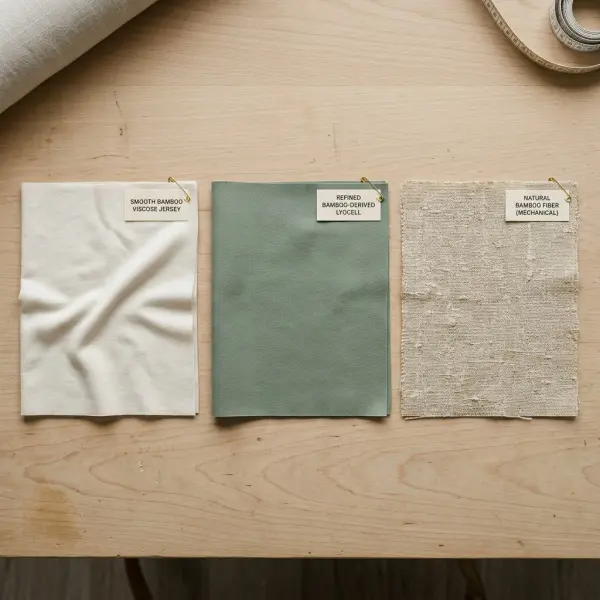
Bamboo fabric is a textile made from bamboo-derived cellulose or, less commonly, from mechanically separated natural bamboo fibers. In most commercial apparel, bamboo is converted into dissolving pulp and then regenerated into viscose, rayon, modal, or lyocell fiber through an industrial process.
This distinction matters because the phrase “bamboo fabric” can describe materials with very different structures, manufacturing systems, performance characteristics, and environmental profiles.
Textile Exchange classifies viscose, modal, lyocell, acetate, and cupro as man-made cellulosic fibers, or MMCFs. These fibers originate from plant cellulose—usually trees, bamboo, or reclaimed feedstock—but are dissolved and re-formed into staple or filament fiber through chemical processing. Textile Exchange definition of man-made cellulosic fibers
Bamboo Viscose or Rayon
Bamboo viscose is the most common bamboo-derived textile used in fashion. Bamboo is processed into cellulose pulp, dissolved, and regenerated into new fibers. Once regeneration is complete, the resulting fiber is chemically classified as viscose or rayon rather than as raw natural bamboo fiber.
The US Federal Trade Commission states that textiles produced this way should be described as “rayon made from bamboo” or “viscose made from bamboo” in the United States. A product may be labeled simply as bamboo only when its fibers are obtained directly from the bamboo plant. Federal Trade Commission guidance on bamboo textiles nt labeling requirements differ by jurisdiction, so brands selling internationally should review the textile fiber rules that apply in each target market. The practical principle remains the same: identify the manufactured fiber accurately and treat bamboo as the cellulose source, not as a substitute for the generic fiber name.
Mechanically Processed Bamboo Fiber
Natural bamboo fiber can be extracted by breaking down the woody bamboo structure through mechanical, enzymatic, retting, washing, and separation processes. The resulting material is sometimes marketed as bamboo linen or natural bamboo bast fiber.
This route preserves more of the plant’s original fibrous structure, but it remains considerably less common in mass-market apparel. Extracting fine, consistent, spinnable fiber from bamboo is operationally difficult, and the resulting yarn may behave differently from the smooth regenerated bamboo viscose familiar to consumers. A 2024 review of bamboo textiles highlights the distinction between mechanical and chemical extraction methods and identifies labeling ambiguity as a continuing industry problem. Review of bamboo fiber extraction and textile applications
Bamboo Modal and Bamboo Lyocell
Bamboo cellulose may also be used as feedstock for modal or lyocell production. These are still regenerated cellulosic fibers, but their manufacturing methods and performance profiles differ from conventional viscose.
Lyocell production typically uses direct cellulose dissolution rather than the viscose xanthation route. Some lyocell systems operate with high solvent recovery, although brands should verify the actual producer, process, recovery data, and chain of custody rather than assuming every product labeled “bamboo lyocell” uses the same technology.
Readers exploring this category further can review Tencel and lyocell fabric for fashion applications. TENCEL™ is a specific Lenzing trademark, not a generic name for every lyocell fabric.
How Is Bamboo Turned Into Fabric?
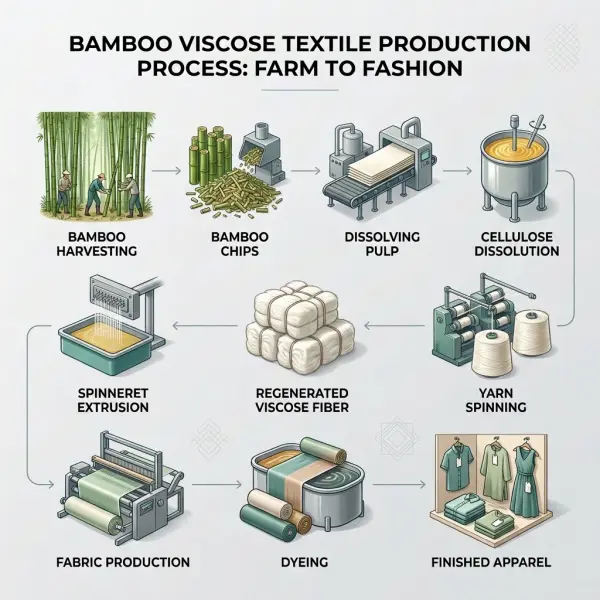
Most bamboo apparel follows a multi-stage industrial pathway. Bamboo cultivation is only the beginning; the final textile is shaped by pulp quality, fiber production, spinning, knitting or weaving, dyeing, finishing, and garment construction.
A simplified bamboo viscose supply chain normally involves:
- Harvesting and chipping the bamboo.
- Removing non-cellulosic components to produce dissolving-grade pulp.
- Treating the cellulose to create a soluble spinning material.
- Filtering and extruding the solution through spinnerets.
- Regenerating the cellulose in a chemical bath.
- Washing, cutting, drying, and preparing the fiber.
- Spinning the fiber into yarn.
- Knitting or weaving the yarn into fabric.
- Dyeing, finishing, testing, and garment manufacturing.
In conventional viscose production, cellulose is treated through a process involving sodium hydroxide and carbon disulfide before the spinning solution is regenerated into cellulose fiber. This is why the environmental impact cannot be assessed solely by looking at how quickly bamboo grows. Chemical recovery, worker exposure controls, energy sources, wastewater treatment, and sulfur-related air emissions are central parts of the production profile. Man-Made Cellulosic Fibre Guidelines cover viscose, modal, lyocell, viscose filament yarn, cupro, and acetate. The current framework addresses material inputs, process management, chemical recovery, air emissions, wastewater, and sludge. ZDHC guidance for man-made cellulosic fiber production
What Does Bamboo Fabric Feel Like?
Most bamboo viscose fabrics feel soft, smooth, and fluid because regenerated viscose fibers can be manufactured with a relatively uniform surface and spun into fine yarns. Lightweight bamboo jerseys frequently have a cool initial touch and a flowing drape, making them attractive for garments designed around comfort and movement.
The experience is not universal. A lightweight single jersey, dense rib knit, woven twill, brushed fleece, and bamboo-cotton blend can all feel substantially different even when bamboo-derived viscose is the main fiber.
A deeper side-by-side evaluation is covered in bamboo viscose vs cotton for daily wear. For material development, the more useful question is not simply “Is bamboo softer?” but “Which fiber, yarn, construction, finish, and garment specification will create the required handfeel after repeated wear and laundering?”
Core Properties of Bamboo-Derived Viscose
Bamboo viscose generally inherits the typical characteristics of regenerated viscose. Its advantages are commercially useful, but they should always be evaluated at fabric and garment level.
|
Property |
Typical characteristic |
What it means for fashion products |
|
Handfeel |
Smooth and often soft |
Suitable for close-to-skin garments, depending on yarn and finish |
|
Drape |
Fluid rather than rigid |
Useful for relaxed dresses, tops, pajamas, and flowing silhouettes |
|
Moisture absorption |
Cellulosic fiber readily absorbs moisture |
Can improve perceived comfort but may also extend drying time |
|
Breathability |
Often comfortable in open or lightweight structures |
Depends heavily on fabric density, thickness, and garment fit |
|
Dye affinity |
Generally accepts many dyes well |
Supports rich coloration, but colorfastness must still be tested |
|
Elastic recovery |
Limited without structural or blend support |
Stretch garments often require elastane or engineered knit construction |
|
Dimensional stability |
Can be sensitive to wet processing and laundering |
Pre-production shrinkage and spirality testing are important |
|
Abrasion resistance |
May be weaker in some lightweight constructions |
High-friction applications require careful specification |
|
Wrinkle behavior |
May crease or lose surface smoothness |
Finishing and garment design affect appearance retention |
Viscose is known for softness, drape, and moisture absorption, but conventional viscose fabrics may also experience stretching, limited elastic recovery, abrasion damage, wet shrinkage, and wrinkling. These risks vary substantially according to fiber quality, yarn twist, fabric structure, finishing, and care conditions. sture Absorbency Is Not the Same as Fast Drying
Bamboo viscose can absorb moisture effectively, which may help move perspiration away from immediate contact with the skin. Absorption alone, however, does not guarantee that a garment will dry rapidly.
A fabric that holds more water may take longer to release it, particularly when it is dense, thick, brushed, or worn in a humid environment. True moisture-management performance involves several separate functions:
- initial wetting;
- liquid absorption;
- capillary transport;
- spreading across the textile surface;
- evaporation and drying;
- ventilation through the fabric and garment.
For activewear or hot-weather apparel, brands should test the complete fabric rather than converting a generic absorbency claim into “sweat-wicking” or “quick-drying” marketing.
Softness Depends on More Than Fiber Content
A label showing 95% bamboo-derived viscose and 5% elastane does not guarantee a premium handfeel. Softness may change according to staple length, yarn count, hairiness, twist, knitting gauge, compactness, enzyme treatment, silicone softening, brushing, and laundering.
This creates a common sourcing problem: a fabric can feel exceptionally soft during showroom selection but become fuzzy, distorted, or noticeably less refined after several wash cycles. Handfeel approval should therefore include laundered samples, not only fresh mill swatches.
Main Benefits for Fashion Applications
Comfortable Contact With the Skin
The strongest commercial reason to use bamboo viscose is often sensory rather than ecological. Fine bamboo-derived viscose yarns can produce smooth, flexible fabrics that work well for underwear, pajamas, loungewear, base layers, and relaxed everyday clothing.
This makes the material useful for brands whose value proposition depends on tactile comfort. The benefit is most convincing when the garment also has flat or well-finished seams, non-abrasive trims, stable sizing, appropriate stretch recovery, and a pattern that does not create pressure or chafing.
Soft fiber cannot compensate for poor garment engineering.
Fluid Drape for Relaxed Silhouettes
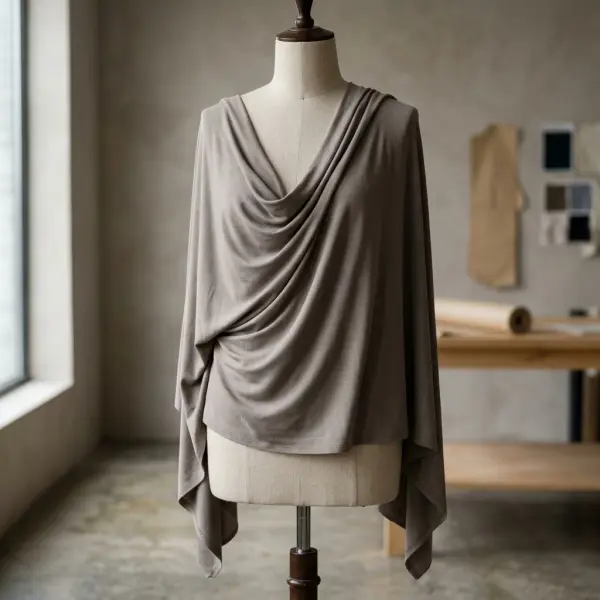
Viscose fabrics frequently hang closer to the body and move more fluidly than stiff cotton or linen constructions. Designers can use this quality for loose dresses, wide-leg pants, wrap silhouettes, lightweight cardigans, soft tops, and layered garments.
The same fluidity can create production challenges. Highly extensible or low-rigidity fabrics may shift during spreading, cutting, sewing, or hanging. Patternmakers may need to consider differential feed, stabilizing, stay tape, seam construction, and garment relaxation before final measurement.
Versatility Through Blending
Bamboo-derived viscose is commonly blended to adjust price, structure, resilience, and care performance.
Typical blend strategies include:
- Bamboo viscose and elastane: improves stretch and recovery for underwear, leggings, bodywear, and fitted tops.
- Bamboo viscose and cotton: combines fluid softness with a more familiar cotton character.
- Bamboo viscose and polyester: may improve durability, shape retention, or drying behavior, but introduces synthetic content and complicates end-of-life claims.
- Bamboo viscose and wool: can support soft thermal layers, depending on yarn development and care requirements.
- Bamboo viscose and linen: may balance drape with texture and a drier handfeel.
Where movement is central to product performance, the relationship between cellulosic fibers and elastane is explored further in how elastane blends improve comfort, fit, and movement.
The operational trade-off is that blends may improve product performance while making fiber separation and textile-to-textile recycling more difficult. A blend should therefore solve a defined product problem rather than being added automatically.
Important Performance Limitations
Shrinkage and Garment Distortion
Some viscose fabrics are sensitive to wet relaxation and laundering. A garment may shorten, widen, twist, or lose its original silhouette if the fabric has not been stabilized adequately.
Knitted products require particular attention to:
- length and width shrinkage;
- spirality or skew;
- recovery after stretching;
- garment torque;
- neckline and armhole deformation;
- measurement changes after drying;
- appearance after repeated laundering.
A supplier’s generic statement that fabric has been “pre-shrunk” is not enough. Brands should define an approved wash method, number of cycles, drying method, and maximum dimensional change for the intended product.
Pilling, Fuzzing, and Abrasion
Very soft fabrics can be produced from fine fibers and low-twist yarns, but these choices may also increase surface fuzzing or pilling. High-friction areas such as inner thighs, underarms, waistbands, socks, and backpack contact zones can expose weaknesses quickly.
Abrasion performance becomes especially important for children’s clothing, travel basics, leggings, socks, workwear, and products promoted for frequent use. The fabric must be tested in its finished condition because dyeing, softening, brushing, and compacting can change the result.
Limited Natural Recovery
Bamboo viscose is not inherently elastic in the way elastane is. A knitted fabric may stretch because of loop construction, but that does not guarantee that it will return fully to its original dimensions.
This difference matters for fitted garments. A fabric can feel stretchy during fitting yet develop bagging at the knees, elbows, seat, or neckline after several hours of wear. Fiber blend, knit structure, fabric weight, elastane quality, and heat exposure during finishing all influence recovery.
Absorbency Can Affect Care and Wear
Moisture absorption supports comfort in some applications, but it can also increase garment weight when wet and lengthen drying time. Poorly stabilized viscose products may become more vulnerable to distortion during wet handling.
Care instructions should be based on garment testing. Delicate-care labeling should not be used merely to transfer unresolved quality problems to the customer.

Common Fashion Uses of Bamboo Fabric
Bamboo-derived viscose is most suitable where softness, flexibility, absorbency, and drape are more important than rigid structure or extreme abrasion resistance.
Common apparel applications include:
- T-shirts and lightweight tops;
- underwear and bralettes;
- pajamas and sleepwear;
- loungewear;
- socks;
- dresses and skirts;
- soft trousers;
- base layers;
- maternity clothing;
- baby and children’s basics;
- scarves and lightweight accessories;
- linings and soft layered garments.
The material is less naturally suited to sharply tailored jackets, rigid denim-style products, protective workwear, or garments exposed to severe abrasion unless the fabric is blended or specifically engineered for those requirements.
The growing use of bamboo-derived fabrics in underwear, sleepwear, and relaxed basics is examined more deeply in why bamboo-based fabrics are popular in comfort-focused apparel.
Underwear and Bodywear
Bamboo-viscose jersey can work well in underwear because it can deliver a smooth surface and flexible drape. Successful products still require stable stretch recovery, durable waistbands, secure seams, appropriate gusset construction, and resistance to repeated washing.
Brands should avoid assuming that fiber softness automatically makes the finished garment suitable for sensitive skin. Dyes, finishes, elastic components, seam placement, detergents, and individual skin conditions can all affect wearer response.
Sleepwear and Loungewear
Pajamas and loungewear benefit from fabrics that feel soft and move easily. Bamboo viscose can support this positioning, particularly in lightweight jerseys, ribs, and brushed blends.
The main commercial risks are shrinkage, twisting, knee bagging, seam growth, and loss of surface quality. These problems can generate returns even when the first-touch experience is excellent.
Dresses and Relaxed Separates
Fluid woven or knitted bamboo-derived fabrics can create elegant movement in dresses, skirts, soft shirts, and wide-leg pants. Designers must account for fabric growth during cutting, sewing, pressing, and hanging.
A dress that measures correctly immediately after sewing may lengthen after hanging because of its own weight. Garment trials should therefore include relaxation before hemming and final measurement.
Is Bamboo Fabric Sustainable?
Bamboo-derived fabric can be produced through more responsible or less responsible systems. The word bamboo alone does not provide enough evidence to determine the environmental impact of a textile.
Bamboo is a plant-based cellulose source, and some bamboo species grow rapidly under suitable conditions. That agricultural characteristic does not automatically offset the impacts of pulp processing, chemical use, energy consumption, water management, emissions, dyeing, finishing, transportation, garment durability, or disposal. The FTC has specifically warned businesses against presenting bamboo rayon as inherently environmentally friendly without adequate substantiation. der MMCF category is commercially significant rather than marginal. Textile Exchange reported that global man-made cellulosic fiber production reached approximately 7.9 million tonnes in 2023, representing about 6% of the global fiber market. That figure covers viscose, modal, lyocell, acetate, and related fibers—not bamboo-derived fiber alone. Textile Exchange Materials Market Report 2024 dstock Sourcing
Brands should establish where the bamboo was grown, how the land was managed, who converted it into dissolving pulp, and whether the supply chain is traceable.
Forest Stewardship Council certification can apply to bamboo and bamboo-derived textiles. FSC Chain of Custody certification is designed to verify the movement of certified forest-based material through the supply chain. Certification can strengthen sourcing assurance, but brands should still validate certificate scope, transaction documentation, supplier identity, and current validity. FSC Chain of Custody certification er Manufacturing
For viscose, the most important questions concern chemical handling and recovery, worker protection, sulfur emissions, wastewater, sludge, and energy.
A supplier saying its bamboo is “organically grown” does not answer how the cellulose was pulped or regenerated. Agricultural sourcing and fiber manufacturing are separate impact stages and require separate evidence.
ZDHC’s MMCF framework provides brands with a more operational reference because it addresses production inputs, processes, and outputs rather than relying on generic plant-based claims. duct Safety Is Not a Full Sustainability Assessment
OEKO-TEX® STANDARD 100 verifies that a textile article has been tested against requirements for harmful substances. It can be useful for products worn close to the skin, but it is not proof that bamboo was responsibly cultivated, that the viscose mill recovered chemicals effectively, or that the finished garment has a lower lifecycle impact than an alternative. OEKO-TEX STANDARD 100 textile safety standard tinction is essential in retail communication. A product-safety certificate, a forest-sourcing certificate, a manufacturing standard, and a lifecycle assessment answer different questions.

Claims Brands Should Treat Carefully
“Naturally Antibacterial”
Natural bamboo plants may contain compounds associated with biological resistance, but regenerated viscose production dissolves the cellulose and substantially transforms the original material. Finished bamboo viscose should not automatically be assumed to retain antibacterial performance.
Where a supplier makes an antibacterial claim, the brand should request product-specific test reports for the finished fabric—not a general study about bamboo plants or unfinished raw material. ISO 20743:2021 specifies quantitative methods for determining antibacterial activity in textile products. ISO 20743 antibacterial textile testing should match the marketed product, finish, organism, laundering condition, and claimed duration. A result from an untreated development sample cannot automatically support a claim about a dyed commercial garment after repeated washing.
“Hypoallergenic”
Hypoallergenic is often used as a broad comfort claim, but it does not mean that no wearer will experience irritation. Reactions may be associated with dyes, finishing agents, residual chemicals, elastics, adhesives, trims, detergents, or individual sensitivities.
A safer communication strategy is to describe verifiable product characteristics: smooth fabric surface, tested harmful-substance compliance, seam construction, or absence of a specifically identified substance where documented.
“Chemical-Free”
Bamboo viscose is not chemical-free. Its production requires chemical processing to isolate, dissolve, and regenerate cellulose. Dyeing and finishing also involve chemical inputs.
The responsible question is not whether chemicals exist, but whether they are selected, controlled, recovered, treated, and disclosed through credible manufacturing systems.
“Biodegradable”
Regenerated cellulose fibers may biodegrade under certain controlled conditions, but a finished garment can contain elastane, polyester sewing thread, dyes, coatings, prints, elastic bands, labels, or other components that behave differently.
Biodegradability also depends on temperature, moisture, microorganisms, oxygen, time, and disposal environment. Brands should not convert a fiber-level characteristic into an unconditional claim that the entire garment will harmlessly disappear after disposal.
“More Sustainable Than Cotton”
There is no universal answer because cotton and bamboo-derived viscose each include multiple agricultural and manufacturing systems. Impact varies by location, energy mix, irrigation, chemical management, yield, pulp source, fabric weight, durability, and methodology.
The commercially useful comparison should be between defined supply chains and defined products, not between two generic fiber names.
What Should Brands Verify Before Sourcing Bamboo Fabric?
The first step is to replace the broad request “Send us bamboo fabric” with a technical material brief. Without a defined specification, suppliers may submit fabrics that share a marketing name but differ significantly in fiber type, quality, performance, and cost.
Confirm the Fiber Identity
Ask the supplier to state:
- the legally recognized generic fiber name;
- whether the fiber is viscose, rayon, modal, lyocell, or mechanically processed bamboo;
- the percentage composition of every fiber;
- whether the bamboo claim refers to feedstock, fiber, yarn, or finished fabric;
- the name and location of the pulp and fiber producers;
- applicable labeling language in the destination market.
This information should match fiber-content testing, care labels, purchase orders, product pages, packaging, and customs documentation.
Define the Fabric Construction
A complete specification should include the factors that materially affect performance:
- knit or weave structure;
- fabric weight in grams per square meter;
- yarn count and yarn type;
- gauge or thread density;
- finished width;
- stretch and recovery;
- usable width;
- surface treatment;
- compacting or stabilization;
- dyeing method;
- shrinkage tolerance;
- pilling grade;
- colorfastness requirements;
- dimensional stability;
- spirality or skew;
- bursting, tensile, or tear strength as relevant.
Brands should avoid approving a fabric based only on fiber percentages and initial softness.
Test the Finished Color and Finish
A white lab dip, dark reactive dye, pigment print, brushed finish, and enzyme-treated jersey can perform differently even when they start with the same greige fabric.
Testing should therefore reflect the actual commercial color, finish, garment construction, and care method. At minimum, many everyday apparel programs should evaluate dimensional change, colorfastness, pilling, seam performance, appearance after laundering, and stretch recovery.
Additional testing may be required for children’s clothing, underwear, activewear, sleepwear, export markets, performance claims, and regulated substances.

Run Wear and Wash Trials
Laboratory results help control measurable properties, but they do not reveal every wearer experience. A limited wear trial can identify issues such as:
- cling in humid conditions;
- slow drying;
- neckline growth;
- knee or elbow bagging;
- fabric transparency;
- surface fuzzing;
- odor retention;
- seam irritation;
- waistband rolling;
- changes in handfeel after washing.
The trial should use the actual garment rather than an unsewn fabric panel. Pattern, seam construction, elastic, garment fit, and care behavior influence the result.
Verify Sustainability Documentation Separately
A practical documentation package may include:
- fiber producer identification;
- bamboo or forest-source traceability;
- current chain-of-custody records;
- chemical-management information;
- wastewater and air-emission performance;
- restricted-substance testing;
- product-safety certification;
- transaction certificates where applicable;
- lifecycle data for significant comparative claims.
No single certificate answers every environmental, safety, and traceability question.
Common Bamboo Fabric Sourcing Mistakes
Treating Every Bamboo Fabric as the Same Material
A sourcing team may compare quotations for bamboo viscose jersey, bamboo-cotton rib, bamboo lyocell woven fabric, and mechanically processed bamboo as though they were interchangeable.
They are not.
This mistake creates inconsistent costing, fit, color, care requirements, and performance. The better approach is to establish the generic fiber, blend, construction, weight, finish, and end use before comparing suppliers.
Choosing the Softest Swatch Without Testing It
Aggressive softening can make a sample highly attractive during selection. It may also conceal low yarn strength, unstable construction, weak recovery, or a finish that diminishes after washing.
The operational consequence is a product that performs beautifully during sales presentation but disappoints after customer use. Approvals should include washed swatches, garment trials, and repeatable quality limits.
Building the Marketing Story Before Confirming the Supply Chain
Some brands write claims about clean processing, pesticide-free cultivation, antibacterial performance, or biodegradability before receiving mill documentation.
Marketing then becomes difficult to correct because the claim has already shaped packaging, campaign photography, wholesale presentations, and customer expectations.
Material claims should follow evidence, not lead it.
Assuming “Bamboo” Means Lyocell
Bamboo viscose, bamboo modal, and bamboo lyocell are not interchangeable labels. A supplier may use “bamboo” prominently while the technical fiber remains conventional viscose.
Brands should request the generic fiber name and manufacturer documentation instead of inferring the process from front-facing marketing language.
Ignoring the Non-Bamboo Components
A garment advertised as bamboo may contain elastane, polyester thread, nylon elastic, foam cups, synthetic labels, plastic printing, or coatings.
These components can be necessary for performance, but they influence recyclability, biodegradability, product safety, and disposal claims. The complete bill of materials—not only the main fabric—should inform communication.
Using Sustainability as a Substitute for Quality
Even well-documented fiber sourcing does not guarantee that a garment will fit well, resist pilling, retain color, or survive laundering.
Durability and continued use are material sustainability considerations in their own right. A product with strong sourcing documentation but poor service life can still create avoidable waste and customer dissatisfaction.
A Practical Bamboo Fabric Development Framework
Fashion businesses can manage bamboo-derived materials through five connected decisions.
1. Define the Product Requirement
Start with the garment rather than the fiber trend. Determine whether the product needs softness, drape, opacity, stretch, fast drying, abrasion resistance, thermal comfort, structure, or low-maintenance care.
Bamboo viscose is most useful when its characteristics solve those requirements. It should not be forced into applications where a different material would perform more reliably.
2. Select the Appropriate Fiber System
Choose between viscose, modal, lyocell, a blend, or a mechanically processed fiber based on price, availability, supplier capability, performance, traceability, and target positioning.
For a commercial loungewear line, a stable bamboo-viscose blend may be more realistic than a rare natural bamboo yarn. For a premium materials story, a traceable lyocell route may justify additional sourcing work—but only when the evidence supports the claim.
3. Engineer the Fabric
Set the yarn, weight, construction, finish, stretch, and quality thresholds. This is where most of the wearer experience is created.
Two brands can purchase fiber from the same producer and still launch very different garments because one controls fabric development carefully while the other accepts an off-the-shelf quality based on handfeel.
4. Validate the Supply Chain and Product
Confirm labeling, traceability, chemical management, product safety, performance, and care. Test commercial colors and finished garments.
When claims such as antibacterial activity, quick drying, ultraviolet protection, or reduced environmental impact are commercially important, commission the appropriate product-specific testing or assessment.
5. Communicate Only What Can Be Demonstrated
A credible product page might explain that a garment uses viscose made from traceable bamboo-derived cellulose and describe its tested handfeel, drape, composition, and care requirements.
It should not imply that the garment is naturally antibacterial, universally hypoallergenic, chemical-free, or automatically better for the planet unless those specific claims are supported.
The strongest material communication is often more precise and less dramatic.
Frequently Asked Questions
Is Bamboo Fabric Natural or Synthetic?
Most bamboo fabric used in clothing is a regenerated cellulosic textile. Its cellulose originates from a plant, but the cellulose is dissolved and re-formed into manufactured fiber through an industrial process.
For this reason, bamboo viscose is not normally classified in the same way as directly spun natural fibers such as cotton, wool, flax, or hemp. It is also different from petroleum-based synthetic fibers such as polyester and nylon.
Mechanically extracted bamboo bast fiber is closer to a natural fiber, but it is comparatively uncommon in mainstream apparel. Brands should check the generic fiber name rather than relying on the word bamboo.
Is Bamboo Viscose the Same as Rayon?
Viscose is a form of rayon, and the terms are often used according to regional labeling conventions. When bamboo supplies the cellulose, the finished fiber remains rayon or viscose made from bamboo.
The bamboo source does not create a separate generic fiber category after the cellulose has been dissolved and regenerated. This distinction is especially important for US labeling, where the FTC requires accurate use of terms such as “rayon made from bamboo” or “viscose made from bamboo.” elling internationally should confirm the fiber terminology required in each destination market.
Does Bamboo Fabric Keep the Plant’s Natural Antibacterial Properties?
This should not be assumed. Regenerated bamboo viscose undergoes extensive chemical processing that transforms bamboo into purified cellulose and then into a new fiber.
A brand making an antibacterial claim should obtain test results for the actual finished fabric or garment. The report should identify the test method, organisms, sample condition, wash durability, and measured performance.
General information about natural bamboo plants is not sufficient evidence for a commercial textile claim. Product-specific testing, such as a suitable ISO 20743 method, provides a more defensible basis.
Is Bamboo Fabric Good for Hot Weather?
Lightweight bamboo-viscose fabrics can feel comfortable in warm weather because they are often soft, absorbent, and fluid. The result still depends on fabric weight, density, garment looseness, airflow, humidity, color, and drying behavior.
A thin, open jersey may feel cooler than a dense double knit made from the same fiber. Absorbency can help manage initial perspiration, but a heavily saturated fabric may remain damp.
Brands developing hot-weather apparel should evaluate air permeability, moisture spreading, drying, opacity, and real-wear comfort rather than relying only on fiber content.
Does Bamboo Fabric Shrink?
Bamboo-derived viscose fabrics can shrink or distort when wet, particularly if the fabric has not been adequately stabilized. Knit structures may also twist, widen, or lose length after laundering.
The extent of change depends on yarn, construction, dyeing, finishing, compacting, garment pattern, washing temperature, agitation, and drying method.
Brands should establish a dimensional-stability specification and test finished garments through repeated care cycles. Customers should receive instructions based on validated performance, not generic recommendations copied from another fabric.
Is Bamboo Fabric Suitable for Activewear?
It can be used in yoga wear, base layers, light training apparel, and relaxed movement products, especially when blended with elastane. It is not automatically ideal for high-intensity activewear.
Absorbency, slow drying, abrasion, limited recovery, and garment weight when wet may become disadvantages. High-performance products often require carefully engineered blends and fabric structures that improve recovery, moisture transport, and durability.
The correct decision depends on the activity. A soft studio top has different requirements from running tights, cycling wear, or competitive sportswear.
What Certifications Should a Bamboo Clothing Brand Request?
No single certification covers the entire bamboo textile supply chain. Relevant documentation may include forest or bamboo-source certification, chain of custody, MMCF manufacturing performance, restricted-substance testing, textile safety certification, and product-specific laboratory reports.
FSC or PEFC documentation may support feedstock traceability. ZDHC-aligned information can help assess chemical and emission management in MMCF production. OEKO-TEX® STANDARD 100 addresses harmful substances in textile articles.
Brands should verify certificate numbers, scope, validity, supplier identity, product coverage, and transaction documentation rather than accepting logos on a presentation.
Conclusion
Bamboo fabric is best understood as a family of bamboo-derived textile routes rather than one uniform material. Most garments marketed as bamboo are made from regenerated viscose or rayon, while bamboo modal, bamboo lyocell, and mechanically extracted bamboo fiber occupy smaller and technically distinct positions.
For fashion businesses, the material’s strongest advantages are its potential softness, fluid drape, absorbency, and suitability for comfort-oriented apparel. Its main risks include ambiguous labeling, unstable fabric performance, unsupported health claims, and sustainability communication that focuses on bamboo cultivation while overlooking pulp and fiber manufacturing.
The most reliable strategy is straightforward: identify the real fiber, engineer the fabric for the intended garment, test the finished product, verify the supply chain, and communicate only what the evidence supports.
Bamboo-derived textiles can be commercially valuable. The value comes from informed product development—not from the word bamboo alone.




Comments 0
Leave a CommentSend Comment
Anda harus Login terlebih dahulu untuk dapat memberikan komentar.