
How to Find Reliable Clothing Manufacturers: Complete Guide for Fashion Brands
Introduction: Why Choosing the Right Manufacturer Matters
Building a fashion brand is not just about great design—it’s about execution. And behind every successful product, there is always a reliable production partner.
Many fashion entrepreneurs begin their journey with excitement—sketching ideas, selecting fabrics, imagining their first collection. But very quickly, reality sets in. Production delays, inconsistent quality, miscommunication, and unexpected costs start to appear. What seemed simple at the beginning becomes complex.
This is why understanding how to find reliable clothing manufacturers is one of the most important steps in building a sustainable fashion business.
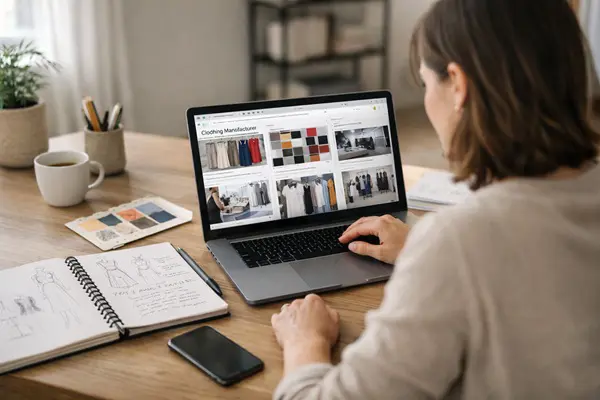
In simple terms, a reliable clothing manufacturer is a partner who consistently delivers quality products on time, communicates clearly, and operates with transparency and professionalism. They are not just a vendor—they are part of your brand’s foundation.
In this guide, we will walk through everything you need to know—from identifying trustworthy manufacturers to avoiding common mistakes—so you can build a strong and reliable production system.
1. What Makes a Clothing Manufacturer Reliable?
Before searching for manufacturers, it helps to pause and ask a simple question: what does “reliable” actually mean in practice?
A reliable clothing manufacturer is not defined by price alone, nor by how impressive their portfolio looks at first glance. Instead, reliability is built through consistency—something that becomes visible over time.
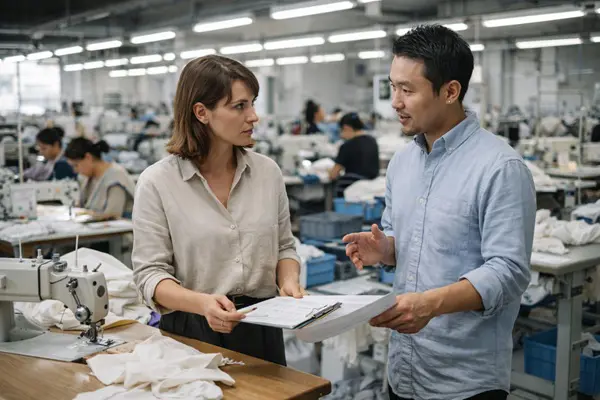
First, there is product quality. A reliable manufacturer does not produce one good sample and then deliver inconsistent bulk production. They maintain the same standard across every piece, every batch.
Then comes communication. Good manufacturers don’t leave you guessing. They explain timelines, costs, and limitations clearly. When issues arise—and they always do—they communicate early, not after the damage is done.
Equally important is on-time delivery. In fashion, timing is everything. A delayed production can mean missing a season, a campaign, or even market momentum.
And beyond operations, there is professional integrity. Reliable manufacturers operate transparently, follow ethical practices, and honor agreements.
Ultimately, a reliable clothing manufacturer is defined by consistency, transparency, and accountability across all stages of production.
2. Types of Clothing Manufacturers You Should Know
As you begin your search, you will quickly realize that not all manufacturers operate in the same way. Understanding the different types can help you choose a partner that matches your needs.
Some manufacturers work under the Cut, Make, Trim (CMT) model. In this setup, you provide everything—from design to materials—and they focus purely on production. This is often suitable for brands that already have experience and strong control over their supply chain.
Others offer full-package services (OEM/ODM). These manufacturers handle everything from sourcing materials to production. For startups or small brands, this approach can be much more practical, as it reduces complexity.
There are also private label manufacturers, who provide ready-made designs that you can customize with your own branding. This is often the fastest way to enter the market.
And finally, some manufacturers specialize in specific categories—such as activewear, denim, or modest fashion. Working with specialists can significantly improve product quality in niche markets.
Choosing the right type of manufacturer is not just a technical decision—it shapes how your entire business operates.
3. How to Find Reliable Clothing Manufacturers
Once you understand what to look for, the next step is knowing where—and how—to find them.
The process always starts with clarity. Before reaching out to any manufacturer, you need to define your own requirements. What kind of product are you creating? What is your target price? What level of quality are you aiming for? Without clear answers, even the best manufacturer will struggle to help you.
From there, you can begin your search. Some brands start with online platforms like Alibaba or sourcing directories. Others rely on local garment clusters, industry communities, or referrals from trusted networks.
Interestingly, referrals often lead to the most reliable partnerships. A recommendation from someone who has already worked with a manufacturer can save you months of trial and error.
But finding options is only the beginning. The real work lies in evaluation.
Looking at a manufacturer’s portfolio gives you a sense of their capabilities. Requesting samples allows you to assess quality firsthand. And most importantly, observing how they communicate gives you insight into how they will operate under pressure.
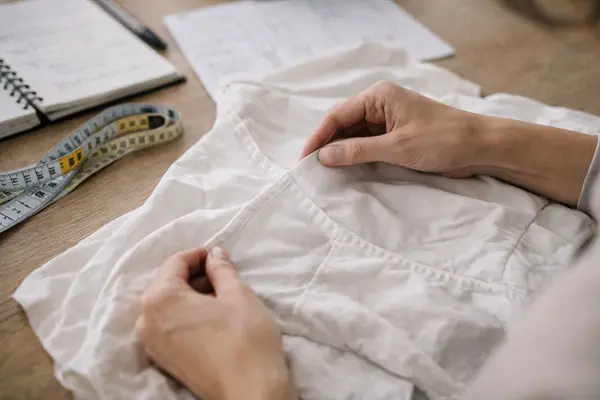
One of the smartest strategies is to start small. Instead of committing to large orders immediately, begin with a sample batch or a limited production run. This reduces risk and gives you real experience before scaling.
4. Key Questions to Ask Before Choosing a Manufacturer
At some point, your research will narrow down to a few potential partners. This is where asking the right questions becomes critical.
A reliable clothing manufacturer should be able to answer clearly when you ask about:
- Minimum order quantities (MOQ)
- Production lead times
- Customization capabilities
- Quality control processes
- Handling of defects or issues
What matters is not just the answers themselves, but how they are delivered. Are they clear? Detailed? Honest? Or vague and evasive?
Often, the way a manufacturer responds is more telling than the content of their answer.
5. Red Flags to Avoid
While searching for manufacturers, it is just as important to recognize warning signs.
Unclear pricing is one of the most common issues. If costs are not transparent from the beginning, they will likely become more complicated later.
Slow or inconsistent communication is another major red flag. If a manufacturer is difficult to reach during the early stages, it will only get worse during production.
A lack of samples, or refusal to provide them, should also raise concerns. Without seeing real output, you are essentially taking a blind risk.
And finally, extremely low prices can be tempting—but they often come at the cost of quality, reliability, or both.
In many cases, the cheapest option becomes the most expensive mistake.
6. How to Build a Long-Term Relationship with Manufacturers
Finding a reliable manufacturer is not the end of the journey—it is the beginning of a partnership.
Strong relationships are built on mutual understanding and professionalism. Clear communication is essential. The more detailed your instructions and expectations, the better the results.

At the same time, reliability works both ways. Manufacturers are more willing to prioritize clients who are organized, respectful, and consistent.
Starting with small orders, building trust over time, and maintaining professional conduct can turn a simple supplier relationship into a long-term strategic partnership.
7. Cost vs Quality: Finding the Right Balance
One of the most common mistakes in fashion is focusing too heavily on cost.
While it is natural to look for competitive pricing, choosing a manufacturer based solely on the lowest price often leads to compromises in quality, consistency, or service.
Low-cost production can result in defects, customer complaints, and damage to your brand reputation. And once trust is lost, it is difficult to recover.
A smarter approach is to look for balance—manufacturers who offer fair pricing while maintaining consistent quality.
Because in fashion, quality is not just a feature—it is part of your brand identity.
8. Global vs Local Manufacturers: Which Is Better?
Another important decision is whether to work with local or international manufacturers.
Local manufacturers often offer easier communication, faster shipping, and more flexibility. This can be especially valuable for smaller brands or those in early stages.
On the other hand, international manufacturers may offer lower production costs and a wider range of capabilities.
There is no universal answer. The best choice depends on your business goals, budget, and operational capacity.
9. The Future: Digital Tools and Smarter Manufacturing
As the fashion industry evolves, technology is beginning to change how brands find and work with manufacturers.
Tools such as AI-driven supplier matching, digital sampling, and 3D prototyping are making the process faster and more efficient.
These innovations reduce uncertainty, improve communication, and allow brands to make better decisions before committing to production.
In many ways, the future of manufacturing is becoming more transparent, more connected, and more intelligent.
10. Final Checklist: How to Identify a Reliable Clothing Manufacturer
Before making your final decision, it helps to step back and review everything clearly.
A reliable clothing manufacturer should offer:
- Clear and consistent communication
- Verified portfolio and experience
- Approved product samples
- Transparent pricing structure
- Realistic production timelines
- Professional and responsive attitude
If all these elements are in place, you are likely working with a partner you can trust.
Conclusion: Reliability Is More Valuable Than Price
At the end of the day, choosing a clothing manufacturer is not just about production—it is about building a foundation for your brand.
A reliable clothing manufacturer supports your growth, protects your reputation, and ensures that your products meet the expectations of your customers.
While it may take time to find the right partner, the effort is always worth it.
Because the strongest fashion brands are not built alone—they are built through reliable partnerships behind the scenes.




Comments 0
Leave a CommentSend Comment
Anda harus Login terlebih dahulu untuk dapat memberikan komentar.