
Linen vs Cotton: Which Fabric Is Better for Hot Climates?
Linen is often the stronger choice for hot climates when the priority is airflow, quick moisture release, and a cool, dry wearing sensation. Made from flax fiber, linen tends to feel crisp, breathable, and airy, especially when used in lightweight woven fabrics with relaxed garment construction. This is why linen is widely used for resortwear, summer shirts, dresses, trousers, and warm-weather tailoring.
Cotton is also highly useful in hot climates, especially for everyday garments that require softness, comfort, affordability, easy care, and broad consumer familiarity. Cotton can absorb moisture well and feel comfortable against the skin, but heavier cotton fabrics may hold moisture longer and feel damp in humid conditions. Fabric weight, weave, finish, and garment fit matter as much as the fiber itself.
For fashion businesses, the best answer is rarely “linen is better” or “cotton is better.” Linen is often better for elevated warm-weather products, relaxed silhouettes, and premium summer positioning. Cotton is often better for mass-market basics, soft casualwear, children’s wear, and easy-care everyday apparel. The right choice depends on climate, customer expectation, price point, product category, and care tolerance.
Why the Linen vs Cotton Question Matters for Fashion Brands
For consumers, the linen vs cotton question usually sounds simple: which fabric feels cooler? For fashion brands, it is more strategic. The decision affects product cost, sourcing options, garment construction, care instructions, perceived value, retail storytelling, return risk, and customer satisfaction.
Hot-climate dressing is not only about fiber type. A breathable fiber can become uncomfortable if the fabric is too dense, the garment is too tight, or the lining traps heat. A simple cotton poplin shirt may feel cooler than a heavy linen jacket. A loose linen dress may feel much fresher than a thick cotton jersey dress. The fiber matters, but the fabric engineering and design execution matter just as much.
This article focuses on performance and business decision-making in hot climates. For a broader foundation on linen itself, including its properties, uses, and sourcing implications, see linen fabric properties and benefits. Here, the main question is more specific: when should brands choose linen, when should they choose cotton, and how should they communicate the difference honestly?
Linen and Cotton: A Basic Material Difference
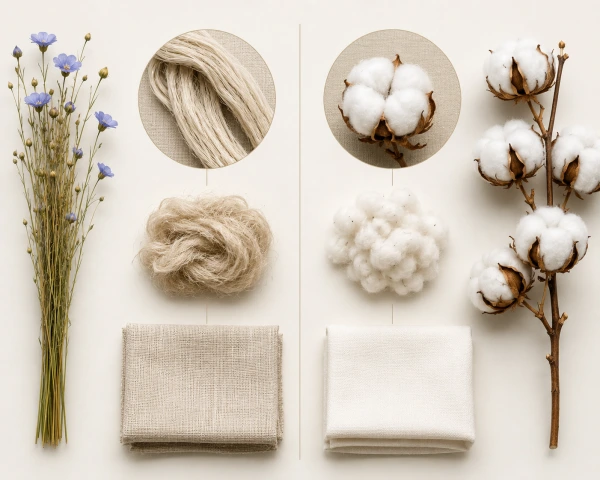
Linen is made from flax, a bast fiber taken from the stem of the flax plant. Cotton is made from seed fibers that grow around the seeds of the cotton plant. This difference in fiber origin influences the way each fabric behaves. Linen tends to be crisp, textured, strong, quick-drying, and prone to wrinkling. Cotton tends to be soft, familiar, absorbent, versatile, and generally easier for consumers to maintain.
Britannica describes linen as stronger than cotton, quick-drying, moisture-absorbent, and cool to wear because it absorbs and releases moisture quickly and conducts heat well; these characteristics explain why linen is so closely linked to summer apparel and warm-weather comfort through Britannica’s linen overview.
Cotton, meanwhile, is one of the most widely used apparel fibers because it is soft, washable, relatively strong, absorbent, and adaptable across many fabric constructions. ScienceDirect’s technical overview notes cotton’s relatively high moisture absorption, strength, abrasion resistance, and usefulness in washable garments through its cotton fabric reference.
For product teams, the practical difference is this: linen often delivers a cooler and more textured warm-weather feel, while cotton often delivers a softer, more familiar, and more scalable everyday comfort profile.
Which Fabric Feels Cooler in Hot Weather?
In many warm-weather apparel contexts, linen feels cooler than cotton because it releases moisture quickly, allows airflow well in suitable constructions, and has a crisp hand that does not cling as easily to the body. This is especially noticeable in loose shirts, relaxed trousers, shirt dresses, resortwear, and unlined summer tailoring.
Cotton can also be comfortable in heat, particularly when it is lightweight, loosely woven, and designed with airflow in mind. Cotton voile, lawn, poplin, muslin, seersucker, and lightweight jersey can perform very well in summer. The problem appears when cotton is heavy, dense, brushed, layered, or too fitted. In humid climates, absorbent cotton may hold moisture and feel damp longer than linen.
A useful way to frame the difference is not “linen is cool and cotton is not.” A more accurate framing is:
- Linen often feels cooler in hot and humid climates when it is lightweight, breathable, and loosely fitted.
- Cotton often feels softer and more familiar, especially for daily basics and close-to-skin apparel.
- Fabric construction can override fiber reputation.
- Garment fit can make or break comfort.
- Finishing and washing treatments influence softness, shrinkage, airflow, and hand feel.
For brands selling into tropical or summer markets, this nuance matters. A customer buying linen expects an airy, relaxed, premium feeling. A customer buying cotton often expects softness, ease, and everyday practicality. Both can work, but they answer different comfort expectations.
Moisture Management: Absorbing vs Releasing Moisture
Both linen and cotton absorb moisture, but they often feel different during wear because linen tends to release moisture faster. This contributes to the dry, cool sensation associated with linen garments. Cotton can absorb perspiration comfortably, but in humid environments it may remain damp longer, depending on weight and structure.
This is one reason linen is frequently used in garments where the customer wants a breezy feel: summer button-up shirts, vacation trousers, beach cover-ups, loose dresses, and relaxed tailoring. Cotton remains highly useful for T-shirts, casual shirts, underwear, loungewear, children’s clothing, and affordable summer basics because softness and washability are often more important than quick drying.
Brands should avoid treating moisture behavior as a simple ranking. Moisture performance depends on several factors:
- Fiber type and fiber quality.
- Yarn structure and twist.
- Fabric weight and weave density.
- Knitted versus woven construction.
- Finishing treatments.
- Garment looseness and ventilation.
- Whether the garment is layered or lined.
This is where sampling and wear testing become essential. A fabric can look beautiful on a hanger but feel heavy after a full day in humid weather. For hot-climate products, teams should test not only appearance but also comfort after washing, movement, and exposure to perspiration.
Breathability Depends on Fabric Construction, Not Fiber Alone
Breathability is often used loosely in fashion marketing, but technically it depends on how air and vapor move through the textile structure. A natural fiber does not automatically make a breathable garment. A tight weave, heavy weight, synthetic lining, dense print, coating, or close fit can reduce comfort even if the outer fabric is linen or cotton.
Cotton Incorporated’s CottonWorks explains cotton’s comfort through breathability and fabric behavior in educational resources for textile professionals, including discussions of airflow, moisture, and comfort in cotton fabrics through CottonWorks’ cotton breathability resources. The key lesson for brands is that cotton performance changes with construction and finishing, not just fiber identity.
The same is true for linen. A loosely woven linen shirt may feel extremely breathable. A densely woven linen canvas may not. A linen blazer with synthetic lining may feel hotter than expected. A linen-viscose dress may drape beautifully but behave differently from pure linen in humidity.
For fashion businesses, “breathable” should be supported by product design. Use the word only when the fabric and construction justify it.
Comfort, Softness, and Skin Feel
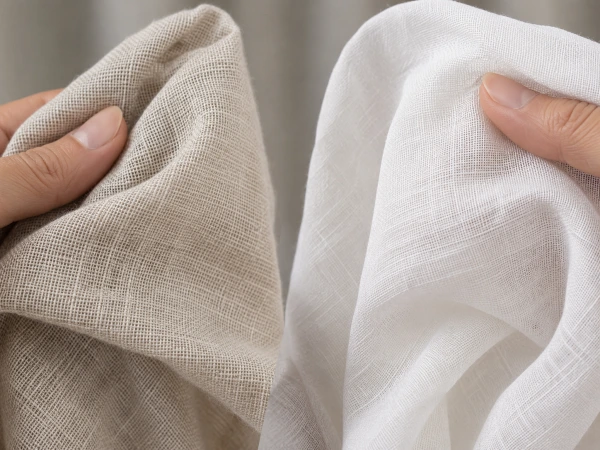
Cotton usually wins on immediate softness. Many consumers are familiar with cotton T-shirts, cotton poplin shirts, cotton underwear, and cotton loungewear, so they associate cotton with comfort. This makes cotton especially strong for categories where softness, familiarity, and easy acceptance matter.
Linen often feels crisper. Some linen fabrics can feel slightly rough at first, especially lower-quality or less-finished versions. Good linen may soften with washing and wear, but the initial hand feel can still be less soft than cotton. This matters in retail, especially for customers buying online. If a customer expects cotton-like softness and receives crisp linen, they may see the fabric as uncomfortable rather than premium.
The right choice depends on the wearer’s expectation:
- For soft daily basics, cotton often performs better.
- For breezy shirts and relaxed summer tailoring, linen often feels more elevated.
- For dresses requiring fluidity, linen-viscose or cotton voile may be more suitable than stiff pure linen.
- For sensitive-skin positioning, brands should test the specific fabric rather than relying on fiber reputation.
- For luxury casualwear, garment-washed linen may improve comfort while keeping linen’s texture.
Customer education matters. Product copy should not oversell linen as soft if the fabric is actually crisp. It is better to describe it as “cool, breathable, and naturally textured” than to create unrealistic expectations.
Wrinkling and Appearance in Hot Climates
Linen wrinkles more visibly than cotton because flax fibers have lower elasticity. This is one of linen’s most famous traits. In premium casual fashion, natural creasing can look intentional, relaxed, and elegant. In highly formal contexts, it can look unpolished.
Cotton also wrinkles, but many cotton fabrics recover visually better or are finished for easier care. Cotton poplin, twill, and knit fabrics can often appear more familiar to customers who want neat everyday clothing. For mass-market retailers, cotton can reduce complaints from customers who dislike visible creasing.
This creates a positioning difference. Linen is excellent when the brand wants a relaxed, natural, resort, artisanal, or understated luxury aesthetic. Cotton is often safer when the product needs to look clean, simple, and low-maintenance after repeated wear.
The decision is partly aesthetic, not only functional. If a brand’s customer loves “effortless summer dressing,” linen wrinkles may support the story. If the customer expects crisp school uniforms, office shirts, or low-maintenance basics, cotton may be the better choice.
Durability and Garment Life
Linen is often described as durable because flax fibers are strong. Cotton is also durable enough for many washable everyday products and performs well across a wide range of apparel categories. The real issue is not only fiber strength but how the garment will be used, washed, stored, and repaired.
A heavy linen fabric can last for years in home textiles or structured apparel. A delicate lightweight linen blouse may need more careful handling. A cotton canvas jacket may outperform a fine linen shirt for abrasion. A cotton T-shirt may lose shape over time depending on yarn quality, knit structure, and laundering.
Durability depends on:
- Fabric weight and construction.
- Fiber length and yarn quality.
- Seam strength and stitching.
- Dyeing and finishing quality.
- Laundering conditions.
- Frequency of wear.
- Product category and stress points.
For business planning, durability claims should be specific. “Linen is durable” is too broad. “This medium-weight linen fabric was selected for relaxed trousers and tested for shrinkage and seam performance” is much more credible.
Cost, Scalability, and Sourcing Considerations
Cotton generally has broader availability and greater price flexibility than linen. It is used globally across mass-market, mid-market, and premium apparel. This makes cotton easier for many brands to source, scale, and repeat across seasons.
Linen can be more expensive, more seasonal, and more dependent on specialized suppliers. High-quality linen also requires careful evaluation of fiber origin, fabric consistency, finishing, shrinkage, and hand feel. For small brands, minimum order quantities and fabric price can be limiting. For larger brands, supply consistency and color matching across production runs can become operational concerns.
Textile Exchange’s Materials Market Report highlights the importance of fiber-market data and material sourcing decisions within the broader textile industry, especially as brands evaluate material impacts, certified production, and emissions-related goals through its 2025 materials report. This does not mean one fiber is automatically better, but it reinforces why brands should evaluate sourcing context rather than relying on generic material claims.
From a margin perspective, cotton often supports sharper pricing and higher-volume basics. Linen often supports higher perceived value, especially in premium seasonal collections. The best commercial strategy may include both: cotton for scale, linen for elevation.
Sustainability: Which Fabric Is More Responsible?
This question requires caution. Linen is often positioned as a responsible natural fiber because flax can be grown with relatively lower inputs in certain regions and linen products can be durable. Cotton is natural and biodegradable under suitable conditions, but conventional cotton impacts vary widely depending on irrigation, fertilizer, pesticide use, yield, and regional farming practices.
Neither fabric is automatically sustainable in every form. A certified, traceable cotton fabric from a well-managed supply chain may be preferable to an undocumented linen fabric with high-impact processing. A long-lasting linen garment may have a stronger use-phase story than a low-quality cotton garment discarded after a few wears. The answer depends on the full product system.
Textile Exchange’s 2026 cotton LCA communication states that cotton’s environmental impacts vary widely based on local growing conditions and practices, which is exactly why generic fiber comparisons can be misleading; brands can reference Textile Exchange’s cotton LCA study announcement when discussing cotton impact variability.
For linen, brands should verify fiber origin, retting method, dyeing, finishing, supplier documentation, certifications, and blend composition. For cotton, they should verify farming practices, certification claims, irrigation context, chemical management, traceability, and processing. The strategic goal is not to declare a universal winner. The goal is to build a defensible sourcing story.
Linen vs Cotton for Different Fashion Categories
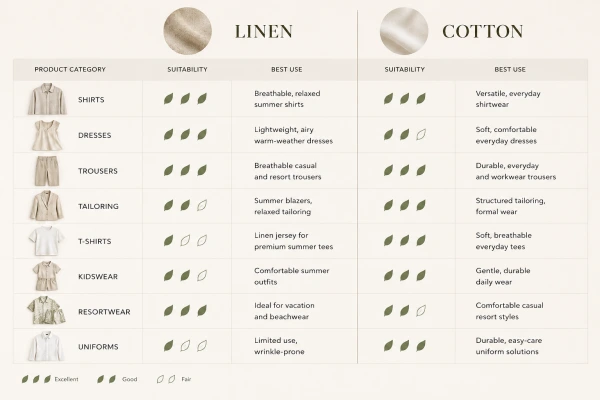
A fabric decision becomes clearer when tied to product category. Linen may be excellent for a relaxed summer suit, but cotton may be better for an entry-level T-shirt. Cotton may be ideal for a school shirt, while linen may be stronger for a premium resort blouse.
The table below gives a practical view for product teams:
|
Product Category |
Linen Usually Works Well When |
Cotton Usually Works Well When |
|
Shirts |
The concept is airy, relaxed, premium, or resort-inspired |
The product needs softness, affordability, and easy care |
|
Dresses |
The silhouette benefits from texture and structure |
The design needs softness, familiarity, or printed versatility |
|
Trousers |
The fit is relaxed and warm-weather oriented |
The garment needs everyday durability and lower maintenance |
|
Tailoring |
The brand wants soft summer tailoring |
The product needs cleaner structure or broader consumer acceptance |
|
T-shirts |
Less common unless blended or jersey-developed |
Strong choice for basics, loungewear, and casualwear |
|
Kidswear |
Useful selectively, but wrinkles and care may be an issue |
Often better for softness, washing, and practicality |
|
Resortwear |
Very strong fit for premium warm-weather storytelling |
Useful for casual vacation basics and printed styles |
|
Uniforms |
Usually limited because of wrinkling |
Often more practical if easy-care performance is needed |
This framework should not be treated as a rigid rule. Fabric innovation, finishing, blends, and construction can change performance. But as a starting point, it helps brands align material choice with customer expectation.
How Fashion Brands Should Choose Between Linen and Cotton
The best fabric choice starts with the customer, not the fiber. A premium resortwear customer may accept wrinkles, higher pricing, and gentle care because linen supports the desired lifestyle. A mass-market customer buying everyday school shirts, T-shirts, or casual basics may prefer cotton because it feels soft, familiar, and easier to wash.
A useful decision process begins with five questions:
- What climate will the garment be worn in?
- Does the customer prioritize coolness, softness, low maintenance, price, or premium texture?
- Does the silhouette need crispness, drape, stretch, or structure?
- Can the brand communicate care requirements clearly?
- Does the material support the brand’s sustainability and sourcing claims?
Once these questions are answered, the choice becomes less emotional. Linen is not automatically the superior hot-climate fabric, and cotton is not automatically basic or inferior. Each fabric has a role. Strong product teams know when to use each one.
For a deeper business discussion on linen’s premium positioning, the next article in this cluster can explore why linen is becoming popular in premium fashion. That topic is different from performance comparison because it focuses on brand perception, consumer taste, and premium market storytelling.
Common Mistakes When Comparing Linen and Cotton
The first mistake is assuming linen is always cooler. Linen often feels cooler, but a heavy linen fabric or lined linen jacket may not outperform a lightweight cotton voile shirt. Hot-climate performance depends on construction, fit, and finishing.
The second mistake is treating cotton as low quality. Cotton spans a wide range, from basic commodity fabrics to refined long-staple cotton shirting and premium cotton knits. A well-developed cotton product can be more appropriate than linen for softness, durability, and everyday care.
The third mistake is making sustainability claims without supply-chain evidence. “Linen is sustainable” and “cotton is bad” are both oversimplified. Responsible material selection requires traceability, farming context, processing information, durability testing, and honest customer communication.
The fourth mistake is ignoring care expectations. Linen customers need to understand wrinkles and care. Cotton customers may expect easier washing and more familiar maintenance. If the product copy does not set expectations correctly, returns and dissatisfaction may increase.
What Brands Should Verify Before Production
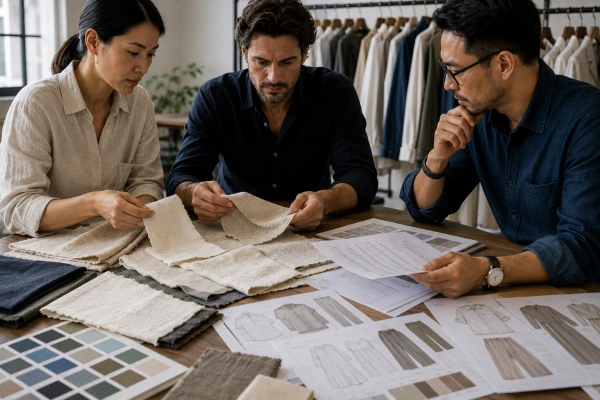
Before choosing either fabric for hot-climate apparel, brands should verify actual performance through samples, not assumptions. This is especially important for online-first brands because customers cannot feel the difference before purchase.
Pre-production checks should include:
- Fabric weight and opacity.
- Breathability and wearer comfort in realistic conditions.
- Shrinkage after washing.
- Colorfastness and post-wash appearance.
- Seam stability and garment distortion.
- Wrinkle behavior and recovery.
- Hand feel before and after laundering.
- Supplier documentation for fiber content and origin.
- Care label accuracy.
- Customer communication strategy.
These checks are not only technical. They are commercial risk controls. A fabric that performs badly after washing can create returns, negative reviews, and margin loss. A fabric that is accurately described can build trust even when it has natural limitations.
FAQ
Is linen better than cotton for hot weather?
Linen is often better for hot weather when the garment is lightweight, breathable, and loosely fitted. It tends to release moisture quickly and feel cool against the body. However, cotton can also work very well in hot climates, especially in lightweight weaves such as voile, lawn, poplin, or seersucker. The better choice depends on fabric weight, construction, garment fit, and customer expectations.
Is cotton good for humid climates?
Cotton can be comfortable in humid climates, especially when it is light, loose, and breathable. However, because cotton absorbs moisture, it may feel damp if the fabric is heavy or if the weather is very humid. For everyday basics, cotton remains practical and familiar. For premium warm-weather garments where a drier feel is important, linen may be more suitable.
Why does linen feel cooler than cotton?
Linen often feels cooler because it absorbs and releases moisture quickly, conducts heat well, and usually has a crisp structure that does not cling heavily to the skin. This effect is strongest in lightweight woven linen garments with relaxed silhouettes. A dense or lined linen garment may not feel as cool, so brands should not rely on fiber type alone.
Which fabric wrinkles more, linen or cotton?
Linen usually wrinkles more than cotton because flax fibers have lower elasticity. This creates the natural creasing associated with linen clothing. Cotton also wrinkles, but many cotton fabrics are softer, more familiar, and easier to finish for wrinkle management. Whether wrinkling is a problem depends on the product concept. In resortwear, linen wrinkles can look intentional. In uniforms, they may be less acceptable.
Is linen more expensive than cotton?
Linen is often more expensive than standard cotton because flax processing is more specialized and linen supply is generally smaller than cotton supply. However, pricing varies by quality, origin, fabric construction, finishing, order volume, and supplier. Premium cotton can also be expensive. Brands should compare actual fabric quotations rather than assume linen always costs more in every case.
Which is better for summer shirts, linen or cotton?
Linen is strong for summer shirts when the desired look is airy, textured, relaxed, and premium. Cotton is strong when the shirt needs to feel soft, washable, affordable, and familiar. A linen shirt may feel cooler in hot weather, while a cotton shirt may be easier for daily care. Linen-cotton blends can offer a useful middle ground for many brands.
Which fabric is more sustainable, linen or cotton?
There is no universal answer. Linen may have advantages in some sourcing systems, especially when flax is responsibly grown and the product is durable. Cotton impact varies widely by region, irrigation, fertilizer, farming practices, and certification. The more responsible option depends on verified sourcing, processing, durability, and end-of-life realities. Brands should avoid broad sustainability claims without documentation.
Should fashion brands use linen blends instead of pure linen?
Linen blends can be a smart choice when pure linen is too crisp, too expensive, too wrinkly, or not suitable for the desired drape. Linen-cotton blends may feel more familiar, while linen-viscose blends may drape better. The trade-off is that blends change the product’s performance and sustainability story. Brands should disclose composition clearly and avoid implying that a low-linen blend behaves like pure linen.
Conclusion
For hot climates, linen often delivers the clearest cooling advantage because it feels airy, releases moisture quickly, and supports relaxed warm-weather silhouettes. It is especially strong for resortwear, summer shirts, dresses, trousers, and elevated casual tailoring. Cotton remains essential because it offers softness, familiarity, washability, affordability, and huge versatility across everyday apparel.
The smarter question is not which fabric is universally better. It is which fabric best fits the product promise. Linen is ideal when the brand wants breathable texture, relaxed premium styling, and natural summer elegance. Cotton is ideal when the customer wants softness, practical care, accessible pricing, and everyday comfort.
For fashion businesses, the best strategy may be to use both materials with intention. Linen can elevate seasonal capsules and premium warm-weather stories. Cotton can anchor reliable basics and scalable casualwear. The winner is not the fiber with the strongest reputation. The winner is the fabric that performs honestly for the garment, the climate, and the customer.




Comments 0
Leave a CommentSend Comment
Anda harus Login terlebih dahulu untuk dapat memberikan komentar.