

Linen Fabric Explained: Properties, Benefits, and Uses
Linen fabric is a natural textile made from flax fibers, valued for its breathability, moisture absorption, crisp texture, durability, and relaxed appearance. In fashion, linen is widely used for warm-weather apparel, resortwear, shirts, dresses, trousers, tailoring blends, loungewear, and premium lifestyle products. Its appeal comes from a combination of comfort, material character, and visual authenticity.
For fashion businesses, linen matters because it sits at the intersection of product performance, natural fiber storytelling, and elevated casual dressing. It can make a garment feel breathable and refined, but it also requires realistic product planning. Linen wrinkles easily, may feel crisp before softening, can shrink if poorly managed, and is often more expensive than mass-market cotton or synthetic alternatives.
The strongest linen products are usually built through good fabric selection, pre-shrinking, suitable garment construction, clear care communication, and honest customer positioning. Linen should not be treated as a perfect fabric for every category. It performs best when its natural texture, cooling feel, and lived-in elegance are part of the product concept rather than problems to hide.
What Is Linen Fabric?
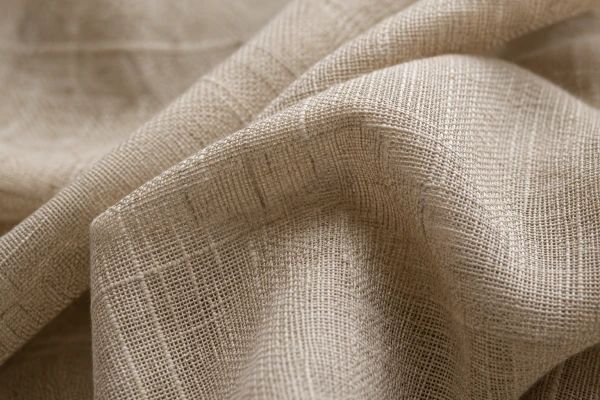
Linen is a textile made from flax, a plant-based bast fiber. In textile terms, “flax” usually refers to the plant and fiber source, while “linen” refers to the yarn, fabric, or finished textile produced from that fiber. The distinction matters for sourcing teams because not every product labeled with flax-related language communicates the same thing. A garment may use pure linen, linen blends, linen-look fabrics, or flax-derived materials with different performance and price implications.
Flax fibers come from the stem of the flax plant. After harvesting, the stems go through processes such as retting, breaking, scutching, hackling, spinning, weaving or knitting, and finishing. These stages influence the final fabric’s handle, consistency, strength, smoothness, color, and price. A fine linen shirt and a coarse linen canvas may both originate from flax, but they serve very different product purposes.
Linen has a long textile history, but its modern fashion relevance is not only nostalgic. It is practical. The fiber is known for absorbing and releasing moisture quickly, drying faster than many common natural fibers, and feeling cool in hot conditions. Britannica describes linen as stronger than cotton, quick-drying, and valued for garments because it absorbs and releases moisture quickly and conducts heat well; brands can reference this technical foundation through Britannica’s linen overview.
For apparel businesses, the useful question is not simply “Is linen good?” The better question is: “What kind of linen, for which product, at what price point, and for which customer expectation?” Linen can be beautiful, premium, and commercially strong, but only when the product brief respects the material’s natural behavior.
Why Linen Matters in the Fashion Fabric Ecosystem
Linen occupies a distinctive position in the fabric ecosystem because it combines heritage, performance, and aesthetic character. It is not as ubiquitous as cotton, not as cheap or uniform as many synthetics, and not as stretchy or easy-care as many modern blended fabrics. That limitation is also part of its identity. Linen is chosen when a brand wants breathability, texture, natural fiber appeal, and a relaxed premium mood.
For fashion brands, linen often works as a material signal. It suggests ease, warm-weather dressing, resort living, artisanal quality, slow lifestyle, or understated luxury, depending on styling and product execution. A linen shirt in a minimal neutral palette communicates something different from a polyester shirt with a similar silhouette. The difference is not only technical. It is emotional and commercial.
This is why linen appears across several product segments:
- Resortwear and vacation capsules where breathability and relaxed texture support the lifestyle story.
- Summer tailoring where linen blends create a softer, less formal version of suiting.
- Premium basics such as shirts, trousers, dresses, and co-ord sets.
- Home and lifestyle textiles including bedding, table linen, curtains, and soft furnishings.
- Conscious material collections where natural fibers and traceability are part of the brand message.
The key is restraint. Linen should not be forced into every category just because it sounds sustainable or premium. It works best when its cooling feel, visible texture, and natural creasing align with the design language. A customer who expects sharp, wrinkle-free officewear may be disappointed by pure linen. A customer looking for breathable elegance may see the same wrinkles as part of the charm.
Core Properties of Linen Fabric
Breathability and Cooling Comfort
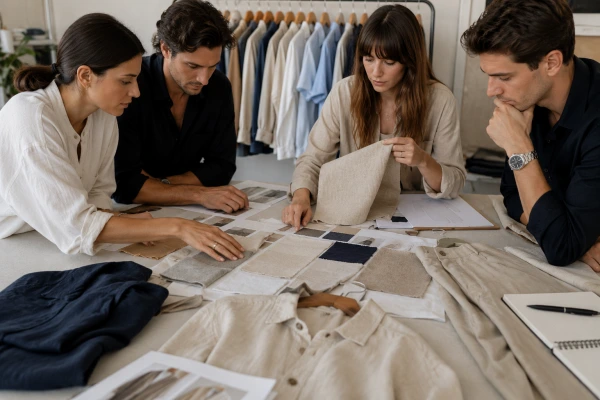
Linen is strongly associated with warm-weather dressing because its fiber structure and fabric behavior support air movement and moisture release. In practical use, linen garments often feel cooler and drier than heavier, tighter, or less breathable fabrics. This is one reason linen shirts, dresses, trousers, and summer tailoring remain commercially relevant in hot and humid markets.
That said, breathability is not determined by fiber alone. Fabric weight, yarn count, weave density, finishing, garment fit, lining, and layering all influence comfort. A lightweight open-weave linen shirt will feel very different from a heavy linen canvas jacket. Brands should avoid claiming that every linen product is automatically ideal for extreme heat. The construction must support the promise.
For product teams, this means comfort claims should be linked to the actual fabric specification. A breathable linen product usually depends on:
- Appropriate fabric weight for the intended climate.
- A weave that allows airflow without becoming too transparent.
- Garment fit that does not trap heat unnecessarily.
- Finishing that preserves the fabric’s natural moisture-handling character.
- Testing for shrinkage, seam stability, and post-wash appearance.
When these details are handled well, linen can become a strong seasonal hero fabric. When they are ignored, the customer may experience roughness, excessive transparency, unexpected shrinkage, or poor garment recovery after washing.
Moisture Absorption and Quick Drying
Linen can absorb moisture and release it relatively quickly, which contributes to its comfort in warm conditions. This property is valuable in apparel categories where the wearer wants the fabric to feel fresh, dry, and less clingy. It is especially relevant for summer shirts, relaxed trousers, dresses, and vacation-ready wardrobes.
In retail communication, this should be explained carefully. Moisture absorption does not mean a linen garment is a technical sportswear fabric. Linen can feel comfortable in heat, but it is not automatically engineered for intense athletic performance. Performance apparel often requires stretch, recovery, abrasion resistance, sweat management, and construction features beyond what basic linen provides.
A better customer-facing explanation is simple: linen is naturally breathable and moisture-absorbent, which helps it feel comfortable for warm-weather everyday wear. That statement is both useful and realistic.
Strength, Durability, and Fabric Life
Linen is often valued for strength and durability. Flax fibers are known for being strong, and linen products can last well when the fabric quality, stitching, care, and use case are appropriate. Britannica’s flax reference notes linen’s strength, luster, durability, and moisture absorbency, while also pointing out that dyeing can be difficult and excessive alkalies in laundering can weaken the fibers; this nuance is useful for both product teams and care communication via Britannica’s flax overview.
Durability, however, should not be oversimplified. Linen can crease sharply, and repeated folding in the same place may create stress over time. A lightweight linen blouse is not expected to perform like a heavy workwear fabric. A linen blend may improve softness, drape, or wrinkle recovery, but it may also change breathability, hand feel, price, and sustainability positioning.
For brands, the operational lesson is clear: match linen quality to product purpose. A premium linen trouser needs different fabric behavior from a loose beach cover-up. A linen blazer needs structure, lining decisions, seam reinforcement, and shape retention planning. Good linen products are engineered, not just selected.
Texture, Slubs, and Natural Irregularity
One of linen’s most recognizable features is its visible texture. Many linen fabrics show subtle slubs, unevenness, and a natural surface that gives the garment depth. This texture can make simple silhouettes feel richer. A plain shirt, wide-leg trouser, or minimal dress can look more considered when the fabric carries natural character.
The same texture can create quality control challenges. Customers unfamiliar with linen may mistake slubs for defects. Merchandising teams may need to explain that some irregularity is normal, especially in fabrics designed to show natural linen character. But there is a line between desirable texture and poor-quality yarn or weaving inconsistency.
Quality teams should define acceptable variation clearly. This is especially important for e-commerce, where customers cannot touch the fabric before purchase. Product pages should use close-up imagery, care notes, and honest descriptions to reduce mismatch between customer expectation and material reality.
Benefits of Linen for Fashion Brands and Consumers
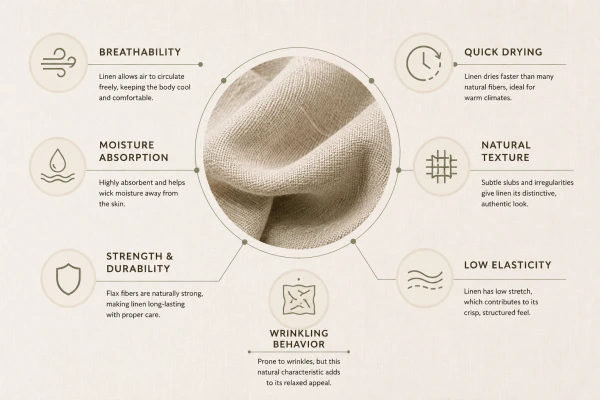
Linen’s benefits are strongest when viewed through both wearer experience and business strategy. For consumers, the appeal is comfort, texture, and effortless style. For brands, linen offers storytelling power, seasonal relevance, and a route into premium casual categories. These two sides must work together. A beautiful sustainability story cannot compensate for a garment that shrinks badly, feels scratchy, or fails after a few washes.
From a product perspective, linen gives brands a fabric that can elevate relatively simple designs. A clean button-up shirt, wrap dress, drawstring trouser, relaxed blazer, or matching set can feel more valuable when made in good linen. The fabric adds visual depth without needing heavy embellishment. This is useful for brands building timeless, understated, or natural-lifestyle collections.
The most practical benefits include:
- Warm-weather comfort for many everyday and vacation contexts.
- Natural texture that supports premium casual styling.
- Good moisture absorption and quick-drying behavior compared with many heavier fabrics.
- Strong storytelling potential around flax, natural fibers, craft, and seasonality.
- Versatility across apparel, accessories, and home lifestyle products.
- Compatibility with blends that can adjust softness, cost, drape, or wrinkle performance.
These benefits become commercially meaningful when they are translated into clear product decisions. A brand might use pure linen for a relaxed resort shirt, linen-viscose for softer drape in a dress, or linen-cotton for a more familiar everyday hand feel. Each choice has a different customer promise.
Common Uses of Linen Fabric in Fashion
Shirts and Blouses
Linen shirts are one of the most recognizable uses of the fabric. They work across menswear, womenswear, and gender-neutral collections because they balance structure and ease. A linen shirt can look polished when pressed, casual when slightly rumpled, and relaxed when worn open over a tank or dress.
For brands, linen shirts are commercially attractive because they are easy to merchandise. They can be styled for resortwear, office-casual dressing, weekend wardrobes, or premium basics. The main development challenge is managing transparency, shrinkage, collar structure, and post-wash appearance.
Dresses, Skirts, and Co-ord Sets
Linen dresses and co-ord sets often perform well in summer and travel-oriented collections. The fabric gives volume and shape without feeling overly formal. It can support minimal silhouettes, tiered dresses, shirt dresses, wrap styles, and relaxed matching sets.
The key decision is fabric weight. Too light, and the garment may become transparent or unstable. Too heavy, and it may lose the airy comfort customers expect from linen. For dresses, brands also need to think carefully about lining. A synthetic lining may solve transparency but reduce breathability. A cotton or lightweight natural lining may preserve comfort but increase cost.
Trousers and Tailoring
Linen trousers and tailoring bring a softer formality to warm-weather dressing. They are especially useful for customers who want polished outfits without the stiffness of traditional suiting. Linen blazers, waistcoats, wide-leg trousers, and relaxed suits can work well in resort, office-casual, and premium lifestyle assortments.
Pure linen tailoring can wrinkle heavily, which may be acceptable in resortwear but less suitable for formal businesswear. This is where blends become important. Linen blended with cotton, viscose, wool, or selected synthetics can improve drape, softness, structure, or wrinkle recovery. The trade-off is that the final product no longer behaves exactly like pure linen.
Home, Lifestyle, and Accessories
Beyond apparel, linen is widely used in home and lifestyle products such as bedding, tablecloths, napkins, curtains, cushion covers, and fabric accessories. These categories benefit from linen’s texture, durability, and natural aesthetic. For fashion brands expanding into lifestyle, linen can help create a coherent material universe across clothing and home goods.
This works especially well for brands with a calm, natural, premium, or slow-living identity. But the same quality rules apply. Poor finishing, unstable shrinkage, weak seams, or inconsistent color can damage the customer’s perception of the brand.
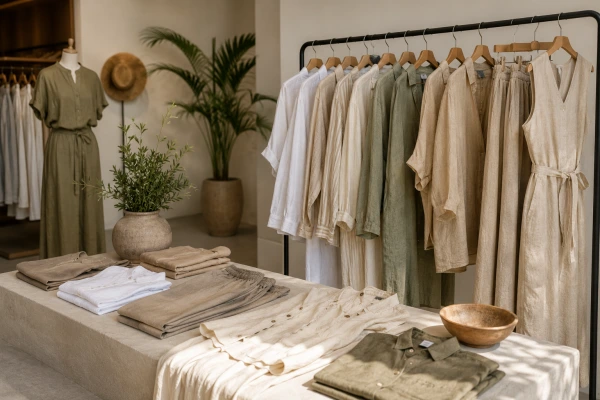
Linen Fabric Types and Product Development Options
Not all linen fabrics behave the same way. The final textile depends on fiber quality, yarn type, weave, weight, finishing, and blending. For fashion businesses, this is where material knowledge becomes commercial advantage. A vague fabric brief that simply says “linen” is not enough for reliable product development.
A sourcing or design team should specify what kind of linen expression the product needs. Should it feel crisp or soft? Structured or fluid? Rustic or refined? Opaque or lightweight? Washed or polished? The right answer depends on the customer, price point, climate, garment type, and brand identity.
Common linen fabric directions include:
- Lightweight woven linen for shirts, blouses, and summer tops.
- Medium-weight linen for dresses, trousers, skirts, and co-ord sets.
- Heavier linen canvas or twill for jackets, utility garments, bags, or home products.
- Washed linen for a softer, more relaxed hand feel.
- Linen blends for improved drape, reduced cost, easier care, or better wrinkle management.
- Fine linen for premium shirting, refined dresses, and elevated lifestyle products.
The most important point is that linen selection should happen early in the design process. If the design requires stretch, sharp pleats, strong color consistency, low wrinkling, or a very fluid drape, pure linen may need support from blending, finishing, or silhouette adjustment.
Linen Blends: Why Brands Use Them
Linen blends are common because they help balance linen’s strengths and limitations. Pure linen has a distinct character, but it is not always the easiest or most commercially scalable option. Blending can make the fabric softer, smoother, more affordable, more fluid, or more familiar to consumers.
A linen-cotton blend may feel more approachable and less crisp. A linen-viscose blend can create softer drape for dresses and blouses. A linen-wool blend may work in transitional tailoring. A linen-synthetic blend may improve certain performance or care characteristics, though it changes the natural fiber story and may complicate end-of-life claims.
Brands should be honest about blends. “Linen blend” can still be valuable, but the customer should understand what they are buying. If the linen percentage is low, marketing should not imply the product delivers the full feel and performance of linen. Transparency protects trust.
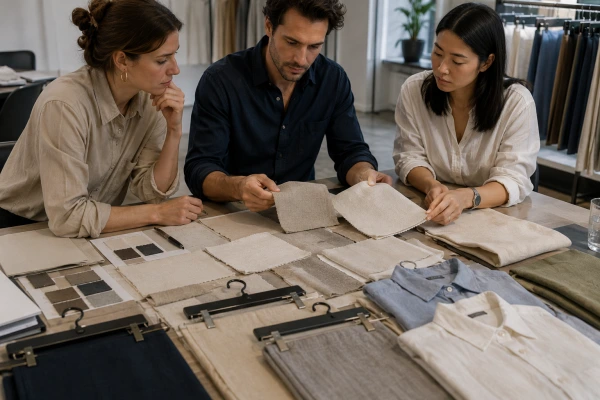
Sustainability Considerations: What Linen Can and Cannot Claim
Linen is often discussed as a more responsible natural fiber option, especially when compared with high-impact material systems. Flax can be grown in temperate climates, and linen is frequently associated with durability, biodegradability under suitable conditions, and lower input cultivation in some production systems. Textile Exchange includes flax and other fibers within broader materials reporting and emphasizes that material choices should be evaluated through evidence, impact data, and sourcing context rather than simple labels; brands can use Textile Exchange’s Materials Market Report as a reference point for broader fiber-market thinking.
Still, linen should not be marketed carelessly as automatically “eco-friendly.” Sustainability depends on farming practices, retting method, water and chemical use, energy sources, dyeing, finishing, transportation, labor conditions, durability, consumer care, and end-of-life pathway. A poorly made linen garment that is discarded quickly is not inherently responsible just because it comes from a natural fiber.
For responsible communication, brands should verify:
- Fiber origin and traceability.
- Whether the linen is certified or covered by recognized sourcing claims.
- Dyeing and finishing processes.
- Shrinkage and durability testing.
- Supplier documentation and chain-of-custody requirements.
- Whether biodegradability claims are realistic for the actual product, including trims, dyes, blends, and finishes.
- Care instructions that reduce unnecessary damage or returns.
The strongest sustainability positioning is specific, not vague. Instead of saying “linen is sustainable,” a brand can say, “This garment is made from European flax linen sourced through documented suppliers,” if that claim is true and verifiable. Specificity is more credible than broad green language.
Operational Implications for Fashion Businesses
Linen affects the entire product workflow: sourcing, design, sampling, production, quality control, merchandising, and after-sales communication. It is not a fabric to add casually at the final stage. When brands treat linen as a strategic material, they can reduce development problems and improve customer satisfaction.
At sourcing level, teams need to evaluate fiber origin, fabric weight, weave density, finishing, minimum order quantities, color availability, and price stability. Linen can be more expensive or less predictable than more standardized fabrics. Some suppliers specialize in refined linen; others offer lower-cost linen blends or linen-look materials. The difference matters.
In manufacturing, linen’s tendency to crease and its lower elasticity require careful handling. Cutting, sewing, pressing, and packing should be planned to avoid unnecessary distortion or permanent creasing. Seam construction, interlining, button placement, and shrinkage allowance all need attention. A linen blazer or trouser requires more technical care than a simple loose shirt.
At retail level, linen needs clear communication. Customers should know that natural creasing is part of the fabric’s character, not necessarily a flaw. Product pages should show close-up texture, styled movement, and post-wash realism where possible. For premium brands, this honesty can strengthen trust. For mass-market brands, it can reduce returns caused by mismatched expectations.
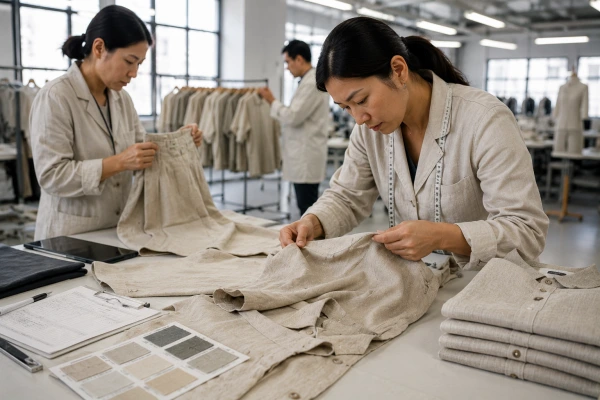
How to Use Linen Strategically in a Fashion Collection
Linen works best when the collection concept gives it a reason to exist. A brand should not add linen only because it is trending or because customers associate it with natural living. The fabric should support the silhouette, season, price point, and customer lifestyle.
For a warm-weather capsule, linen can anchor shirts, trousers, dresses, and lightweight outer layers. For a premium essentials line, linen can elevate simple shapes through texture and hand feel. For resortwear, linen can create an aspirational but wearable mood. For workwear-inspired collections, heavier linen can add structure while keeping the look relaxed.
A practical linen strategy may include:
- Pure linen for hero products where texture and authenticity matter most.
- Linen blends for categories that need softer drape or easier care.
- Washed linen for casual lifestyle products.
- Heavier linen for jackets, bags, or utility-inspired pieces.
- Close-up visual merchandising to show the fabric’s natural surface.
- Clear care guidance to reduce shrinkage, wrinkling complaints, and return risk.
The best collections do not hide linen’s imperfections. They design around them. A relaxed silhouette, earthy palette, soft tailoring, or garment-washed finish can make linen’s creasing and texture feel intentional. A very tight, hyper-polished, wrinkle-free concept may fight against the material.
Common Mistakes When Working With Linen
One common mistake is treating linen as a universal summer solution. Linen can be excellent for hot climates, but performance depends on fabric construction and garment design. A dense, heavy linen garment may feel less comfortable than a lighter cotton or technical fabric in certain conditions. Brands should test real samples instead of relying on fiber reputation alone.
Another mistake is overpromising sustainability. Linen has strong responsible-material potential, but claims must be documented. If a product is a linen-polyester blend with synthetic trims and conventional dyeing, it should not be marketed as purely natural or biodegradable. Green claims that are too broad can create reputational and regulatory risk.
A third mistake is ignoring shrinkage and post-wash behavior. Linen can change after washing, especially if the fabric is not pre-shrunk or if care instructions are unclear. This can affect fit, length, seam appearance, and customer satisfaction. Sampling should include wash testing, not just showroom evaluation.
Brands also sometimes underestimate customer education. A customer who expects perfect smoothness may view linen wrinkles negatively. A customer who understands linen may see them as part of the fabric’s relaxed beauty. Merchandising, photography, product copy, and sales training all influence how the customer interprets the material.
What Brands Should Verify Before Choosing Linen
Before committing to linen for a collection, fashion teams should verify both technical and commercial factors. The goal is not to make linen difficult. The goal is to prevent avoidable mistakes.
Key checks should include fabric weight, composition, shrinkage, colorfastness, seam performance, opacity, pilling tendency, hand feel after washing, and supplier documentation. For premium products, teams should also evaluate fiber origin, certification options, and consistency between bulk production and sample yardage.
A useful pre-production checklist includes:
- Is the fabric pure linen or a linen blend?
- What is the linen percentage?
- Has the fabric been pre-shrunk or garment-washed?
- How much shrinkage occurs after home laundering?
- Does the fabric become softer, rougher, or distorted after washing?
- Is the opacity suitable for the garment type?
- Does the fabric support the intended silhouette?
- Are sustainability or origin claims documented?
- Can the supplier maintain color and quality consistency at production scale?
These checks are especially important for emerging brands and fashion startups. Linen can elevate a collection, but it can also expose weak product development systems. The more premium the product promise, the more disciplined the technical validation must be.
FAQ
Is linen fabric good for clothing?
Yes, linen is good for many clothing categories, especially warm-weather garments such as shirts, dresses, trousers, resortwear, relaxed tailoring, and premium casual basics. It is breathable, moisture-absorbent, quick-drying, and visually distinctive. However, it is not ideal for every product. Linen wrinkles easily, can feel crisp, and may shrink if the fabric and garment are not properly prepared. Brands should use linen where its natural texture and relaxed character support the design concept.
Why does linen wrinkle so easily?
Linen wrinkles because flax fibers have low elasticity compared with many other fibers. When the fabric bends or compresses, it does not spring back as easily. This creates the creased appearance commonly associated with linen garments. In some products, wrinkling is part of the desired aesthetic. In more formal categories, brands may use linen blends, garment finishes, or looser silhouettes to make wrinkles less visually disruptive.
Is linen better than cotton?
Linen and cotton serve different needs. Linen often feels cooler, dries faster, and has a crisp natural texture, while cotton is usually softer, more familiar, and often easier to source at scale. The better choice depends on product purpose, climate, price point, care expectations, and brand positioning. A deeper comparison belongs in a dedicated linen vs cotton article because the answer changes by garment category and customer expectation.
Is linen sustainable?
Linen can be part of a more responsible material strategy, especially when the flax is responsibly grown, traceable, durable, and processed with lower-impact methods. But linen is not automatically sustainable in every form. Farming, retting, dyeing, finishing, transportation, garment durability, care, and end-of-life all matter. Brands should avoid vague eco-friendly claims and use documented, specific language instead.
What are the disadvantages of linen fabric?
The main disadvantages are wrinkling, possible shrinkage, higher cost, limited elasticity, and sometimes a crisp or rough hand feel before softening. Linen can also be harder to dye consistently than some other fibers. These are not necessarily deal-breakers, but they require thoughtful product development. Brands should test fabric behavior before production and communicate care expectations clearly to customers.
What products are best made from linen?
Linen works especially well for shirts, blouses, dresses, trousers, co-ord sets, resortwear, summer tailoring, relaxed jackets, bedding, table linen, and lifestyle textiles. It is strongest when breathability, texture, and relaxed elegance are part of the value proposition. For tight garments, high-stretch products, or wrinkle-free officewear, pure linen may need blending or alternative fabric engineering.
Does linen get softer over time?
Many linen fabrics become softer with washing and wear, especially washed linen or good-quality apparel linen. However, softness depends on fiber quality, yarn, weave, finishing, laundering, and garment construction. Brands should not rely on this claim without testing their specific fabric. Product pages can mention softening over time only when it is accurate for the selected material.
How should fashion brands communicate linen care?
Brands should explain linen care in practical terms: wash according to the garment label, avoid harsh treatment, expect natural creasing, reshape when damp if appropriate, and consider gentle steaming or ironing depending on the desired look. Care instructions should be specific to the garment, not generic. Clear care communication helps reduce returns, complaints, and customer disappointment.
Conclusion
Linen remains one of fashion’s most commercially meaningful natural fabrics because it offers more than a fiber story. It gives products texture, breathability, seasonal relevance, and a relaxed premium character that many consumers recognize instantly. For brands, that combination can be powerful.
But linen works best when it is treated with technical respect. Its wrinkles, crispness, shrinkage risk, and cost are not small details. They shape product development, customer perception, quality control, and merchandising. The strongest linen collections are not built by simply adding the word “linen” to a product description. They are built through fabric testing, clear sourcing, suitable silhouettes, honest claims, and thoughtful communication.
For fashion businesses, linen is not just a summer fabric. It is a material strategy. Used well, it can support comfort, craft, natural texture, and elevated everyday dressing. Used carelessly, it can create fit problems, care complaints, and overstated sustainability messaging. The difference lies in how seriously the brand understands the fabric before bringing it to market.




Comments 0
Leave a CommentSend Comment
Anda harus Login terlebih dahulu untuk dapat memberikan komentar.