
Silk Fabric Explained: Production, Properties, and Applications
What Is Silk Fabric?
Silk fabric is a textile made from silk fiber, a natural protein fiber most commonly obtained from the cocoons of the mulberry silkworm, Bombyx mori. It is valued in fashion because it combines a smooth hand feel, natural luster, elegant drape, relatively strong filament structure, and strong association with premium apparel. The most common commercial silk is mulberry silk, although other types such as tasar, eri, and muga also exist, each with different texture, color, supply base, and end-use potential.
Silk production begins with sericulture, the cultivation of silkworms and their host plants, followed by cocoon harvesting, stifling, cooking, reeling, twisting, weaving or knitting, dyeing, finishing, and garment manufacturing. This process is technically demanding, labor-intensive, and sensitive to fiber quality, yarn preparation, fabric construction, finishing chemistry, and care requirements.
For fashion businesses, silk is not simply a luxury material. It is a sourcing decision with implications for cost, durability, transparency, care labeling, sustainability claims, and customer expectations. Used well, silk can elevate dresses, blouses, scarves, eveningwear, bridalwear, lingerie, tailoring accents, and premium accessories. Used without proper testing and communication, it can create issues around shrinkage, colorfastness, abrasion, perspiration sensitivity, light exposure, and aftercare.
Understanding Silk as a Natural Protein Fiber
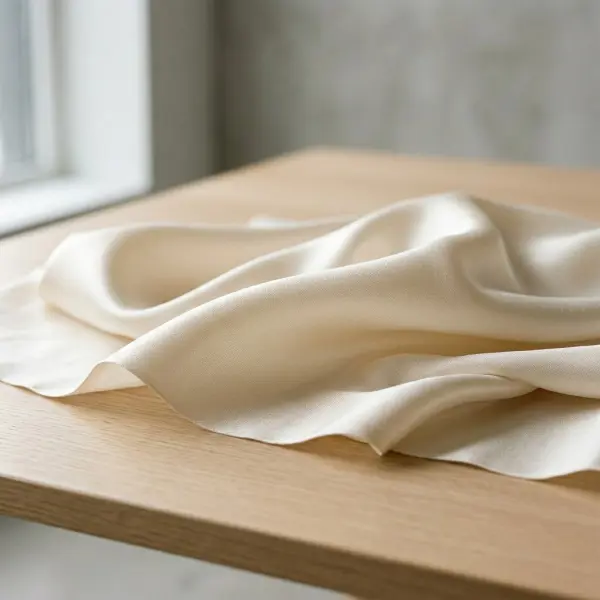
Silk belongs to a different material family from cotton, linen, viscose, polyester, or nylon. Cotton and linen are cellulose-based plant fibers. Polyester and nylon are synthetic polymers. Silk, like wool, is a protein fiber. This matters because protein fibers respond differently to heat, moisture, alkalinity, sunlight, abrasion, and finishing chemistry.
The structure of silk explains much of its appeal. The silk filament contains fibroin, the structural protein that gives the fiber strength and continuity, and sericin, a gummy protein that binds the filament in the cocoon. In conventional silk processing, much of the sericin is removed during degumming to reveal the softer, smoother, more lustrous fibroin fiber. The result is a textile that can look fluid and delicate while still offering meaningful tensile strength when properly processed and constructed.
This is one reason silk can feel contradictory to new designers. It can look refined and fragile, yet a high-quality silk yarn can be technically strong. It can feel cool against the skin, yet it may also provide comfort in cooler conditions depending on fabric weight and construction. It can appear minimal, yet it carries strong cultural, ceremonial, and luxury associations in many markets.
For fashion brands, the practical lesson is simple: do not evaluate silk by fiber name alone. A silk organza, silk satin, silk crepe, silk chiffon, silk twill, and silk noil are all “silk,” but they behave very differently in design, cutting, sewing, wear, and care. Fabric construction often determines whether silk feels sharp and structured, soft and fluid, sheer and delicate, or textured and casual.
How Silk Fabric Is Produced
Silk production is best understood as a connected value chain rather than a single textile process. The quality of the final fabric depends on biological cultivation, cocoon handling, yarn preparation, textile construction, dyeing, finishing, and garment engineering. A beautiful silk garment begins long before the fabric reaches the cutting table.
Most commercial silk begins with sericulture. In mulberry silk production, silkworms feed on mulberry leaves and spin cocoons made from continuous filament. Under conventional production, cocoons are processed before the moth breaks through because a broken cocoon interrupts the continuous filament and affects reeling quality. The Food and Agriculture Organization describes the filament as bonded with sericin, which forms the cocoon sheath, and explains that heat processing softens sericin so the filament can be unwound. FAO silk reeling and testing manual
After cocoon selection, the production chain typically moves through several stages:
- Cocoon sorting, where cocoons are graded for size, shape, shell quality, defects, and reelability.
- Stifling or drying, used in conventional silk to stop pupal development and preserve the cocoon for reeling.
- Cooking, where cocoons are softened in hot water so the filament can be unwound.
- Reeling, where filaments from multiple cocoons are combined into raw silk thread.
- Throwing or twisting, where silk yarn is twisted to achieve the desired strength, handle, and fabric behavior.
- Degumming, where sericin is partly or substantially removed depending on the desired hand feel.
- Weaving, knitting, dyeing, printing, and finishing, where silk becomes a market-ready textile.
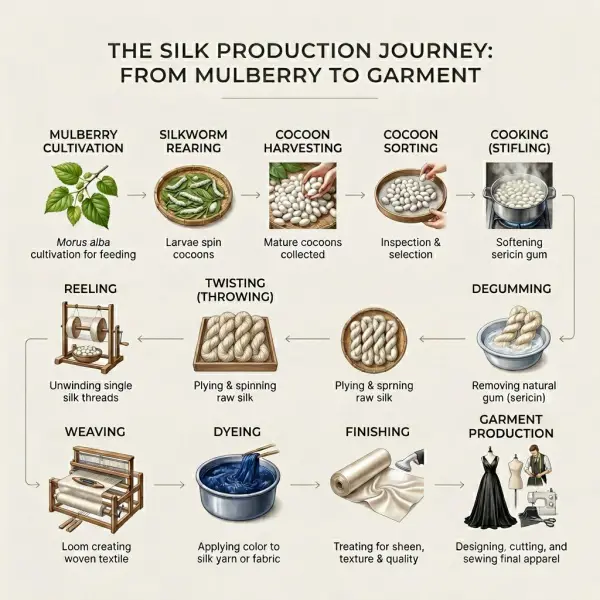
The process sounds straightforward on paper, but it is highly sensitive in practice. Reeling quality affects yarn evenness. Degumming affects softness, weight loss, luster, and dye response. Twist level affects drape and strength. Fabric construction affects transparency, seam slippage, snagging, and end-use suitability. Finishing can enhance hand feel, color, stability, or surface character, but it can also create performance risks if not tested properly.
For brands, this means silk sourcing should not stop at asking, “Is it real silk?” The better question is: what silk type, what yarn quality, what fabric construction, what finishing route, what test results, and what care performance?
Main Types of Silk Used in Fashion and Textiles
The word “silk” often refers to mulberry silk in mainstream apparel, but the silk ecosystem is broader. Different silk types come from different silkworm species, feeding systems, geographies, and processing traditions. These differences affect price, texture, color, consistency, and product positioning.
Mulberry silk is the most widely recognized commercial silk and is generally associated with fine filament, smooth surface, high luster, and luxury apparel. The Central Silk Board describes mulberry silk as the bulk of commercial silk produced globally and notes that it comes from Bombyx mori silkworms feeding on mulberry leaves. Central Silk Board on mulberry silk
Non-mulberry silks, sometimes grouped as wild or vanya silks in South Asian contexts, include tasar, eri, and muga. Tasar silk often has a more textured, less lustrous character and is used in apparel, interiors, and craft-driven products. Eri silk is typically spun rather than reeled in the same way as continuous filament silk, giving it a warmer, more cottony or woolly feel. Muga silk, associated especially with Assam, is known for its natural golden tone and cultural significance, although availability and price can be highly specialized.
For fashion businesses, these distinctions open different product strategies:
- Mulberry silk works well for refined premium apparel, scarves, bridal pieces, eveningwear, lingerie, and fluid tailoring.
- Tasar silk can support artisanal, textured, earthy, or heritage-driven collections.
- Eri silk may suit softer, more matte, craft-oriented, or comfort-led products.
- Muga silk is more niche and often requires careful cultural, sourcing, and authenticity communication.
The deeper comparison between natural silk and man-made alternatives deserves its own discussion. Brands evaluating satin polyester, viscose satin, acetate, cupro, nylon, or other “silky” fabrics should compare not only price and look, but also fiber origin, performance, care, durability, customer expectation, and brand positioning. For that broader comparison, see natural silk vs synthetic silk alternatives.
Key Properties of Silk Fabric
Silk’s reputation comes from a combination of sensory, mechanical, thermal, and aesthetic qualities. Yet these properties are not identical across every silk fabric. A tightly woven silk twill does not behave like a sheer chiffon. A sandwashed silk crepe does not behave like a crisp organza. Fiber gives the foundation; yarn and construction shape the final experience.
Natural Luster and Visual Depth
Silk is known for its soft, elegant luster. Unlike a flat synthetic shine, good silk often reflects light with depth and subtle variation, especially in satin, charmeuse, taffeta, and twill constructions. This is one reason silk photographs beautifully in editorial fashion, bridalwear, luxury scarves, and occasionwear.
The commercial value of this luster is significant. In premium apparel, the customer is not only buying fiber content; they are buying visual emotion. Silk catches light in movement, enhances color richness, and creates a perception of refinement. For brands, this makes silk powerful in categories where product imagery, styling, and tactile expectation influence purchase decisions.
Soft Hand Feel and Skin Comfort
Silk can feel smooth, light, and pleasant against the skin, which makes it popular for blouses, dresses, scarves, sleepwear, lingerie, and linings. The smooth surface can reduce friction compared with rougher fabrics, although the actual comfort depends on weave, finish, garment fit, climate, and wearer sensitivity.
The mistake is assuming every silk fabric feels soft. Silk organza can be crisp. Silk dupioni can be slubby. Silk noil can feel textured and casual. Silk georgette can feel dry and grainy. These differences are not defects; they are design characteristics. A good product developer chooses the silk construction that supports the garment’s intended silhouette and customer promise.
Drape, Fluidity, and Structure
Silk is one of the most expressive fibers for drape. Lightweight silk satin, crepe de chine, georgette, and chiffon can move fluidly around the body. Taffeta, organza, faille, and dupioni can create shape, volume, and architectural detail. This range makes silk unusually versatile for both soft and structured fashion.
For designers, drape is not just aesthetic. It affects pattern cutting, seam placement, lining decisions, fit tolerance, and return risk. A bias-cut silk dress, for example, may look beautiful but requires careful grading, hanging, stabilization, and production control. A silk organza overlay may support volume, but it can also snag or crush if handled poorly.
Strength, Delicacy, and Wear Reality
Silk filament can be strong, but silk fabrics can still be vulnerable in daily use. Lightweight silk may abrade, snag, stain, crease, or show water marks. Some silk garments are sensitive to perspiration, deodorant, alkaline detergents, sunlight, and aggressive dry-cleaning conditions. Textile conservation guidance notes that light damage to textiles can be cumulative and irreversible, and protein fibers such as silk are vulnerable to alkalis and strong acids. National Park Service textile care guidance Museum WA textile deterioration guidance
This is why silk should be designed with use case in mind. A silk blouse for office wear needs different durability assumptions than a silk evening gown worn occasionally. A silk scarf may require strong colorfastness and edge finishing. A silk lining must withstand friction. Luxury does not remove the need for performance testing.
Common Silk Fabric Constructions and Their Applications
For fashion businesses, the most useful way to understand silk is not only by fiber type, but by fabric construction. Construction determines how silk performs in real garments.
|
Silk Fabric Type |
Typical Character |
Common Applications |
Practical Consideration |
|
Silk charmeuse / satin |
Smooth, glossy face, fluid drape |
Dresses, blouses, lingerie, eveningwear |
Can show seam tension, water marks, and handling defects |
|
Crepe de chine |
Soft, slightly pebbled, moderate drape |
Blouses, dresses, scarves |
More forgiving than very shiny satin but still delicate |
|
Silk chiffon |
Sheer, light, floating |
Overlays, scarves, occasionwear |
Needs careful seam finishing and handling |
|
Silk georgette |
Sheer to semi-sheer, dry texture |
Dresses, blouses, layered garments |
Can snag and require lining or layering |
|
Silk organza |
Crisp, transparent, structured |
Bridalwear, volume, couture details |
Can crease and fray; requires precise construction |
|
Silk twill |
Diagonal weave, supple, stable |
Scarves, shirts, dresses |
Good for prints and accessories |
|
Silk taffeta |
Crisp, structured, rustling hand |
Eveningwear, bridalwear, occasion skirts |
Can crease and may be less comfortable for casual wear |
|
Silk noil |
Matte, textured, spun silk character |
Casual tops, craft-led apparel |
Less lustrous; positioning must be clear |
|
Silk dupioni / shantung |
Slub texture, crisp hand |
Occasionwear, jackets, dresses |
Slubs are part of the aesthetic, not necessarily defects |
This table should not be used as a substitute for sampling. It is a starting point for product decisions. Two suppliers may describe a fabric as “silk satin,” yet differences in momme weight, weave density, yarn quality, finishing, and dyeing can create very different outcomes.

Why Silk Matters for Fashion Businesses
Silk matters because it sits at the intersection of material performance, cultural value, customer perception, and product margin. Few fabrics can communicate softness, elegance, sensuality, heritage, and premium positioning with such immediacy. But that same power raises expectations.
When a customer buys silk, they usually expect more than fabric content. They expect beautiful color, refined finishing, careful construction, and a sense of occasion. Poor stitching, puckered seams, cheap lining, weak buttons, unclear care labels, or transparent cost-cutting can damage trust quickly because silk amplifies both good and bad decisions.
From a business perspective, silk can support several strategies. It can anchor a premium capsule collection. It can upgrade a small accessory line through scarves or pocket squares. It can elevate bridal and occasionwear. It can create tactile differentiation in a market crowded with polyester satin and viscose blends. It can also introduce risk if the brand does not have the right supplier, testing process, production skill, and customer education.
This is why silk works best when it is integrated into product strategy, not added as a decorative luxury label. The material should support the customer’s lifestyle, price expectation, care tolerance, and reason for purchase. A silk travel blouse, for example, may sound attractive, but if it wrinkles easily, stains visibly, and requires delicate care, the product promise may fail. A silk occasion scarf, on the other hand, may deliver high perceived value with lower fit complexity.
Production and Quality Factors Brands Should Check
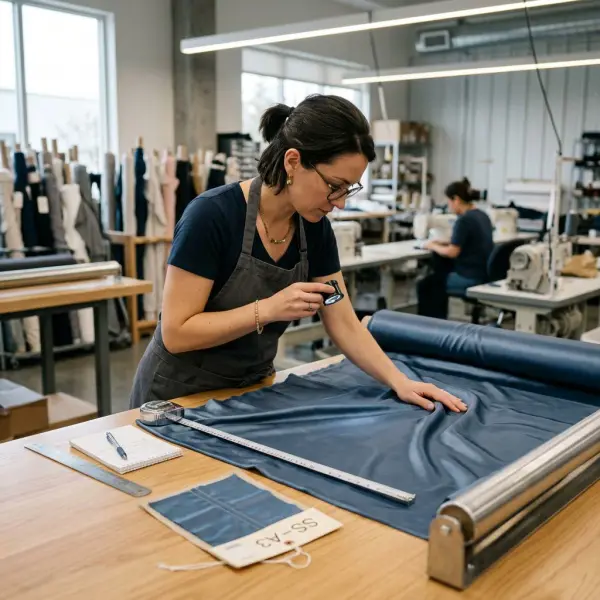
Silk quality control should begin before bulk order placement. The key is to evaluate both material quality and product suitability. A beautiful fabric roll can still be wrong for a specific garment.
Brands should review several factors before committing to production:
- Silk type and origin: Confirm whether the fabric is mulberry silk, eri, tasar, muga, blended silk, or another silk category.
- Fabric weight: Silk is often measured in momme for certain fabric types; the suitable weight depends on end use.
- Yarn and weave quality: Check evenness, slubs, neps, barré, streaks, and consistency across the roll.
- Colorfastness: Test resistance to washing, dry cleaning, rubbing, perspiration, and light exposure where relevant.
- Shrinkage and dimensional stability: Test before approving patterns and care labels.
- Seam performance: Evaluate seam slippage, puckering, fraying, and needle damage.
- Finishing compatibility: Check whether softening, sandwashing, printing, dyeing, or coating changes performance.
- Care requirements: Confirm whether the final garment can be washed, dry cleaned, steamed, or ironed safely.
- Chemical safety: For skin-contact products, consider testing or certification aligned with target market expectations.
Chemical safety is especially important for premium products worn close to the skin. OEKO-TEX STANDARD 100, for example, is a widely recognized textile label for products tested for harmful substances from yarn to finished product. OEKO-TEX STANDARD 100 Certification is not the only route to responsible sourcing, but third-party testing can help brands reduce risk and communicate more clearly.
Sustainability and Traceability: What Brands Should Say Carefully
Silk is natural, renewable in biological origin, and biodegradable under certain conditions, but those qualities do not automatically make every silk product sustainable. Sustainability depends on the full system: mulberry cultivation, land use, farming inputs, cocoon processing, energy use, water use, dyeing, finishing, labor conditions, animal welfare considerations, transport, garment durability, care, and end-of-life context.
This is where brands need discipline. Saying “100% natural silk” is a fiber-content statement. Saying “eco-friendly silk” is a broader sustainability claim that requires evidence. Textile Exchange’s Fiber and Materials Matrix is designed to help brands evaluate material programs across broader pillars such as climate, nature, people, animals, and governance, which reflects the kind of multidimensional thinking needed for material decisions. Textile Exchange Fiber and Materials Matrix
In commercial communication, silk sustainability claims should be specific and verifiable. Better claims usually explain what is being measured or controlled.
For example:
- Instead of “sustainable silk,” say “silk sourced from a supplier with documented traceability to reeling and weaving facilities,” if that is true.
- Instead of “chemical-free silk,” say “tested for selected harmful substances under [specific standard],” if supported by documentation.
- Instead of “biodegradable garment,” clarify whether the claim refers to fiber level, fabric level, or full product level including sewing thread, trims, dyes, prints, interlinings, and labels.
- Instead of “peace silk” as a vague moral claim, explain the specific production method and verification basis.
This precision protects both the customer and the brand. It also supports stronger AI search visibility because specific, entity-rich claims are easier to retrieve and summarize than generic green language.
Practical Applications of Silk in Fashion Categories
Silk works best when its properties align with the product’s function. It is not the right fabric for every premium garment, and forcing it into the wrong product can create unnecessary cost and after-sales issues.
In womenswear, silk is especially strong in blouses, dresses, scarves, soft tailoring, occasionwear, and elevated wardrobe staples. A silk crepe blouse can offer softness without excessive shine. A silk twill scarf can deliver print clarity, drape, and giftable value. A silk satin dress can create visual drama, but it requires careful fit and finishing because shine reveals tension and surface irregularities.
In menswear, silk is often used for ties, pocket squares, scarves, eveningwear details, linings, and premium shirting accents. In accessories, silk can carry strong margin potential because smaller items require less fabric but can still deliver high perceived value. In bridalwear and eveningwear, silk remains highly relevant because its movement, light response, and tactile quality support emotional purchase decisions.
For product teams, the key is to match silk construction to customer use:
- For daily premium tops, consider crepe de chine, sandwashed silk, silk twill, or silk blends with tested stability.
- For scarves and printed accessories, consider silk twill or satin with strong color and edge-finishing control.
- For bridal volume, consider silk organza, taffeta, gazar-like structures, or layered constructions.
- For fluid occasionwear, consider silk charmeuse, satin, chiffon, or georgette with appropriate lining.
- For craft or heritage collections, consider tasar, eri, noil, dupioni, or shantung where texture is part of the design story.
A brand does not need to use silk everywhere to benefit from it. Often, the strongest strategy is selective use: one hero blouse, one scarf capsule, one bridal layer, one premium lining, or one limited-edition drop.

Manufacturing Considerations for Silk Garments
Silk production at garment level demands more care than many standard apparel fabrics. Cutting, sewing, pressing, and packing can all affect the final look. Lightweight silk may shift during cutting. Satin surfaces can mark. Chiffon and georgette can stretch or distort. Organza can fray. Dupioni and shantung require decisions about slub placement and visual consistency.
Manufacturers working with silk need suitable handling protocols. Cutting tables should be clean. Marker planning should account for nap, shine direction, print placement, and fabric instability. Needles must be appropriate to the fabric weight to reduce damage. Seam type, stitch density, thread choice, and pressing temperature should be tested before bulk production.
Pressing is particularly important. Silk can respond poorly to excessive heat, water spotting, or pressure marks. Steam may help shape some garments, but it can also create marks on certain finishes. Finished garments should be packed to reduce crushing, abrasion, and transfer staining. For pale silk, storage and transport conditions matter because dirt, moisture, and color transfer can be costly.
A commercially realistic silk production checklist should include:
- Pre-production fabric testing and approved shade bands.
- Cutting trial for shifting, fraying, and pattern accuracy.
- Sewing trial for seam puckering, needle marks, seam slippage, and pressing response.
- Fit review after hanging, especially for bias-cut or fluid garments.
- Care label validation based on actual garment testing, not assumptions.
- Final inspection under appropriate lighting to detect shade variation, snags, stains, and surface marks.
The goal is not to make silk production slow for the sake of caution. The goal is to prevent expensive mistakes that appear only after bulk production, customer wear, or cleaning.
Care Labeling and Customer Communication
Silk care is a business issue, not just a consumer instruction. If care guidance is vague, unrealistic, or untested, brands increase the risk of returns, complaints, damaged products, and reputational loss.
Care requirements depend on the specific silk fabric, dye, print, finish, construction, lining, trims, and garment structure. Some silk items may be washable under controlled conditions, while others should be dry cleaned. A lined silk dress, printed silk scarf, beaded silk gown, or structured silk jacket may need very different care instructions. In the United States, the FTC Care Labeling Rule requires care instructions for covered textile wearing apparel and certain piece goods, including washing or dry-cleaning instructions and relevant warnings where needed. FTC Care Labeling Rule
Customer-facing communication should be practical and specific. Instead of romanticizing silk as effortless luxury, brands should tell buyers how to preserve it. This can include guidance on avoiding harsh detergents, protecting garments from prolonged direct sunlight, managing perspiration exposure, storing pieces properly, and following the care label.
For premium silk products, aftercare content can become part of the brand experience. A short care card, product page care section, or post-purchase email can reduce confusion and reinforce perceived value. Customers are more likely to accept delicate care when the brand explains why the material deserves it.
Common Mistakes Brands Make With Silk
Silk can elevate a collection quickly, but it also exposes weak product development. Many problems come not from silk itself, but from treating silk like any other fabric.
Mistake 1: Choosing Silk for Prestige Without Matching the Use Case
Some brands choose silk because it sounds premium, then apply it to a product that needs easy washing, high abrasion resistance, or low-maintenance travel performance. The result can be a beautiful product that disappoints in daily use.
A better approach is to define the customer situation first. Is the garment for occasional wear, workwear, travel, gifting, bridal, sleepwear, or styling? Once the use case is clear, the team can choose the right silk construction or decide that a silk blend or alternative fabric is more realistic.
Mistake 2: Assuming All Silk Has the Same Quality
“100% silk” does not guarantee premium performance. Fiber content tells only part of the story. A poorly woven, unstable, badly dyed, or aggressively finished silk fabric can perform worse than a well-developed blend.
Brands should request fabric specifications, supplier history, test reports where relevant, and physical swatches. For high-value products, lab testing and wear trials are worth the cost.
Mistake 3: Ignoring Seam and Fit Behavior
Silk often reveals construction problems. Puckered seams, pulling at stress points, visible needle damage, and uneven hems can make a garment look cheap even when the fabric is expensive. This is especially true for glossy satin and lightweight fluid fabrics.
The better approach is to sample with the actual bulk fabric or a very close substitute, then review seam performance, lining, fusing, stitch type, and pattern balance before production approval.
Mistake 4: Making Sustainability Claims Too Broad
Natural fiber language can tempt brands into broad environmental claims. But silk’s impact depends on production context, and finished silk products may include dyes, finishes, trims, synthetic threads, interlinings, and packaging.
A stronger strategy is to communicate verified facts: supplier traceability, testing standards, responsible chemical management, artisan production context, repairability, durability, or limited-batch sourcing. Specific beats vague.
Mistake 5: Underestimating Customer Education
A customer may love silk but not understand how to care for it. If the product page says only “luxurious silk fabric,” the brand misses an opportunity to manage expectations. Good education can reduce product misuse and improve satisfaction.
This does not mean overwhelming the customer. It means making the material promise honest: beautiful, premium, tactile, and refined, but deserving of appropriate care.
Important Technical Caveats Before Sourcing Silk
Silk is a high-value material, but it is not magic. A few caveats should guide responsible decision-making.
First, silk is not automatically durable in every application. Fiber strength does not eliminate risks from abrasion, sunlight, perspiration, seam stress, water spotting, or cleaning. The garment’s construction and end use matter.
Second, “natural” does not automatically mean low impact. Brands should evaluate farming, processing, energy, chemical management, labor, animal welfare, and product longevity before making sustainability claims.
Third, silk alternatives are not automatically inferior. Polyester satin, acetate, viscose, cupro, lyocell blends, and other materials may be more suitable for certain price points, performance needs, or care expectations. The right material depends on the product promise. This comparison is explored further in Natural Silk vs Synthetic Silk Alternatives.
Fourth, silk’s premium symbolism is real, but it must be earned through design and execution. A poorly made silk garment can damage brand trust faster than a well-made non-silk garment. The cultural and branding side of this material is discussed more deeply in why silk continues to symbolize premium fashion.
How Fashion Businesses Can Apply Silk Strategically
Silk should be treated as a strategic material choice. The best use is not necessarily the most obvious or the most expensive. For many brands, silk works best when applied selectively, supported by strong product storytelling and careful quality control.
A startup may begin with silk scarves because they reduce fit complexity and allow strong print storytelling. A premium womenswear brand may use silk crepe for a signature blouse that becomes a repeatable core product. A bridal label may use silk organza or taffeta to build shape and emotional value. A tailoring brand may use silk as a lining or trim to elevate interior finishing.
Operationally, brands should build silk into their product development calendar. Silk sampling, testing, cutting trials, supplier communication, and care label validation all require time. Rushing silk into production often creates preventable problems.
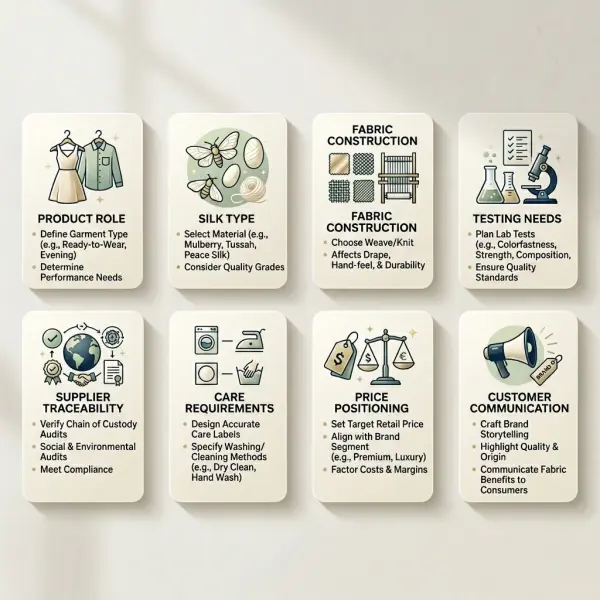
A practical silk strategy should include:
- Clear product role: hero item, capsule, accessory, lining, occasionwear, or brand-signature material.
- Defined customer expectation: delicate luxury, everyday premium, craft texture, formalwear, or giftable accessory.
- Supplier qualification: fabric consistency, traceability, dyeing capability, testing support, and communication reliability.
- Technical testing: shrinkage, colorfastness, seam slippage, abrasion, perspiration, and care performance where relevant.
- Brand communication: honest material story, care education, and specific claims.
- Margin planning: allowance for fabric cost, wastage, testing, skilled production, and higher inspection standards.
Silk rewards brands that think carefully. It is less forgiving when used as a shortcut to luxury. The more precise the sourcing and product strategy, the stronger the commercial result.
FAQ: Silk Fabric in Fashion Business
Is silk fabric always expensive?
Silk is generally positioned as a premium material because sericulture and silk processing are labor-intensive, technically sensitive, and less scalable than many mass-market synthetic fibers. However, prices vary widely depending on silk type, grade, fabric construction, weight, finishing, origin, supplier, and order volume. A lightweight silk noil or blended silk fabric may sit at a different price point from high-quality silk charmeuse, silk organza, or printed silk twill. Brands should compare total product cost, not fabric price alone. Waste, cutting complexity, sewing skill, testing, care requirements, and return risk all affect commercial viability.
What is the difference between silk fiber and silk fabric?
Silk fiber is the raw or processed protein filament or staple fiber obtained from silkworm cocoons. Silk fabric is the textile made after that fiber is reeled or spun into yarn and then woven, knitted, dyed, printed, or finished. This distinction matters because fiber content does not determine everything. A fabric’s performance depends on yarn quality, weave or knit structure, weight, finishing, and garment construction. Two fabrics can both be 100% silk but feel and perform very differently. Product teams should evaluate the actual fabric, not just the fiber label.
Is mulberry silk better than other types of silk?
Mulberry silk is often associated with fine filament, smooth texture, and high luster, which makes it highly valued for many premium fashion applications. But “better” depends on the intended product. Tasar, eri, muga, dupioni, shantung, and silk noil may be more suitable when a brand wants texture, craft character, matte appearance, cultural story, or a less polished look. For a luxury scarf, mulberry silk twill may be ideal. For an earthy artisanal jacket, tasar or noil may communicate the concept more effectively. The best silk is the one that fits the product purpose.
Can silk garments be washed?
Some silk garments may be washable, but this should never be assumed. Washability depends on the specific fabric, dye, print, finish, garment construction, lining, trims, and testing results. Lightweight silk, bright dyes, delicate prints, structured garments, and embellished pieces may require dry cleaning or very controlled care. Brands should validate care labels through testing, not guesswork. Customer instructions should be clear because improper washing can cause shrinkage, color bleeding, texture change, water marks, or loss of finish.
Is silk sustainable?
Silk can have positive attributes: it is natural in origin, renewable as a biological fiber, and biodegradable under suitable conditions. But sustainability cannot be judged by fiber origin alone. The actual impact depends on farming practices, land use, energy, water, processing methods, dyeing, finishing, labor conditions, animal welfare issues, durability, care, and end-of-life conditions. Brands should avoid broad claims such as “eco-friendly silk” unless they have evidence. More credible communication focuses on specific verified practices, testing, traceability, or responsible sourcing programs.
What products are best suited for silk?
Silk is especially suited to products where drape, luster, softness, print quality, or emotional value matter. Common applications include blouses, dresses, scarves, ties, pocket squares, bridalwear, eveningwear, lingerie, sleepwear, linings, and premium accessories. It may be less suitable for products requiring heavy abrasion resistance, frequent machine washing, rugged outdoor use, or low-maintenance everyday care unless the specific fabric and construction have been carefully tested. The product’s lifestyle context should guide the decision.
How should brands communicate silk to customers?
Brands should communicate silk with both romance and clarity. The product story can highlight softness, luster, drape, craft, or premium feel, but it should also explain care requirements and realistic use. Strong communication includes fabric type, key benefits, care guidance, and any verified sourcing or testing claims. Avoid vague claims like “pure luxury” without product substance, or “sustainable silk” without evidence. Customers trust silk more when the brand explains what makes the material special and how to preserve it.
Conclusion: Silk Is Valuable When Strategy Matches Material Reality
Silk remains one of fashion’s most expressive materials because it brings together touch, light, movement, heritage, and premium perception. Its value is not only technical and not only symbolic. It lives in the relationship between fiber, fabric, garment, customer expectation, and brand execution.
For fashion businesses, the opportunity is significant. Silk can elevate product lines, strengthen premium positioning, and create memorable customer experiences. But it also requires discipline. Brands need the right fabric construction, supplier control, testing, production skill, care labeling, and communication. Without those foundations, silk can become costly, fragile, and commercially risky.
The smartest approach is not to use silk everywhere. It is to use silk where its qualities genuinely improve the product. When silk is chosen with intention, tested properly, and explained honestly, it can do what few materials can: make a garment feel both technically refined and emotionally desirable.




Comments 0
Leave a CommentSend Comment
Anda harus Login terlebih dahulu untuk dapat memberikan komentar.