
How Consumer Preferences Are Redefining Fashion Categories
Quick Answer
Consumer preferences are redefining fashion categories because shoppers increasingly choose clothing based on fit, comfort, versatility, lifestyle, value, and styling flexibility rather than only by traditional menswear, womenswear, formalwear, casualwear, or seasonal departments. This shift is especially visible in products such as oversized shirts, relaxed trousers, outerwear, sneakers, knitwear, bags, and accessories that can move across different wardrobes and occasions.
Fashion categories are the product groupings brands and retailers use to organize apparel for design, merchandising, inventory, marketing, and shopping navigation. Traditionally, these categories were built around gender, season, occasion, and product type. Today, consumers often shop through a more fluid logic: what fits my body, what matches my lifestyle, what can I wear repeatedly, what feels comfortable, and what gives good value?
For fashion businesses, this does not mean all old categories should disappear. Menswear, womenswear, workwear, sportswear, modestwear, occasionwear, and children’s wear still matter. The bigger change is that brands need more flexible category systems. Retailers that can combine product type, fit, function, styling, price, and lifestyle context will be better positioned than brands that rely only on rigid category labels.

What Does It Mean When Consumers Redefine Fashion Categories?
Consumers redefine fashion categories when their shopping behavior no longer follows the structure that brands and retailers use to organize products. A retailer may divide its store into menswear, womenswear, formalwear, casualwear, and seasonal collections. But a customer may search for “comfortable trousers for travel,” “oversized shirt for layering,” “minimal sneakers for work,” or “lightweight jacket for unpredictable weather.” The customer’s logic is practical, not departmental.
This is not a small change. Category structure affects everything from product development and buying to website navigation, store layout, inventory planning, SEO, photography, and customer service. When consumer behavior shifts, category systems must eventually adjust.
In the past, fashion categories helped simplify complexity. A customer entered a department, selected a size, chose a color, and compared similar products. That system still works in many cases. But it becomes less effective when customers want more flexible products, compare across categories, discover outfits through social media, and expect online stores to show them relevant options quickly.
A modern category strategy should not only ask, “Where does this product belong?” It should also ask, “How does the customer actually search for it, style it, and use it?”
Why Consumer Preferences Are Changing
Consumer preferences are changing because fashion is now shaped by comfort-driven lifestyles, digital discovery, value-conscious shopping, flexible work routines, travel needs, social media styling, and the desire for products that can be worn more often. Many shoppers are not abandoning fashion. They are becoming more selective about what deserves space in their wardrobe.
This selectiveness matters in a slower and more pressured fashion market. McKinsey’s State of Fashion 2026 notes that the global fashion industry is expected to face low single-digit growth, with macroeconomic volatility and value-conscious consumer behavior influencing demand. McKinsey State of Fashion 2026 When consumers feel more careful about spending, they often look for garments that offer more than one use case.
This is where category boundaries start to loosen. A jacket is no longer only “outerwear.” It may also be a travel piece, office layer, weekend staple, modest layering item, streetwear statement, or capsule wardrobe essential. A pair of trousers may be judged by comfort, drape, waist adjustability, wrinkle resistance, and styling flexibility before the customer cares whether it sits under formalwear or casualwear.
The old category system is still useful for internal planning. But the customer-facing experience needs to reflect how people actually think.
From Department-Based Shopping to Need-Based Shopping
Need-based shopping is becoming more important because customers often start with a problem, occasion, or lifestyle situation rather than a fixed department. They may need clothes for commuting, travel, hybrid work, hot weather, layering, daily errands, content creation, or simple mix-and-match dressing.
A customer looking for “easy trousers for work and weekend” does not want to browse ten unrelated categories. They want options that solve the need: comfortable waist, clean silhouette, easy fabric, neutral styling, and reliable fit. A customer searching for a “shirt for layering” may compare overshirts, poplin shirts, linen shirts, denim shirts, and lightweight jackets. These products may sit in different categories internally, but the customer sees them as possible solutions to the same styling problem.
This shift is practical for fashion businesses because it creates stronger merchandising stories. Instead of presenting products only by department, brands can create category edits around real use cases:
- work-to-weekend pieces;
- travel-friendly layers;
- relaxed tailoring;
- everyday modest layering;
- shared wardrobe staples;
- warm-weather essentials;
- oversized shirts and easy outerwear;
- capsule wardrobe foundations.
These edits do not replace core product categories. They add another layer of customer logic.

The Rise of Fit-Based Shopping
Fit-based shopping is one of the clearest signs that consumer preferences are reshaping fashion categories. Shoppers increasingly care about whether a product is relaxed, boxy, straight, oversized, cropped, adjustable, slim, wide-leg, high-rise, low-rise, structured, draped, or easy to layer.
This is especially important for unisex and gender-neutral fashion. A product can be categorized as flexible, but if the fit is unclear, customers may hesitate. Vogue has reported that gender-neutral fashion faces a sizing challenge because traditional size systems do not always serve broader fit expectations well. Vogue analysis on gender-neutral fashion sizing
For fashion brands, the lesson is simple: fit language has become category language. Customers do not only want to know whether a garment is a shirt, jacket, or trouser. They want to know how it sits on the body.

Why Fit Descriptions Matter More Than Generic Size Labels
Size labels are often too limited. A medium in one brand may feel oversized, while a medium in another brand may feel slim. Even within the same brand, fabric, cut, and garment type can change the fit experience. This is why product descriptions need to explain the intended silhouette.
Useful fit descriptions include:
- relaxed fit for easy movement;
- boxy fit with wider body proportion;
- straight-leg fit with clean vertical line;
- oversized fit for layering;
- adjustable waist for flexible comfort;
- cropped length for modern proportion;
- longer body length for coverage;
- structured shoulder for sharper styling.
These terms help customers shop more confidently. They also help brands reduce unnecessary returns caused by mismatched expectations.
Comfort Has Become a Category Driver
Comfort is no longer limited to loungewear. It now influences workwear, travelwear, modestwear, casualwear, tailoring, footwear, and even occasion dressing. Consumers may still want polished clothing, but many no longer accept garments that look good only when standing still and feel uncomfortable in real life.
This is one reason relaxed trousers, soft tailoring, knit sets, stretch fabrics, breathable shirts, wide-leg pants, and easy outerwear continue to perform across many markets. These products respond to a practical lifestyle: people move between home, office, transportation, public spaces, digital meetings, and social activities in the same day.
For apparel brands, comfort does not mean careless construction. A comfortable product still needs strong pattern work, good fabric recovery, appropriate seam placement, durable trims, and reliable finishing. Cheaply made stretch clothing can lose shape. Oversized garments can look sloppy if proportion is not controlled. Soft fabric can feel luxurious or weak depending on yarn, weight, finishing, and garment construction.
The consumer wants comfort, but the business must translate comfort into product quality.
Versatility Is Changing How Customers Judge Value
Versatility has become a major value signal. Many consumers now ask whether a garment can be worn multiple ways, across seasons, or for more than one occasion. A shirt that works for office layering, weekend styling, and travel may feel more valuable than a more decorative piece with limited use.
This behavior is partly economic and partly cultural. NielsenIQ’s Consumer Outlook: Guide to 2026 notes that consumers are increasingly value-oriented and more willing to compare products by perceived quality, usefulness, and substitution value. NielsenIQ Consumer Outlook Guide to 2026 In fashion, this does not always mean buying the cheapest item. It can mean buying the product that feels more useful per wear.
A versatile product usually has at least one of these strengths:
- it works across different styling situations;
- it can be layered easily;
- it has a color or silhouette that mixes well;
- it offers enough comfort for repeated use;
- it can be dressed up or down;
- it is not too trend-specific;
- it has fabric quality that supports regular wear.
This is why shared wardrobe products and unisex basics can feel commercially attractive. They support the idea of more use from fewer pieces.
Social Media Has Made Aesthetic-Based Shopping More Powerful
Social media has changed fashion categories because many shoppers now discover clothing through looks, moods, creators, and micro-aesthetics rather than brand departments. A consumer may search for “quiet luxury,” “gorpcore,” “old money style,” “minimalist capsule wardrobe,” “office siren,” “clean girl outfit,” “coastal style,” or “utility streetwear” before searching for a specific garment category.
Some of these trends move quickly. Some become long-term style languages. The business challenge is knowing which aesthetic has enough staying power to influence product planning and which is only short-lived content noise.
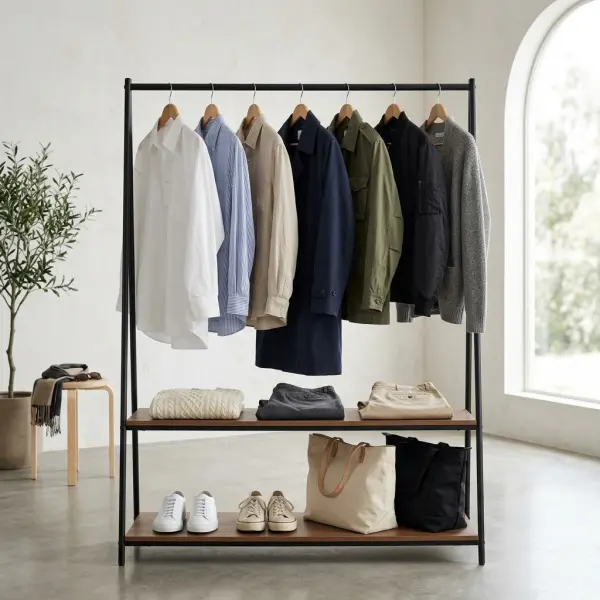
For category strategy, the important point is that aesthetic-based shopping cuts across product departments. A “utility streetwear” look may include cargo pants, technical jackets, caps, sneakers, sling bags, and oversized shirts. A “minimalist capsule” look may include knitwear, straight trousers, white shirts, loafers, and clean outerwear. These are not single product categories. They are styling systems.
Fashion brands can respond by creating editorial category pages or product edits that match how consumers search. The best examples do not chase every micro-trend. They translate relevant aesthetics into products the brand can credibly sell.
E-Commerce Navigation Needs to Become More Flexible
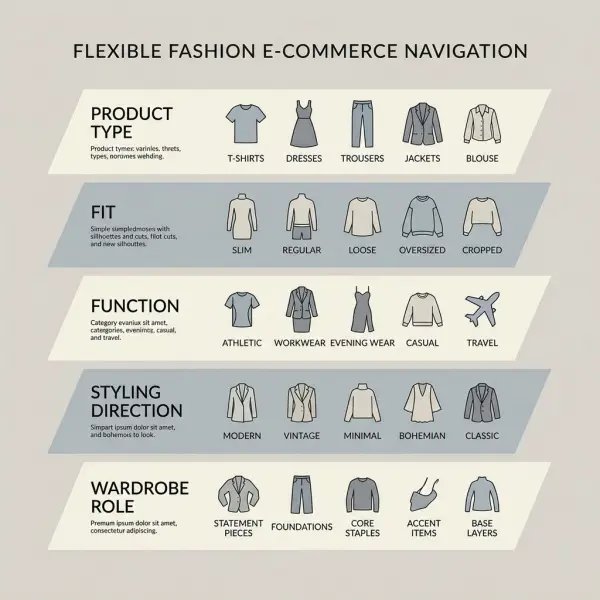
E-commerce navigation is one of the most important places where fashion categories are being redefined. A rigid menu can hide relevant products, while a flexible navigation system can help customers discover items according to fit, use, style, and occasion.
A customer should be able to shop by product type, but also by silhouette, fabric, fit, function, and styling need. This is especially useful for categories such as trousers, shirts, jackets, dresses, knitwear, and footwear, where the same product can serve different wardrobe purposes.
A more flexible fashion e-commerce structure may include:
|
Navigation Layer |
Example Filters or Edits |
Business Value |
|
Product type |
shirts, jackets, trousers, knitwear, bags |
Keeps basic shopping structure clear |
|
Fit and silhouette |
relaxed, oversized, straight, cropped, wide-leg |
Helps customers understand shape quickly |
|
Function |
travel, work, layering, warm weather, daily wear |
Matches real customer needs |
|
Styling direction |
minimal, utility, streetwear, polished casual |
Supports aesthetic-based discovery |
|
Wardrobe role |
capsule staple, statement piece, shared wardrobe |
Helps customers judge usefulness |
This kind of structure does not remove traditional categories. It makes them more searchable and more relevant.
What This Means for Product Development Teams
For product development teams, changing consumer preferences mean products should be planned with use cases in mind, not only category labels. A brand should know whether a new shirt is meant to be worn tucked, layered, oversized, under a blazer, over a tank top, for travel, or as part of a capsule wardrobe.
This affects technical decisions. Fabric weight, drape, shrinkage, seam construction, collar shape, sleeve length, hem curve, pocket placement, and garment measurements all influence how the product performs in real life. If a brand wants a shirt to work as both a shirt and light outer layer, it may need more ease, stronger fabric, durable buttons, and a hem proportion that looks good untucked.
The same logic applies to trousers. A pair of trousers positioned as “work-to-weekend” must balance comfort and polish. The waistband, rise, pocket structure, fabric recovery, wrinkle behavior, and leg shape matter. The product should not only look good in a campaign. It must survive actual use.
This is why consumer preference research should be connected to technical development. Marketing insights are useful only if the product team can translate them into fabric, pattern, fit, construction, and quality standards.
What This Means for Merchandising and Buying
For merchandisers and buyers, category change creates both opportunity and risk. The opportunity is to build more relevant assortments around real consumer behavior. The risk is assortment confusion: too many edits, unclear product logic, duplicated SKUs, and weak inventory planning.
A buyer may see strong demand for relaxed trousers, but that does not automatically mean the brand needs many similar trousers. It may need one strong straight-leg option, one softer wide-leg option, one travel-friendly fabric option, and one more polished option. The distinction should be based on customer use, not minor styling differences that create inventory clutter.
Merchandising teams should ask:
- Which products solve repeated customer needs?
- Which items can be styled across more than one category?
- Which silhouettes are gaining repeat demand?
- Which products create high returns because expectations are unclear?
- Which categories need better fit education?
- Which products deserve stronger content support?
The answer may lead to fewer but stronger products. In a value-conscious market, a clear assortment can be more powerful than a crowded one.
How Brands Can Communicate New Categories Without Confusing Customers
Brands should communicate new fashion categories through practical language. Customers do not always need complex terminology. They need to understand what the product is, how it fits, where they can wear it, and why it belongs in their wardrobe.
Instead of relying only on broad phrases, brands can use concrete descriptions:
- “relaxed shirt for layering”;
- “straight-leg trousers for work and weekend”;
- “lightweight jacket for daily travel”;
- “oversized knit for easy styling”;
- “structured tote for office and casual use”;
- “shared wardrobe outerwear”;
- “capsule staples for everyday dressing.”
This language makes category innovation feel simple. It also helps SEO and AI search because product pages become easier to understand.
For the broader visibility context, this connects to AEO for fashion brands and answer-based search. Search engines and AI systems cannot interpret vague fashion copy as easily as clear, descriptive product information.
Common Mistakes Fashion Brands Make
One common mistake is forcing customers into old categories even when the product is clearly more flexible. For example, a relaxed overshirt may be listed only under menswear, even though it could appeal to customers looking for layering pieces, modest outerwear, travel shirts, or casual jackets. The product loses visibility because the category is too narrow.
Another mistake is creating too many trend edits without operational discipline. If every aesthetic becomes a new category, the website can become confusing. Customers may struggle to understand where products live, and internal teams may struggle to manage inventory and content. Category innovation should simplify shopping, not create a maze.
A third mistake is using fashionable terms without product proof. A brand may describe something as “versatile” even though it only works in one styling context. It may call trousers “work-to-weekend” even though the fabric wrinkles easily or the fit is uncomfortable. Customers quickly notice when category language is not supported by product performance.
A better approach is to let product reality lead the category. If the garment has flexible use, clear fit, strong styling potential, and repeat-wear value, the category story becomes more believable.
Practical Framework: How to Redesign Fashion Categories Around Consumer Preferences
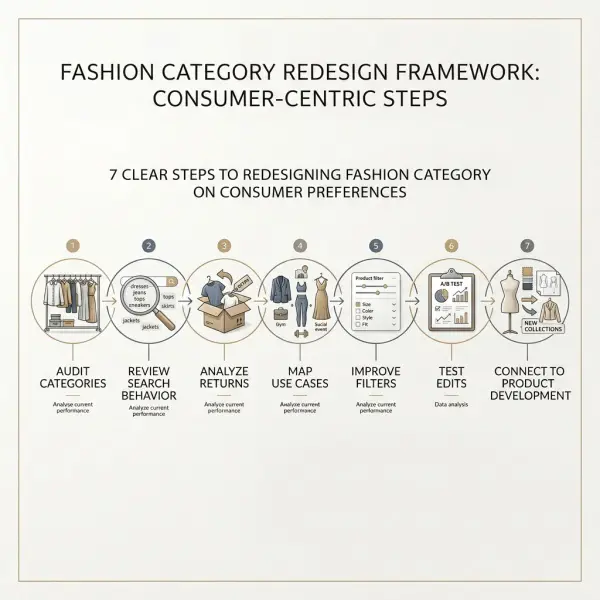
Fashion businesses can redesign categories by studying how customers search, buy, return, review, and style products. The goal is not to abandon existing structure. The goal is to add customer-centered layers that improve discovery and decision-making.
A practical category redesign process may look like this:
- Audit current product categories.
Identify which categories are too rigid, too broad, or too confusing. - Review search and website behavior.
Look at what customers search for internally, which filters they use, and where they exit. - Analyze returns and reviews.
Fit complaints, fabric complaints, and expectation gaps often reveal weak category communication. - Map products by use case.
Classify products by lifestyle need: work, travel, layering, daily wear, occasion, comfort, or capsule wardrobe. - Improve product copy and filters.
Use clearer terms for fit, fabric, function, and styling role. - Test category edits before restructuring everything.
A seasonal “travel-ready layers” edit or “relaxed workwear” page can reveal demand before deeper investment. - Connect category strategy to buying and product development.
If customers respond strongly to certain needs, future collections should reflect that data.
This framework keeps category strategy practical. It also prevents brands from making changes based only on trend language.
What Fashion Businesses Should Verify Before Changing Categories
Before changing category structure, fashion businesses should verify whether the new system actually helps customers shop better. A category redesign that looks modern but confuses customers can damage conversion.
Brands should verify:
- whether customers already search beyond traditional categories;
- whether product data is detailed enough to support new filters;
- whether the size chart can support fit-based shopping;
- whether product photography shows enough styling context;
- whether internal teams can maintain new category pages consistently;
- whether inventory planning can support multi-category merchandising;
- whether SEO pages are clear enough for search engines and AI summaries.
This is especially important for small and mid-sized brands. A complicated category structure requires content, photography, tagging, product data, and maintenance. If the team cannot manage it, a simpler structure with strong product descriptions may work better.
Category innovation should reduce friction. If it adds more work without improving customer understanding, it needs to be simplified.
FAQ: Consumer Preferences and Fashion Categories
How are consumer preferences changing fashion categories?
Consumer preferences are changing fashion categories by shifting attention from fixed departments to fit, comfort, function, lifestyle, and styling flexibility. Customers may still shop shirts, trousers, dresses, jackets, and shoes, but they also search by relaxed fit, work-to-weekend use, travel-friendly fabric, oversized silhouette, or capsule wardrobe value. This means brands need category systems that reflect how customers actually choose clothing, not only how internal teams organize products.
Does this mean menswear and womenswear categories are disappearing?
No, menswear and womenswear categories are not disappearing entirely. Many customers still find them useful, and many product development systems still rely on gendered blocks and size standards. The more realistic change is hybrid categorization. Brands may keep traditional categories while adding additional shopping layers such as fit, silhouette, occasion, function, style direction, and shared wardrobe edits.
Why is fit becoming more important in fashion shopping?
Fit is becoming more important because customers want to understand how a garment will sit on the body before buying it, especially online. Size labels alone are often not enough because sizing differs between brands and product types. Clear fit descriptions such as relaxed, boxy, oversized, straight-leg, cropped, or adjustable help customers make better decisions and can reduce returns caused by mismatched expectations.
What is need-based shopping in fashion?
Need-based shopping means customers start with a practical wardrobe need instead of a fixed category. For example, they may look for clothing for travel, hybrid work, layering, warm weather, modest styling, daily errands, or repeat wear. This behavior encourages brands to create category edits around real use cases, such as travel-ready layers, relaxed workwear, capsule wardrobe staples, or versatile outerwear.
How can fashion brands respond to changing consumer preferences?
Fashion brands can respond by improving product data, using clearer fit language, adding flexible e-commerce filters, creating practical styling edits, and connecting customer insights to product development. They should study search behavior, returns, reviews, and repeat purchases to understand what customers really need. The strongest response is not just new marketing language, but better products, clearer categories, and easier decision-making.
What categories are most affected by flexible consumer preferences?
Shirts, trousers, outerwear, knitwear, sneakers, bags, and accessories are strongly affected because they can often be styled across different wardrobes and occasions. Categories such as denim, tailoring, and structured garments are also affected, but they require more careful fit and sizing work. Products with flexible silhouettes usually adapt more easily than highly fitted or occasion-specific garments.
Why does e-commerce make category change more important?
E-commerce makes category change more important because customers search, filter, and discover products differently online. A product can appear in multiple relevant contexts: product type, fit, function, styling direction, and wardrobe role. If product pages are poorly tagged or descriptions are vague, customers may not find items that actually match their needs. Strong e-commerce structure improves both user experience and search visibility.
What is the biggest mistake brands make when redefining categories?
The biggest mistake is changing category names without improving product clarity. A brand may create modern edits such as “versatile essentials” or “shared wardrobe,” but if the product information, sizing, photography, and filters are weak, customers still feel unsure. Category innovation should help customers understand the product faster. It should not become decorative branding with no operational support.
Conclusion
Consumer preferences are redefining fashion categories because shoppers are more practical, more selective, and more flexible in how they build wardrobes. They still care about style, but they also care about comfort, fit, repeat use, value, and real-life function. This changes how products should be designed, named, merchandised, photographed, filtered, and explained.
For fashion businesses, the opportunity is to build category systems that match actual shopping behavior. Menswear, womenswear, casualwear, formalwear, and seasonal categories still have value, but they should be supported by more customer-centered layers: fit, silhouette, function, occasion, lifestyle, and wardrobe role.
The brands that respond well will not simply rename categories. They will use consumer insight to improve product development, e-commerce navigation, merchandising, and communication. In a market where customers are more careful with what they buy, the best category strategy is the one that helps them choose with confidence.





Comments 0
Leave a CommentSend Comment
Anda harus Login terlebih dahulu untuk dapat memberikan komentar.