

How Fabric Weight Affects Drape, Durability, and Comfort
Quick Answer
Fabric weight affects how a textile hangs, withstands use, and feels on the body, but GSM does not determine any of these qualities by itself. Heavier fabrics often create a more substantial silhouette and may provide more material to resist wear. They can also feel warmer or less flexible. Lightweight fabrics may move more easily and feel less burdensome, but some can appear transparent, cling to the body, or require reinforcement.
The actual result depends on fiber type, yarn structure, weave or knit construction, thickness, density, finish, stretch, garment pattern, and intended use. Two fabrics with identical GSM can therefore have very different drape, abrasion resistance, air permeability, and thermal behavior.
For fashion businesses, the practical approach is to use fabric weight as an initial specification, then validate it through physical sampling and performance tests. The right weight is the one that supports the garment’s silhouette, expected service life, comfort conditions, and commercial positioning—not simply the highest or lowest GSM available.
Why Fabric Weight Matters Beyond a Number
Fabric weight describes the mass of a textile relative to its area, commonly expressed as grams per square metre or GSM. The basic measurement is explained in this guide to fabric GSM and what fabric weight means.
In product development, however, the number becomes useful only when it is connected to garment behavior. A design team does not experience a fabric as “180 grams per square metre.” It experiences whether the fabric collapses softly, holds a clean line, stretches out at the knees, traps heat, reveals undergarments, or feels tiring after several hours of wear.
Weight influences those outcomes because it changes how much material is present over a given area. Yet that mass operates through a textile structure. Fiber modulus, yarn twist, stitch length, thread density, thickness, surface treatment, and finishing can reinforce or counteract the effect of weight.
This is why fabric weight should be treated as an influential variable rather than a performance verdict.
How Does Fabric Weight Affect Drape?
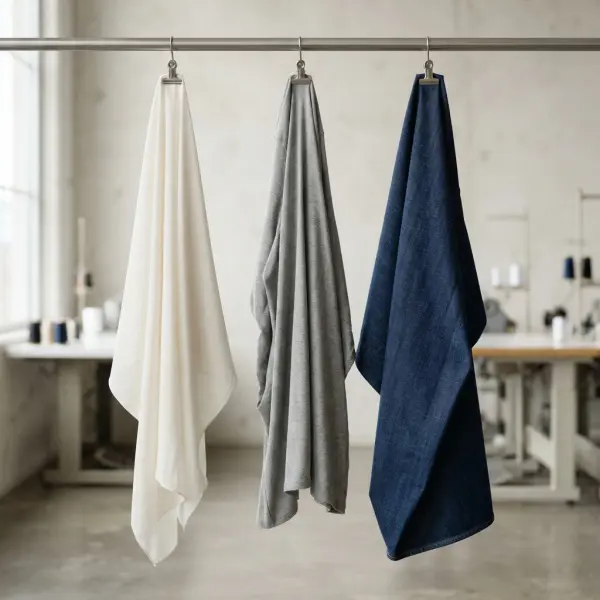
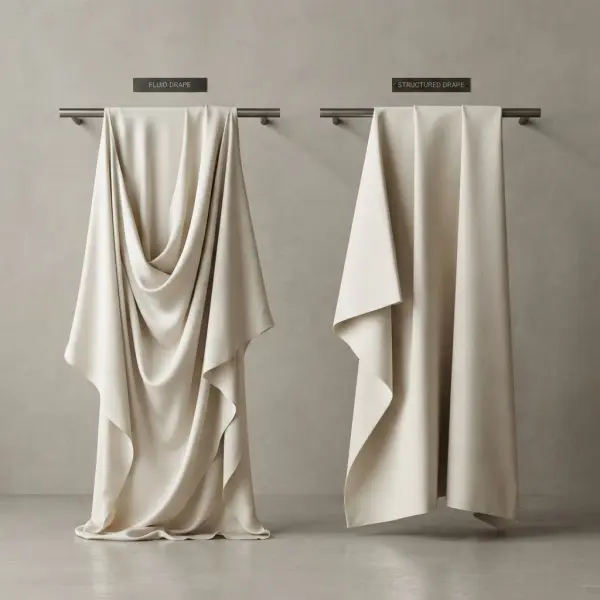
Fabric weight can influence drape by changing how strongly gravity pulls the material downward, but drape also depends heavily on bending stiffness, shear behavior, construction, thickness, and finishing. A heavier fabric may fall with greater visual substance, while a lighter fabric may float, cling, flare, or collapse depending on its structure.
Drape describes how a fabric deforms and forms folds under its own weight. It shapes the silhouette of skirts, dresses, trousers, jackets, scarves, and other garments in which fabric hangs away from support points.
Weight and drape are related, but not in a simple “lighter equals fluid” formula.
Weight Can Help a Fabric Fall Downward
Additional mass can give fabric a more pronounced downward pull. This may help certain trousers hang more cleanly from the hip, allow a skirt to fall closer to the body, or give a dress a more substantial sweep.
This effect is often valued when a garment needs controlled movement rather than airy volume. A fabric that is too light for the pattern may lift, cling through static, reveal seam allowances, or fail to fall as the designer intended.
Even so, downward pull does not automatically produce softness. A heavy coating fabric can remain rigid because its construction and finish resist bending. A lighter satin or fine crepe may form deeper, more fluid folds because it has lower bending resistance.
Stiffness Can Override the Expected Weight Effect
Fabric stiffness is a separate property. ASTM D1388 measures fabric stiffness through bending length and calculated flexural rigidity. The existence of a dedicated test is a useful reminder that GSM cannot substitute for stiffness data.
Two 200 GSM fabrics may behave very differently:
- A tightly constructed canvas may stand away from the body and preserve angular shapes.
- A soft jersey may bend readily and follow the wearer’s contours.
- A washed twill may fall more softly than the same construction before finishing.
- A bonded fabric may resist folding even when its individual layers were previously flexible.
Fabric weight contributes to the force acting on the material, while stiffness influences how strongly the fabric resists that force. Drape emerges from the interaction.
Fiber and Yarn Structure Change the Result
Fiber type affects flexibility, resilience, surface friction, and moisture response. Yarn properties add another layer. Filament yarns, spun yarns, highly twisted yarns, textured yarns, and bulky yarns can create different drape outcomes even at similar GSM levels.
A fabric made with fine filament yarns may feel smooth and move fluidly. A textile made from bulky spun yarns can reach a similar GSM with more loft and surface texture. Neither result is inherently better; each serves a different silhouette and customer expectation.
Finishing Can Transform Drape Without a Major GSM Change
Mechanical and chemical finishes can alter softness, compactness, surface character, and bending behavior. Washing, enzyme treatments, softeners, calendaring, resin finishes, brushing, compacting, and bonding may change how the textile falls.
Some treatments also change GSM through added substances, removed material, or dimensional change. Others may produce a noticeable handfeel difference while leaving mass per area relatively close to the original value.
This creates a practical sourcing risk: approving only a GSM target does not guarantee that the bulk fabric will reproduce the approved sample’s movement. The finish and process route need to be controlled as well.

What Fabric Weight Means for Garment Silhouette
The suitability of a weight becomes clearer when viewed through the garment pattern. The same textile can look controlled in one design and awkward in another.
A full gathered skirt requires enough flexibility to compress at the waist and enough body to create the intended volume. If the fabric is too heavy or stiff, the gathering may become bulky. If it is too light and limp, the skirt may collapse rather than maintain its planned shape.
Wide-leg trousers create a different problem. A very light material may move attractively but cling to the legs, expose pocket bags, or show wrinkling. A more substantial fabric can produce a cleaner vertical line, although excess weight may pull at the waistband or make the garment tiring in warm conditions.
Structured jackets rely not only on shell-fabric weight but also on interlinings, facings, linings, seam allowances, shoulder components, and pressing. Selecting a heavier shell does not remove the need for compatible internal construction.
Designers should therefore assess weight alongside:
- Garment volume and panel size
- Number and depth of gathers, pleats, or tucks
- Desired distance from the body
- Seam and hem construction
- Support points such as waistbands and shoulders
- Use of lining, interfacing, or reinforcement
- Movement expected during wear
- Desired visual character
The best evaluation is a garment prototype. Hanging a rectangular swatch can show general behavior, but it cannot reproduce the effect of curved seams, bias sections, pockets, closures, elastic, or body movement.
Does Heavier Fabric Last Longer?
Heavier fabric may provide a greater material reserve against wear, but higher GSM does not guarantee greater durability. Durability depends on the failure mode being considered and on how fiber, yarn, construction, finishing, garment engineering, care, and use interact.
A heavier fabric can still pill quickly, lose shape, split at seams, abrade at fold lines, or tear around pockets. A lighter engineered fabric may perform well because it uses suitable fibers, strong yarns, balanced construction, reinforcement, and appropriate finishing.
The question should not be “Is this fabric heavy enough to be durable?” It should be “Which types of damage must this product withstand, and does the complete material system meet those requirements?”
Abrasion Resistance
Garments exposed to repeated rubbing—such as work trousers, uniforms, bags, seat areas, inner thighs, cuffs, and elbows—need suitable abrasion resistance. More mass can sometimes delay the point at which rubbing removes enough material to cause visible damage. This is not universal.
Fiber abrasion behavior, yarn twist, yarn size, surface hairiness, weave or knit structure, and finishing can all change the result. Raised or loosely constructed surfaces may show wear differently from smooth, compact fabrics.
ASTM D4966 covers determination of textile-fabric abrasion resistance using the Martindale tester. Abrasion performance is tested separately precisely because GSM alone cannot predict it reliably.
Tearing and Breaking Performance
Heavier fabrics often use larger yarns, higher thread density, or more substantial structures, which may contribute to strength. However, the relationship is not automatic.
A tightly woven fabric can have good breaking resistance yet propagate a tear differently once damaged. A fabric made from degraded fibers may be heavy but weak. Coatings may initially reinforce a textile but crack or delaminate under repeated flexing. Stretch fabrics introduce further considerations because elongation and recovery matter alongside maximum force.
The required test should match the likely stress. Breaking strength, tear resistance, bursting strength, seam strength, and seam slippage answer different questions.
Pilling and Surface Appearance
Pilling occurs when fibers work out of the fabric, entangle, and remain attached as small balls on the surface. Fabric weight does not determine whether this will happen.
Fiber strength, blend composition, yarn twist, hairiness, construction, surface friction, and finishing are more direct influences. A heavy, soft knit can pill noticeably, while a lighter tightly woven fabric may retain a cleaner surface. The reverse is also possible.
For consumer-facing apparel, appearance retention can matter as much as structural survival. A garment may remain wearable in a mechanical sense but be abandoned because the surface looks worn.
Dimensional Stability and Shape Retention
A higher GSM does not prevent shrinkage, growth, twisting, bagging, or loss of recovery. Knit structure, stitch length, elastic-fiber performance, yarn torque, finishing, relaxation, and laundering conditions affect dimensional stability.
Extra garment weight can sometimes increase stress on shoulder seams, waistbands, hanger points, and highly elastic areas. A long heavy knit dress, for example, may lengthen during storage or wear if the structure does not provide adequate recovery.
Durability should therefore be considered at both fabric and garment level.
How Fabric Weight Affects Comfort
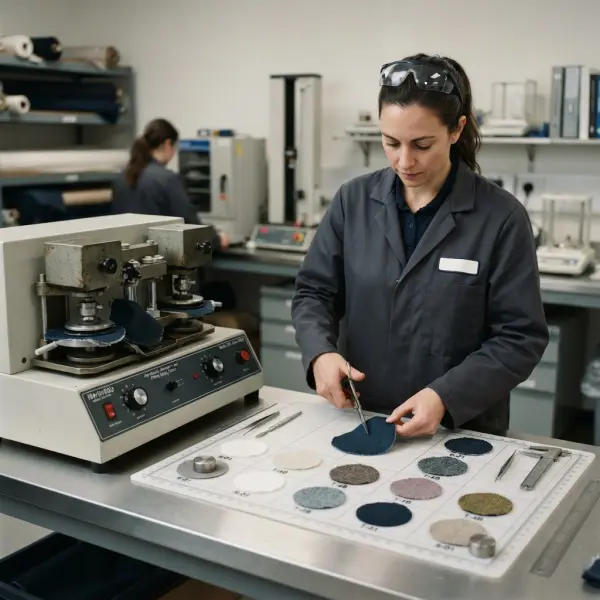
Fabric weight affects perceived comfort through load, bulk, movement, thermal behavior, and the way a garment contacts the body. Comfort remains multidimensional and highly dependent on climate, activity, garment fit, layering, and individual preference.
A lightweight fabric may feel barely noticeable during movement, but it can also cling, transmit pressure from tight seams, or require a lining that changes the total garment system. A heavier textile may feel protective and stable yet become burdensome during prolonged wear.
Comfort is not simply the absence of weight.
Physical Load and Freedom of Movement
The wearer carries the mass of the finished garment, not the GSM number in isolation. A long coat contains much more fabric area than a sleeveless top, so identical GSM would produce very different garment weights.
Heavy materials can increase load at the shoulders, waist, neck, or other support points. This matters in long garments, embellished products, uniforms, protective apparel, and layered outfits. Pattern balance and support construction become more important as weight increases.
Lighter fabrics generally reduce the load, but movement also depends on stretch, friction, garment ease, seam placement, and stiffness. A light, rigid fabric cut too closely can restrict movement more than a heavier stretch textile with an appropriate pattern.
Thermal Comfort
Heavier fabrics are often associated with warmth because they may be thicker, denser, or able to contain more insulating structure. Yet GSM is not a direct measure of thermal insulation.
Warmth depends strongly on trapped air, thickness, porosity, fiber structure, wind permeability, moisture condition, and the entire clothing assembly. A lofty material can trap air effectively, while a dense fabric may primarily reduce air movement. Wet conditions can change the behavior again.
ISO 11092:2026 specifies methods for measuring thermal resistance and water-vapour resistance of textiles and related materials under steady-state conditions. These are distinct properties that should not be inferred solely from fabric weight.
Air Permeability
Air permeability describes how readily air passes through a textile under specified conditions. It is influenced by pore size, construction density, yarn structure, coatings, and finishes.
Lightweight fabric is not necessarily highly air-permeable. A light but tightly woven or coated shell can restrict airflow, while a heavier open knit may allow substantial air passage. Garment openings and fit also influence real-world ventilation.
ISO 9237:1995 provides a method for measuring fabric air permeability. For activewear, warm-climate clothing, and outer layers, this data may be more useful than assuming breathability from GSM.
Moisture and Water-Vapour Transfer
Comfort during activity depends partly on how the clothing system manages perspiration and water vapour. Fiber absorbency, capillary structure, finishes, drying conditions, garment ventilation, and layer interaction all matter.
A low-GSM polyester fabric may absorb little moisture into the fiber but can still be engineered to spread liquid across its structure. A lightweight absorbent material may feel comfortable initially yet remain wet longer under some conditions. A heavier textile may buffer moisture but become burdensome when saturated.
Terms such as “breathable,” “moisture-wicking,” and “quick-drying” should be supported by defined test results rather than by fabric weight or fiber marketing alone.
Tactile and Psychological Comfort
Handfeel can alter how consumers interpret weight. A dense, smooth fabric may feel reassuring and premium to one buyer, while another considers it heavy or restrictive. A soft lightweight fabric may be perceived as delicate, airy, or insufficiently substantial depending on the garment category.
Surface roughness, seams, labels, static, cling, transparency, and the sensation of fabric against the skin all affect comfort. These factors are difficult to reduce to one laboratory number and benefit from fit trials with representative wearers.

The Trade-Off Between Drape, Durability, and Comfort
Drape, durability, and comfort do not always improve in the same direction. Increasing fabric substance may support a cleaner silhouette and provide more abrasion margin, but it may add heat, bulk, or load. Reducing weight may improve packability and freedom of movement while increasing the risk of transparency, instability, or insufficient structure.
The trade-off can be summarized as follows:
|
Fabric-weight direction |
Possible advantages |
Possible drawbacks |
What must still be verified |
|
Lighter |
Lower garment mass, easier layering, potential for fluid or airy movement |
Transparency, cling, reduced structure, possible vulnerability in high-wear areas |
Opacity, tear strength, seam performance, air permeability, dimensional stability |
|
Mid-range |
Balance between substance, movement, and production practicality |
May still be unsuitable when the product requires an extreme property |
Drape, recovery, abrasion, comfort in intended climate |
|
Heavier |
Greater substance, potential structure, potential wear reserve, reduced show-through |
Added load, bulk, drying time, warmth, seam stress, restricted movement |
Stiffness, thermal resistance, abrasion, support construction, garment weight |
“Possible” is the key qualifier. A product team should not convert these tendencies into guarantees.
Consider a travel trouser. A very light fabric may pack easily but wrinkle, cling, or abrade too quickly in the intended use. A heavy fabric may look polished and resist minor wear but occupy more luggage space and feel uncomfortable in warm transit environments. The most suitable option may be a moderate weight with strong yarns, controlled stretch, good recovery, and a finish chosen for the care conditions.
This type of decision is examined more directly in the guide to choosing between lightweight and heavyweight fabrics.
Why Garment Construction Changes the Weight Equation
Fabric is only one part of the finished clothing system. Linings, interlinings, seam allowances, pockets, rib, elastic, closures, quilting, embroidery, and trims add weight and can change stiffness or thermal behavior.
A lightweight shell combined with a dense lining and substantial interfacing may produce a heavier garment than expected. A heavyweight knit with minimal seams may feel less restrictive than a lighter woven garment with rigid bonding and tight construction.
Several construction choices deserve attention:
- Seam type: Thick fabrics can create bulky seam intersections, while fragile lightweight materials may need narrow or reinforced seams.
- Hem treatment: A deeper or weighted hem can improve fall but may distort a delicate fabric.
- Interfacing: Support should be compatible with the shell’s weight, stretch, care method, and drape.
- Closures: Heavy garments place more load on zippers, buttons, snaps, and their attachment areas.
- Lining: Lining changes opacity, friction, thermal comfort, and total garment weight.
- Pattern ease: Heavier or stiffer fabrics may need different ease and shaping from lighter, more flexible materials.
A material decision should therefore be approved in garment form, preferably after wear, movement, laundering, and storage trials appropriate to the product.
How Fashion Businesses Can Apply Fabric-Weight Insights
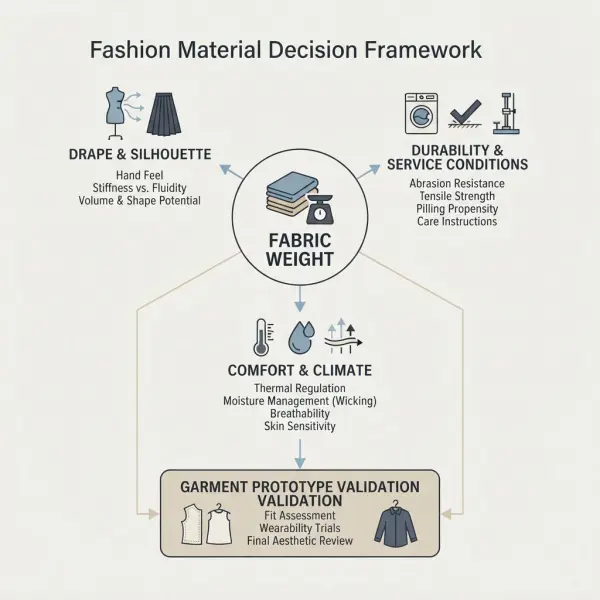
A workable process begins with product requirements rather than a preferred GSM number. The team should define the silhouette, target use, climate, care expectation, price position, and likely stress points before finalizing the fabric specification.
Translate Design Language into Measurable Requirements
Descriptions such as “fluid,” “substantial,” “softly structured,” or “light but not transparent” are useful creative directions, but suppliers need measurable and visual references.
Pair the description with:
- An approved GSM range
- A physical benchmark swatch
- Fiber and construction details
- Width and finish
- Stiffness or drape expectations where critical
- Opacity requirements
- Relevant strength or abrasion criteria
- Stretch and recovery requirements
- Thermal or air-permeability requirements when relevant
This combination reduces the chance that a technically compliant fabric produces the wrong garment.
Test the Risk, Not Everything by Habit
Not every fashion product needs the same testing package. The test plan should reflect use.
Workwear may prioritize abrasion, tear, seam strength, and dimensional stability. Activewear may require stretch, recovery, drying, air permeability, and moisture-management evaluation. A fluid occasion dress may depend more on drape, snagging, seam appearance, colorfastness, and care behavior.
Testing every available property can add cost without improving the decision. Testing only GSM, on the other hand, leaves major risks unexamined.
Review the Complete Garment
Prototype review should include movement, sitting, walking, bending, layering, storage, and care. Teams should observe whether the garment grows, twists, clings, becomes transparent, strains its support points, or feels uncomfortable after extended wear.
Fit sessions should use the intended fabric or a genuinely comparable substitute. A toile made in a materially different weight and stiffness may validate pattern dimensions while hiding the final silhouette and comfort problems.
Maintain Bulk Consistency
Once a fabric is approved, the purchase specification should record the nominal GSM, tolerance, test method, finish, construction, and other performance criteria. Incoming material should be compared with both the documented requirements and the approved physical standard.
If bulk GSM remains within tolerance but the handfeel or drape changes noticeably, teams should not accept the fabric based on the number alone. The underlying yarn, construction, or finishing process may have shifted.
Common Mistakes When Evaluating Fabric Weight
Assuming Heavy Means Durable
This mistake usually begins with a visually substantial sample. The team expects the material to withstand wear without testing abrasion, tearing, pilling, recovery, or seam behavior.
If the fabric fails at one of those points, its additional mass may offer little protection. The better approach is to identify likely failure modes and test them directly.
Assuming Light Means Breathable
Low garment mass can improve perceived lightness, but airflow depends on the textile’s pores and construction. A tightly constructed lightweight fabric may allow less air passage than a heavier open structure.
For climate-sensitive products, brands should evaluate air permeability, water-vapour resistance, thermal behavior, fit, and ventilation rather than relying on GSM.
Approving Drape from a Small Swatch
A hand-sized swatch shows texture and local flexibility but cannot fully represent the weight of a long skirt, wide trouser leg, or full coat panel. Larger fabric areas experience greater total gravitational load and interact with seams and the body.
A hanger-length sample or prototype provides more useful evidence for silhouette decisions.
Ignoring the Weight of Added Components
A garment that feels balanced as an unlined shell may become heavy after lining, embroidery, hardware, pockets, and interlining are added. Support points and closure areas can then experience greater stress than expected.
Product teams should estimate and review total garment weight, particularly for long, embellished, layered, or heavily trimmed designs.
Using One Fabric Weight Across an Entire Range
Standardizing fabric can simplify sourcing and consolidate volume, but one GSM may not serve every silhouette. A material suitable for a basic T-shirt may be too heavy for a gathered top and too light for a structured overshirt.
Standardization works best within compatible product groups, not as an automatic rule for every style.
What Brands Should Verify Before Acting
Before selecting or changing fabric weight, confirm the following:
- Is the stated GSM measured on finished, conditioned fabric?
- Does the approved sample match the planned fiber, construction, and finish?
- What silhouette should the material create at full garment scale?
- Which areas will experience abrasion, tension, stretching, or repeated flexing?
- In what climate and activity level will the product be worn?
- Will lining, interfacing, trims, or embellishment materially change total weight?
- Which performance tests correspond to the product’s real risks?
- Has the garment been evaluated after laundering or other intended care?
- Can the supplier reproduce both the GSM and the approved handfeel?
- Will changing weight affect fabric yield, freight, sewing, pressing, or retail expectations?
These questions keep the discussion tied to product performance. They also prevent teams from treating a fabric-weight change as a minor substitution when it may alter fit, construction, costing, and customer experience.
Frequently Asked Questions
Does heavier fabric drape better?
Heavier fabric can fall more decisively because gravity acts on greater mass, but it does not necessarily drape more fluidly. If the material is stiff, thick, bonded, or tightly constructed, it may hold away from the body rather than form soft folds. A lighter fabric with low bending resistance can drape more fluidly than a heavier rigid textile. Evaluate weight together with stiffness, construction, finish, panel size, and the garment pattern. For critical silhouettes, a full prototype is more informative than GSM alone.
Does higher GSM make clothing more durable?
Higher GSM may provide more material to withstand wear, but it does not guarantee durability. Fiber strength, yarn quality, construction, abrasion resistance, tear behavior, pilling, seam performance, stretch recovery, finishing, and care all affect service life. The relevant failure mode should be tested directly. A lightweight engineered fabric can outperform a heavier poorly constructed one, while a substantial textile may be appropriate where repeated abrasion or structural stability is the main concern.
Is lightweight fabric always cooler?
No. Lightweight fabric reduces garment mass, but thermal comfort also depends on air permeability, thickness, trapped air, moisture transfer, color, fit, layering, and environmental conditions. A lightweight coated or tightly woven textile may restrict airflow. A heavier open knit may allow more ventilation but still create additional warmth or bulk. Products intended for hot conditions should be evaluated for airflow, water-vapour resistance, drying behavior, sun exposure, garment coverage, and activity level rather than weight alone.
Why do two fabrics with the same GSM feel different?
GSM measures mass per area, not how that mass is arranged. Two equal-GSM fabrics may use different fibers, yarn sizes, twists, weave patterns, knit structures, thicknesses, finishes, or stretch systems. One may be compact and smooth; another may be bulky, soft, or open. These structural differences change stiffness, surface feel, air permeability, opacity, recovery, and drape. For sourcing, equal GSM should be considered one point of similarity rather than proof that the materials are interchangeable.
Can lowering fabric GSM reduce product quality?
Lowering GSM does not automatically reduce quality, but it can change performance if the fabric is not re-engineered or revalidated. Possible effects include greater transparency, reduced structure, altered drape, different shrinkage, lower abrasion margin, or more difficult sewing. In other cases, stronger yarns or a more efficient construction may reduce weight while maintaining the required performance. Brands should compare prototypes and test the properties that matter before treating a lighter version as equivalent.
How should fabric weight be evaluated for children’s clothing?
For children’s clothing, weight should be considered alongside mobility, climate, softness, seam comfort, care, durability, and the safety requirements applicable to the product and market. Heavy garments can add unnecessary load, while very light fabrics may lack opacity or withstand active use poorly. The finished garment should permit expected movement and be evaluated after repeated care. GSM is useful for controlling material consistency, but it does not replace product-specific mechanical, chemical, flammability, trim, or construction requirements.
Should brands publish GSM in product descriptions?
Publishing GSM can help knowledgeable customers understand whether a product is light, substantial, or suitable for layering, especially for T-shirts, sweatshirts, denim, and workwear. The number should be accurate and supported by context. “240 GSM structured cotton jersey” is more informative than “premium heavyweight fabric,” but it still does not communicate every performance property. Brands should avoid implying that higher GSM automatically means better quality and explain the intended feel or use in plain language.
Conclusion
Fabric weight influences how clothing hangs, survives repeated use, and feels during wear, but it works through the material’s entire structure. Greater mass can add substance, improve downward fall, or provide additional wear reserve. It can also increase bulk, warmth, stress, and physical load. Lower mass can support movement and layering while introducing challenges with opacity, stability, or durability.
The commercially useful question is therefore not whether heavier or lighter fabric is inherently better. It is whether the selected weight works with the fiber, yarn, construction, finish, garment pattern, climate, and expected use.
Brands that connect GSM with physical benchmarks, relevant performance tests, and garment trials make more dependable decisions. They also gain a clearer basis for communicating with mills, approving bulk material, managing substitutions, and explaining product differences to customers.





Comments 0
Leave a CommentSend Comment
Anda harus Login terlebih dahulu untuk dapat memberikan komentar.