
Building a Signature Style Without Following Every Trend
Quick Answer
Building a signature style does not mean rejecting trends completely. It means developing a clear, recognizable style direction that can absorb selected trends without losing its core identity. For individuals, a signature style may appear through consistent silhouettes, colors, fabrics, accessories, proportions, or styling habits. For fashion brands, it appears through recognizable design codes, product consistency, visual language, and a strong understanding of the customer’s lifestyle.
The difference is discipline. Trend-following starts from external pressure: what is popular, visible, or commercially loud. Signature style starts from internal clarity: what feels authentic, useful, repeatable, and aligned with long-term identity. Trends can still play a role, but they should be filtered carefully.
For fashion businesses, this is commercially important because customers often build trust around consistency. A brand that changes direction too aggressively every season may generate short-term attention but weaken long-term recognition. A brand with a strong signature can update itself while remaining familiar. That balance—freshness without confusion—is where lasting style value is built.
What Signature Style Really Means
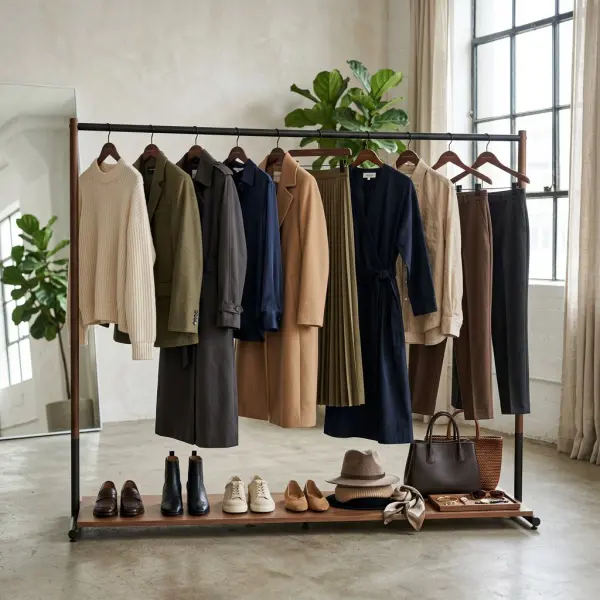
Signature style is not a uniform. It is a recognizable pattern of taste.
A person with a signature style may still dress differently for work, travel, evening events, or relaxed weekends. A brand with a signature style may still release seasonal collections, explore new colors, or update proportions. The key is that there is a visible thread connecting those choices. Something feels consistent even when the surface changes.
That thread may come from many places: a preference for clean tailoring, soft romantic details, modest layering, sculptural silhouettes, relaxed utility, vintage references, bold color, refined neutrals, or strong accessories. Signature style becomes meaningful when these preferences are repeated with intention, not by accident.
In fashion business terms, signature style is a form of aesthetic equity. It helps customers recognize a brand, understand its promise, and decide whether it belongs in their lives. When a brand’s style language is clear, customers do not need to reinterpret the brand from zero every season. They understand the world the brand is building.
This article focuses on how signature style is built without chasing every trend. The previous article, how personal style evolves over time, explains why style changes across life stages. Here, the focus shifts from evolution to selection: how to decide what belongs, what should be ignored, and what can be adapted.
The Difference Between Signature Style and Trend Dependency
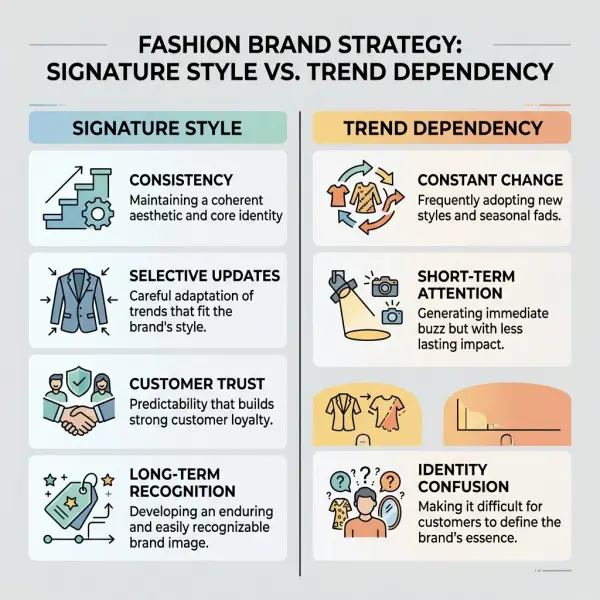
Trend dependency happens when a wardrobe or brand identity is built mainly around what is currently visible. The result may look fresh for a short period, but it can quickly become unstable. If every season requires a new aesthetic reset, customers may struggle to understand what the person or brand actually stands for.
Signature style works differently. It can include trend elements, but those elements are filtered through a stable point of view. A brand known for relaxed tailoring might adopt a seasonal color trend through blazers and wide-leg trousers. A modest fashion brand might interpret a sheer trend through layered textures rather than transparency. A minimalist customer might use one trending accessory without changing the whole wardrobe.
The difference is not whether trends are used. The difference is who is in control.
A trend-led approach asks, “What is popular now?”
A signature-style approach asks, “Does this support the style direction we want to be known for?”
That question protects both individuals and brands from overreacting to short-term visibility. It also improves buying discipline. Not every trend deserves production, inventory, content, or campaign investment.
Why Signature Style Matters for Fashion Businesses
For fashion brands, signature style is not only a creative concern. It affects product development, marketing efficiency, merchandising, customer loyalty, and even operational planning.
A brand with a clear signature style can design more coherently. It can brief designers, merchandisers, stylists, photographers, sourcing teams, and retail teams with a stronger shared language. This reduces the risk of collections feeling fragmented. It also helps customers understand why one product belongs beside another.
Without a signature style, collections may become a series of disconnected reactions. One season is minimalist. The next is maximalist. The next is nostalgic. The next is sporty. Some brands can deliberately operate this way, especially if their identity is built around experimentation. But for many commercial fashion businesses, constant aesthetic switching can weaken recognition.
Recognition matters because customers often return to brands that help them make decisions more easily. When customers understand a brand’s style promise, they can imagine how new products will fit into their existing wardrobes. That does not guarantee purchase, but it reduces friction.
Signature style also supports stronger storytelling. A campaign does not have to explain the brand from the beginning every time. It can build layers: new season, familiar world; updated styling, recognizable attitude; fresh pieces, consistent values.
The Core Elements of a Signature Style
A signature style usually develops through repeated design and styling decisions. These decisions do not need to be rigid, but they should be intentional enough to create recognition.
For individuals, the elements may be personal and intuitive. For brands, they need to be documented, tested, and translated into product and communication systems. The more people involved in a fashion business, the more important it becomes to define the style codes clearly.
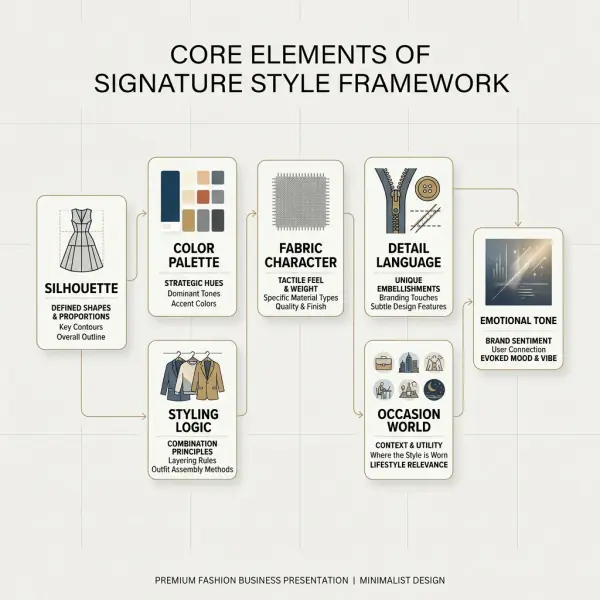
The core elements often include:
- Silhouette: the recurring garment shapes, proportions, and fit preferences.
- Color palette: the base colors, accent colors, and seasonal color boundaries.
- Fabric character: structured, fluid, crisp, textured, soft, glossy, matte, lightweight, or substantial.
- Styling logic: how pieces are layered, tucked, belted, accessorized, or balanced.
- Occasion world: the lifestyle contexts the style serves most naturally.
- Detail language: collars, cuffs, closures, seams, trims, prints, embroidery, pleats, drape, or hardware.
- Emotional tone: elegant, relaxed, intellectual, romantic, practical, confident, playful, understated, or expressive.
These elements are not separate boxes. They work together. A neutral palette can feel minimal, rustic, corporate, soft, or luxurious depending on silhouette and fabric. A floral print can feel youthful, vintage, modest, dramatic, or premium depending on scale, placement, and styling.
This is why a signature style should not be reduced to “wearing the same colors” or “always choosing the same type of garment.” The strongest style identities usually have depth. They are consistent enough to be recognized but flexible enough to evolve.
How to Build a Signature Style Without Becoming Repetitive
The fear many people and brands have is that consistency will become boring. That fear is understandable, but it usually comes from confusing consistency with sameness.
A strong signature style does not repeat the exact same look forever. It repeats a point of view. The wardrobe or collection can still shift through texture, layering, proportion, accessories, fabrication, and occasion. The underlying taste remains legible.
For example, a brand with a refined everyday elegance position might use relaxed tailoring as a core code. One season, that could appear as linen blazers, soft trousers, and leather sandals. Another season, it could become wool coats, ribbed knits, and polished boots. The products change, but the style world remains coherent.
The same applies to personal wardrobes. Someone who loves long silhouettes does not need to wear the same dress repeatedly. She might express that preference through maxi skirts, longline vests, wide-leg trousers, column dresses, or floor-grazing coats. The signature is not the item. It is the proportion.
A useful method is to separate constants from variables.
Constants are the elements that should remain recognizable. Variables are the elements that can change seasonally or situationally.
For a brand, constants might include:
- clean lines;
- modest coverage;
- soft neutral foundations;
- relaxed tailoring;
- subtle texture;
- practical elegance.
Variables might include:
- seasonal accent colors;
- print scale;
- fabric weight;
- accessory styling;
- hem length;
- campaign location;
- occasion emphasis.
This structure gives creative teams freedom without losing direction. It also gives customers confidence that new collections will still feel connected to the brand they trust.
Filtering Trends Through a Signature Style Lens
Trends are not the enemy of signature style. Poor filtering is the problem.
A trend can refresh a brand, introduce new customers, or make familiar products feel current. But a trend should be translated, not copied. When brands copy trends too literally, they may lose the very difference that made them valuable.
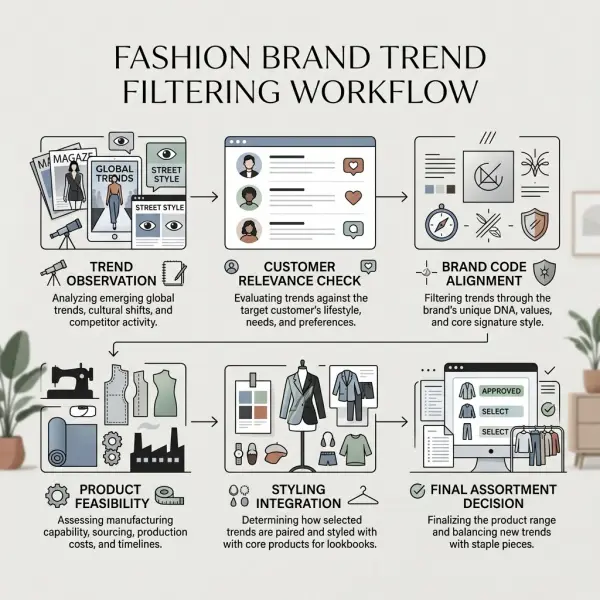
The filtering process should ask practical questions before a trend reaches production or campaign planning:
- Does the trend support the brand’s core customer lifestyle?
- Can it be interpreted through existing design codes?
- Will it still feel relevant after the peak visibility moment?
- Does the customer need this product, or only recognize it from social media?
- Can the trend be executed at the right quality level and price point?
- Will it confuse the brand’s existing assortment?
- Does it create new styling possibilities for products customers already own?
These questions help brands avoid inventory driven by visual panic. A trend that looks compelling online may not work in store, in fit sessions, in climate realities, or in customers’ daily wardrobes.
The better approach is selective adaptation. A trend toward metallics might become a subtle hardware update, a satin accessory, or a soft shimmer knit rather than a full metallic collection. A trend toward oversized volume might become a relaxed shoulder or wider trouser leg rather than extreme proportions that only suit editorial styling.
Fashion businesses should treat trends as inputs, not instructions.
Signature Style and Customer Trust
Customers do not only buy garments. They buy confidence in a decision.
A clear signature style helps customers trust that a brand understands a particular way of dressing. This is especially valuable for customers who feel overwhelmed by too many options. When the market offers endless trends, a brand with a defined point of view can become a filter.
That trust can show up in several ways. Customers may return because they know the fit works. They may follow the brand because the styling feels useful. They may buy new pieces because the color palette integrates with previous purchases. They may recommend the brand because it solves a consistent wardrobe problem.
This does not mean customers want brands to be predictable in a flat way. They still want discovery. But discovery works better when it is anchored. A new product feels less risky when it belongs to a familiar style universe.
This is particularly relevant for wardrobe-based categories such as workwear, modest fashion, premium essentials, contemporary womenswear, tailoring, knitwear, and lifestyle apparel. In these categories, customers often care about repeatability, compatibility, and long-term wearability. A strong signature style can make assortment planning more commercially intelligent.
The next article, why personal style matters more than fashion trends, will go deeper into why this kind of style clarity may create more durable value than trend participation alone.
The Operational Side of Signature Style
Signature style must be operationalized. Otherwise, it remains a moodboard concept.
A fashion brand may say it stands for “modern elegance,” but that phrase alone is not enough for product development. What does modern elegance mean in sleeve length, fabric weight, fit tolerance, button choice, neckline depth, print scale, or garment care expectations? What does it mean for photography, casting, styling, retail display, packaging, and customer service?
Operational clarity turns aesthetic intention into repeatable execution. This matters because fashion businesses involve many decisions across many teams. If each team interprets the style differently, the brand becomes inconsistent.
A practical signature style system may include:
- a design code document;
- fit and proportion guidelines;
- approved color architecture;
- fabric and trim direction;
- styling principles;
- product naming logic;
- visual merchandising rules;
- photography and art direction references;
- customer communication language;
- seasonal trend adoption criteria.
This does not have to become bureaucratic. In smaller fashion businesses, a concise style guide can be enough. The goal is to create shared judgment. When a new product idea appears, the team should be able to discuss whether it strengthens or weakens the signature.
For garment manufacturers and sourcing partners, this clarity can also improve execution. If a brand consistently needs certain fabric hands, drape behavior, finish quality, or construction details, suppliers can work more effectively. Signature style is not only visual; it has material and technical implications.

Signature Style for Retail and Merchandising
Retail is where signature style becomes visible to the customer. A brand may have a clear internal vision, but if merchandising is scattered, the customer will not feel it.
A strong retail expression does not require every item to look identical. It requires thoughtful relationships between products. The customer should be able to see how a shirt connects to a trouser, how a bag completes the mood, how a knit updates a familiar silhouette, and how the new season relates to previous purchases.
This is where merchandising can turn style into a commercial experience. Instead of presenting products only by category, brands can organize around style stories:
- “Soft tailoring for everyday work”
- “Neutral layers with quiet texture”
- “Modern modest dressing for warm weather”
- “Weekend pieces with polished structure”
- “Accessories that define the look”
- “Evening updates for a refined wardrobe”
These stories help customers understand how to use the product. They also support AI search and on-site discovery because they reflect intent-based language rather than only product labels.
For multi-brand retailers, signature style can also apply to buying strategy. A retailer does not need to carry every trend. It needs to curate trends that fit its customer promise. The best assortment decisions often come from knowing what not to buy.
How Individuals Can Build Signature Style More Intentionally
Although this article is written for fashion industry readers, individual style behavior remains the foundation of the market. Brands serve real people, and real people build style through trial, repetition, and editing.
For individuals, building a signature style begins with observation. The most useful clues are not always found in aspirational images. They are found in what someone actually wears repeatedly, what makes them feel comfortable, what receives natural compliments, and what survives wardrobe edits.
A practical process might begin with three questions:
- What do I wear most often when I feel like myself?
- Which pieces do I admire but rarely use?
- Which colors, shapes, or fabrics consistently make dressing easier?
The answers reveal the gap between fantasy style and lived style. That gap is important. A person may love dramatic fashion imagery but need clothes for commuting, parenting, teaching, client meetings, or running a business. Signature style becomes strongest when aspiration and reality are brought into conversation.
The goal is not to remove imagination. The goal is to make imagination wearable.
For brands, this personal process offers a useful insight: customers often need help translating inspiration into real outfits. Styling content, capsule edits, fit education, and product pairing can support that translation.
Common Mistakes When Building a Signature Style
One common mistake is copying a style icon too literally. Inspiration can be useful, but imitation rarely creates a durable signature. A copied look may fail because the person’s body, climate, profession, culture, budget, or lifestyle is different. For brands, copying another brand’s recognizable codes can also weaken differentiation and create customer confusion.
Another mistake is reducing signature style to a color palette. Color is important, but it is not enough. A beige wardrobe can be minimal, romantic, rustic, corporate, coastal, luxury, or dull depending on fabric, fit, styling, and detail. Without silhouette and attitude, palette alone may become generic.
Some brands also mistake consistency for lack of innovation. They avoid repetition because they fear customers will get bored. But in fashion, repetition can create recognition when handled well. The issue is not repeating a blazer, dress shape, or styling code. The issue is repeating without improvement, relevance, or freshness.
A more commercial mistake is adopting too many trends because each one appears to have demand. This can lead to fragmented assortments, unclear visual merchandising, and difficult inventory planning. A brand may attract many first-time browsers but fail to build repeat customers because the identity feels unstable.
A better approach is to build a style filter before the buying or design process begins. The filter should clarify which trends deserve adaptation, which should remain as content references, and which should be ignored.
What Signature Style Does Not Mean
Signature style is sometimes misunderstood as restriction. It is better understood as direction.
It does not mean a person must dress the same way forever. It does not mean a brand should avoid seasonal updates. It does not mean trends are irrelevant. It does not mean every product must be basic, neutral, classic, or minimal. Many expressive, colorful, avant-garde, modest, romantic, sporty, or streetwear-driven brands have strong signature styles.
What matters is coherence. The customer should understand the logic behind the choices.
Signature style also should not be used as an excuse to ignore customer change. As discussed in how personal style evolves over time, people’s wardrobes shift as their lives shift. A brand with a strong signature must still listen. It should evolve through better product relevance, not random aesthetic movement.
There is also a risk of over-defining the style. If a brand creates rules so narrow that every product becomes predictable, the assortment may lose energy. The best signature style systems leave room for surprise. They define the center clearly but allow thoughtful variation around it.

How Fashion Businesses Can Apply This Strategically
Fashion businesses can use signature style as a practical decision-making tool across creative, commercial, and operational functions.
In product development, signature style helps teams decide which ideas deserve investment. A design may be beautiful but wrong for the brand. Another may look quiet on a moodboard but become commercially powerful because it strengthens a core wardrobe need. The style filter helps distinguish novelty from relevance.
In sourcing and manufacturing, signature style can guide fabric and construction consistency. If a brand’s identity depends on fluid drape, then fabric selection, sampling, and quality control must support that. If the signature depends on sharp tailoring, pattern accuracy and pressing standards become more important. If the brand is known for soft everyday comfort, hand feel and care performance matter.
In retail, signature style can improve assortment navigation. Customers should not have to work too hard to understand how the pieces relate. Merchandising, styling, and product copy should show the logic of the wardrobe.
In marketing, signature style creates a stronger content system. Instead of chasing every trending aesthetic, the brand can repeatedly educate customers around its own point of view: how to layer, how to style proportions, how to use accessories, how to update familiar pieces, how to dress for real-life occasions.
A simple implementation framework can help:
- Define the brand’s core style codes.
- Identify which codes are fixed and which are flexible.
- Build seasonal trend filters before designing or buying.
- Create product stories around customer use cases.
- Measure repeat purchase, return reasons, and styling engagement.
- Refine the signature through customer behavior, not only creative preference.
This approach makes signature style commercially useful rather than purely aesthetic. It gives the brand a clearer way to grow without losing itself.
FAQ
What is a signature style?
A signature style is a recognizable pattern of dressing or design that reflects consistent taste, values, proportions, colors, fabrics, or styling habits. For an individual, it may appear in repeated wardrobe choices that feel authentic and practical. For a fashion brand, it appears in design codes, product consistency, visual identity, and the customer experience. Signature style does not require sameness. It allows variation, but the overall direction remains clear. The strongest signature styles are recognizable without feeling frozen.
Can you follow trends and still have a signature style?
Yes. A signature style can include trends when they are filtered carefully. The key is adaptation. Instead of copying a trend exactly, the person or brand interprets it through existing style codes. For example, a brand known for modest elegance may adapt a sheer trend through layered organza details rather than revealing garments. A minimalist customer may adopt a trending color through one accessory. Trends become useful when they refresh the style, not when they replace it.
Why is signature style important for fashion brands?
Signature style helps fashion brands build recognition, trust, and consistency. Customers are more likely to understand a brand when its products, styling, imagery, and messaging feel connected. This can support repeat purchases because customers can imagine how new products fit into their existing wardrobes. It also helps internal teams make better decisions across design, sourcing, merchandising, and marketing. Without a clear signature, collections may become fragmented and overly dependent on short-term trends.
Is signature style the same as a capsule wardrobe?
No. A capsule wardrobe is usually a limited selection of versatile garments designed to work together. A signature style is broader. It refers to the recognizable taste or style logic behind clothing choices. Someone can have a capsule wardrobe without a strong signature style if the pieces feel generic. Someone else can have a large, expressive wardrobe with a very clear signature because the colors, silhouettes, accessories, and styling habits are consistent.
How can a brand know which trends to ignore?
A brand can ignore a trend when it does not fit the customer’s lifestyle, brand identity, product capabilities, price point, or wardrobe logic. Trend visibility alone is not enough reason to produce or buy inventory. Brands should ask whether the trend strengthens their signature, solves a customer need, can be executed well, and will integrate with the existing assortment. If the answer is unclear, the trend may be better used as content inspiration rather than product direction.
Can a signature style change over time?
Yes. A signature style can evolve as individuals, customers, and brands mature. The important point is continuity. Evolution should feel like refinement, not confusion. A brand may improve fabric quality, modernize silhouettes, introduce new occasions, or adjust styling while keeping its core identity intact. Individuals may also update their wardrobes as their lifestyle changes. Strong signature style is not fixed forever; it is stable enough to be recognized and flexible enough to remain relevant.
What is the biggest mistake in building a signature style?
The biggest mistake is building style from external imitation rather than internal clarity. Copying influencers, competitors, or viral trends may create short-term appeal, but it often lacks durability. For individuals, the result may be a wardrobe that looks good online but does not work in real life. For brands, it can weaken differentiation and confuse customers. A stronger approach begins with lifestyle, fit, fabric, proportion, values, and repeatable style codes.
Conclusion
Building a signature style without following every trend is not about rejecting fashion’s movement. It is about choosing deliberately.
Trends can be useful. They introduce freshness, language, and cultural energy. But they become stronger when filtered through a clear style identity. Without that filter, wardrobes become crowded and brands become difficult to recognize.
For fashion businesses, signature style is both creative and operational. It shapes product development, sourcing, merchandising, retail experience, marketing, and customer retention. It helps brands decide what to make, what to skip, how to communicate, and how to remain relevant without constantly reinventing themselves.
The most valuable signature styles are not static. They breathe. They evolve with the customer, adapt to the market, and still feel unmistakably themselves.




Comments 0
Leave a CommentSend Comment
Anda harus Login terlebih dahulu untuk dapat memberikan komentar.