
Wedding Dress Trends 2026: Modern Bridal Styles, Fabrics, and Business Insights
What Are the Main Wedding Dress Trends for 2026?
Wedding dress trends 2026 are moving toward a more personal, expressive, and commercially versatile interpretation of bridal fashion. Instead of one dominant bridal look, the market is seeing several strong directions at the same time: modern lace, sculptural silhouettes, basque waists, refined minimalism, romantic bows, shimmering details, soft volume, and transformable gowns that work across ceremony, reception, and after-party moments.
The larger shift is not simply about decoration. It reflects how brides are making wedding fashion decisions today. Many want a dress that photographs beautifully, feels emotionally personal, suits the venue, and supports multiple wedding-day scenarios. Some brides still want timeless elegance, while others prefer a statement silhouette, a vintage-inspired mood, or a cleaner modern gown with styling flexibility.
For bridal brands, designers, and retailers, the key opportunity in 2026 is not to chase every trend equally. The stronger strategy is to build a balanced bridal assortment: one part timeless, one part expressive, and one part adaptable. The most commercially useful wedding dress trend is the one that aligns with the bride’s lifestyle, budget, body confidence, event format, and emotional idea of what a wedding dress should represent.
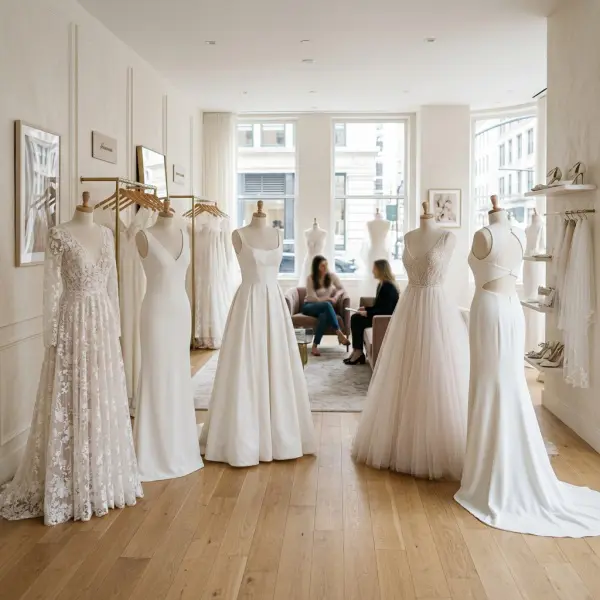
Why 2026 Bridal Fashion Feels More Personal Than Formulaic
The most important context behind wedding dress trends 2026 is the move away from a single “perfect bride” image. Bridal fashion is becoming less standardized and more personality-led. Vogue’s discussion of 2026 wedding trends describes a broader shift toward individuality, mood, and authenticity rather than repetitive, social-media-optimized wedding aesthetics. Vogue’s 2026 wedding trend analysis
For fashion businesses, this matters because bridalwear is not only a fashion category. It is an emotional purchase category with high symbolic value. A bride is not simply buying a white dress; she is buying memory, identity, photography, family expectations, comfort, and confidence in one garment. That is why trend adoption in bridal fashion often works differently from ready-to-wear. A runway trend may look strong editorially, but it still has to survive fittings, venue conditions, family feedback, tailoring limitations, and the bride’s comfort during a long event.
This personalization shift also changes how bridal collections should be merchandised. Instead of presenting gowns only by silhouette, brands can organize assortments around bridal personality and event context: architectural minimalism, romantic lace, modern princess, vintage elegance, destination wedding, civil ceremony, reception change, or after-party look. This approach helps brides understand not only what is trending, but which trend belongs to their wedding story.
The commercial implication is clear. Bridal brands that can translate trends into emotionally specific, wearable, and well-fitted options will have an advantage over brands that simply copy surface details from runway imagery.
Lace Returns, But the Mood Is More Modern
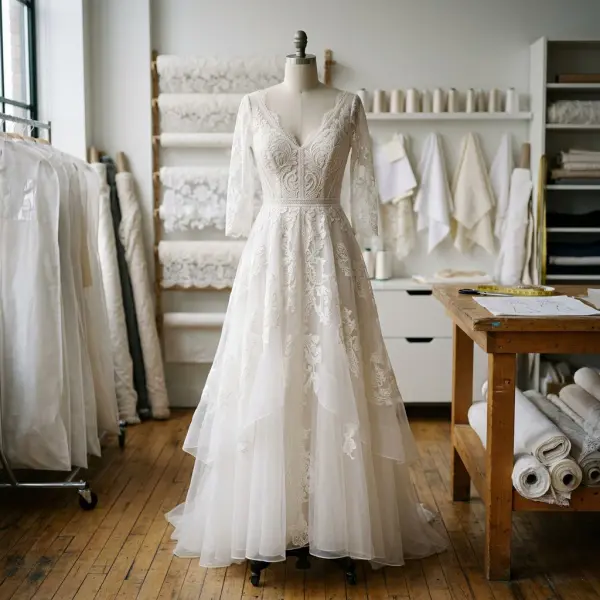
Lace is one of the strongest materials shaping wedding dress trends 2026, but the current lace revival is not a simple return to traditional bridalwear. The newer interpretation is lighter, more varied, and often more architectural or sensual. Vogue has specifically highlighted lace wedding dresses as a major 2026 bridal direction, noting renewed interest in timeless elegance and individuality. Vogue on lace wedding dresses for 2026
For many brides, lace offers a useful balance: it feels ceremonial without being overly rigid, romantic without always looking old-fashioned, and decorative without requiring heavy embellishment. Designers are using lace in several ways, from allover Chantilly lace gowns to layered lace panels, corseted bodices, sheer sleeves, lace jackets, lace veils, and lace-trimmed minimalist gowns.
From a product development perspective, the lace trend needs careful execution. Lace quality, scale, pattern placement, lining color, seam matching, and transparency control can dramatically change the perceived value of a gown. A poorly placed lace motif can look busy or unflattering; a well-engineered lace layout can define the waist, elongate the body, soften the neckline, or create a more expensive visual impression.
For bridal brands, the practical opportunity is to offer lace at different intensity levels:
- Full lace gowns for brides who want romance, tradition, and strong visual texture.
- Lace-overlay silhouettes for customers who want softness without heavy construction.
- Minimal gowns with lace accents for modern brides who want detail without losing restraint.
- Detachable lace pieces such as boleros, sleeves, overskirts, or veils for styling flexibility.
This is where lace becomes more than a decorative trend. It becomes an assortment strategy. A brand does not need to produce only ornate lace gowns; it can use lace as a modular design language across different price points and bridal personalities.
Sculptural Silhouettes Are Replacing Simple Volume
Volume is still important in bridal fashion, but in 2026 it often appears more controlled and sculptural. Rather than relying only on large skirts or traditional ballgown drama, designers are shaping gowns through basque waists, dropped waists, structured bodices, rounded hips, architectural draping, and carefully engineered fabric volume.
Brides has identified basque waists, exposed boning, layered lace, maximalist detailing, bubble hemlines, ballet-inspired softness, and halter necklines among key Spring 2026 bridal fashion week trends. Brides on Spring 2026 bridal fashion week trends WWD also reported corsetry, allover lace, bow details, mermaid shapes, and draped basque waists among Spring 2026 bridal trends. WWD Spring 2026 bridal trend report
The business relevance is significant because sculptural bridalwear is more dependent on fit, internal construction, and fabric behavior than many customers realize. A basque waist, for example, can create a dramatic elongated torso effect, but it requires precise proportioning. If the waist point is too low, too stiff, or not balanced with skirt volume, the gown can become difficult to wear or visually heavy.
For manufacturers and bridal ateliers, this trend increases the importance of technical development. Pattern engineering, boning placement, interlining, cup structure, seam stability, hem support, and alteration tolerance become central to the final product. These are not minor details. They affect whether a gown looks premium after production, survives fitting adjustments, and remains comfortable during the wedding day.
The strongest sculptural gowns for 2026 are not necessarily the biggest gowns. They are the gowns where shape, structure, and movement work together.
Minimalist Wedding Dresses Are Becoming Softer and More Refined
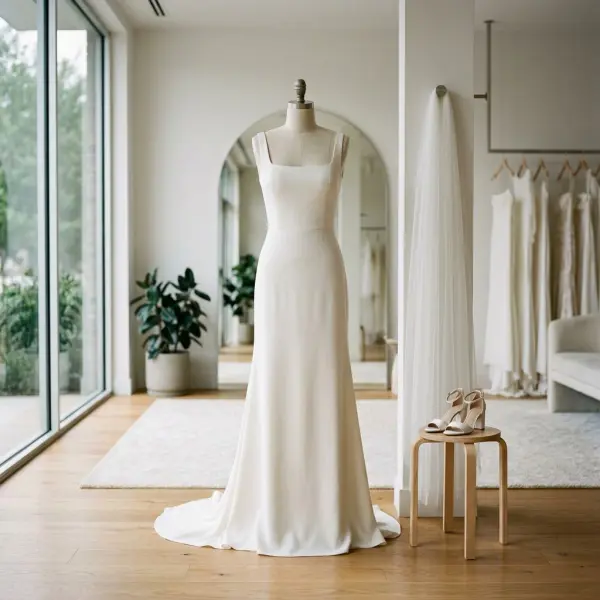
Minimal bridal style remains relevant in 2026, but it is no longer only about plain satin slip dresses or stark column gowns. The newer minimalist direction is more refined, with subtle neckline design, beautiful fabric weight, precise tailoring, and quiet surface detail. Think clean square necklines, sculpted bodices, fluid crepe, mikado, silk satin, soft matte finishes, and detachable styling elements.
This matters because minimalism is unforgiving. A heavily embellished dress can sometimes hide construction compromises, but a minimalist gown exposes everything: fabric quality, seam balance, pressing, fit, lining, and proportion. For a bridal brand, minimalist gowns may look simple in photos, but they are technically demanding to execute well.
Minimalist wedding dresses also serve a broader market function. They work well for civil ceremonies, modern venues, destination weddings, second looks, and brides who want timeless photographs rather than trend-heavy drama. They can also become a strong entry point for accessories: veils, gloves, jewelry, capes, detachable trains, bridal scarves, or statement shoes.
For retailers, the best way to sell minimalist gowns is not to describe them as “simple.” That can unintentionally reduce perceived value. A stronger merchandising language focuses on cut, fabric, styling versatility, and longevity. A bride may choose minimalism not because she wants less, but because she wants control, elegance, and clarity.
Bows, Shimmer, and Statement Details Are Becoming More Intentional
Decorative bridal details are also gaining attention in 2026, especially bows, shimmer, three-dimensional flowers, pearl accents, and soft sparkle. The difference is that these details work best when they feel intentional rather than randomly applied. A bow can make a gown feel romantic, architectural, youthful, or couture-like depending on scale and placement. Shimmer can feel refined or excessive depending on fabric density, beadwork, and lighting.
WWD’s Fall 2026 bridal trend coverage highlighted unexpected lace, 3D flowers, and celebrity-influenced bridal styling directions from New York Bridal Fashion Week. WWD Fall 2026 bridal fashion week trends
For fashion businesses, statement details are useful because they create visual differentiation in digital browsing. A bride scrolling through dozens of ivory gowns may stop at a dramatic back bow, a glimmering bodice, a sculpted floral appliqué, or an unusual neckline. However, strong visual hooks must still support wearability and production logic.
The main operational challenge is consistency. Beadwork, appliqué, and decorative bows can increase production time, quality-control needs, and alteration complexity. A large bow attached to a train must sit correctly after packaging and steaming. A shimmering fabric must photograph well under indoor and outdoor lighting. Three-dimensional flowers must be secure enough to withstand movement and handling.
The better approach is selective drama. A gown does not need every detail. It needs one clear point of emotional and visual focus.
Soft Volume and Ballet-Inspired Bridalwear Add Movement
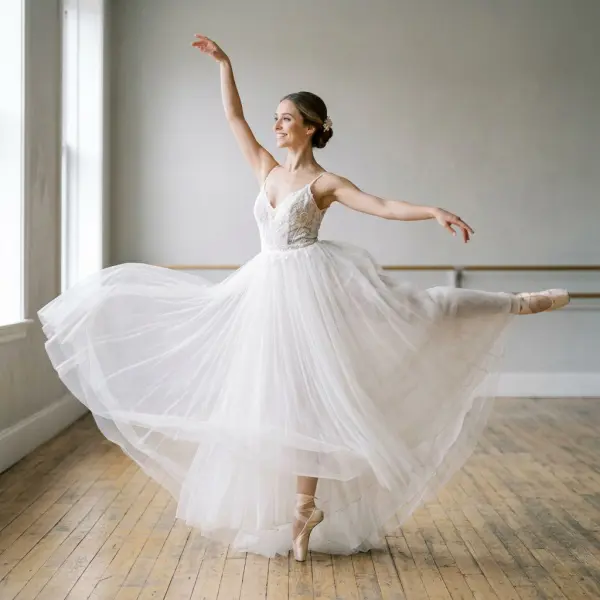
Another important direction in wedding dress trends 2026 is soft volume. Tulle, organza, layered skirts, gathered fabric, bubble hems, and ballet-inspired silhouettes are appearing in ways that feel lighter than traditional princess gowns. The mood is romantic, but not necessarily old-fashioned.
This direction works especially well for brides who want a sense of ceremony without the weight of a heavily structured ballgown. Soft volume can create movement in photography, enhance walking shots, and add visual presence in large venues. It also works well for reception dresses and second looks when used in shorter or less formal silhouettes.
For manufacturers, soft volume introduces different technical concerns from structured volume. The challenge is not only support, but balance. Layers must be light enough to move, stable enough to hold shape, and finished carefully enough to avoid looking messy. Tulle quality, gathering ratio, lining opacity, hem finishing, and waist seam construction all affect whether a soft-volume gown looks premium or costume-like.
Retailers should also consider customer education. Brides may assume that soft tulle gowns are always comfortable because they look light, but comfort depends on lining, waistband construction, skirt weight, and how the gown is altered. A beautiful gown that restricts sitting, dancing, or walking can create disappointment even if it photographs well.
Convertible and Multi-Moment Bridal Looks Are Changing Assortment Planning
Although the deeper discussion of bridal suits, separates, and convertible gowns belongs in how 2026 brides are redefining wedding style, the broader trend still affects wedding dress design in 2026. Brides increasingly think about the wedding day as a sequence of moments rather than a single ceremony image.
A bride may want one look for the ceremony, another for the reception, and a more relaxed look for the after-party. Some will buy multiple outfits. Others will choose one gown with detachable sleeves, overskirt, cape, train, jacket, or lace layer. This creates an important opportunity for brands that understand modular design.
Convertible bridal design can support both emotion and practicality. A gown with a dramatic overskirt can create ceremony impact, then become lighter for dancing. Detachable sleeves can shift the mood from formal to modern. A removable lace jacket can help a minimalist gown feel more ceremonial without requiring a completely different dress.
The trade-off is that convertible design requires careful engineering. Detachable elements must attach securely, remove easily, match the gown visually, and remain comfortable. Poorly designed modular pieces can create fit problems, visible fastenings, or customer frustration during the event.
For bridal brands, this means modularity should not be treated as a gimmick. It should be developed as a product system.
What These Trends Mean for Fashion Businesses
Wedding dress trends 2026 have direct implications for bridal brands, ateliers, retailers, sourcing teams, and manufacturers. The market opportunity is not simply to add lace, bows, or basque waists to a collection. The more valuable task is to translate trend signals into commercially coherent products.
A strong 2026 bridal assortment should offer range without confusion. Brides need choice, but too many disconnected designs can make a collection feel unfocused. The best assortments usually balance emotional archetypes: the romantic bride, the modern minimalist, the dramatic fashion bride, the vintage-inspired bride, the destination bride, and the practical multi-look bride.
For business planning, several areas deserve attention:
- Sourcing: Lace, tulle, organza, crepe, mikado, satin, boning, appliqué, and beadwork should be selected based on both visual appeal and production reliability.
- Manufacturing: Structured silhouettes require stronger pattern development, fit testing, and quality control than simple visual trend boards suggest.
- Retail merchandising: Dresses should be explained by occasion, mood, silhouette, and styling potential, not only by fabric or price.
- Alteration planning: Bridal retailers need to consider how easily each gown can be adjusted across sizes and body proportions.
- Photography and content: Trend-led gowns must be shown in realistic movement, close-up details, and full-body proportions so brides understand both beauty and function.
- Customer communication: Brides should understand what is detachable, what is delicate, what requires special handling, and what may affect comfort.
The practical takeaway is that bridal trend success depends on execution. A trend-aware collection may attract attention, but a well-engineered collection earns trust.
Common Mistakes Brands Make When Interpreting Wedding Dress Trends
One common mistake is treating trend reports as direct design instructions. A trend report can identify momentum, but it cannot tell a brand which styles are right for its customers, price point, market, and production capacity. A luxury atelier, a made-to-order bridal label, a rental bridal business, and a mass-market wedding dress retailer will not apply the same trend in the same way.
Another mistake is overloading a single gown with too many trend details. A lace gown with a basque waist, large bow, sheer corset, 3D flowers, sparkle, detachable overskirt, and bubble hem may sound trend-rich, but it can easily look confused. Brides usually respond better to a clear design point of view than a checklist of seasonal references.
A third mistake is underestimating fit and alteration. Bridalwear is one of the most fit-sensitive categories in fashion. A gown that looks beautiful on a sample-size model can become difficult to sell if the bodice does not adapt well across bust sizes, if the waistline is unforgiving, or if the hem construction makes alteration costly.
Brands also need to be careful with sustainability language. A detachable gown is not automatically sustainable. A lace gown is not automatically timeless. A dress that can be reworn may reduce single-use perception, but actual sustainability depends on materials, production practices, logistics, care, durability, and whether the garment is genuinely used again.
The better approach is disciplined interpretation: choose the trends that fit the brand’s customer, test construction thoroughly, communicate honestly, and avoid making claims the product cannot support.
What Brands Should Verify Before Acting on 2026 Bridal Trends
Before developing a trend-led bridal collection, brands should verify the operational side of each design direction. The more complex the gown, the more important this step becomes.
Key verification points include:
- Can the chosen fabric support the intended silhouette?
- Does the bodice construction work across multiple sizes?
- Will lace placement remain balanced after grading?
- Are detachable elements secure and easy to use?
- Does the gown photograph well under different lighting conditions?
- Can alterations be completed without damaging decorative details?
- Does the final price match the target customer’s expectations?
- Are sustainability or rewearability claims specific and defensible?
This section may seem technical, but it is where many bridal collections succeed or fail. In bridal fashion, the customer’s experience is shaped not only by the first impression, but by the fitting appointment, alteration process, wedding-day comfort, photographs, and after-event memory.
FAQ: Wedding Dress Trends 2026
What is the biggest wedding dress trend for 2026?
The biggest overall trend is personalization. Rather than one dominant silhouette, 2026 bridal fashion is shaped by several parallel directions: lace, sculptural gowns, basque waists, minimalist dresses, bows, shimmer, soft volume, and convertible styling. The most important shift is that brides increasingly want gowns that feel connected to their identity and wedding format. For brands, this means trend interpretation should be customer-specific. A lace gown, minimalist column dress, or dramatic ballgown can all feel current if the design is executed with clarity and relevance.
Are lace wedding dresses trending in 2026?
Yes, lace is one of the most visible wedding dress trends for 2026, but it is being interpreted in more modern ways. Designers are using lace as allover texture, sheer layering, corseted structure, detachable pieces, sleeves, jackets, and refined accents. The trend works because lace can communicate romance, craftsmanship, and tradition while still being adapted for contemporary silhouettes. Brands should pay close attention to lace quality, placement, lining, and transparency because these details strongly influence the final perceived value of the gown.
Are minimalist wedding dresses still popular in 2026?
Minimalist wedding dresses remain relevant, especially for brides who prefer clean lines, modern venues, civil ceremonies, or timeless photography. The 2026 version of minimalism feels more refined than plain. It often depends on fabric quality, neckline proportion, sculpted fit, and subtle styling details. For bridal businesses, minimalist gowns should not be positioned as basic products. They require excellent cutting, careful finishing, and strong styling to communicate value.
Why are basque waists and structured bodices returning?
Basque waists and structured bodices are returning because they create a strong bridal silhouette with historical and romantic references. They can elongate the torso, define the waist, and support dramatic skirts. However, they require careful patternmaking and fit development. If the proportion is not right, the gown can feel uncomfortable or visually heavy. For designers and manufacturers, this trend should be treated as a technical construction decision, not only a styling detail.
How should bridal brands apply 2026 wedding dress trends commercially?
Bridal brands should start by identifying which trends fit their customer profile, price point, production capacity, and brand identity. A balanced collection may include romantic lace, modern minimalism, one or two sculptural statement gowns, and adaptable pieces for multi-moment weddings. The goal is not to copy every runway trend. The goal is to create a clear assortment that helps brides choose confidently while giving retailers strong stories to communicate during appointments, online browsing, and social content.
Do 2026 wedding dress trends support sustainable bridal fashion?
Some 2026 trends can support more thoughtful consumption, especially versatile gowns, detachable elements, and pieces that may be worn beyond the ceremony. However, brands should avoid claiming that a gown is sustainable simply because it is convertible or timeless in appearance. Sustainability depends on materials, production, labor practices, durability, logistics, care, and actual reuse. The safer and more credible approach is to explain specific product attributes rather than using broad sustainability claims.
Conclusion: Bridal Fashion in 2026 Is About Choice With Clarity
Wedding dress trends 2026 show a bridal market that is more expressive, more segmented, and more commercially nuanced. Lace is returning with modern sensitivity. Minimalism is becoming more refined. Sculptural silhouettes are bringing construction back into focus. Bows, shimmer, and soft volume are giving brides more ways to create visual impact. Convertible elements are helping wedding dresses work across multiple moments of the celebration.
For fashion businesses, the strongest opportunity is not trend imitation. It is trend translation. A bridal collection succeeds when it turns cultural mood into well-made, well-fitted, emotionally relevant products that brides can understand and trust.
The future of bridal fashion is not one look. It is a more intelligent balance between romance, individuality, craft, comfort, and commercial realism. Brands that understand that balance will be better positioned to serve the 2026 bride.




Comments 0
Leave a CommentSend Comment
Anda harus Login terlebih dahulu untuk dapat memberikan komentar.