
Smocking and Shirring Explained for Garment Construction
A fitted summer dress made from non-stretch cotton, a blouse with a softly gathered neckline, and a children's garment featuring decorative embroidery may appear to have little in common. Yet all three can demonstrate how fabric manipulation allows designers to control garment fullness, introduce texture, and influence fit without fundamentally changing the fabric itself.
Smocking and shirring are two construction techniques that achieve these effects through different stitching methods. Although the terms are frequently used interchangeably in contemporary fashion retail, their technical differences matter when developing patterns, selecting fabrics, estimating production costs, and establishing quality standards.
For fashion brands and garment manufacturers, understanding these techniques is particularly useful when designing clothing that balances decorative appeal with functional flexibility.
Quick Answer: What Are Smocking and Shirring?
Smocking and shirring are fabric manipulation techniques used in garment construction to control fullness, create surface texture, and influence the fit of clothing.
Traditional smocking involves arranging fabric into small, regular folds and securing them with decorative embroidery stitches. Depending on the stitch pattern, the finished surface may retain some flexibility without requiring elastic thread.
Shirring involves gathering fabric through multiple rows of stitching. In modern apparel construction, elastic shirring commonly uses elastic thread to draw fabric together, creating a textured section that can expand and contract.
Both techniques are used in dresses, blouses, children's clothing, sleeve cuffs, waistbands, and decorative garment panels. However, traditional smocking generally emphasizes structured embroidery and craftsmanship, while elastic shirring is particularly useful for creating flexible garment sections.
The suitability of either technique depends on fabric weight, construction method, desired fit, production capability, and customer expectations. A lightweight woven fabric may respond well to elastic shirring, while heavier materials may require a different construction approach to achieve controlled gathering.
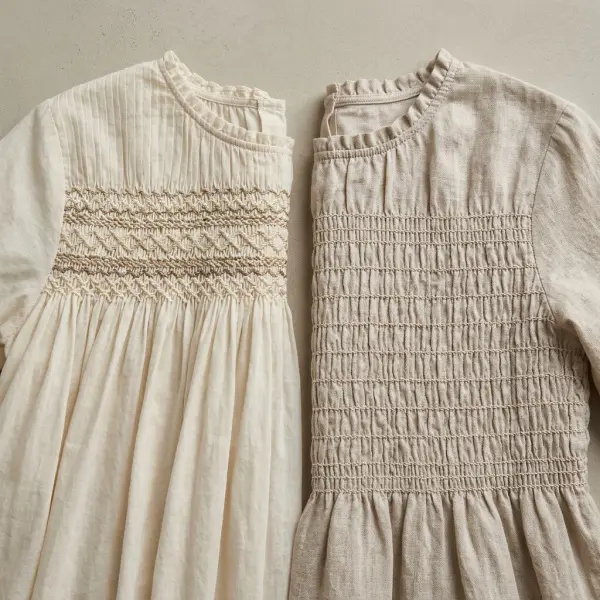
Understanding Smocking in Garment Construction
Smocking is a needlework and fabric manipulation technique in which stitches secure arranged folds of fabric to produce decorative patterns, controlled fullness, and, in certain constructions, flexibility.
Traditional English smocking typically begins with a series of evenly gathered pleats. Embroidery stitches are then worked across selected folds, establishing relationships between them and creating geometric or decorative patterns.
The Smocking Arts Guild of America describes traditional smocking as embroidery worked over gathered fabric, a construction principle that distinguishes it from ordinary surface embroidery applied to flat material.
The Relationship Between Decoration and Function
Smocking has historically served both decorative and functional purposes. Before modern elastic materials became widely available, certain smocking constructions allowed garments made from relatively inflexible woven fabrics to accommodate movement.
The Museum of English Rural Life documents how historical smocks incorporated gathered and stitched sections around areas such as the chest, back, and cuffs. These sections provided flexibility while controlling the fullness of the garment.
In contemporary fashion, the decorative component often receives greater attention. Designers may use embroidered smocking to introduce craftsmanship, create visual distinction, or establish a particular aesthetic associated with heritage clothing and artisanal production.
Nevertheless, smocking should not be treated solely as embellishment. Its arrangement can affect the dimensions, thickness, drape, and flexibility of an entire garment panel.
Common Forms of Smocking
Smocking encompasses several related fabric manipulation approaches rather than one universal stitch pattern.
Common examples include:
- English smocking: Decorative embroidery worked across pre-gathered fabric, often creating geometric or floral patterns.
- Counterchange smocking: Fabric manipulation that uses existing patterns, such as checks or stripes, to guide the arrangement of folds.
- Canadian smocking: Fabric manipulation using strategically positioned stitches to create dimensional folds and geometric surface effects, often without visible decorative embroidery on the face of the fabric.
- Machine smocking: Machine-assisted decorative stitching over arranged or gathered fabric, depending on the intended construction.
These approaches can produce considerably different results. A traditional embroidered bodice and a dimensional Canadian-smocked panel may belong to the same broad category of fabric manipulation, but they should not be expected to deliver identical stretch, recovery, or garment fit.
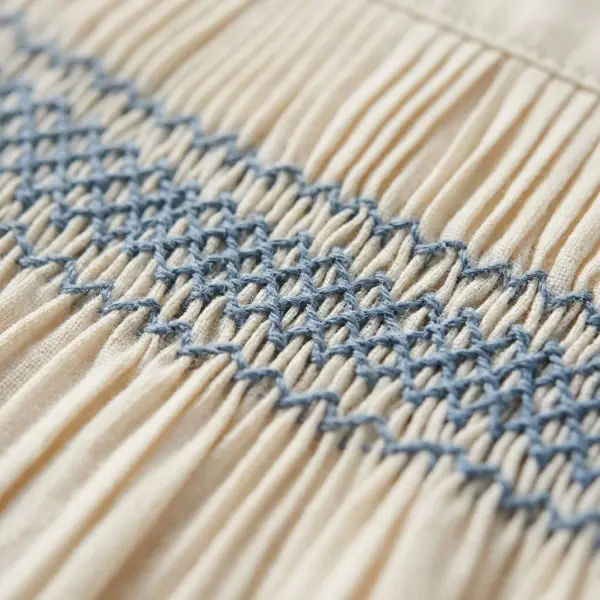
Understanding Shirring in Garment Construction
Shirring is a technique that gathers fabric through multiple rows of stitching to create controlled fullness, surface texture, and, when elastic materials are used, flexible garment sections.
The broader definition of shirring does not necessarily require elastic thread. Non-elastic shirring can also be used to produce decorative gathering. In contemporary garment sewing, however, the term frequently refers to elastic shirring because of its application in fitted yet expandable garment panels.
How Elastic Shirring Works
A common method of elastic shirring uses conventional sewing thread in the upper needle and elastic thread in the bobbin of a compatible sewing machine. As successive rows are stitched, the elastic draws the material together and creates a contracted fabric section.
The resulting panel can extend when stretched and contract when the stretching force is removed, provided that the elastic and stitching retain sufficient recovery.
Machine manufacturers such as Brother provide guidance for sewing elastic shirring, illustrating how conventional sewing equipment can be used for this technique on compatible machine models.
The degree of contraction is not determined by elastic thread alone. Fabric weight, stitch formation, thread tension, row arrangement, and elastic properties collectively influence the finished result. Consequently, two visually similar fabrics may produce different shirred dimensions even when sewn using the same equipment.
Why Shirring Is Useful for Clothing Fit
Elastic shirring is particularly useful when designers want selected areas of a woven garment to accommodate movement or dimensional variation.
Consider a summer dress made from cotton lawn. Without additional construction features, its woven bodice may require carefully positioned darts, shaping seams, or an opening with a zipper. A shirred bodice offers another design possibility by allowing a section of the fabric to contract around the body and expand when the garment is worn.
This flexibility does not eliminate the need for pattern development. The designer still needs to establish appropriate relaxed dimensions, wearing dimensions, coverage, and comfort.
Elastic shirring is commonly applied to bodices, waistlines, sleeve cuffs, and back panels where localized flexibility can support the intended silhouette.
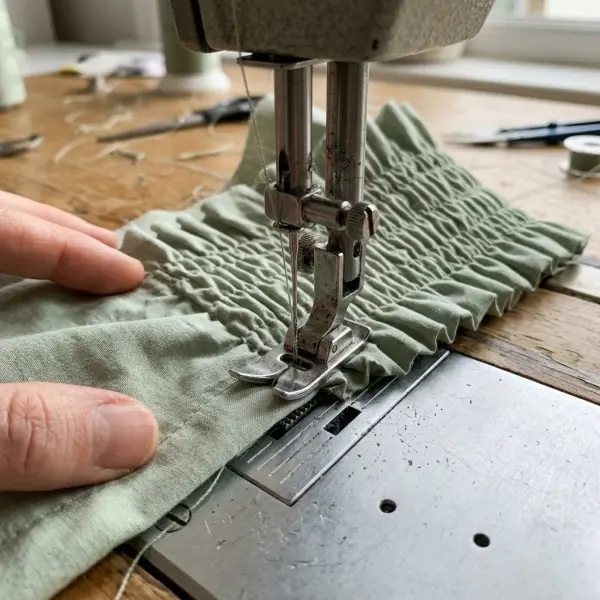
Smocking vs Shirring: What Is the Difference?
The main difference between traditional smocking and elastic shirring lies in how fabric fullness is controlled. Traditional smocking uses decorative stitches to organize and secure folds, while elastic shirring uses elasticated stitching to contract the fabric and provide recoverable extension.
The finished appearance may be similar from a distance, particularly when both techniques are used across a garment bodice. Their construction requirements and functional characteristics, however, are different.
|
Comparison Factor |
Traditional Smocking |
Elastic Shirring |
|
Construction principle |
Decorative stitches secure arranged fabric folds |
Elasticated stitching contracts fabric |
|
Main sewing material |
Embroidery or conventional sewing thread |
Elastic thread and conventional sewing thread |
|
Surface appearance |
Structured decorative patterns |
Repeated gathered rows |
|
Source of flexibility |
Fold geometry and stitch arrangement |
Elastic contraction and extension |
|
Typical production approach |
Hand embroidery or machine-assisted construction |
Machine sewing or specialized production equipment |
|
Design emphasis |
Craftsmanship, decoration, and controlled fullness |
Texture, flexibility, and adaptable fit |
|
Common applications |
Children's dresses, decorative bodices, heritage-inspired clothing |
Summer dresses, blouses, waistbands, and cuffs |
|
Production considerations |
Pattern preparation, stitch accuracy, and labor requirements |
Elastic consistency, machine setup, and dimensional control |
|
Stretch recovery |
Depends on stitch pattern and fabric construction |
Depends on elastic quality and construction |
Neither method is inherently superior. A premium children's clothing brand may prioritize embroidered details, while a contemporary womenswear business may select elastic shirring to achieve a flexible bodice within its target price range.
A more detailed examination of sewing methods and production requirements is available in Elastic Shirring vs Traditional Smocking: Key Sewing Differences.
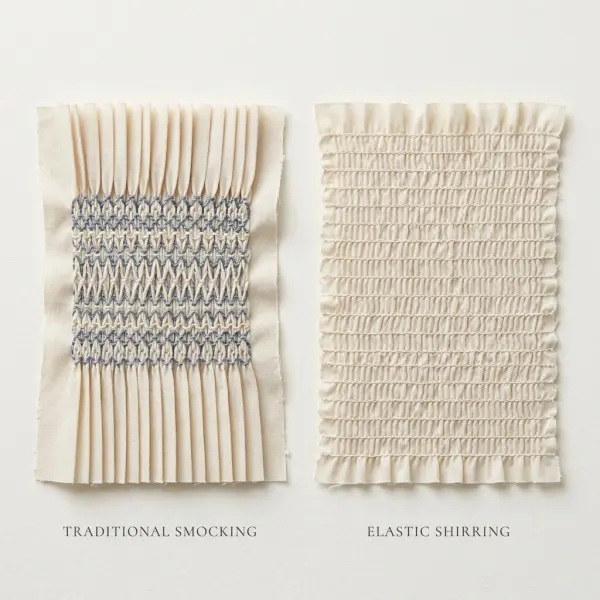
How Smocking and Shirring Influence Garment Design
Smocking and shirring change the relationship between the original dimensions of a fabric and the dimensions of the finished garment. By concentrating material into selected areas, designers can create visual texture, redistribute fullness, and establish transitions between fitted and loose sections.
These changes affect both the aesthetic and structural characteristics of clothing.
Controlling Fullness and Silhouette
Fabric fullness is an essential component of garment design. Additional material may be required to create volume, accommodate movement, or establish a particular silhouette, but unmanaged fullness can make a garment appear bulky or poorly proportioned.
A smocked or shirred waistline can concentrate fullness around the waist while allowing the surrounding fabric to fall freely. Similarly, a shirred sleeve cuff can contain the volume of a wide sleeve and create a more defined transition around the wrist.
These techniques belong to a broader family of construction methods that includes pleats, tucks, and gathers in garment construction. Each method controls fabric fullness differently and should be selected according to the desired structural and visual effect.
Creating Texture Without Changing the Base Fabric
A relatively simple woven fabric can acquire a distinctive surface through smocking or shirring. Plain cotton, for example, may develop a dimensional appearance when arranged into repeated folds and secured with decorative stitches.
This gives fashion designers an additional way to create visual interest without relying exclusively on printed patterns, specialty weaves, or applied embellishments. The construction technique itself becomes part of the garment's aesthetic identity.
There is a commercial trade-off. Although the base fabric may be relatively inexpensive, additional fabric consumption, embroidery, sewing operations, and inspection requirements can increase the finished garment cost.
Supporting Adaptable Garment Fit
Elastic shirring can help a garment accommodate a range of body measurements within the limits established during product development.
A shirred back panel on a fitted dress, for instance, may provide additional flexibility across the torso while allowing the front of the garment to retain a more structured appearance. This can be commercially useful when a fashion brand wants to combine a fitted silhouette with some tolerance for body measurement variation.
However, flexibility should not be confused with universal sizing. A panel that stretches sufficiently may still create excessive pressure, insufficient coverage, or an undesirable appearance at the upper end of its intended size range.
Which Fabrics Are Suitable for Smocking and Shirring?
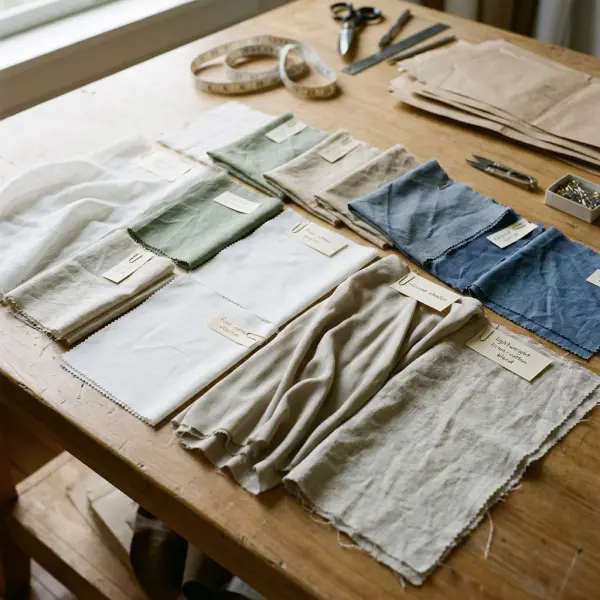
Lightweight to medium-light woven fabrics are often suitable for smocking and elastic shirring because they can be arranged into multiple folds without creating excessive bulk. The final suitability depends on fabric structure, stiffness, thickness, drape, and the intended construction.
Fabric weight is particularly relevant to elastic shirring. An elastic thread may gather a lightweight cotton fabric effectively but produce insufficient contraction when used with a substantially heavier material.
SINGER's sewing machine guidance on shirring recommends testing the construction on sample fabric because material weight and stitch length influence the gathering effect.
Common Fabric Options
|
Fabric |
Construction Characteristics |
Potential Applications |
|
Cotton lawn |
Lightweight, relatively fine, and easy to arrange into small folds |
Dresses, blouses, and embroidered bodices |
|
Cotton voile |
Lightweight and often semi-sheer |
Summer garments and delicate decorative panels |
|
Cotton poplin |
Relatively stable with varying degrees of crispness |
Structured shirred tops and children's clothing |
|
Viscose challis |
Soft, fluid, and drapable |
Relaxed dresses and flexible waistlines |
|
Lightweight linen blends |
Natural texture with varying stiffness |
Casual dresses, tops, and resortwear |
|
Lightweight silk fabrics |
Delicate surface with construction-dependent handling requirements |
Premium decorative garments |
|
Double gauze |
Soft, layered construction with a naturally textured surface |
Relaxed clothing and selected shirred designs |
Fabric categories alone are insufficient for material approval. Cotton poplin, for example, can vary considerably in weight and stiffness, while viscose fabrics may behave differently depending on their weave, finishing, and dimensional stability.
Sourcing teams should evaluate the actual production fabric rather than assume that all materials sharing the same fiber composition will perform consistently.
Common Applications of Smocking and Shirring in Fashion
Smocking and shirring can be incorporated into different garment categories, but their value depends on where the construction is positioned and what it is expected to achieve.
Dresses and Womenswear
In womenswear, elastic shirring is often used across bodices, waistlines, and back panels. It allows designers to introduce localized flexibility while maintaining the visual characteristics of woven fabrics.
Traditional smocking may serve a different purpose within the same category. An embroidered neckline or decorative front panel can become a focal point of a dress, particularly when craftsmanship forms part of the product's positioning.
Children's Clothing
Smocking has a well-established association with children's clothing, including decorative dresses and occasionwear. Its combination of gathered material and embroidered detailing can support traditional design aesthetics.
Elastic shirring can also be incorporated into children's clothing where flexible sections are useful. Nevertheless, designers need to consider appropriate fit, comfort, construction durability, and applicable product safety requirements rather than assume that an elasticated design is automatically suitable for children.
Maternity and Adaptable Clothing
Selected shirred panels can help garments accommodate changing body dimensions, making the technique relevant to some maternity and adaptable clothing designs.
A dress with an elasticated upper bodice and unrestricted fullness below may accommodate certain changes in body measurements more readily than a closely fitted, non-stretch construction. Its suitability still depends on panel placement, elastic pressure, garment length, and the intended stage of use.
Sleeve Cuffs, Necklines, and Waistbands
Smocking and shirring do not need to cover large garment sections. A relatively narrow band can create a meaningful structural or decorative effect.
Shirred cuffs can control sleeve volume, while smocked necklines can introduce texture around the upper garment. Elasticated waist sections can establish shape without relying exclusively on conventional fitted waistband constructions.

Fabric Consumption and Production Cost Considerations
Smocking and shirring influence production costs because fabric is contracted into a smaller finished area while additional sewing operations are required to maintain that construction.
A shirred panel cannot normally be cut using only its intended relaxed finished width. Additional fabric must be included to account for contraction, seam allowances, and construction requirements.
Understanding the Gathering Ratio
A gathering ratio expresses the relationship between the original fabric dimension and the finished gathered dimension.
For example, if a fabric sample measuring 60 centimeters contracts to 30 centimeters after shirring, its gathering ratio is 2:1.
|
Measurement |
Illustrative Value |
|
Original fabric width |
60 cm |
|
Relaxed shirred width |
30 cm |
|
Gathering ratio |
2:1 |
|
Reduction in width |
50% |
This example illustrates the calculation rather than a universal production standard. Actual ratios depend on the selected fabric, construction method, elastic characteristics, and desired appearance.
For garment manufacturers, approving a gathering ratio through sampling is essential because it affects pattern dimensions, marker efficiency, fabric purchasing, and finished garment measurements.
Labor and Manufacturing Requirements
Traditional hand smocking can require substantial skilled labor because fabric arrangement and embroidery must be executed accurately. Complex patterns may introduce additional preparation and inspection requirements.
Elastic shirring can be more compatible with repetitive machine production, particularly when suitable equipment and stable operating parameters are available. However, inefficient handling, inconsistent elastic feeding, frequent adjustments, or rework can reduce the expected production advantage.
A fashion business should therefore compare total manufacturing costs rather than focus exclusively on fabric prices or nominal sewing speed. Material utilization, operator capability, defect rates, and production volume all influence whether a construction is commercially viable.
How Fashion Businesses Can Apply Smocking and Shirring Strategically
The most effective application begins with identifying what the garment construction needs to accomplish. Decoration, localized flexibility, premium craftsmanship, and adaptable fit are different objectives, even when they produce visually related designs.
Define the Construction During Product Development
Product developers should communicate the intended technique before suppliers begin sampling. Descriptions such as “smocked bodice” may be insufficient because different suppliers can interpret the same terminology differently.
A garment technical specification should identify relevant details, including:
- The intended smocking or shirring construction method.
- Fabric specification and approved elastic or embroidery thread.
- Position, width, and height of the constructed panel.
- Stitch pattern or row arrangement.
- Target relaxed dimensions and measurement tolerances.
- Required extension and recovery, where applicable.
- Approved appearance after laundering.
Clear specifications reduce the likelihood of a supplier producing the correct general appearance but an unsuitable functional result.
Validate Fabric and Supplier Compatibility
Sourcing decisions should consider the manufacturer's ability to execute the selected technique consistently. A supplier experienced in basic woven garments may not necessarily possess the embroidery skills or machine configuration required for a particular smocking design.
Before bulk production, the brand should approve a representative construction sample made with the intended production fabric and thread. The approval process should establish whether the panel meets both visual and dimensional requirements.
For elastic shirring, testing should also consider how the material behaves after stretching and laundering. An attractive initial sample is not sufficient evidence of consistent long-term performance.
Align Construction With Product Positioning
Traditional decorative smocking can support product positioning built around craftsmanship, heritage-inspired design, or detailed embroidery. Elastic shirring may be more appropriate when the commercial objective emphasizes everyday wearability, flexible fit, and repeatable production.
The distinction should also inform product descriptions. A garment marketed as hand-smocked should genuinely use the represented handwork process. Conversely, a machine-shirred garment can be described accurately through its gathered texture and elasticated construction without implying that it incorporates traditional hand embroidery.
Accurate terminology helps customers understand the product they are purchasing and supports clearer communication throughout sourcing, manufacturing, and retail operations.
Common Mistakes When Using Smocking and Shirring
Treating Both Techniques as Interchangeable
The similarity in finished appearance can lead product developers to specify smocking when they actually require elastic shirring. This may result in a sample that looks acceptable but does not provide the intended flexibility or decorative detail. Technical packs should identify the construction method explicitly rather than relying solely on fashion retail terminology.
Underestimating Fabric Consumption
Because the finished panel occupies a smaller area than the original fabric, inaccurate consumption estimates can lead to material shortages and unexpected costing adjustments. This becomes particularly significant when large garment sections are gathered. Establishing the contraction ratio during sample development allows costing and pattern decisions to reflect the actual construction.
Assuming Elastic Shirring Eliminates Fit Development
Elasticated panels can provide flexibility, but they cannot compensate for every pattern or sizing problem. Excessive reliance on stretch may produce uncomfortable garments or inconsistent silhouettes across sizes. Fit approval should therefore evaluate both the relaxed garment and its behavior across the intended wearing measurements.
Approving Appearance Without Evaluating Performance
A shirred panel may appear uniform during initial inspection but behave differently after repeated extension or washing. Evaluating only its visual appearance can allow dimensional instability or poor elastic recovery to remain undetected until after sale. Brands should establish functional approval criteria alongside their aesthetic requirements.
Detailed production challenges and corrective approaches are discussed in Common Shirring Problems and How to Achieve Consistent Fabric Gathering.
Important Technical Caveats
Smocking and shirring should be evaluated as complete garment constructions rather than isolated decorative techniques. Their performance emerges from the interaction between fabric, thread, stitch formation, pattern dimensions, and finishing processes.
Several limitations deserve particular attention:
|
Assumption |
Technical Reality |
|
All smocking creates stretch |
Some smocking constructions are primarily decorative and provide limited flexibility |
|
Shirring always requires elastic |
Non-elastic shirring also exists |
|
All lightweight fabrics gather identically |
Fabric stiffness, weave, finishing, and thickness affect contraction |
|
Elastic shirring guarantees comfortable fit |
Comfort depends on extension, pressure, panel placement, and garment dimensions |
|
A single gathering ratio works for every design |
Ratios must be established for the specific construction |
|
Machine shirring is always less expensive |
Total cost depends on production efficiency, material use, equipment, and rework |
|
A successful sample guarantees bulk consistency |
Production variation must still be controlled |
These limitations are especially relevant when fashion brands transfer an approved design to another supplier or substitute a fabric after sampling. Even relatively small material changes can require renewed construction and fit approval.
Frequently Asked Questions (FAQ)
1. Is smocking the same as shirring?
No. Traditional smocking involves securing arranged fabric folds with decorative stitches, while shirring gathers fabric using multiple rows of stitching, commonly incorporating elastic thread in modern apparel.
Fashion retailers sometimes describe elastic-shirred garments as smocked garments because their surfaces appear similar. This terminology may be understandable from a styling perspective, but garment manufacturers need a more precise distinction.
When communicating with suppliers, brands should specify whether they require embroidered smocking, elastic shirring, or another gathered construction. This helps prevent misunderstandings about appearance, labor requirements, fabric consumption, and functional performance.
2. Can non-stretch woven fabrics become stretchy through shirring?
Elastic shirring can introduce localized stretch into a garment section made from non-stretch woven fabric. The extension occurs primarily because the gathered material opens as the elasticated stitching stretches, rather than because the woven fabric itself becomes elastic.
This construction allows designers to create flexible sections using materials that otherwise provide limited extension. However, the available movement remains restricted by the original fabric dimensions, stitch structure, and elastic properties.
Once the gathered fabric approaches its fully extended dimensions, additional stretching may place excessive stress on the thread or surrounding seams.
3. Can smocking be performed using a sewing machine?
Yes. Certain smocking effects can be produced using sewing machines with suitable decorative stitching capabilities, while specialized equipment may support more repetitive commercial production.
Machine smocking should not automatically be considered identical to traditional hand smocking. Differences in stitch formation, pattern complexity, fabric preparation, and surface appearance can influence the finished result.
A fashion brand selecting machine-assisted construction should approve the actual sample rather than rely on the technique's name. If hand craftsmanship is central to the product's positioning, the manufacturing process must also support any related marketing claims.
4. How much extra fabric is required for smocking or shirring?
The additional fabric requirement depends on the gathering ratio achieved by the selected construction. There is no universal multiplier suitable for every fabric, stitch pattern, or garment application.
During sample development, manufacturers can measure the original fabric width and compare it with the relaxed width after construction. This provides a practical basis for calculating the material required to achieve the intended panel dimensions.
The final pattern must also account for seam allowances, finishing operations, potential dimensional changes during laundering, and production tolerances. A ratio established for one fabric should be revalidated when the material or construction changes.
5. Does elastic shirring make a garment more durable?
Not necessarily. Elastic shirring introduces flexibility, but overall garment durability depends on fabric quality, elastic properties, stitch formation, seam construction, and exposure to wear and laundering.
An appropriately constructed shirred panel may accommodate movement that would otherwise place stress on a closely fitted woven section. Nevertheless, elastic thread can deteriorate or lose recovery over time, and damaged stitches may affect localized gathering.
For commercial apparel, durability should be evaluated through suitable garment testing and inspection rather than inferred from the presence of elasticated construction.
6. Can smocking and shirring be used together in one garment?
Yes. Designers can combine decorative smocking and elastic shirring within the same garment when each construction serves a distinct purpose.
For example, a dress may incorporate traditional embroidered smocking across the front bodice for decorative appeal and elastic shirring across the back to provide additional fitting flexibility.
The combined construction requires careful pattern development because the two sections may have different contraction ratios, thicknesses, and extension characteristics. Designers should evaluate their interaction at joining seams and across the intended size range to ensure that the garment maintains balanced proportions and comfortable fit.
Conclusion
Smocking and shirring demonstrate how garment construction can transform the behavior and appearance of otherwise conventional fabrics. Rather than relying exclusively on fiber composition or fabric manufacturing, designers can manipulate material through stitching to create texture, control fullness, and introduce localized flexibility.
Traditional smocking remains particularly relevant where decorative craftsmanship and structured fabric manipulation are important. Elastic shirring offers a different set of possibilities for garments that require expandable sections, gathered texture, and adaptable fit.
For fashion businesses, the most important consideration is not simply choosing between the two techniques. It is understanding how the selected construction affects material consumption, product development, manufacturing consistency, customer comfort, and commercial positioning.
When these factors are addressed during sampling and specification development, smocking and shirring can become deliberate design solutions rather than merely decorative additions.


Comments 0
Leave a CommentSend Comment
Anda harus Login terlebih dahulu untuk dapat memberikan komentar.