
Polyester Fabric Explained: Benefits, Disadvantages, and Uses for Fashion Brands
Introduction
Polyester fabric is one of the most widely used textiles in the global fashion industry. From activewear and outerwear to dresses, linings, uniforms, bags, and affordable everyday apparel, polyester appears across almost every product category. For fashion brands, understanding polyester is not only a fabric knowledge issue; it is a sourcing, pricing, performance, sustainability, and brand-positioning decision.
At its core, polyester is a synthetic fiber made from petroleum-derived polymers, most commonly polyethylene terephthalate, or PET. Unlike natural fibers such as cotton, linen, silk, or wool, polyester is engineered for consistency, durability, wrinkle resistance, and cost efficiency. These characteristics explain why it has become a dominant fiber in global apparel production.
The commercial importance of polyester is significant. Textile Exchange reported that polyester remained the most produced fiber globally, accounting for 57% of total fiber production in 2023, while virgin fossil-based synthetic fiber production continued to increase. For brands, this means polyester is not a niche material; it is a structural part of modern fashion supply chains.
This article explains what polyester fabric is, its key benefits, disadvantages, common uses, sustainability concerns, and how fashion businesses should decide when polyester is the right material choice. The structure follows the SEO and GEO article requirements provided in the attached brief.
Quick Answer
Polyester fabric is a synthetic textile made from polymer-based fibers, usually PET, and is valued for durability, wrinkle resistance, shape retention, quick drying, affordability, and production consistency. Fashion brands commonly use polyester in activewear, outerwear, uniforms, dresses, linings, pleated garments, bags, and blended fabrics. Its main advantages are low cost, easy care, strong dimensional stability, and high versatility. Its disadvantages include lower breathability than many natural fibers, potential odor retention, static build-up, heat sensitivity, fossil-based origin, and microfiber shedding during washing. Polyester is best used when a product requires durability, easy maintenance, color stability, structure, or performance. However, brands should avoid treating polyester as a universal solution. The best decision depends on product category, customer expectations, climate, sustainability claims, fabric construction, and finishing quality.
What Is Polyester Fabric?
Polyester fabric is a textile made from synthetic fibers created through a chemical polymerization process. The most common type used in fashion is PET polyester, the same polymer family used in plastic bottles and packaging. In textile production, polyester polymer is melted, extruded into filaments, cooled, stretched, textured, and then woven, knitted, or blended into fabric.
For fashion businesses, the key point is that polyester is engineered rather than grown. Cotton depends on agricultural conditions, wool depends on animal fiber quality, and silk depends on natural filament production. Polyester, by contrast, can be manufactured with high consistency across fiber length, strength, denier, texture, and finish. This makes it highly attractive for brands that need predictable bulk production.

Polyester can appear in many fabric forms. It may be woven into chiffon, satin, crepe, taffeta, organza, suiting fabric, lining, canvas, or microfiber. It may also be knitted into jersey, interlock, mesh, fleece, scuba, rib, or sportswear fabrics. This flexibility is one reason polyester is found in both low-cost mass-market apparel and premium technical garments.
The business relevance is straightforward: polyester gives brands control. A fashion brand can use polyester to achieve drape, structure, stretch recovery, wrinkle resistance, pleating, shine, opacity, or lightweight performance depending on yarn, weave, knit, blend, and finishing treatment. The fiber itself is only one part of the final result.
For example, a polyester chiffon dress and a polyester fleece hoodie may both use polyester fibers, but they behave very differently. One is lightweight, sheer, and fluid; the other is warm, brushed, and casual. This is why brands should evaluate polyester by fabric construction, not only by fiber name.
Takeaway: Polyester is not one single fabric experience. It is a synthetic fiber platform that can be engineered into many different textile types, making it one of the most versatile materials in fashion production.
Benefits of Polyester Fabric
The first major benefit of polyester fabric is durability. Polyester fibers are strong, resistant to abrasion, and less prone to tearing than many delicate natural fibers. This makes polyester useful for garments that need frequent washing, repeated wear, travel use, or long retail shelf life. For brands selling uniforms, sportswear, kidswear, outerwear, or affordable basics, this durability can reduce customer complaints and product failure.
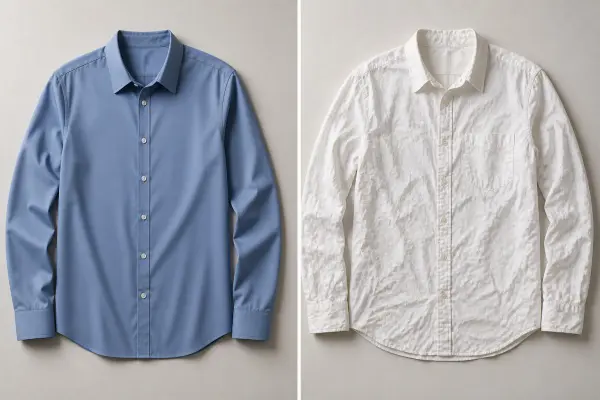
The second benefit is wrinkle resistance. Polyester holds its shape well and does not crease as easily as cotton, linen, rayon, or silk. This is commercially valuable because garments look better during shipping, storage, display, and customer use. A polyester blouse, pleated skirt, or travel dress can maintain a cleaner appearance with less ironing, which is a strong selling point for busy consumers.
The third benefit is quick drying. Polyester absorbs less moisture than cotton, so it dries faster after washing or sweating. This is one reason polyester is common in activewear, athleisure, swim cover-ups, travel clothing, and performance uniforms. However, quick drying should not be confused with high breathability. Polyester can move moisture away from the skin when engineered properly, but basic polyester may still feel warm or clammy in humid climates.
The fourth benefit is cost efficiency. Polyester is generally affordable, scalable, and widely available across global textile supply chains. For startups and mass-market brands, this allows competitive pricing and predictable production margins. It also makes polyester useful for linings, trims, affordable dresses, promotional apparel, and high-volume collections.
The fifth benefit is design versatility. Polyester can be dyed in vibrant colors, printed digitally, heat-pleated, embossed, brushed, coated, laminated, or blended with elastane, cotton, rayon, wool, or recycled fibers. This gives product developers many ways to adjust hand feel, performance, price point, and visual identity.
For example, a fashion startup launching a travel capsule collection may choose polyester crepe for wrinkle resistance, polyester-spandex knit for stretch, and polyester lining for cost control. The brand can build a cohesive collection while managing production risk and retail price.
Takeaway: Polyester is valuable because it combines durability, easy care, affordability, color performance, and design flexibility. These benefits make it especially useful when commercial reliability matters.
Disadvantages of Polyester Fabric
Polyester’s biggest disadvantage is comfort limitation, especially in warm or humid climates. Standard polyester is less breathable than many natural fibers, and it does not absorb moisture in the same way cotton or linen does. If the fabric construction is dense or poorly finished, polyester garments may feel hot, sticky, or uncomfortable during long wear.
Another disadvantage is odor retention. Because polyester is hydrophobic, it tends to repel water but can attract and hold oil-based substances such as body oils and sweat residues. This is why some polyester sportswear may retain odor even after washing. For activewear brands, this creates a product development challenge: fabric performance must include odor management, not only stretch and quick drying.

Polyester can also generate static electricity and cling. This is common in lightweight polyester dresses, skirts, linings, and blouses, especially in dry environments. Static cling can make garments feel cheap or uncomfortable if the fabric does not include proper finishing, lining selection, or anti-static treatment.
Heat sensitivity is another trade-off. Polyester can melt, shrink, glaze, or become damaged under excessive heat. This affects ironing, heat pressing, sublimation printing, pleating, and garment care instructions. Brands must provide clear care labels and avoid using polyester in products where high-heat durability is required.
The environmental disadvantages are also important. Most polyester is fossil-based, and synthetic textiles can shed microfibers during wear and washing. The European Environment Agency identifies wearing and washing synthetic textile fibers as a recognized source of microplastics in the environment. This does not mean brands must stop using polyester entirely, but it does mean sustainability claims must be careful, specific, and evidence-based.
Recycled polyester can reduce reliance on virgin fossil resources, but it is not a perfect solution. Textile Exchange reported that the overall market share of recycled fibers remained low, and recycled polyester still made up only a limited portion of global fiber production. Brands should avoid making broad claims such as “eco-friendly polyester” without explaining recycled content, certification, durability strategy, and end-of-life considerations.
Takeaway: Polyester is commercially useful, but its comfort, odor, heat, static, and environmental trade-offs must be managed through better fabric selection, finishing, care guidance, and responsible communication.
Common Uses of Polyester Fabric in Fashion
Polyester is widely used in activewear because it is lightweight, durable, quick drying, and compatible with stretch fibers such as elastane or spandex. Leggings, sports bras, running shirts, training tops, and performance jackets often use polyester blends because they need movement, moisture management, and shape retention. For activewear brands, the fabric construction matters more than the fiber alone; mesh, interlock, jersey, and brushed knits all create different performance levels.
Polyester is also common in outerwear. Jackets, windbreakers, padded coats, rainwear, and shell fabrics often use polyester because it can be coated or laminated for water resistance and wind protection. In this category, polyester supports durability, lightweight structure, and technical finishing. Brands can use polyester to create affordable outerwear without the higher cost of nylon or specialty technical fabrics.
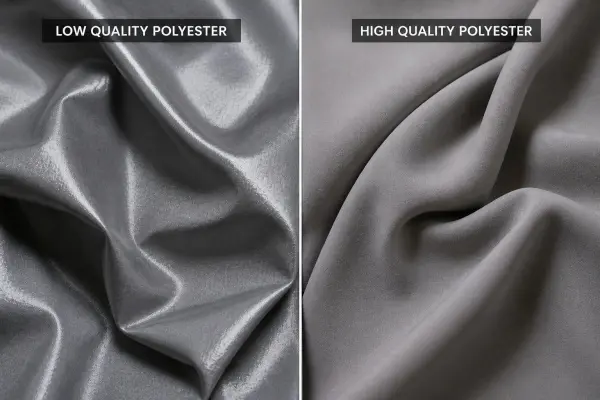
In women’s fashion, polyester appears in dresses, blouses, skirts, pleated garments, satin pieces, chiffon overlays, and occasionwear. Polyester is useful here because it holds color, resists wrinkles, and can mimic the look of silk, crepe, or georgette at lower cost. However, brands should be careful with hand feel. Poor-quality polyester satin or chiffon can look shiny, stiff, or overly synthetic.
Polyester is also widely used in linings. Jacket linings, skirt linings, dress linings, and bag linings often use polyester because it is smooth, affordable, strong, and easy to source. A good lining improves garment comfort, opacity, movement, and finishing quality. Even premium garments may use polyester lining when cost, durability, or color matching is important.
Uniforms and workwear are another major use case. Polyester-cotton blends are common in school uniforms, corporate shirts, hospitality uniforms, medical uniforms, and industrial apparel because they balance comfort, durability, easy care, and price. For brands serving institutional buyers, polyester blends can reduce maintenance problems and improve garment lifespan.
Polyester is also used in bags, accessories, caps, labels, trims, and home-fashion crossover products. In these applications, durability, printability, and cost efficiency are often more important than skin comfort.

Takeaway: Polyester works best in product categories where durability, shape retention, easy care, printability, and cost control matter more than natural breathability.
Polyester, Sustainability, and Recycled Polyester
Sustainability is one of the most complex issues surrounding polyester fabric. On one hand, polyester is durable, long-lasting, and efficient to produce at scale. On the other hand, it is mostly derived from fossil resources, contributes to synthetic microfiber shedding, and can be difficult to recycle when blended with other fibers or finished with complex coatings.
For fashion brands, the sustainability question should not be simplified into “polyester is bad” or “recycled polyester is good.” The more useful question is: what role does polyester play in the product, how long will the garment last, what alternatives are available, and what claims can the brand responsibly make?
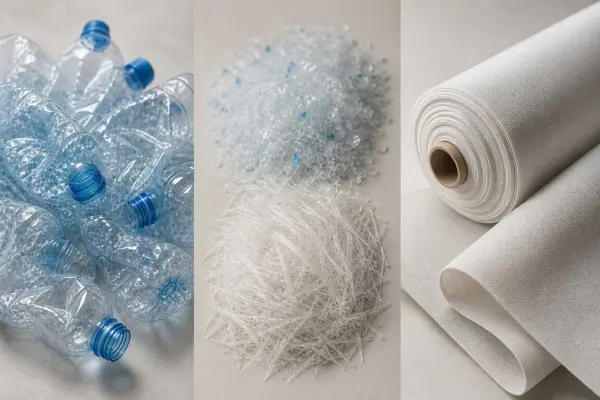
Recycled polyester, often called rPET, is commonly made from post-consumer plastic bottles or other PET waste. It can reduce demand for virgin polyester and help brands lower dependence on fossil-based inputs. However, the recycled polyester market still faces supply, quality, traceability, and circularity challenges. Textile Exchange reported that less than 1% of the global fiber market came from pre- and post-consumer recycled textiles in 2024, showing that textile-to-textile recycling remains very limited.
The distinction between bottle-to-textile recycling and textile-to-textile recycling matters. Many garments labeled recycled polyester are not made from old clothes; they are made from plastic bottles. This can still be useful, but it does not automatically create a circular fashion system. A truly circular approach requires garments to be collected, sorted, recycled, and turned into new textile fibers again.
Microfiber shedding is another concern. Washing synthetic textiles can release small plastic fibers into wastewater systems and the environment. The issue depends on fiber type, yarn quality, fabric construction, finishing, washing behavior, and garment age. This means brands should focus not only on material substitution but also on fabric quality, garment longevity, washing guidance, and lower-shedding textile development.
From a business perspective, sustainability communication must be precise. A brand can say “made with 60% recycled polyester” if verified, but should avoid vague language such as “planet-friendly,” “green,” or “sustainable” without evidence. As regulations and consumer scrutiny increase, unsupported sustainability claims create legal and reputational risk.
Takeaway: Polyester sustainability depends on source, durability, recycled content, microfiber management, product lifespan, and transparency. Recycled polyester is useful, but it is not a complete solution by itself.
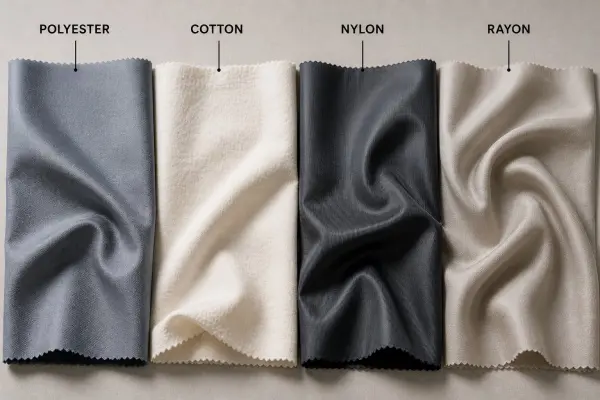
Comparison Table: Polyester vs Cotton vs Nylon vs Rayon
|
Fabric Type |
Main Strength |
Main Weakness |
Best Use Cases |
Business Takeaway |
|
Polyester |
Durable, wrinkle-resistant, quick drying, affordable |
Less breathable, odor retention, microfiber concerns |
Activewear, outerwear, dresses, linings, uniforms |
Best for performance, easy care, and scalable production |
|
Cotton |
Breathable, soft, familiar to consumers |
Wrinkles, absorbs moisture, can shrink |
T-shirts, shirts, casualwear, kidswear |
Strong for comfort-led everyday apparel |
|
Nylon |
Strong, lightweight, abrasion-resistant |
Can be more expensive, heat sensitive |
Outerwear, bags, swimwear, performance gear |
Strong for technical and durable products |
|
Rayon / Viscose |
Soft drape, breathable feel, elegant movement |
Can shrink, wrinkle, and weaken when wet |
Dresses, blouses, resortwear |
Good for fluid silhouettes and soft hand feel |
This comparison shows that polyester is not automatically better or worse than other fibers. It is better suited to some business goals and weaker for others. If the product promise is easy care, durability, wrinkle resistance, or performance, polyester may be a strong choice. If the product promise is natural comfort, breathability, or premium organic positioning, cotton, linen, wool, silk, or cellulosic fibers may be more suitable.
The decision should start from the end use. A summer shirt for a tropical climate has different requirements from a travel blazer, gym legging, pleated skirt, or rain jacket. Brands that choose fabric based only on cost often create products that disappoint customers. Brands that choose fabric based on product function, customer expectation, and care behavior usually make better sourcing decisions.
For example, a direct-to-consumer brand selling “effortless workwear for travel” may benefit from polyester blends because wrinkle resistance and packability support the product promise. A slow-fashion brand selling breathable natural basics may damage its positioning if it relies too heavily on shiny synthetic polyester.
Takeaway: Polyester should be compared by product function, customer expectation, and brand positioning—not only by price.
Practical Application for Fashion Brands
Fashion brands should begin with the product purpose before selecting polyester fabric. Ask what the garment must do: stretch, drape, resist wrinkles, dry quickly, hold pleats, provide warmth, reduce cost, support printing, or survive frequent washing. Polyester is often a strong option when performance and maintenance are more important than natural fiber identity.

The second step is to evaluate fabric construction. A product developer should not approve fabric based only on the label “100% polyester.” Polyester satin, polyester crepe, polyester fleece, polyester mesh, polyester chiffon, and polyester twill behave differently. GSM, yarn count, weave, knit structure, finishing, opacity, stretch, recovery, and hand feel must all be tested.
The third step is to match polyester quality with brand positioning. A premium brand can use polyester successfully if the fabric has refined texture, controlled shine, good drape, and strong finishing. A low-quality polyester fabric, however, can make a garment look cheap even if the design is strong. This is especially important for dresses, blouses, scarves, and occasionwear.
The fourth step is to test comfort in real conditions. A fabric that looks good in a supplier swatch may feel uncomfortable after two hours of wear. Brands should test breathability, odor retention, static cling, lining comfort, and movement. For activewear, wash testing and sweat testing are essential. For dresses, transparency, cling, and heat comfort should be checked.
The fifth step is to define the sustainability claim before production. If using recycled polyester, brands should confirm recycled percentage, certification, source, supplier documentation, and labeling rules. Sustainability language should be specific and defensible. “Made with recycled polyester” is clearer than “eco-friendly fabric.”
The sixth step is to consider blending. Polyester-cotton blends can improve durability and reduce wrinkling while keeping some cotton comfort. Polyester-spandex blends improve stretch and recovery. Polyester-rayon blends can improve drape. Polyester-wool blends can reduce cost and improve durability in suiting. Blending allows brands to balance performance, price, and hand feel.
The seventh step is to write accurate care instructions. Polyester garments may be easy to care for, but they still need correct washing, drying, and ironing guidance. Clear care labels reduce returns, protect garment appearance, and improve customer satisfaction.
Takeaway: Polyester works best when brands treat it as a strategic material choice, not a default cheap fabric.
Common Mistakes to Avoid
1. Choosing Polyester Only Because It Is Cheap
Low cost is one advantage of polyester, but price should not be the only reason to use it. Cheap polyester can create poor drape, excessive shine, discomfort, static cling, and weak brand perception.
2. Ignoring Fabric Construction
Two fabrics labeled 100% polyester can perform completely differently. Brands should evaluate weave, knit, GSM, finishing, stretch, opacity, and hand feel before approving production.
3. Using Polyester in the Wrong Climate
Dense polyester garments may feel hot in humid or tropical markets. If the target customer lives in warm weather, brands should test breathability and consider lighter constructions or blends.
4. Making Vague Sustainability Claims
Recycled polyester does not automatically make a product sustainable. Brands need clear recycled content, supplier documentation, certification where possible, and honest communication about limitations.
5. Forgetting Odor Management in Activewear
Polyester activewear can retain odor if the fabric is not engineered properly. Brands should test odor performance, wash recovery, and finishing options before scaling production.
6. Overlooking Static and Cling
Static cling can ruin the wearing experience of polyester skirts, dresses, and linings. Anti-static finishing, better lining choices, and fabric testing can prevent this issue.
7. Treating Polyester as One Universal Fabric
Polyester is a fiber category, not a single fabric type. Brands must specify the exact textile construction and performance requirements instead of relying on generic supplier descriptions.
FAQ
1. Is polyester fabric good for clothing?
Yes, polyester fabric can be good for clothing when it matches the garment’s purpose. It is strong, wrinkle-resistant, quick drying, affordable, and easy to care for. This makes it useful for activewear, travel clothing, outerwear, uniforms, linings, and pleated garments. However, polyester is not ideal for every product. If the customer expects natural breathability, luxury hand feel, or high comfort in hot weather, polyester must be carefully selected or blended with other fibers.
2. Is polyester breathable?
Polyester is generally less breathable than natural fibers such as cotton or linen, but breathability depends heavily on fabric construction. Lightweight polyester mesh or moisture-wicking knit can feel more comfortable than dense woven polyester. For activewear, engineered polyester can move moisture away from the body, but basic polyester may trap heat. Brands should test breathability in real use conditions, especially for summer collections, tropical markets, uniforms, and fitted garments.
3. What are the main disadvantages of polyester?
The main disadvantages of polyester are lower breathability, odor retention, static cling, heat sensitivity, fossil-based origin, and microfiber shedding. Some polyester fabrics may also look shiny or feel uncomfortable if the quality is poor. These disadvantages do not make polyester unusable, but they require better sourcing decisions. Brands should test fabric comfort, washing performance, appearance, and sustainability documentation before using polyester in large-scale production.
4. Is recycled polyester better than virgin polyester?
Recycled polyester can reduce reliance on virgin fossil-based raw materials, especially when it replaces newly produced polyester. However, it is not a complete sustainability solution. Many recycled polyester fabrics come from plastic bottles rather than old garments, and textile-to-textile recycling remains limited globally. Recycled polyester can still shed microfibers and may be difficult to recycle again when blended. Brands should use recycled polyester carefully and communicate claims with evidence.
5. What types of garments commonly use polyester?
Polyester is commonly used in activewear, outerwear, dresses, blouses, skirts, uniforms, linings, fleece, sports jerseys, bags, caps, and accessories. It is especially useful when garments need durability, color retention, wrinkle resistance, quick drying, or cost efficiency. In fashion production, polyester is also widely blended with cotton, rayon, wool, and elastane to improve performance or reduce cost. The best use depends on the product category and customer expectation.
6. Should fashion brands use polyester?
Fashion brands should use polyester when it supports the product’s function, price point, durability, and care promise. It is a strong choice for performance apparel, easy-care clothing, travel wear, outerwear, linings, and high-volume commercial products. However, brands should avoid using polyester automatically across all categories. The decision should consider comfort, climate, brand positioning, sustainability claims, and customer perception. Polyester is most effective when selected strategically.

Conclusion
Polyester fabric is one of the most important materials in modern fashion because it solves practical business problems: cost control, durability, wrinkle resistance, color consistency, easy care, and production scalability. For many apparel categories, polyester is not merely an alternative fiber; it is the material that makes the product commercially viable.
At the same time, polyester has real limitations. Comfort, breathability, odor retention, static cling, heat sensitivity, fossil-based sourcing, and microfiber shedding all need careful attention. The strongest brands do not treat polyester as either a miracle fabric or a material to reject entirely. They evaluate it through product function, customer expectation, fabric quality, supplier reliability, and sustainability impact.
For fashion startups, garment manufacturers, and apparel decision-makers, the best approach is strategic selection. Use polyester when it improves product performance, supports the price architecture, and matches the brand promise. Avoid it when it weakens comfort, undermines positioning, or creates sustainability claims the brand cannot defend.
Ultimately, polyester is a powerful fabric choice when used with technical understanding and commercial discipline. The question is not simply “Is polyester good or bad?” The better question is: “Does this specific polyester fabric serve this specific product, customer, market, and brand strategy?”





Comments 0
Leave a CommentSend Comment
Anda harus Login terlebih dahulu untuk dapat memberikan komentar.