
How Merchandising Influences Consumer Buying Decisions
Quick Answer
Merchandising influences consumer buying decisions by shaping what customers notice, how easily they understand the product offer, how confident they feel about a purchase, and whether the product feels relevant to their needs, style, budget, and occasion. In fashion retail, this influence happens through assortment structure, product placement, pricing architecture, styling context, size availability, product information, visual presentation, and promotional timing.
Good merchandising does not force customers to buy. It reduces decision friction. It helps shoppers move from “I am browsing” to “this fits my need” by making the product range easier to scan, compare, trust, and imagine in real life.
For fashion businesses, this matters because apparel decisions are rarely based on function alone. Customers also evaluate fit, identity, body confidence, fabric feel, occasion, trend relevance, styling flexibility, price justification, and return risk. A dress may fail not because the design is weak, but because it is displayed without styling context, photographed poorly, priced without a clear value signal, or missing key sizes.
Merchandising is therefore one of the strongest retail levers between product planning and actual purchase behavior.
Why Merchandising Matters in the Buying Journey
Merchandising matters because customers rarely make fashion purchases from product information alone. They move through a set of judgments: Do I notice it? Do I understand it? Does it suit me? Is it worth the price? Can I wear it with what I already own? Do I trust the size, fabric, and quality? Should I buy now or wait?
McKinsey’s consumer decision journey model explains that customers do not always move through a simple linear funnel. They may consider, evaluate, add, remove, and revisit options before purchasing. consumer decision journey In fashion retail, merchandising shapes this journey at almost every step.
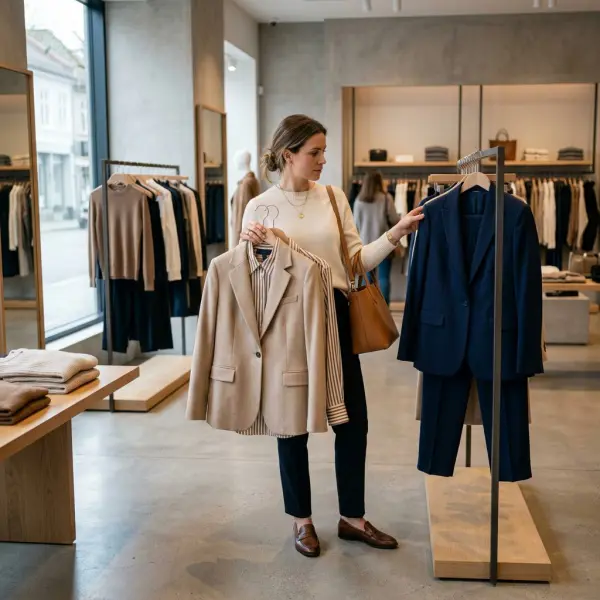
A customer may enter a store looking for trousers but leave with a blouse, belt, and earrings because the merchandising made a complete outfit feel obvious. Another customer may abandon an online cart because the size guide is hard to find, the fabric description is vague, or the product images do not show the garment on different body angles.
Merchandising works in the space between product and decision. It does not change the product itself, but it changes how the product is perceived, compared, trusted, and acted upon.
What Does Merchandising Influence in Consumer Behavior?
Merchandising influences attention, perception, comparison, confidence, urgency, and purchase intention. These are not abstract marketing ideas. They show up in practical retail outcomes such as higher product discovery, stronger conversion, better basket building, lower hesitation, fewer returns, and more disciplined markdowns.
For fashion businesses, the influence usually appears in five areas:
- Which products customers notice first.
- How customers understand the product range.
- How customers compare similar items.
- How confident customers feel about fit, quality, and value.
- Whether customers feel enough reason to buy now.
The last point is important. Merchandising should not rely only on artificial urgency or discount pressure. In strong fashion retail, the reason to buy may come from relevance, styling clarity, limited seasonal timing, size availability, occasion need, or confidence that the garment solves a real wardrobe problem.
Attention: Merchandising Decides What Customers See First
Customers cannot buy what they do not notice. Merchandising influences attention by controlling product placement, category hierarchy, display priority, homepage order, fixture layout, product grouping, and campaign visibility.
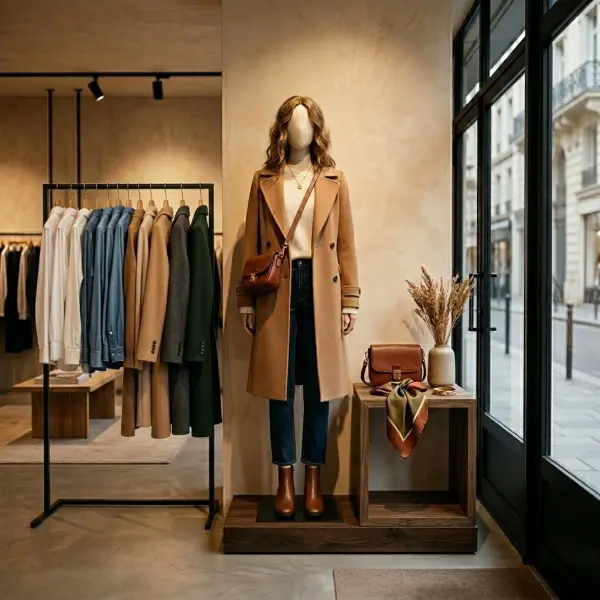
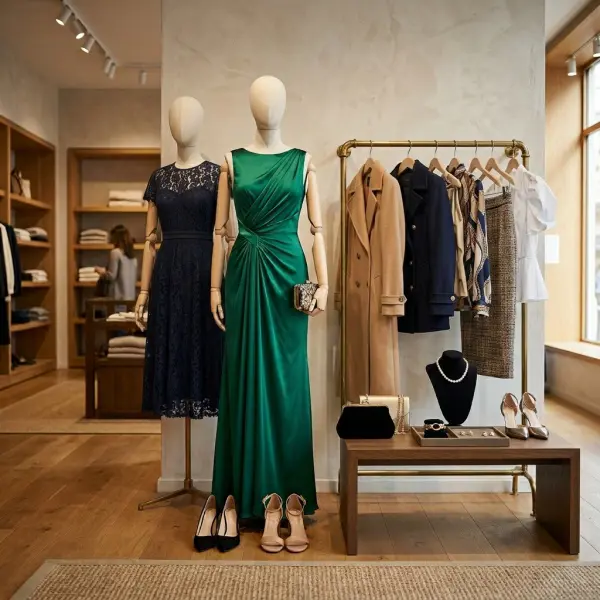
In a physical store, attention may be shaped by entrance displays, eye-level placement, lighting, mannequin styling, color blocking, and the path customers naturally follow. Online, attention is shaped by homepage modules, category sorting, product thumbnails, filters, recommendation blocks, email edits, and search results.
This is where merchandising becomes selective. Not every product deserves equal visibility at the same time. A retailer may use the front display for a new seasonal capsule, keep replenishable basics easy to find, and place accessories near related garments to support styling. The decision should reflect product role, stock depth, margin, season, and customer demand.
Shopify defines retail merchandising as how retailers present and promote products to encourage sales, including product displays, placement, and promotions. retail merchandising definition For fashion businesses, the key is to make attention useful, not random. A striking product at the store entrance may generate curiosity, but if it is unavailable in key sizes or priced far above the customer’s usual range, it may create interest without conversion.
Clarity: Good Merchandising Reduces Decision Friction
Good merchandising makes the product offer easier to understand. It helps customers answer basic questions quickly: What is new? What is core? What is for work? What is for occasionwear? What goes together? What is premium? What is affordable? What is available in my size?
In fashion retail, unclear merchandising often creates hesitation. A store may have many attractive pieces, but if categories are mixed without logic, customers must work too hard to find what matters. Online, the same problem appears when filters are weak, product names are vague, or similar styles are not clearly differentiated.
Clarity can come from several merchandising choices:
- Grouping products by lifestyle, occasion, category, color, or collection.
- Separating core products from seasonal statements.
- Making price tiers easy to understand.
- Showing complete outfit combinations.
- Placing key size, fit, and fabric information close to the buying decision.
- Using product names and descriptions that reflect actual customer search behavior.
This is not about simplifying the assortment until it becomes boring. It is about helping customers navigate choice. A premium womenswear store may still carry a rich product range, but it needs a visible logic: tailoring, silk separates, occasion dresses, knit essentials, travel pieces, or accessories that complete the wardrobe.
When clarity is missing, shoppers may still browse. But browsing does not always become buying.
Choice Architecture: More Options Are Not Always Easier to Buy
Choice architecture is the way options are arranged so customers can compare and decide. In fashion merchandising, it includes assortment size, product grouping, color range, size availability, filtering, product recommendations, and the way alternatives are presented.
Retailers often assume that more choice increases the chance of purchase. Sometimes it does. Larger assortments can help customers find personal style, size, color, and price fit. But too many poorly organized options can also slow decision-making, especially when products look similar, differences are unclear, or customers are unsure about what they want.
Research on choice overload is nuanced. A meta-analysis in the Journal of Consumer Psychology found that the effect of assortment size depends on factors such as choice set complexity, decision task difficulty, preference uncertainty, and decision goals. choice overload meta-analysis Harvard Business Review also summarized the practical issue: too much choice can reduce the likelihood of purchase and satisfaction when customers feel overwhelmed. too much choice and consumer decisions
For fashion retailers, the lesson is not “offer fewer products.” The better lesson is “make choice easier to interpret.”
|
Merchandising Situation |
Likely Customer Reaction |
Better Approach |
|
Many similar black trousers with unclear differences |
Confusion or delayed decision |
Label by fit, rise, fabric, length, and use case |
|
Too many trend colors in shallow stock |
Interest but poor size availability |
Edit colors by customer relevance and buy depth |
|
Large online category with weak filters |
Browsing fatigue |
Improve filters by size, fit, fabric, occasion, and price |
|
Mannequins styled without nearby stock |
Inspiration without conversion |
Keep styled products easy to locate |
|
Promotions across too many items |
Discount noise |
Focus promotions by story, category, or buying intent |
Choice works best when customers can understand the difference between options. A relaxed linen trouser, tailored wool trouser, stretch office trouser, and wide-leg satin trouser may all sit under “pants,” but they solve different wardrobe needs. Merchandising should make those differences visible.
Relevance: Customers Buy Faster When the Product Feels Like It Solves a Real Need
Fashion customers rarely buy only because an item exists. They buy because the item feels relevant to a moment, identity, problem, or aspiration. Merchandising influences buying decisions by connecting products to these contexts.
A customer may need a dress for a wedding, a blazer for work, modest layers for daily wear, denim that fits comfortably, travel clothes that do not wrinkle easily, or accessories that refresh an old outfit. Merchandising can make these use cases obvious.
A rack labeled only by category may say “Dresses.” A stronger merchandising story may communicate “easy occasion dresses,” “work-to-dinner dresses,” “vacation linen,” or “modern modest layers.” The product is the same. The decision context changes.
This matters especially for fashion retailers with broad assortments. Customers may not know exactly what they want at the beginning of the journey. Good merchandising helps them recognize their own need.
Perceived Value: Merchandising Helps Customers Understand Why a Product Costs What It Costs
Merchandising influences perceived value by explaining the relationship between product, price, quality, styling use, and brand position. In fashion, price is not evaluated only by material cost. Customers also consider fit, fabric handfeel, construction, versatility, emotional appeal, trend relevance, brand trust, and how often they expect to wear the item.
A $35 T-shirt, $120 blouse, and $450 blazer can all make sense in the same store if the merchandising clearly separates their roles. The T-shirt may be an everyday essential, the blouse may offer drape and styling flexibility, and the blazer may be a tailored investment piece. If those differences are not visible, the customer may compare only by price and choose the cheapest or delay the purchase.
Perceived value is affected by many merchandising signals:
- Fabric information and close-up imagery.
- Product weight, lining, stitching, or finishing details.
- Styling versatility shown through outfits.
- Fit notes and model information.
- Customer reviews or staff recommendations.
- Store environment and product spacing.
- Price architecture across good, better, and premium tiers.
This does not mean retailers should over-explain every product. Too much information can also create fatigue. The goal is to give enough meaningful cues for the customer to justify the decision.
A premium knitwear product, for example, may need information about fiber composition, handfeel, care, warmth, and styling. A fast-moving hair accessory may need strong visual appeal and easy add-on placement more than a long explanation.
Confidence: Fit, Size, and Product Information Can Make or Break the Purchase
Confidence is critical in apparel because customers carry more uncertainty than in many other product categories. A shopper may like the product but still wonder: Will it fit my body? Will the color look the same in real life? Is the fabric sheer? Is the waist elastic? Does the model’s height affect how the dress length appears? Can I return it if it does not work?
Online, this confidence gap becomes larger because the customer cannot touch the fabric or try the garment before buying. Baymard’s apparel e-commerce UX guidance emphasizes the importance of size information that matches the product type, measurement details, international size conversion, and visible size guide access near the size selector. apparel sizing UX best practices
This is merchandising, not just website usability. Product information affects buying confidence, conversion, and return risk.
Fashion retailers can strengthen confidence by making decision-critical information visible:
- Fit type: slim, relaxed, oversized, straight, high-rise, cropped, longline.
- Fabric behavior: stretch, drape, weight, sheerness, texture, lining.
- Model context: height, size worn, garment length.
- Size support: measurements, conversion, body measurement guide.
- Styling context: how the garment works with shoes, layers, accessories, or innerwear.
- Care expectations: hand wash, dry clean, wrinkle behavior, shrinkage risk where relevant.
The point is not to overwhelm customers with technical language. It is to answer the questions that commonly stop them from buying.

Emotional Connection: Merchandising Turns Products Into a Wardrobe Story
Fashion buying is partly practical and partly emotional. Customers buy garments because they need coverage, comfort, and function. But they also buy because the product supports a version of themselves: polished, relaxed, elegant, youthful, professional, creative, modest, bold, minimal, feminine, or quietly luxurious.
Merchandising influences this emotional layer by creating a wardrobe story. A single white shirt may feel plain on a hanger. Styled under a soft blazer with wide-leg trousers and a leather belt, it can become part of a workwear identity. A printed scarf may feel optional in isolation. Styled with a neutral dress, it becomes the detail that completes the look.
This is why fashion merchandising should not treat products as disconnected units. Customers often need help imagining use. They want to know not only what the item is, but how it lives in their wardrobe.
There is a commercial implication here. When merchandising shows complete looks, it can support cross-selling and higher basket value. But the styling must feel realistic for the customer. If a boutique serves professional women who need comfortable officewear, an overly editorial runway-style display may create admiration without purchase. The customer may think, “Beautiful, but not for my life.”
Good merchandising makes aspiration reachable.
Urgency: Buying Decisions Are Often Shaped by Timing and Availability
Urgency in merchandising does not have to mean aggressive countdowns or constant discount pressure. In fashion retail, urgency can come naturally from season, occasion, limited size availability, product drop timing, or cultural shopping calendars.
A customer may buy a linen set before a holiday trip, a formal dress before wedding season, a warm coat before winter, or modest occasionwear before a religious celebration. Merchandising influences this behavior by aligning product visibility with the customer’s buying window.
Timing is especially important because fashion products can lose relevance quickly. A party dress displayed after peak event season may require discounting. A coat launched too late may miss the early cold-weather demand. A capsule collection promoted before stock is ready may create frustration.
Merchandising should create urgency with operational honesty:
- Launch seasonal products when customers are ready to buy, not only when stock arrives.
- Promote limited products when key sizes are still available.
- Use occasion edits before the event window becomes too narrow.
- Avoid pushing urgency on products that will clearly remain available.
- Plan markdown timing before products become stale.
Urgency works best when it is grounded in real product and customer context. False urgency may create short-term clicks, but it can weaken trust if customers notice the same “limited” offer repeated every week.
Social Proof and Trust: Merchandising Can Reduce Perceived Risk
Customers often look for signals that other people trust the product. This is especially true online, where uncertainty about fit, quality, and expectation is higher.
Social proof can come from reviews, user-generated content, staff picks, bestseller labels, customer photos, styling videos, or store associate recommendations. But fashion retailers should use these signals carefully. A “bestseller” badge can help, but if applied too broadly, it loses meaning. Reviews can support confidence, but only when they are easy to filter by size, body type, fit, or use case.
In apparel, social proof is most useful when it answers decision-relevant questions. A review that says “nice dress” is less helpful than one that explains whether the dress runs small, how the fabric feels, whether it needs lining, or whether it works for a specific occasion.
Merchandising teams should treat trust signals as part of product communication. They should help customers decide, not merely decorate the page.
How Merchandising Influences In-Store and Online Buying Differently
In-store and online merchandising influence buying decisions through different sensory and operational cues. Physical retail can use touch, scale, movement, lighting, staff support, and immediate try-on. Online retail depends more heavily on images, information architecture, filters, reviews, size guidance, and delivery or return confidence.
|
Decision Factor |
In-Store Merchandising |
Online Merchandising |
|
Product discovery |
Store layout, fixtures, window displays, mannequin styling |
Homepage modules, search, filters, category sorting |
|
Fit confidence |
Fitting rooms, staff support, immediate try-on |
Size guide, model info, measurements, reviews |
|
Fabric understanding |
Touch, weight, drape, movement |
Close-up photos, videos, fabric descriptions |
|
Styling confidence |
Mannequins, outfit walls, staff suggestions |
Complete-the-look modules, editorial photos, styling content |
|
Urgency |
Limited floor stock, seasonal display, staff communication |
Low-stock messaging, launch timing, email edits |
|
Trust |
Store environment, service quality, product handling |
Reviews, return policy, product detail accuracy |
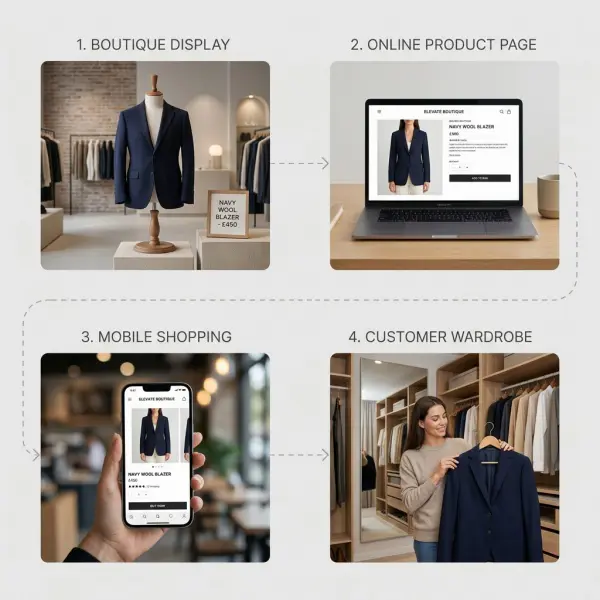
The strongest fashion retailers usually connect both environments. A customer may discover a product on Instagram, compare it online, try it in-store, and later buy through the website. Merchandising should feel consistent across these touchpoints, even if the execution differs.
A product described online as “relaxed fit” should not feel unexpectedly narrow in-store. A campaign dress shown as premium should not arrive with weak packaging or unclear care instructions. When merchandising promises and product experience do not match, trust declines.
How Fashion Businesses Can Apply Merchandising to Improve Buying Decisions
Fashion businesses can apply merchandising more strategically by focusing on decision support, not only product display. The goal is to identify where customers hesitate and adjust merchandising to reduce that hesitation.
Map the Customer’s Decision Questions
A useful starting point is to list the questions customers ask before buying. For apparel, these questions are often practical:
Will this fit me? Is it worth the price? What can I wear it with? Is it suitable for my occasion? Will the fabric feel comfortable? Is the color accurate? Is this too trendy? Can I return it?
Once those questions are clear, merchandising can answer them through product grouping, styling, descriptions, size support, visuals, and staff training.
Build Product Stories Around Use Cases
Instead of presenting only product categories, fashion retailers can create edits around customer situations. This is especially useful for boutiques, modest fashion brands, workwear retailers, travelwear labels, and occasionwear stores.
Examples include:
- “Office layers for warm weather.”
- “Easy dresses for wedding guests.”
- “Weekend denim with softer fits.”
- “Travel pieces that pack lightly.”
- “Modest occasionwear with breathable fabrics.”
- “Accessories that refresh neutral outfits.”
These stories help customers see relevance faster. They also support better internal linking for content-driven retail websites. For a broader foundation on the role of merchandising in product planning and retail operations, see fashion merchandising explained for retail businesses.
Improve Product Information Where Risk Is Highest
Not every product needs the same level of explanation. A simple scrunchie does not need the same product detail as a tailored blazer or evening dress. Merchandising teams should prioritize high-risk products: expensive items, fitted garments, sheer fabrics, occasionwear, footwear, denim, swimwear, and products with historically high returns.
The higher the customer uncertainty, the more important the merchandising support.
Use Visual Merchandising Without Letting It Carry the Whole Strategy
Visual merchandising is powerful, but it is not a substitute for strong assortment, pricing, inventory, and product information. A beautiful display may attract attention, but customers still need available sizes, believable styling, clear value, and a reason to buy.
The next article in this cluster can go deeper into visual merchandising strategies for fashion retail, including store layout, window display, product grouping, and visual hierarchy.
Common Mistakes That Weaken Buying Decisions
Merchandising mistakes often appear as customer hesitation. The product may be good, but the buying path is unclear.
Mistake 1: Displaying Products Without Decision Context
A product on a hanger may not explain enough. If customers cannot imagine where to wear it, how to style it, or why it belongs in their wardrobe, they may postpone the purchase.
The better approach is to merchandise around use cases. Show the trouser with shoes, tops, and outerwear. Explain whether the dress works for daytime events, travel, work, or evening occasions. Make the product easier to place in real life.
Mistake 2: Offering Too Many Similar Choices Without Clear Differences
A wall of similar shirts, jeans, or dresses can look abundant, but abundance without structure can slow decisions. Customers need to know what makes one option different from another.
The better approach is to differentiate by fit, fabric, occasion, length, price, and styling role. Similar products should compete less and clarify more.
Mistake 3: Making Size Information Hard to Find
Size uncertainty is one of the most practical barriers in fashion buying, especially online. When size information is buried, generic, or inconsistent across products, customers may abandon the purchase or buy multiple sizes with the intention to return.
The better approach is to place product-specific sizing, measurements, model details, and fit notes near the size selector. For fitted garments, size guidance should be treated as a conversion tool, not a secondary detail.
Mistake 4: Using Discounts Instead of Better Merchandising
Discounts can move products, but they do not automatically solve weak merchandising. A product may be slow because it is hidden, poorly styled, badly photographed, or confusingly described.
Before markdown, retailers should ask whether the product has been given enough visibility, whether the styling makes sense, whether the right customer has seen it, and whether the price issue is real or only assumed.
Mistake 5: Creating Inspiration That Customers Cannot Buy
This happens when displays, campaigns, or social content show products that are sold out, unavailable in key sizes, or difficult to find. Inspiration without availability can frustrate customers.
The better approach is to align creative merchandising with stock reality. If a product is the hero of a campaign, it should have enough inventory to support demand, or the retailer should provide clear alternatives.
What Merchandising Can and Cannot Do
Merchandising can improve product discovery, decision confidence, perceived value, styling relevance, and buying flow. It can help customers understand the offer and reduce unnecessary friction.
But merchandising cannot fully fix the wrong product, poor quality, unrealistic pricing, weak fit, unreliable stock, or a brand position that does not match the customer. It can improve how products are understood, but it cannot make every product commercially viable.
This distinction matters. When a product fails, teams may blame display, photography, price, or marketing. Sometimes those are the problem. Sometimes the product itself does not meet the customer’s expectations. A mature merchandising review should separate communication problems from product problems.
A simple diagnostic can help:
|
Symptom |
Possible Merchandising Issue |
Possible Product Issue |
|
High views, low conversion |
Weak information, unclear size, poor price framing |
Product does not match customer need |
|
High try-on, low purchase |
Styling attracts attention |
Fit, comfort, fabric, or construction problem |
|
Strong sales, high returns |
Online content overpromises |
Fit inconsistency or fabric expectation gap |
|
Slow sales, low visibility |
Poor placement or weak storytelling |
Product not relevant or overbought |
|
Heavy discount required |
Late launch or wrong presentation |
Demand overestimated or price mismatch |
This kind of review prevents teams from making superficial fixes. A new display may help. But if the garment’s fit is wrong, the buying decision will still break at the fitting room or return stage.
FAQ: Merchandising and Consumer Buying Decisions
How does merchandising influence customer buying decisions?
Merchandising influences buying decisions by shaping what customers notice, how they compare options, how clearly they understand product value, and how confident they feel before purchase. In fashion retail, this includes product placement, assortment structure, outfit styling, size availability, pricing signals, product descriptions, and promotional timing. Strong merchandising reduces hesitation by making the product easier to understand and easier to imagine in real use.
Does good merchandising increase sales?
Good merchandising can support higher sales, but it does not guarantee them. It can improve product visibility, reduce confusion, encourage styling add-ons, and strengthen purchase confidence. The result depends on product quality, price fit, customer demand, stock availability, channel execution, and timing. Merchandising works best when the product is relevant and the business has enough operational discipline to support the buying journey.
Why do customers respond to product placement?
Customers respond to product placement because placement affects attention and convenience. Products placed at eye level, near related items, on mannequins, in homepage edits, or within relevant search results are more likely to be noticed. But placement should match stock depth and product role. Featuring an item strongly when key sizes are missing may create frustration instead of sales.
How does merchandising reduce choice overload?
Merchandising reduces choice overload by organizing options so customers can compare them meaningfully. Instead of showing many similar products without explanation, retailers can group items by fit, occasion, fabric, price, color, or styling purpose. This helps customers understand why one product may suit them better than another. The goal is not always fewer choices, but clearer choices.
What role does product information play in fashion merchandising?
Product information plays a major role because fashion purchases involve uncertainty around fit, fabric, size, color, care, and styling. Clear information can increase confidence and reduce returns. For online retail, details such as measurements, model size, fit notes, fabric behavior, and close-up images are especially important. Poor product information can make even attractive garments feel risky to buy.
How does merchandising affect perceived value?
Merchandising affects perceived value by helping customers understand why a product is priced a certain way. Fabric quality, construction, versatility, styling potential, fit, brand position, and product presentation all shape value perception. A higher-priced garment may feel reasonable when the merchandising clearly communicates material, craftsmanship, use case, and styling longevity. Without those cues, customers may judge the item mainly by price.
Is visual merchandising the same as influencing consumer behavior?
Visual merchandising is one way to influence consumer behavior, but it is not the only one. Consumer decisions are also affected by assortment planning, product information, pricing, size availability, reviews, online filters, store service, and markdown timing. Visual merchandising attracts and guides attention, while broader merchandising supports the full decision path from discovery to purchase.
Conclusion
Merchandising influences consumer buying decisions by making fashion products easier to notice, understand, trust, compare, and imagine in real life. It turns assortment into a guided shopping experience rather than a collection of disconnected items.
For fashion retailers, the most valuable merchandising work often happens before the customer realizes it. A clear product hierarchy, useful sizing information, realistic styling, thoughtful placement, and well-timed product stories can reduce hesitation without relying on aggressive selling.
The real strength of merchandising is not manipulation. It is decision support.
When customers understand why a product matters, how it fits their life, and whether it is worth buying now, they are more likely to move with confidence. That confidence is what many fashion retailers overlook. Product desire may start the journey, but merchandising often decides whether the journey becomes a purchase.




Comments 0
Leave a CommentSend Comment
Anda harus Login terlebih dahulu untuk dapat memberikan komentar.