
Why Lyocell Is Gaining Attention in Comfortable Modern Apparel
Quick Answer
Lyocell is gaining attention in comfortable modern apparel because it helps textile developers combine several commercially useful qualities: a smooth handfeel, fluid drape, moisture absorption, relatively high strength among regenerated cellulosic fibers, and compatibility with woven, knitted, pure-fiber, and blended constructions.
These characteristics allow lyocell to appear across categories that were once treated separately. The same fiber family can support soft denim, relaxed shirts, dresses, underwear, knit tops, loungewear, travel clothing, and unstructured tailoring. TENCEL™ Lyocell, Lenzing’s branded lyocell fiber, has also increased the material’s visibility through ingredient branding, traceability programs, and collaborations with mills and apparel companies.
Comfort, however, is not created by fiber content alone. Fabric weight, yarn structure, density, finishing, garment fit, airflow, humidity, stretch recovery, seams, and care conditions can matter as much as the fiber itself.
Lyocell is therefore most useful when a brand selects it for a defined product need and validates performance on the finished garment. It should not automatically be described as quick-drying, wrinkle-free, antibacterial, highly elastic, or sustainable without product-specific evidence.
Why Is Lyocell Receiving More Attention from Apparel Brands?
Lyocell sits at the intersection of several priorities that frequently appear in modern product briefs: tactile comfort, relaxed silhouettes, fabric movement, material traceability, and reduced dependence on conventional fossil-based fibers.
The wider man-made cellulosic fiber category includes viscose, modal, and lyocell. Textile Exchange describes lyocell and modal as versatile materials used in categories such as denim, T-shirts, and tops, while emphasizing that the environmental performance of these fibers depends substantially on their cellulose feedstock and supply-chain practices.
Interest can also be seen in the commercial activity of major fiber producers. Lenzing reported solid demand in 2024 for its specialty fibers, including TENCEL™ Lyocell, despite subdued conditions in the wider textile market. It also reported growing interest in lyocell filament products and new lyocell applications in denim. This is company-specific evidence rather than proof of universal market growth, but it shows how mills and brands are extending the material into additional apparel segments.
Lyocell’s appeal is not based on one dramatic technical breakthrough. It comes from the way the fiber can help product teams manage several compromises at once.
A garment can feel soft without looking excessively casual. A woven fabric can drape while retaining more strength than many conventional viscose constructions. Denim can become less rigid without losing its recognizable character. A next-to-skin knit can absorb moisture without relying entirely on a petroleum-derived fiber.
Those combinations are commercially useful.
What Does Comfort Mean in Apparel?
Comfort is the wearer’s physical and psychological response to the complete clothing system. It includes tactile softness, thermal balance, moisture transfer, freedom of movement, pressure, garment weight, surface friction, fit, and personal preference.
This distinction matters because textile marketing often reduces comfort to one fiber property. A fabric may absorb moisture well but feel heavy after becoming wet. Another may feel soft in the showroom but become rough, distorted, or clingy after repeated washing. A breathable fabric can still feel uncomfortable when the garment is too tight or the seams rub against the body.
Research on thermophysiological comfort shows that clothing comfort is influenced by the interaction of the human body, the microclimate between skin and clothing, fabric properties, garment design, activity level, temperature, humidity, and airflow. Important fabric factors include thermal resistance, water-vapor transfer, wicking, drying behavior, friction, bending rigidity, and compressibility.
For fashion brands, this means a fiber should never be evaluated in isolation.
A more accurate comfort model is:
Fiber properties + yarn engineering + fabric construction + finishing + garment fit + use environment + care history = experienced comfort
Lyocell can make a meaningful contribution to this system. It cannot control every variable within it.
How Does Lyocell Contribute to a Comfortable Handfeel?
Lyocell fibers can produce fabrics with a smooth surface and a soft, refined touch. Lenzing describes TENCEL™ Lyocell fibers as soft and smooth while also having relatively high tenacity among cellulosic fibers.
The practical value is that softness does not have to be associated only with fluffy, brushed, or loosely constructed textiles. Lyocell can support clean and polished surfaces as well as washed, sueded, or casual effects.
A lightweight woven blouse may feel smooth and cool against the skin. A fibrillated twill can develop a soft peach-like surface. A fine jersey may feel supple without requiring a heavily brushed finish. A lyocell-cotton denim can retain visual substance while feeling less rigid than a comparable conventional cotton denim.
The final sensation still depends on several decisions:
- Fiber fineness and staple length
- Staple fiber or filament format
- Yarn count and twist
- Spinning method
- Fabric density
- Knit or weave structure
- Enzyme treatment
- Mechanical finishing
- Resin or crosslinking treatments
- Garment washing
- Repeated home care
Softness at first touch is only one stage of the evaluation. Brands should also examine whether the surface remains smooth after abrasion, perspiration, laundering, drying, and wear.
Why Moisture Interaction Matters for Everyday Comfort
Lyocell is hydrophilic, meaning it has an affinity for moisture. The cellulosic structure can absorb water vapor and liquid moisture into the fiber rather than leaving all moisture on the fabric surface.
This can support a less clammy wearing sensation in suitable garments, particularly when the fabric also allows vapor and air to move through its structure. TENCEL™ describes its lyocell fibers as supporting a dry feeling through moisture control, but this fiber-level benefit must still be interpreted through the actual fabric construction.
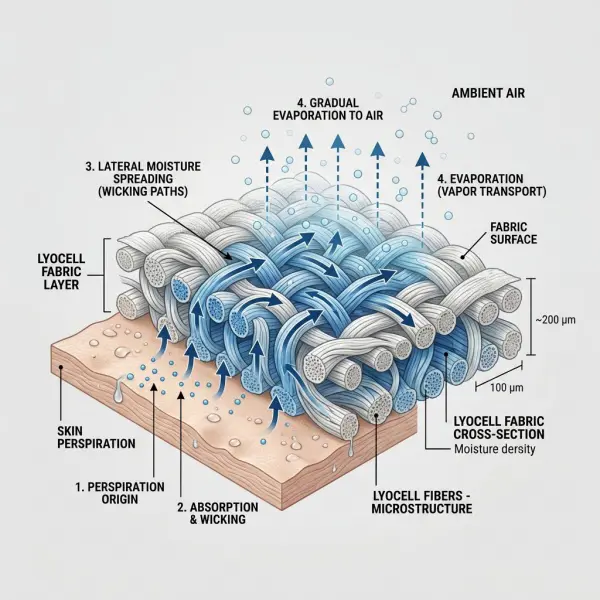
Moisture-related comfort involves several separate mechanisms:
- Sweat or water vapor reaches the textile.
- The fiber or fabric absorbs part of the moisture.
- Liquid may move through yarn and fabric capillaries.
- Moisture reaches a larger surface area.
- Water vapor or liquid evaporates into the surrounding air.
- The fabric eventually returns to a dry state.
Lyocell’s moisture absorption supports part of this sequence. It does not guarantee that the entire sequence happens quickly.
Scientific reviews of apparel drying performance show that wicking, evaporation, fabric thickness, weight, air permeability, surface structure, temperature, humidity, and airflow all affect how moisture moves and how fast a garment dries.
This is especially important when lyocell is used in travel apparel, base layers, active-inspired garments, or products promoted for warm climates.
A lightweight lyocell knit may feel comfortable during low-intensity daily use. It may not dry as quickly as a properly engineered lightweight polyester fabric during high-perspiration exercise. Moisture absorption and quick drying are related, but they are not the same performance claim.
Fabric Structure Still Controls Breathability
Lyocell is frequently described as breathable, but breathability is not a fixed property delivered by the fiber name alone.
Air permeability is strongly influenced by fabric porosity, thickness, weight, yarn density, and weave or knit structure. Water-vapor transfer is also affected by the spaces between fibers and yarns, moisture absorption, vapor-pressure differences, and environmental conditions.
A loosely knitted lyocell top may allow substantial airflow. A tightly woven lyocell twill may allow much less. A coated or laminated lyocell fabric may have very different vapor-transfer properties from an untreated fabric made from the same fiber.
Garment design introduces another layer. A loose shirt creates a different skin-to-clothing microclimate from a fitted bodysuit. Wider sleeves, vents, neckline shape, layering, and garment length can change how air circulates around the body.
For warm-weather products, brands should evaluate:
- Fabric weight
- Thickness
- Air permeability
- Water-vapor permeability
- Moisture regain
- Wicking behavior
- Drying rate
- Garment fit
- Layering assumptions
- Intended temperature and humidity
Using the word “breathable” without identifying what was tested can create unrealistic customer expectations.
Why Drape Makes Lyocell Relevant to Modern Silhouettes
Lyocell can produce fabrics that fall close to the body, move smoothly, and create soft volume without always becoming visually limp. This makes it suitable for contemporary silhouettes that prioritize ease rather than rigid internal structure.
Fluid trousers, overshirts, bias-cut skirts, shirt dresses, relaxed suits, wide-leg jeans, and soft utility garments all depend heavily on how fabric weight and bending behavior interact with pattern shape.
Lyocell can work particularly well when a designer wants:
- Movement without excessive bulk
- Soft tailoring without a stiff formal appearance
- Denim with reduced rigidity
- Draped garments with a clean surface
- Casual products that still look refined
- Lightweight volume in wide silhouettes
A fabric with too little body may collapse around pockets, collars, waistbands, or seams. A fabric with too much stiffness may resist the intended movement. Lyocell gives mills several ways to position the textile between these extremes through fiber type, yarn, blending, density, and finishing.
Drape is not inherently comfortable, but it can support comfort by allowing a garment to move with the wearer and reducing rigid pressure points.
It can also create fit risks. A fluid fabric may grow at the knees, elbows, seat, or hem. Bias-cut garments may lengthen after hanging. Soft waistbands can roll or stretch. Loose structures may suffer from seam slippage.
Product teams must therefore balance visual movement with dimensional control.

Strength Expands the Range of Possible Products
Lyocell is not used only because it is soft. Its relatively high strength among regenerated cellulosic fibers is an important part of its commercial appeal.
This helps explain why it can move between delicate-looking garments and more substantial categories such as denim, trousers, work-inspired clothing, and washable everyday apparel. Lenzing identifies high tenacity as a core characteristic of TENCEL™ Lyocell, while independent technical literature generally distinguishes lyocell from conventional viscose through its more oriented fiber structure and stronger wet performance.
Fiber strength does not guarantee garment durability. A strong fiber can still become part of a weak fabric when the yarn is uneven, the construction is too open, the seams are unstable, or finishing damages the textile.
Even so, stronger wet performance can give mills and garment developers more flexibility during:
- Dyeing and washing
- Enzyme treatment
- Garment finishing
- Denim laundering
- Repeated consumer washing
- Lightweight fabric engineering
- Blending with weaker or more irregular fibers
This matters for brands trying to combine a soft material story with realistic everyday care.
Why Blending Makes Lyocell More Versatile
Lyocell is rarely limited to one visual identity because it can be blended with fibers that change its structure, cost, recovery, texture, warmth, or drying behavior.
The blend can be created at fiber, yarn, fabric, or garment-component level. Those options allow mills to place lyocell where it contributes the most value rather than requiring it to perform every function.
Lyocell and Cotton
Cotton-lyocell blends can retain a familiar cotton appearance while adding softness, fluidity, or moisture absorption. They are common in denim, shirting, casual trousers, knits, and bedding-related textile constructions.
In denim, lyocell may be added to reduce stiffness and produce a softer washed character. The blend must still be engineered for seam strength, growth, skew, abrasion, and shape retention.
Lyocell and Elastane
Elastane provides stretch and recovery that lyocell alone does not naturally supply. This combination is useful in underwear, fitted tops, leggings, trousers, and soft stretch denim.
The main risk is assuming that a small elastane percentage will solve every recovery issue. Yarn configuration, knit structure, heat setting, finishing, and garment pattern remain critical.
Lyocell and Linen
Linen can provide dry texture, visual irregularity, and crispness. Lyocell can soften the handfeel and add more fluid movement.
The blend may be useful for summer shirts, relaxed dresses, trousers, and resortwear. Creasing and dimensional change should still be tested rather than treated as defects that the lyocell will automatically eliminate.
Lyocell and Wool
Lyocell can modify the softness, drape, moisture behavior, and price of wool-containing fabrics. These blends can support lightweight knitwear, soft suiting, base layers, and transitional apparel.
Care compatibility becomes a central issue. Wool felting behavior, lyocell shrinkage, dyeing requirements, and finishing conditions must work together.
Lyocell and Synthetic Fibers
Polyester, nylon, or other synthetic fibers may be added to improve resilience, drying, abrasion resistance, shape retention, or production economics.
The blend can create useful performance, but it complicates claims about biodegradability, renewable content, and textile-to-textile recycling. Customer communication should reflect the whole composition rather than focusing only on the lyocell percentage.
Which Apparel Categories Benefit Most from Lyocell?
Lyocell is gaining attention partly because it can serve categories that share comfort requirements but have different visual and mechanical needs.
Loungewear and Elevated Basics
Loungewear, T-shirts, relaxed tops, sleepwear, and knit separates benefit from smoothness and softness against the skin. Lyocell can help these products feel more refined than conventional basic jersey.
However, knit stability is crucial. Soft lyocell jersey can grow, twist, shrink, or lose shape when yarn, loop length, finishing, and elastane recovery are not well controlled.
Underwear and Next-to-Skin Apparel
Next-to-skin garments require low surface irritation, moisture interaction, softness, stretch, seam comfort, and repeated washing performance.
Lyocell can contribute softness and moisture absorption, while elastane or engineered knitting supplies recovery. Waistband design, seam placement, labels, elastics, and gusset construction may affect comfort more than a small difference in fiber percentage.
Soft Denim
Lyocell allows denim mills to create jeans, overshirts, skirts, and jackets with softer handfeel and greater drape. It is particularly relevant for relaxed, wide-leg, lightweight, and fluid denim concepts.
Lenzing reported expanded customer interest in new TENCEL™ Lyocell denim applications during 2024, including matte fiber variants intended to extend the aesthetic possibilities of lyocell denim.
The operational challenge is balancing softness with recovery and shape retention. A comfortable pair of jeans should not become excessively baggy after several hours of wear.
Dresses and Fluid Separates
Lyocell can support dresses, skirts, blouses, and trousers that require movement and a smooth or softly washed surface.
Product teams must check opacity, seam slippage, snagging, hanging growth, hem distortion, and pressing marks. The material’s visual elegance does not remove the need for technical reinforcement.
Relaxed Tailoring
Soft blazers, unstructured jackets, fluid trousers, and overshirts can use lyocell where conventional tailoring materials feel too formal or rigid.
The fabric may need carefully selected interlining, stay tape, pocketing, shoulder support, and pressing conditions. A soft outer fabric paired with overly stiff internal components can produce an uncomfortable and visually inconsistent garment.
Travel and Commuter Clothing
Travel products often need softness, easy movement, manageable care, odor control, wrinkle recovery, drying performance, and resistance to repeated wear.
Lyocell may contribute to comfort, but it does not automatically supply every travel function. Wrinkle, drying, recovery, and odor claims should be verified on the finished garment. Blends may be more suitable than 100% lyocell when resilience or rapid drying is the priority.
Active-Inspired Apparel
Lyocell can work in yoga-inspired tops, casual training layers, warm-up products, studio-to-street clothing, and low-intensity movement apparel.
It is less straightforward for high-output endurance sports where rapid sweat transport, low wet weight, abrasion resistance, compression recovery, and fast drying are critical. Research on activewear shows that moisture performance depends on the complete fabric system and environmental conditions rather than one fiber characteristic.
How Lyocell Supports a More Flexible Product Architecture
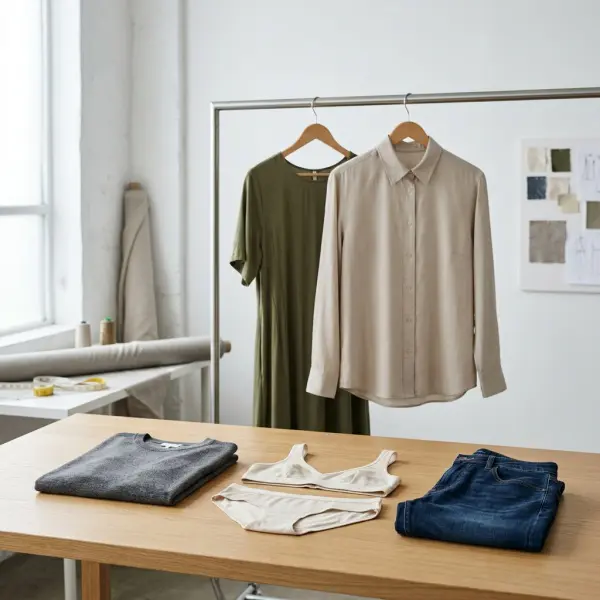
One reason lyocell is commercially attractive is that brands can use it across multiple product families without making every item look identical.
A brand might use:
- Fine lyocell jersey for base layers
- Lyocell-elastane rib for fitted tops
- Cotton-lyocell denim for relaxed jeans
- Lyocell twill for utility trousers
- Lyocell-linen woven fabric for summer shirts
- Lyocell filament for fluid premium garments
- Lyocell-wool blends for lightweight tailoring
This can support a coherent material narrative while allowing different levels of structure, stretch, weight, and price.
The strategy only works when the brand maintains precise product data. “Made with lyocell” is not a technical specification. Every style needs its own composition, construction, performance standard, care method, and approved claims.
For the foundational distinction between the generic fiber and the TENCEL™ trademark, see Tencel and lyocell fabric explained for fashion applications.
Does Lyocell Support Premium Positioning?
Lyocell can support premium positioning, but the fiber name alone does not create a premium garment.
The material may contribute value through smooth handfeel, refined drape, strong coloration, verified fiber sourcing, ingredient branding, or an alternative to more conventional cotton, viscose, and synthetic constructions.
TENCEL™ has particular commercial visibility because it combines a branded fiber with defined sourcing, production, certification, and communication systems. Lenzing reports that TENCEL™ Lyocell and Modal fibers are made from controlled or certified wood sources and provides product-level branding and certification routes.
Premium value still has to be visible in the complete product:
- Fabric quality is consistent
- The garment fits well
- Seams and trims feel comfortable
- Color remains stable
- The fabric keeps its shape
- Care instructions are realistic
- Surface appearance survives laundering
- Claims are specific and verifiable
- Packaging and communication explain the material accurately
A poorly constructed TENCEL™ Lyocell garment can damage customer trust more quickly than a well-made generic fabric with modest claims.
The Sustainability Story Is Useful but Must Be Controlled
Environmental positioning has contributed to lyocell’s visibility, particularly where the production system uses responsibly sourced cellulose and efficient solvent recovery.
Lenzing states that its TENCEL™ Lyocell production process recovers more than 99.8% of the solvent and that the wood used for its TENCEL™ Lyocell and Modal fibers comes from controlled or certified sources meeting Forest Stewardship Council or Programme for the Endorsement of Forest Certification requirements. These are producer-specific claims and should not be generalized to every generic lyocell fiber.
Textile Exchange similarly emphasizes that the environmental impact of man-made cellulosic fibers depends substantially on how wood or other cellulosic feedstocks are sourced. Its 2025 market reporting found that two-thirds of man-made cellulosic fibers were produced using certified or controlled feedstock, indicating progress while also showing that coverage is not universal.
Brands should verify:
- Fiber producer
- Pulp and forest source
- Certification scope
- Solvent or chemical recovery
- Energy source
- Facility-level production data
- Wet-processing impacts
- Garment durability
- Blend composition
- End-of-life claim conditions
- Trademark and communication authorization
Lyocell should not be described as chemical-free. Cellulose dissolution, fiber production, dyeing, finishing, and garment processing all involve industrial chemistry.
It should also not be called fully circular unless a documented take-back, recovery, recycling, and regeneration system exists for the actual product.
What Lyocell Cannot Automatically Deliver
Lyocell Is Not Inherently Elastic
The fiber does not behave like elastane. Stretch may come from a knitted structure, mechanical fabric construction, or an elastomeric blend.
Without adequate recovery, fitted products may bag at the knees, elbows, seat, or waistband.
Lyocell Is Not Necessarily Quick-Drying
It can absorb moisture, but drying speed depends on fabric weight, thickness, airflow, surface area, humidity, and blend composition.
High-perspiration products require comparative drying and moisture-management tests.
Lyocell Is Not Automatically Wrinkle-Free
Cellulosic fabrics can crease. Fabric density, finishing, blending, garment construction, packing, and care influence wrinkle behavior.
An easy-care claim should be based on the finished garment.
Lyocell Is Not Automatically Antibacterial or Odor-Resistant
Moisture control is not the same as antimicrobial performance. Antibacterial and odor-control claims require defined test methods, test organisms or odor protocols, and evidence that the effect remains after laundering.
Lyocell Is Not Suitable for Every Performance Product
Extreme abrasion, compression, weather protection, rapid drying, chemical resistance, or heavy industrial use may require other fibers, coatings, membranes, or blends.
Material selection must follow the use case.
Every Lyocell Fabric Is Not TENCEL™
Lyocell is a generic fiber. TENCEL™ is a trademark for specific Lenzing fibers. A brand needs appropriate certification and authorization before using branded product claims.
The detailed terminology and process distinction is covered in Tencel vs rayon and other regenerated cellulosic fabrics.
Operational Challenges Brands Should Anticipate
Lyocell can simplify some material decisions while creating new production requirements.
Fibrillation and Surface Change
Lyocell fibers can develop tiny fibrils under wet mechanical stress. Controlled fibrillation may create an attractive peach-skin or washed effect. Uncontrolled fibrillation may appear as fuzziness, pilling, or pale surface marks.
Dark colors, garment washing, abrasion zones, and repeated laundering deserve particular attention.
Dimensional Stability
Fluid lyocell fabrics may shrink, grow, skew, or distort when the fabric has not been adequately relaxed and stabilized.
Garment testing should include the intended washing, drying, pressing, and wearing conditions.
Sewing and Handling
Soft or slippery fabrics can shift during cutting. Fine structures may suffer from seam slippage, needle damage, puckering, or distortion.
Factories may need to adjust:
- Lay height
- Cutting support
- Needle type and size
- Thread
- Stitch density
- Differential feed
- Presser-foot pressure
- Seam reinforcement
- Pressing temperature
- Handling between operations
Shade and Finish Consistency
Surface fibrillation and finishing can alter how color is perceived. Dark shades may show whitening more clearly, while sueded surfaces may reflect light unevenly.
Bulk tolerances should be agreed before production.
Care Communication
A care label should be based on the complete garment. Trims, elastics, linings, interlinings, prints, coatings, and mixed-fiber panels may require stricter care than the main lyocell fabric.
How Fashion Businesses Can Apply Lyocell Strategically
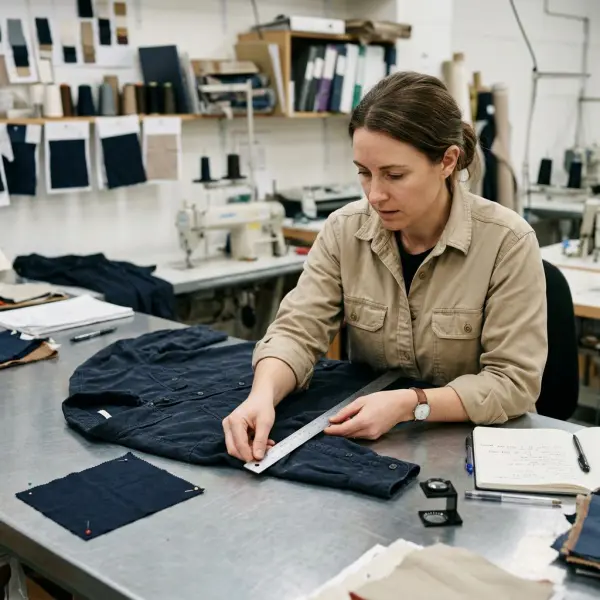
1. Define the Comfort Problem First
Do not begin with “we want to use lyocell.” Begin with the wearer’s problem.
Is the garment too rigid, too rough, too warm, too heavy, too clingy, or too restrictive? Does it need softer drape, more moisture absorption, or a smoother next-to-skin surface?
The required solution determines whether lyocell, a blend, or another material is most suitable.
2. Translate Comfort into Measurable Requirements
“Soft and breathable” is too vague for a supplier brief.
Depending on the product, the specification may need targets for:
- Fabric weight and thickness
- Air permeability
- Water-vapor permeability
- Wicking
- Drying time
- Stretch and recovery
- Shrinkage
- Pilling
- Bursting or tensile strength
- Seam slippage
- Abrasion
- Surface friction
- Bending rigidity
- Appearance after laundering
Not every product needs every test. The test plan should match the risk.
3. Compare Complete Fabric Options
Compare fabrics with similar weights, structures, finishes, and intended applications. A lightweight lyocell jersey should not be judged against heavy cotton twill as though the difference comes only from fiber content.
Conduct blind handfeel reviews where possible so the brand name does not influence the assessment.
4. Develop the Pattern Around Fabric Behavior
A pattern created for crisp cotton may not work in fluid lyocell. Pocket openings may stretch, collars may collapse, hems may drop, and waistbands may roll.
Allow the fabric to relax before cutting and assess hanging growth before finalizing garment length.
5. Test the Garment in the Intended Climate
Laboratory results should be supplemented with wear trials that reflect expected temperature, humidity, activity, and care behavior.
A fabric that feels comfortable in an air-conditioned showroom may behave differently in a humid outdoor environment.
6. Build Claims from Documentation
Separate three types of claims:
- Fiber identity: The product contains lyocell or verified TENCEL™ Lyocell.
- Performance: The finished fabric or garment achieved a defined test result.
- Environmental attribute: A specific producer, facility, feedstock, or product has supporting certification or lifecycle evidence.
Do not use a fiber supplier’s general marketing claim as evidence for an unrelated fabric or completed garment.
7. Track Customer Experience After Launch
Returns, reviews, complaints, repairs, and care questions can reveal whether the product fulfilled its comfort promise.
Useful signals include:
- Garment growth
- Pilling
- Shrinkage
- Heat complaints
- Slow drying
- Surface whitening
- Waistband discomfort
- Seam irritation
- Unexpected transparency
- Difficult ironing
Comfort should be treated as a product-performance metric, not only a marketing message.
A Decision Framework for Using Lyocell
|
Product requirement |
Why lyocell may help |
Main limitation to check |
|
Soft next-to-skin feel |
Smooth fiber and suitable yarns can create a refined surface |
Pilling, seams, elastics, finishes |
|
Fluid silhouette |
Lyocell fabrics can provide drape and movement |
Growth, seam slippage, collapse |
|
Moisture comfort |
Cellulosic fiber absorbs moisture |
Drying rate and wet weight |
|
Soft denim |
Can reduce rigidity and improve drape |
Recovery, abrasion, fibrillation |
|
Washable apparel |
Relatively strong wet fiber performance |
Shrinkage and garment construction |
|
Relaxed tailoring |
Supports softness with visual refinement |
Interlining and shape retention |
|
Premium material story |
Branded and traceable options are available |
Cost, licensing, claim accuracy |
|
Reduced synthetic content |
Can replace part of a fossil-derived blend |
Performance and end-of-life trade-offs |
|
Travel apparel |
Comfortable touch and versatile aesthetics |
Wrinkles, drying, odor, recovery |
|
Active-inspired clothing |
Useful for low- to moderate-intensity garments |
High-sweat performance must be tested |
Lyocell is most compelling when the fiber’s actual strengths correspond with the product brief. It is less compelling when the design team expects the material name to solve unrelated performance problems.
Common Mistakes in Lyocell Comfort Products
Mistake 1: Using Softness as the Only Approval Criterion
A fabric may feel excellent before washing but shrink, twist, pill, or grow after several care cycles.
Approve handfeel and durability together.
Mistake 2: Calling Every Lyocell Product Breathable
Breathability depends heavily on structure, thickness, coatings, fit, and environmental conditions.
Use an air-permeability or water-vapor test when the claim matters commercially.
Mistake 3: Confusing Absorption with Quick Drying
Absorbing sweat can support comfort but may also increase water retained in the fabric.
Test drying performance for travel, sports, and humid-climate products.
Mistake 4: Ignoring Recovery
Soft, stretchable fabric is not necessarily resilient. A garment may stretch during wear and fail to return to its original dimensions.
Measure growth and recovery after repeated extension.
Mistake 5: Overloading the Material with Sustainability Claims
A lyocell fiber may have verified sourcing and process benefits, but the garment may also contain elastane, synthetic sewing thread, chemical finishes, coatings, or mixed trims.
Describe the documented attribute rather than declaring the entire garment sustainable.
Mistake 6: Treating Branded and Generic Lyocell as Identical
TENCEL™ Lyocell comes with a specific producer, documentation system, and trademark rules. Generic lyocell may come from a different process and supply chain.
Verify the fiber behind the fabric quotation.
Mistake 7: Forcing Lyocell into Every Category
Lyocell may be unsuitable where extreme recovery, weather protection, abrasion resistance, stiffness, or rapid drying is the central requirement.
The best material strategy accepts that different products need different fibers.
What Should Brands Verify Before Launching a Lyocell Product?
Before bulk production, brands should confirm:
- Exact generic fiber composition
- Whether the material is generic lyocell or TENCEL™ Lyocell
- Fiber percentage and blend configuration
- Staple or filament format
- Yarn and fabric construction
- Fabric weight, width, and finish
- Shrinkage and growth
- Pilling and abrasion
- Colorfastness
- Fibrillation behavior
- Stretch and recovery
- Air and water-vapor permeability where relevant
- Drying performance where relevant
- Garment-level wash testing
- Seam and trim comfort
- Fiber and forestry documentation
- Trademark authorization
- Approved environmental and performance claims
- Bulk-production tolerances
- Repeat-order availability
The most useful verification is evidence tied to the exact fabric lot and garment design. Generic brochures can support background understanding, but they do not replace product-specific testing.
Frequently Asked Questions
Why Is Lyocell Considered Comfortable?
Lyocell can contribute to comfort through a smooth surface, soft handfeel, moisture absorption, drape, and relatively strong fiber performance. These characteristics can be useful in garments worn close to the skin or designed for relaxed movement.
Comfort still depends on the finished textile and garment. Fabric weight, porosity, seams, fit, stretch, temperature, humidity, and activity level can change the wearing experience substantially.
A dense lyocell twill may feel warmer than an open cotton fabric, while a poorly stabilized lyocell knit may become uncomfortable after losing its shape. Brands should therefore validate comfort through fabric tests and wear trials.
Is Lyocell Good for Hot and Humid Weather?
Lyocell can be appropriate for hot weather when it is made into a lightweight, air-permeable fabric with a loose or ventilated garment design. Its moisture absorption may help reduce an immediately clammy sensation.
In humid conditions, evaporation is slower because the surrounding air already contains substantial moisture. A thick lyocell fabric may therefore remain damp longer than expected.
Warm-climate products should be evaluated for weight, airflow, water-vapor transfer, drying rate, opacity, fit, and real-use conditions. The word “lyocell” alone does not guarantee tropical comfort.
Is Lyocell Better Than Cotton for Comfortable Clothing?
Neither fiber is universally more comfortable. Lyocell often provides a smoother surface and more fluid drape, while cotton can offer familiar texture, broad construction options, and different levels of crispness or softness.
A lightweight cotton voile may feel more breathable than a dense lyocell twill. A fine lyocell jersey may feel smoother than a rough cotton jersey.
The more useful comparison is between finished fabrics with similar weight, structure, finish, and garment purpose. Brands should also consider durability, care, supply, environmental documentation, and cost rather than relying only on initial softness.
Is Lyocell Suitable for Activewear?
Lyocell can work in yoga-inspired apparel, studio clothing, warm-up layers, low-intensity tops, travel-active products, and comfortable base layers.
For high-intensity sports, the fabric must be tested for sweat transport, drying, wet cling, abrasion, stretch recovery, weight when wet, and repeated laundering. Hydrophilic fibers can absorb moisture without necessarily drying as quickly as engineered synthetic textiles.
A blend may provide a more appropriate balance than 100% lyocell. The correct choice depends on the activity, climate, garment fit, and performance standard.
Does Lyocell Prevent Body Odor?
Lyocell should not automatically be marketed as odor-preventing. Moisture interaction may influence the microclimate inside a garment, but body odor is affected by perspiration, skin microorganisms, garment drying, washing, finishes, and individual physiology.
A product making an antibacterial or odor-control claim needs appropriate testing. The test should identify the method, microorganisms or odor protocol, result, and durability after laundering.
Without this evidence, the safer claim is limited to documented fiber or moisture-management characteristics.




Comments 0
Leave a CommentSend Comment
Anda harus Login terlebih dahulu untuk dapat memberikan komentar.