

How Technology Improves Fashion Supply Chain Visibility
Quick Answer
Technology improves fashion supply chain visibility by connecting product, material, supplier, production, inventory, shipment, and retail data into systems that decision-makers can actually use. In fashion, visibility is not only about tracking where a garment is. It is about knowing whether the right fabric has been ordered, whether production is on schedule, whether stock is in the correct store or warehouse, and whether product information can support compliance, sustainability, resale, or customer communication.
The most useful technologies usually include product lifecycle management systems, enterprise resource planning systems, supplier portals, RFID, barcode systems, digital product identifiers, warehouse management systems, transportation tracking, business intelligence dashboards, and, in more advanced cases, traceability platforms or Digital Product Passport infrastructure.
The caveat is important: technology does not automatically create visibility. It only works when product data is structured, suppliers participate, teams follow consistent workflows, and the business defines what it needs to see. A fashion brand with poor SKU discipline, inconsistent purchase order data, and informal supplier communication will not become transparent simply by buying software. The first gain usually comes from cleaner data and better coordination, not from the most advanced tool.

What Is Fashion Supply Chain Visibility?
Fashion supply chain visibility is the ability to see, verify, and act on accurate information across the apparel value chain, from raw material sourcing and product development to manufacturing, logistics, inventory, retail, and post-sale product data. It connects operational data so teams can answer practical questions: where is the fabric, which supplier confirmed the order, what stage is production in, how much stock is available, and what product information is reliable enough to share with buyers, regulators, or customers.
This is different from simply “having data.” Many fashion businesses already have data scattered across emails, spreadsheets, WhatsApp messages, supplier PDFs, warehouse files, e-commerce platforms, and accounting systems. Visibility means that the data is organized, timely, consistent, and usable for decision-making.
A small brand may only need visibility into purchase orders, sample approvals, supplier deadlines, inventory, and customer demand. A global retailer may need item-level tracking, multi-tier supplier mapping, automated shipment alerts, compliance documentation, and product-level sustainability information. The principle is the same, but the system depth depends on business size, product complexity, regulatory exposure, and channel strategy.
Why Fashion Supply Chains Are Hard to See Clearly
Fashion is difficult to monitor because it combines creative change, seasonal pressure, SKU complexity, fragmented suppliers, and short commercial windows. A single style may have several colorways, size ranges, trims, packaging components, washing processes, and store allocations. Small changes in one area can create consequences elsewhere.
A common example is fabric substitution. If a supplier changes fabric weight, finishing, or yarn composition after sampling, the design team may see only a small visual difference. But production, costing, quality control, labelling, care instructions, import classification, and sustainability claims may all be affected. Without visibility, the brand discovers the issue late—often when goods arrive, when customers complain, or when a buyer asks for documentation.
The problem is not only distance. Even domestic production can lack visibility if teams rely on informal updates. A local factory may be nearby, but if the brand does not have clear purchase order status, material availability, production capacity, inspection results, and delivery confirmation, decision-making remains reactive.
Fashion visibility usually breaks down in several predictable places:
- Product data changes after development but is not updated across all systems.
- Suppliers confirm deadlines verbally without structured milestone tracking.
- Fabric, trims, and packaging are managed separately from garment production.
- Inventory is available physically but not accurately reflected in the retail or e-commerce system.
- Sustainability, compliance, and material claims are stored as documents instead of structured data.
- Teams use different item names, style codes, color names, or size references.
These are not glamorous problems, but they are commercially expensive. They create late deliveries, excess stock, unnecessary air freight, markdowns, customer disappointment, and weak negotiating power with suppliers.
Visibility, Traceability, and Transparency Are Related — But Not the Same
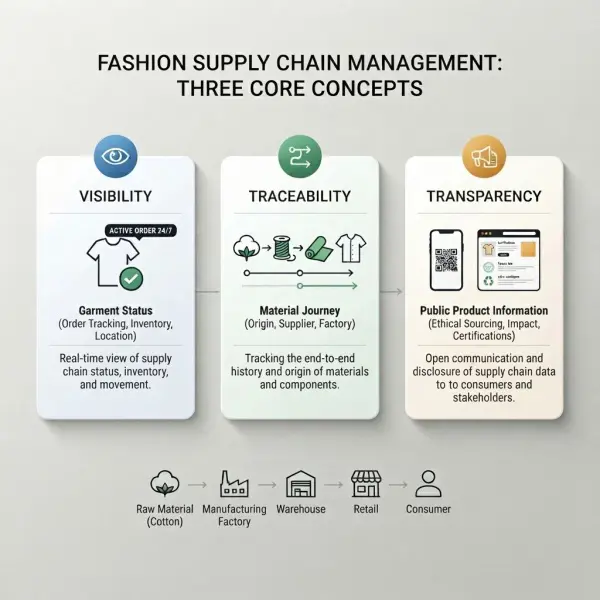
Supply chain visibility, traceability, and transparency are often used interchangeably, but they serve different purposes. Confusing them can lead brands to invest in the wrong system or make public claims they cannot support.
Visibility is mainly operational. It helps the business see what is happening across orders, materials, production, inventory, and logistics. Traceability is more about following the history or movement of materials and products through defined stages. Transparency is about what the business discloses to external stakeholders, such as consumers, regulators, investors, or retail partners.
|
Concept |
Practical Meaning in Fashion |
Main Business Use |
|
Visibility |
Knowing current status across product development, sourcing, production, logistics, and stock |
Better planning, fewer delays, improved inventory decisions |
|
Traceability |
Following the product or material journey backward or forward through the value chain |
Compliance, material verification, risk management, product claims |
|
Transparency |
Sharing selected information externally in a clear and credible way |
Trust, regulation, sustainability communication, buyer assurance |
A brand can have internal visibility without full consumer transparency. It can also publish transparency claims without having strong operational visibility, although that is risky. The strongest position is when internal systems support external claims. For example, a brand should not claim responsible sourcing based only on a supplier statement if it has no supporting documentation, chain-of-custody data, audit trail, or verification process.
This distinction matters because upcoming product data expectations in Europe are becoming more structured. The European Commission describes the Digital Product Passport as a key innovation under the 2024 Ecodesign for Sustainable Products Regulation for storing and sharing relevant product data on sustainability, durability, and environmental aspects, available to consumers, businesses, and public authorities. (single-market-economy.ec.europa.eu) The Commission has also described the DPP as a digital identity card for product sustainability performance, recyclability, and lifecycle environmental impact. (single-market-economy.ec.europa.eu)

How Technology Improves Visibility Across the Fashion Supply Chain
Technology improves visibility by turning scattered supply chain information into connected workflows. The value is not only faster reporting. The deeper value is that teams can detect problems earlier and make better trade-offs before deadlines, margins, or customer trust are damaged.
Product Lifecycle Management Connects Design, Development, and Sourcing
Product lifecycle management, usually called PLM, helps fashion teams manage product information from concept to final approved specification. In apparel, this may include sketches, tech packs, bill of materials, size specs, sample comments, colorways, supplier assignments, cost estimates, and approval history.
PLM is especially useful because many supply chain problems begin before production. If a designer updates a garment detail but sourcing still uses the old bill of materials, the supplier may quote the wrong cost. If the sample team approves a trim change but the update does not reach purchasing, the factory may receive incorrect components. PLM reduces these mismatches by giving teams one controlled place for product development data.
For growing brands, PLM does not have to be complex from the beginning. The first goal is simple: create a reliable product record. Once that foundation is stable, the brand can connect product data to costing, purchase orders, production tracking, and compliance files.
ERP Turns Supply Chain Activity Into Business Control
Enterprise resource planning, or ERP, connects operational activity with business records. In fashion, ERP can manage purchase orders, vendor records, inventory, production orders, invoices, costing, warehouse stock, and sales orders.
ERP improves visibility because it links supply chain decisions to commercial consequences. A delay is no longer just a production issue; it becomes a cash flow issue, a sales allocation issue, and sometimes a customer service issue. If a brand knows that 5,000 units are delayed by two weeks, it can adjust marketing, store allocation, e-commerce availability, and wholesale communication before the problem becomes public.
The mistake many brands make is implementing ERP before cleaning product structure. If style codes, colors, sizes, supplier references, and units of measure are inconsistent, ERP may only centralize confusion. For this reason, ERP implementation should be treated as an operational discipline project, not merely a software purchase.
Supplier Portals Reduce Email-Based Blind Spots
Supplier portals help brands collect structured updates from vendors, factories, mills, trim suppliers, and logistics partners. Instead of searching across email threads, teams can request status updates, upload documents, approve samples, confirm production milestones, and track corrective actions in a shared environment.
This is particularly helpful for brands working with multiple factories or sourcing agents. The buyer may not need to know every small factory-floor detail, but they do need accurate milestone visibility: fabric ordered, fabric received, cutting started, sewing in progress, inline inspection completed, final inspection booked, goods packed, shipment released.
Supplier portals work best when they are simple enough for suppliers to actually use. A technically sophisticated portal that suppliers avoid will not improve visibility. Many apparel suppliers operate under tight administrative capacity, so the workflow should match real production routines rather than forcing unnecessary reporting burdens.
RFID and Barcodes Improve Inventory and Item Movement Data
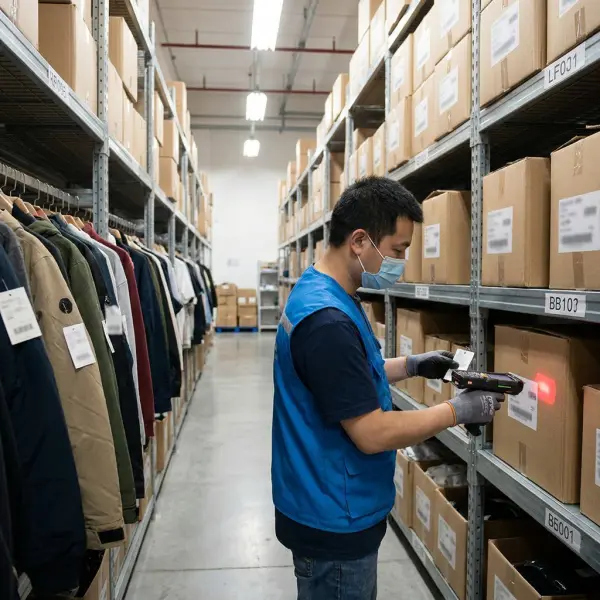
Barcode systems and radio-frequency identification, or RFID, improve visibility by giving products, cartons, or individual items machine-readable identities. Barcodes usually require line-of-sight scanning. RFID can allow faster scanning of multiple tagged items, depending on tag type, reader setup, item density, materials, and store or warehouse conditions.
In apparel retail, RFID is often associated with better inventory accuracy, faster cycle counts, omnichannel fulfillment, and loss visibility. Avery Dennison, referencing Auburn University, states that apparel retailers may have around 65% inventory accuracy without RFID and up to 99% with RFID, although actual performance depends on implementation quality, tagging coverage, store process discipline, and system integration. (Avery Dennison Smartrac)
The important point is not that RFID is automatically better for every brand. The important point is granularity. If a brand only needs carton-level warehouse control, barcode discipline may be enough. If a retailer wants item-level store visibility for buy-online-pick-up-in-store, ship-from-store, fitting room analytics, or high-value product authentication, RFID becomes more strategically relevant. A deeper article on RFID applications and benefits in the fashion industry can explore the technology in more detail.
Logistics and Warehouse Systems Make Movement Visible
Warehouse management systems and transportation management tools help brands see where goods are, how they move, and where delays occur. In apparel, this can include inbound fabric, finished garments, cartons, store replenishment, e-commerce fulfillment, returns, and transfers between locations.
Visibility at this stage directly affects margin. If a brand discovers late that goods missed a vessel, it may pay for air freight, delay a launch, split shipments, or accept stock arriving after the selling window. For seasonal fashion, two weeks can change the commercial value of a product.
Good logistics visibility does not eliminate disruption. It helps the brand choose the least damaging response. That may mean reallocating stock to stronger stores, extending pre-order windows, shifting marketing dates, or prioritizing core sizes for faster fulfillment.
The Role of Standards and Product Identifiers
Visibility depends heavily on identifiers. A product cannot be tracked reliably if different teams describe it differently. In fashion, this often means aligning style codes, color codes, size codes, supplier IDs, material references, purchase order numbers, carton labels, and item-level identifiers.
GS1’s EPCIS standard is relevant here because it provides a common language for sharing event data across supply chains. GS1 describes EPCIS as a traceability event messaging standard that enables supply chain visibility by sharing event data across and within enterprises. (gs1.org) In simple terms, standards help systems describe what happened, when it happened, where it happened, and why it matters.
For fashion brands, this can support more consistent communication between internal systems, suppliers, logistics providers, marketplaces, and retailers. Standards do not solve every problem, but they reduce ambiguity. A garment moving through a factory, warehouse, store, resale platform, or recycling program needs a reliable identity if the business wants meaningful visibility.
The European Commission’s textile strategy also explicitly includes the introduction of a Digital Product Passport among measures related to sustainable and circular textiles. (Environment) The Joint Research Centre’s 2026 preparatory study explains that the DPP for textile apparel products is intended to provide harmonised, machine-readable information to support market surveillance, consumer information, circular economy strategies, and industrial competitiveness.
Useful external references for this topic include the GS1 EPCIS supply chain visibility standard, the European Commission overview of the Digital Product Passport consultation, and the JRC study on DPP content for textile apparel products under ESPR.
What Better Visibility Changes for Fashion Businesses
The practical value of visibility is that it improves decisions before problems become expensive. It gives teams earlier warnings, cleaner accountability, and a stronger basis for planning.
Sourcing Becomes Less Reactive
With better visibility, sourcing teams can compare supplier performance using actual data rather than memory or informal impressions. They can see which suppliers confirm materials on time, which factories frequently miss production milestones, which categories require more buffer, and which regions create logistics risk.
This does not mean brands should reduce supplier relationships to scorecards alone. Apparel sourcing still depends on trust, craftsmanship, negotiation, and capacity alignment. But visibility gives sourcing teams stronger evidence. A supplier that is slightly more expensive may be commercially better if it reduces late shipments, quality failures, and emergency freight.
Production Planning Becomes More Realistic
Production planning improves when teams can see material readiness, factory capacity, order status, and inspection results together. A production calendar built only around target launch dates is often too optimistic. A calendar built around actual material availability and supplier capacity is more usable.
For manufacturers, better visibility supports line planning, machine allocation, labor scheduling, and quality control. For brands, it supports more reliable launch planning and wholesale delivery commitments. Readers who need the manufacturing side can connect this topic to apparel production planning for manufacturers.
Inventory Decisions Become More Accurate
Inventory visibility is one of the most immediate commercial benefits. If a brand has a reliable view of stock by style, size, color, location, and selling speed, it can make better replenishment, markdown, transfer, and e-commerce decisions.
Poor inventory visibility creates strange contradictions. A product may appear out of stock online while sitting in a store stockroom. A store may receive more units of a slow-moving color while another store loses sales because core sizes are missing. A warehouse may reorder too early because returns have not been processed correctly.
Better visibility does not guarantee perfect demand forecasting, but it reduces avoidable errors. For fashion businesses where margins are often pressured by markdowns, this matters.
Compliance and Sustainability Claims Become Easier to Support
Fashion brands are under growing pressure to support product claims with reliable data. This includes material composition, recycled content, restricted substances, country of origin, supplier information, and environmental claims. The EU has also been advancing policy measures around sustainable textiles, green claims, extended producer responsibility, and product information. (Environment)
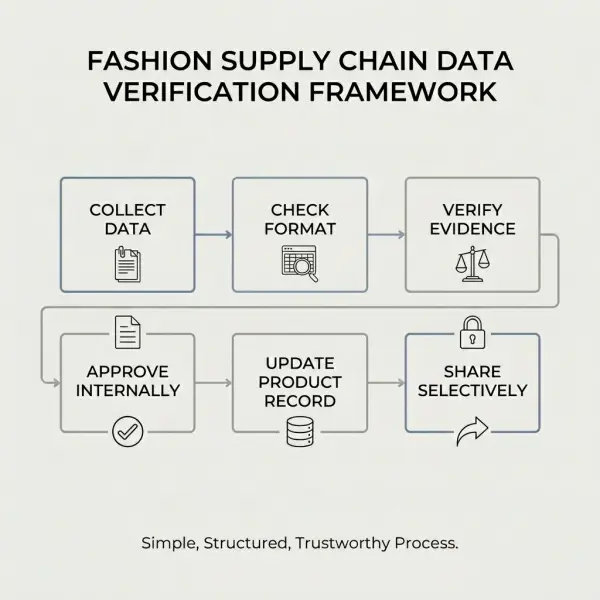
Technology can help organize this information, but it does not automatically verify truth. A digital record is only as credible as the data source, evidence, and governance behind it. If a supplier uploads an inaccurate certificate or if material composition changes without an update, the system may preserve the mistake at scale.
This is why visibility should be paired with verification. Brands should distinguish between supplier-declared data, third-party verified data, legally required data, and marketing-friendly but unverified claims.

A Practical Technology Stack for Better Supply Chain Visibility
A useful visibility stack does not need to be built all at once. For many fashion businesses, the best approach is staged: standardize core product data first, then connect workflows, then add tracking depth where the business case is clear.
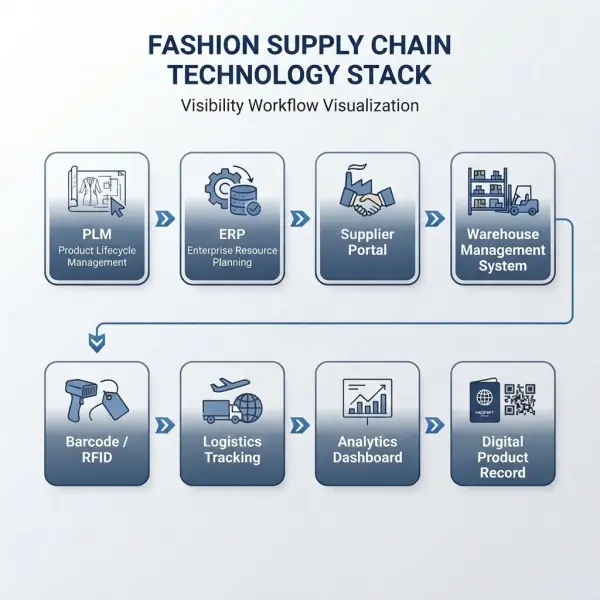
A practical stack may include:
- PLM for product specifications, tech packs, sampling, and development approvals.
- ERP for purchase orders, inventory, costing, vendor management, and financial control.
- Supplier portal for production milestones, documents, sample approvals, and corrective actions.
- Warehouse management system for receiving, picking, packing, stock transfers, and fulfillment.
- Barcode or RFID infrastructure for product, carton, or item-level identification.
- Business intelligence dashboard for exception reporting, supplier performance, and inventory risk.
- Traceability or Digital Product Passport platform where product-level transparency or compliance requires structured lifecycle data.
The sequencing matters. A brand should not start with a complex traceability platform if it cannot maintain accurate product master data. It should not introduce RFID if store teams are not trained to use scans consistently. It should not build dashboards before defining which decisions the dashboard should support.
Technology selection should start with business questions. What do teams need to see? Which decisions are currently delayed? Where does the brand lose money because information arrives too late? Which data must be reliable for compliance or buyer requirements? Once those questions are clear, the tool choice becomes more grounded.
How Fashion Brands Can Apply Visibility Technology Strategically
The smartest implementation begins with a narrow operational problem, not a broad ambition to “digitize everything.” A brand might start by improving fabric order visibility, production milestone tracking, inventory accuracy, or supplier document management. Once one workflow becomes reliable, the brand can extend visibility to adjacent processes.
For a small fashion brand, a realistic first phase may be to clean style codes, standardize tech pack data, centralize purchase orders, and track production milestones in a shared system. This alone can reduce confusion between design, sourcing, and suppliers.
For a growing DTC brand, the next priority may be inventory visibility across warehouse, store, e-commerce, returns, and marketplaces. This is where barcode discipline, warehouse workflows, and system integrations become commercially important.
For a brand selling into regulated or sustainability-sensitive markets, the priority may be traceability and product data governance. That means knowing which material claims are supported, where data comes from, who approved it, and whether it can be shared with retailers, regulators, or consumers. The upcoming discussion on supply chain digitization trends fashion brands should know can go deeper into broader digital adoption patterns.
A practical implementation roadmap may look like this:
|
Phase |
Main Goal |
What to Fix First |
|
Phase 1 |
Build a reliable product data foundation |
Style codes, color names, size matrix, bill of materials, supplier records |
|
Phase 2 |
Track operational milestones |
Sampling, material orders, production status, inspection, shipment |
|
Phase 3 |
Improve inventory accuracy |
Warehouse process, barcode/RFID tagging, returns flow, store stock counts |
|
Phase 4 |
Connect analytics |
Supplier performance, delay alerts, stock risk, margin impact |
|
Phase 5 |
Support traceability and product disclosure |
Material evidence, compliance records, DPP-ready data structure |
This staged approach is less glamorous than a full transformation narrative, but it is usually more effective. Fashion supply chains improve when technology matches the maturity of the operation.
Common Mistakes When Using Technology for Supply Chain Visibility
Mistake 1: Buying Software Before Fixing Data Discipline
Many fashion businesses assume poor visibility is a software gap. Sometimes it is. More often, it is a data discipline gap. If style codes are inconsistent, supplier names are duplicated, bill-of-materials fields are incomplete, and purchase orders are updated manually outside the system, new software will not solve the root problem.
The better approach is to define product data rules before implementation. Who creates style codes? Who approves material changes? Which fields are mandatory? How are colors, sizes, trims, and suppliers named? These details may feel administrative, but they determine whether visibility is reliable.
Mistake 2: Treating Supplier Updates as Optional
Supplier participation is essential. A brand cannot see production status if suppliers update the system late, vaguely, or only when chased. This often happens when the brand introduces a portal but does not align expectations, training, incentives, or consequences.
The better approach is to integrate reporting into the commercial relationship. Production milestones, document uploads, quality updates, and shipment confirmations should be part of the operating agreement, not a side request from the merchandising team.
Mistake 3: Confusing Dashboard Design With Decision Quality
A dashboard may look impressive while still being useless. If it only reports what happened last week, it may not help teams prevent next week’s delay. Visibility tools should highlight exceptions, risk, and action priorities.
Useful dashboard questions include: which orders are at risk, which materials are late, which supplier has repeated delays, which sizes are understocked, which shipments require escalation, and which claims lack evidence. The best dashboards reduce noise rather than adding more screens.
Mistake 4: Overpromising Transparency to Consumers
Consumer-facing transparency must be handled carefully. A QR code on a care label or hangtag can provide useful information, but it does not automatically prove ethical sourcing or sustainability. If a brand cannot verify the underlying data, public transparency may increase reputational risk.
This is especially important for environmental claims. The European Commission’s textiles strategy includes policy actions related to greenwashing and clearer textile information, so brands should avoid broad claims unless the evidence is specific and defensible. (Environment)
Important Technical Caveats
Technology can improve fashion supply chain visibility, but it has limits. The first caveat is interoperability. Many fashion businesses use separate systems for design, accounting, warehouse, e-commerce, and supplier communication. If these systems do not share data properly, teams may still work from conflicting versions of the truth.
The second caveat is data rights and confidentiality. Suppliers may be reluctant to share detailed upstream information if it exposes subcontractors, pricing structures, production capacity, or commercially sensitive relationships. Research on traceability data sharing has noted that supply chain traceability data can be commercially sensitive, creating tension between transparency and competitive confidentiality. (arXiv)
The third caveat is verification. A system can confirm that a field is filled in, but not necessarily that the information is true. The JRC’s textile DPP preparatory study notes that automated validation can check whether required data fields are present and correctly formatted, but not whether the information is accurate.
The fourth caveat is cost. Item-level RFID, advanced traceability, integrations, and analytics may create value, but they also require tags, hardware, software, training, process redesign, and supplier alignment. Smaller brands should start where the return is clearest.
What Brands Should Verify Before Investing
Before investing in visibility technology, fashion brands should verify their operational readiness. The goal is not to delay modernization. The goal is to avoid expensive systems that teams cannot maintain.
A brand should check:
- Whether product master data is already consistent enough to connect across systems.
- Whether suppliers are willing and able to provide structured updates.
- Whether the brand needs batch-level, carton-level, or item-level tracking.
- Whether inventory errors are large enough to justify RFID or system upgrades.
- Whether compliance data needs are driven by buyers, regulators, sustainability claims, or internal governance.
- Whether teams have the capacity to maintain data quality after launch.
- Whether the system can integrate with e-commerce, warehouse, accounting, or retail platforms.
The best technology decision is rarely the most advanced option. It is the option that improves the most valuable decision at the right operational maturity level.
FAQ
What is the simplest definition of fashion supply chain visibility?
Fashion supply chain visibility is the ability to see accurate, timely, and usable information across the apparel supply chain. It helps brands know what is happening with product development, sourcing, production, inventory, logistics, and product data. For a fashion business, this may mean knowing whether fabric has arrived, whether production is delayed, whether warehouse stock is accurate, or whether product information is reliable enough for compliance and customer communication.
Is supply chain visibility the same as traceability?
No. Visibility is mainly about seeing current operational status, while traceability follows the history or movement of products and materials through the value chain. A brand may use visibility to track whether an order is late. It may use traceability to show where cotton, fabric, dyeing, sewing, and finishing took place. The two overlap, but they are not identical. Strong visibility often supports traceability, but traceability requires more structured historical data and evidence.
Which technology should a small fashion brand start with?
A small fashion brand should usually start with product data discipline, purchase order tracking, inventory accuracy, and supplier communication before investing in advanced tools. This may involve a simple PLM system, structured spreadsheets, inventory software, barcode workflows, or a lightweight supplier portal. The priority is to create one reliable version of product and order information. Advanced traceability, RFID, and analytics become more useful once the basic workflow is stable.
Does RFID automatically improve fashion supply chain visibility?
RFID can improve visibility, especially for item-level inventory accuracy, store stock counts, omnichannel fulfillment, and loss visibility. But it does not work automatically. Brands need proper tagging, reader infrastructure, system integration, staff training, and consistent operating procedures. RFID is most valuable when the business needs fast item-level visibility across stores, warehouses, or high-value product flows. For simpler operations, barcode systems may be more cost-effective.
How does better visibility reduce fashion inventory problems?
Better visibility reduces inventory problems by showing what stock exists, where it is located, how quickly it is selling, and where discrepancies appear. This helps brands avoid over-ordering, missed replenishment, unnecessary markdowns, and poor online availability. In fashion, where each style may have many size and color combinations, even small inventory inaccuracies can affect sales. Visibility helps teams move from guessing to evidence-based allocation and replenishment.
Can technology make fashion supply chains fully transparent?
Technology can support transparency, but it cannot guarantee it. Transparency depends on the accuracy of data, supplier cooperation, evidence quality, verification, and what the brand chooses to disclose. A public product page, QR code, or Digital Product Passport-style record can be useful, but it should not be treated as proof unless the underlying data is credible. Brands should be careful not to overstate sustainability or ethical sourcing claims based only on unverified supplier declarations.
How does supply chain visibility support sustainability?
Supply chain visibility supports sustainability by helping brands understand materials, suppliers, production locations, inventory waste, returns, and product lifecycle information. It can help identify overproduction, unnecessary air freight, weak material documentation, or unsupported product claims. But visibility is not the same as sustainability performance. A brand may see its supply chain more clearly and still need to change design, sourcing, production, logistics, or business model decisions to reduce impact.
Conclusion
Technology improves fashion supply chain visibility when it turns fragmented information into reliable operational intelligence. For fashion brands, that intelligence can affect sourcing, production planning, logistics, inventory, compliance, sustainability communication, and customer experience.
The strongest results usually come from a clear sequence: clean the product data, standardize supplier communication, connect operational systems, improve inventory accuracy, then build traceability and product disclosure where the business case requires it. RFID, PLM, ERP, supplier portals, dashboards, and Digital Product Passport infrastructure all have roles to play, but none of them can replace process discipline.
For fashion businesses, the real question is not “Which technology is the most advanced?” It is “Which information do we need earlier, more accurately, and in a form that helps us act?” Brands that answer that question well are better positioned to reduce delays, protect margins, support credible claims, and manage supply chains with less guesswork.





Comments 0
Leave a CommentSend Comment
Anda harus Login terlebih dahulu untuk dapat memberikan komentar.