

Why Soft Knit Fabrics Remain Popular in Everyday Clothing
Quick Answer
Soft knit fabrics remain popular in everyday clothing because they solve several practical wardrobe needs at once: they can accommodate movement, provide a comfortable handfeel, work across relaxed silhouettes, and be engineered for very different levels of weight, warmth, stretch, and structure. Jersey, French terry, sweatshirt fleece, rib knit, interlock, and related constructions therefore appear across T-shirts, hoodies, joggers, dresses, loungewear, casual workwear, and athleisure rather than belonging to one narrow product category.
Comfort is part of the explanation, but it is not the whole story. Knit structures can be adjusted through yarn selection, loop geometry, density, fiber composition, finishing, and garment design. Textile research shows that properties such as thickness, porosity, yarn parameters, structure, and fabric mass can materially influence stretchability, air permeability, heat transfer, and thermal comfort.
Current consumer evidence also suggests that comfort and casual dressing remain commercially relevant. In Cotton Incorporated's 2026 New Year Survey of 891 U.S. respondents, 52% described their clothing outlook as comfortable and 45% as casual. That is a U.S.-specific survey rather than a universal global result, but it illustrates why brands continue refining everyday basics rather than treating comfortable clothing as a temporary fashion cycle.

What Are Soft Knit Fabrics?
Soft knit fabrics are textiles formed by intermeshing yarn loops and engineered to provide a combination of flexibility, surface comfort, drape, body, warmth, or stretch depending on their construction. They include relatively light fabrics such as single jersey as well as denser structures such as interlock, rib, French terry, sweatshirt fleece, and many specialty knitted materials.
The word soft should not be treated as a technical construction category by itself. Softness may come from the fiber, yarn structure, knit geometry, mechanical or chemical finishing, brushing, washing, surface treatment, or a combination of these factors. A brushed cotton-blend fleece and a smooth viscose-rich jersey can both feel soft while behaving very differently in wear.
Knitting also does not guarantee one fixed performance profile. Recent textile research reinforces that the functional behavior of knitted fabrics emerges from the interaction of yarn composition, stitch architecture, loop length, thickness, porosity, and structural configuration rather than from a single characteristic.
For fashion businesses, that versatility is one reason the category remains useful. A product developer can work within the broad knit ecosystem while creating a lightweight summer T-shirt, a fluid dress, a compact polo, a heavyweight streetwear sweatshirt, or a brushed winter jogger with very different consumer experiences.
Comfort Is Important, but “Comfort” Is More Than Softness
When shoppers call a garment comfortable, they may be describing several sensations at once. The fabric may feel pleasant against the skin, stretch when the body moves, avoid excessive pressure, allow heat and moisture to escape at an acceptable rate, or simply fit a familiar everyday routine.
Textile science distinguishes these dimensions more carefully. Thermophysiological comfort, for example, concerns how the clothing system interacts with heat and moisture transfer between the body and the surrounding environment. A major review of clothing comfort notes that fiber characteristics, yarn properties, fabric weight, thickness, structure, porosity, and the air gap between clothing and skin can all influence the result. review of clothing thermophysiological comfort
ISO 11092:2026 similarly treats thermal resistance and water-vapour resistance as measurable textile properties rather than assumptions that can be inferred from a fabric's marketing name. ISO 11092 textile thermal and water-vapour resistance standard
This distinction matters commercially. A brand cannot reliably create “comfortable basics” simply by selecting the softest swatch in a sourcing room. A garment that feels luxurious in the hand can still become uncomfortable if it is too heavy for the climate, restricts recovery around the knees or elbows, traps more heat than the wearer expects, shrinks out of proportion, or develops a rougher surface after laundering.
Why Knit Structures Work Well With Human Movement
One of the practical strengths of many knitted fabrics is their ability to deform through changes in the loop structure. Unlike a rigid sheet, knitted loops can change shape when the material is stretched, allowing the fabric to accommodate movement even before elastane is introduced.
The exact degree of extension and recovery varies considerably. Rib structures, jersey, interlock, terry, fleece, and engineered knits do not stretch in the same way, and yarn count, loop length, additional elastic yarns, density, and finishing can significantly alter their mechanical behavior. A 2026 study of seamless knitted fabrics, for example, found that yarn number and loop-related construction variables affected stiffness, stretchability, pressure, porosity, and air permeability.
For ordinary clothing, the business implication is straightforward. Garments such as T-shirts, leggings, joggers, sweatshirts, knit dresses, and casual tops need to respond to sitting, reaching, bending, walking, and repeated changes in posture. A fabric system that accommodates those movements can support comfort without requiring every garment to be cut extremely loose.
Elastane can extend that capability, but it is not the only source of flexibility. Some knit garments rely heavily on structural stretch, while others combine knit geometry with elastomeric yarns to obtain stronger stretch and recovery. Product developers need to know which mechanism they are using because it affects fit, durability, pattern dimensions, care, and eventual recovery.

Soft Knits Fit the Way Modern Wardrobes Are Actually Used
Everyday wardrobes are rarely divided into perfectly isolated categories. A sweatshirt may be worn at home, on a flight, during a grocery run, at a café, or under a coat. A knit polo can move between casual work and weekend use. A simple jersey dress may function as leisurewear, travel clothing, or a base for more formal accessories.
This flexibility favors fabrics that can support multiple levels of styling without demanding highly specialized care or movement patterns. Soft knits are particularly useful here because they can be cut into familiar silhouettes while being adjusted through weight, structure, surface, and finishing.
Cotton Incorporated's 2026 U.S. consumer research provides one contemporary example of this preference for wardrobe utility. Its survey work found that many respondents described their clothing outlook as comfortable or casual, while interviews with apparel brands emphasized basics that can move across settings and routines. These findings come from an industry organization and should not be generalized to every country or demographic, but they align with the continued commercial role of adaptable everyday clothing.
For brands, the opportunity is therefore broader than “selling loungewear.” Soft knit products can occupy the increasingly useful middle ground between clothes that are purely for relaxation and clothes that are highly structured, formal, or occasion-specific.

Everyday Dressing Rewards Low-Friction Products
Some garments require a decision. Others become automatic.
A well-fitting T-shirt, sweatshirt, cardigan, knit dress, or pair of joggers can become part of a repeat-wear wardrobe precisely because the wearer already understands how it feels, how it combines with other clothing, and when it can be used. This kind of familiarity reduces what might be called wardrobe friction: the effort involved in deciding whether a garment fits the situation, feels comfortable, or works with the rest of an outfit.
That concept should not be confused with a scientific claim that knitwear automatically produces higher repeat-purchase rates. Consumer behavior depends on price, fit, style, culture, climate, brand loyalty, quality, and many other factors. But commercially, garments that solve frequent dressing situations have more opportunities for use than highly specialized products.
Cotton Incorporated's 2026 article on wardrobe basics reported that T-shirts were among the more frequently purchased garments in its U.S. Consumer Sentiment Survey and quoted brand executives describing basic pieces as products consumers repeatedly reach for because of fit, feel, and versatility. Again, this evidence is market-specific, but it helps explain why brands continuously refine foundational products instead of replacing them every trend cycle.
That refinement can be subtle: slightly denser jersey, improved recovery, a softer finish, stronger ribbing, cleaner neck construction, a revised oversized proportion, or a different fabric weight. Commercial longevity often comes from improving an established everyday product rather than constantly inventing a completely new clothing category.
The Soft-Knit Category Is Much Broader Than Loungewear
Associating soft knits only with sweatpants and hoodies understates the category. Knitted fabrics support some of the most widespread garment types in modern wardrobes, including T-shirts, polos, underwear, base layers, sweaters, sportswear, dresses, leggings, socks, casual jackets, cardigans, and many fashion tops.
What changes is the way softness is engineered. Single jersey can produce a lightweight, fluid garment. Interlock can create a smoother and more stable double-knit surface. Rib structures can provide extension and recovery around cuffs, necklines, or entire garments. French terry adds loopback body, while brushed fleece increases surface loft and tactile warmth.
The first article in this cluster, Fleece and Terry Fabrics Explained for Casual Apparel, explains that sweatshirt-oriented end of the knit ecosystem in greater technical detail. The second, French Terry vs Fleece: What Makes Them Different?, separates unbrushed loopback fabric from conventional brushed sweatshirt fleece.
The broader lesson is that softness is not tied to one aesthetic. A minimalist premium T-shirt, a fitted rib dress, a performance top, and an oversized streetwear hoodie can all belong to the soft-knit ecosystem while targeting different consumers, climates, prices, and occasions.
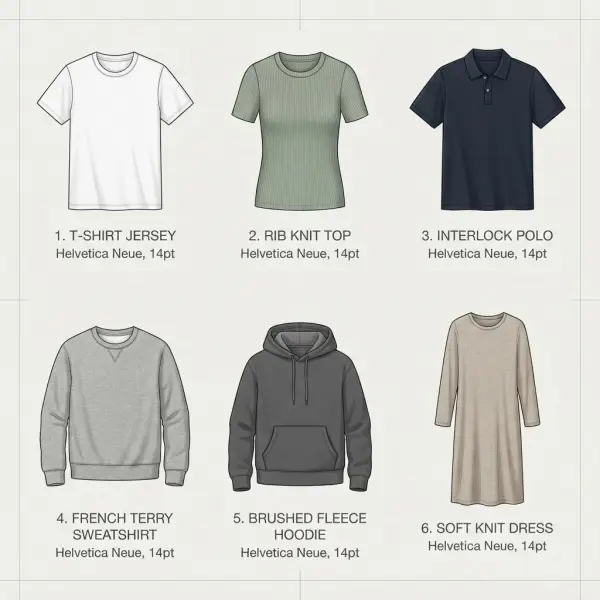
Why Soft Knits Work Across Different Seasons
Soft knit fabrics can be engineered across a wide range of weights, thicknesses, porosities, and surface finishes, which allows the same broad material family to serve very different seasonal needs. A lightweight jersey can function in warm weather, while a dense interlock or brushed fleece can support cooler conditions.
That versatility is not because knit fabric is inherently cool or inherently warm. Research on clothing comfort shows that thermal behavior depends on factors including yarn characteristics, fabric thickness, mass, porosity, structure, moisture transport, and the microclimate between fabric and skin.
The commercial advantage lies in design range. A brand that has established a recognizable casual silhouette can adjust fabric construction rather than redesign the entire product concept. A lightweight loopback sweatshirt can appear in spring, for example, while a brushed version can serve colder months. A jersey program can move from lighter open constructions toward denser compact knits as temperatures fall.
This strategy still needs regional judgment. A “year-round hoodie” for a tropical market and a year-round hoodie for a cold continental climate are not equivalent products. Brands serving multiple geographies should avoid treating seasonal labels as universal and instead work with actual fabric performance, layering behavior, and local customer use.
Fabric Weight and Thickness Help Create Different Wardrobe Roles
One reason soft knits remain adaptable is that designers can change the physical presence of the garment without abandoning the underlying comfort proposition. Lightweight fabrics can sit close to the body or drape fluidly, while heavyweight knits can create volume, structure, and visual substance.
Fabric weight is often expressed as grams per square meter, or GSM. It is useful for controlling material mass, comparing sourcing samples, estimating yield, and maintaining production consistency. However, GSM does not independently define softness, warmth, air permeability, thickness, or quality.
Research on knitted textiles demonstrates why. Fabric thermal and mechanical behavior can change with yarn linear density, loop length, number of yarns, thickness, porosity, and structure. Two materials with a similar nominal weight may therefore feel and perform differently.
This creates room for deliberate product segmentation. A fashion brand might offer a lightweight everyday tee, a compact midweight premium tee, and an oversized heavyweight tee as three distinct products even when all use a cotton-based jersey concept. The perceived value comes from the complete material-and-garment execution, not simply from increasing GSM.
Softness Can Be Engineered in Several Ways
Fiber selection matters, but softness is not a property of fiber content alone. Yarn twist, yarn fineness, fiber length, knit structure, enzyme treatment, mechanical finishing, silicone or other finishing systems, washing, raising, sueding, and brushing can all change how a fabric feels.
This is why two fabrics labeled “100% cotton jersey” may have very different handfeel. One may use a compact, smooth yarn and dense knit for a clean premium surface; another may be washed or mechanically treated to create a softer, more relaxed touch. Similarly, polyester-containing knits can range from smooth performance jersey to plush synthetic fleece.
Brushing is especially relevant to sweatshirt fabrics because it raises fibers from the reverse surface, creating a softer nap and additional loft. But the process introduces another quality variable: the initial softness needs to survive reasonable wear and laundering without unacceptable pilling, matting, or loss of appearance.
For product developers, softness should therefore become part of the approved fabric standard, not a vague adjective in an email. Handfeel can be assessed against an approved reference, supported where appropriate by objective performance tests for the properties that matter most to the product.
The Importance of Fit, Recovery, and Shape Retention
Comfortable movement means little if a garment loses its intended shape after a few hours of wear. Soft knit products therefore need an appropriate balance between extensibility and recovery.
A fabric that stretches easily but recovers poorly may develop bagging at the elbows, knees, seat, cuffs, or neckline. Excessive recovery force creates the opposite problem: a garment may technically stretch but still feel restrictive against the body. The required balance depends on whether the design is a loose sweatshirt, fitted rib dress, supportive legging, relaxed jogger, or basic T-shirt.
Knitted structure can influence this behavior even without elastane. Introducing elastomeric yarns creates additional possibilities but also changes production and durability considerations. Heat exposure, laundering, chemical finishing, yarn percentage, stitch design, and garment construction can affect how elastic components perform over time.
This is one reason fit should be approved in the actual production fabric whenever possible. Switching from one apparently similar knit to another late in development can alter stretch, drape, recovery, shrinkage, and garment balance enough to change the fit even when pattern measurements remain unchanged.
Why Casualization Helps Soft Knits—but Does Not Explain Everything
The expansion of casual and hybrid dressing has clearly created opportunities for comfortable knit garments, but it would be too simplistic to argue that soft knits only remain popular because formal dress has declined.
T-shirts, knit underwear, sweaters, sweatshirts, polos, jersey dresses, and other knitted garments were everyday staples long before contemporary discussions about hybrid work or post-pandemic dressing. Their durability as categories comes from practical characteristics and familiar wardrobe roles as much as from any single social trend.
Recent survey evidence nonetheless shows that comfort remains salient. Cotton Incorporated's 2026 U.S. New Year Survey found that 52% of 891 respondents described their expected clothing direction as comfortable and 45% as casual. The useful business interpretation is not that every market is becoming permanently casual; it is that comfort continues to coexist with fashion, work, travel, and social dressing rather than operating as an isolated category.
Brands have responded by creating products that look more considered without abandoning tactile ease: compact knit polos, structured sweatshirts, matching knit sets, refined rib dresses, fine-gauge cardigans, and premium heavyweight tees are all examples of how casual comfort can be presented at different levels of polish.
Comfort and Style Are Not Opposing Product Goals
A persistent misconception is that a garment becomes less fashionable as it becomes more comfortable. In practice, fabric comfort and visual design are separate variables that can be developed together.
Soft knit fabric can support fitted, oversized, minimal, sporty, feminine, utilitarian, streetwear, or premium casual aesthetics. Silhouette, color, proportion, trims, seam design, neckline treatment, fabric surface, and styling determine whether the result reads as basic loungewear or deliberate fashion.
This gives brands considerable room to differentiate even in mature product categories. A plain sweatshirt may be transformed through a compact heavyweight fabric, cropped proportion, sculpted sleeve, specialty rib, pigment dye, embroidery, or carefully controlled wash. The underlying knit remains familiar, but the product expression changes.
For smaller fashion businesses, that can be strategically useful. Developing an entirely new textile platform for every collection is expensive and risky. Refining proven knit bases through design and finishing can create novelty while preserving some continuity in sourcing, fit blocks, supplier knowledge, and customer expectations.
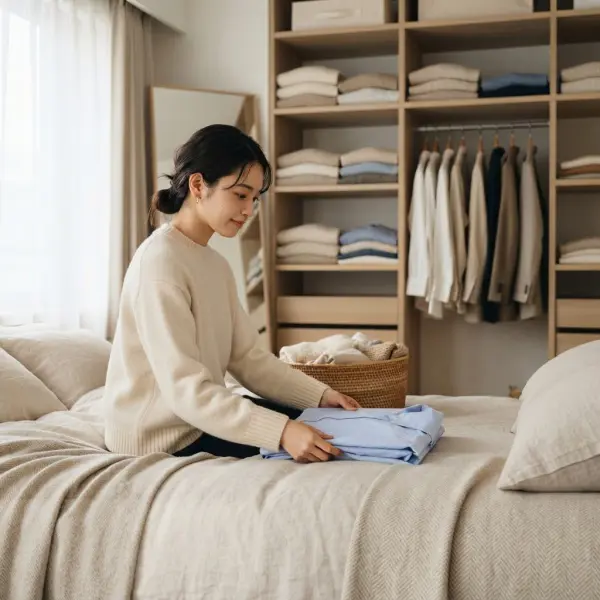
Why Material Versatility Matters to Fashion Businesses
For an apparel company, the commercial value of soft knits extends beyond consumer comfort. A flexible textile category can support assortment building, price segmentation, seasonal adaptation, and product extensions while allowing teams to retain some shared development knowledge.
A brand that becomes experienced with jersey, rib, interlock, French terry, and fleece can create a coherent casual ecosystem rather than sourcing every product as an unrelated item. Familiarity with suppliers, shrinkage behavior, dyeing, rib matching, sewing, printing, embroidery, and quality problems can make subsequent development more systematic.
This does not mean one mill or one fabric should be forced across every product. Specialization still matters. A lightweight fashion jersey supplier may not be the strongest partner for heavyweight three-end fleece, and a technically excellent performance knit may not suit a pigment-dyed lifestyle collection.
The strategic advantage comes from understanding the material family well enough to know what can be standardized and what must remain product-specific.
How Soft Knits Support Layering
Layering is another reason knitted basics can remain useful across seasons and use cases. A lightweight T-shirt becomes a base layer beneath an overshirt or jacket; a sweatshirt can function alone or as a mid-layer; a cardigan can be added and removed as conditions change.
Whether a garment layers well depends on more than softness. Fabric thickness, surface friction, silhouette, sleeve volume, neckline, moisture behavior, thermal resistance, and the air spaces between clothing layers all influence the result.
ISO 9920's framework for clothing ensembles is relevant here because thermal characteristics are affected by the ensemble rather than merely by a single textile. The standard considers thermal insulation and water-vapour resistance at the clothing-system level and recognizes effects from factors such as movement and air penetration. ISO 9920 clothing ensemble thermal characteristics
For fashion brands, this suggests a useful merchandising perspective: a knit garment can be developed not only as an isolated SKU but as one layer within a wardrobe system. That approach can improve coordination between T-shirts, sweatshirts, outerwear, bottoms, and seasonal styling.
Why Soft Knits Work Particularly Well for Travel and Hybrid Routines
Travel clothing exposes several weaknesses quickly. Garments may be worn for long periods while sitting, moving through different temperatures, carrying bags, and transitioning between public and private environments. Fabrics that restrict movement or require constant adjustment can become inconvenient.
Soft knitted garments can be useful in these situations because suitable constructions combine flexibility with relatively familiar silhouettes. A clean sweatshirt, knit polo, cardigan, jersey dress, or relaxed knit trouser can provide more movement than a rigid equivalent while still appearing presentable if the material has adequate recovery and surface stability.
The same logic applies to hybrid daily routines. Someone may commute, work in a casual office, take a child to school, stop at a shop, and spend the evening at home without changing into entirely different wardrobe categories. Apparel that can bridge these contexts gains practical relevance.
Brands should still resist marketing every soft garment as universally suitable for travel. Wrinkle behavior, drying time, thermal comfort, odor retention, pocket design, abrasion, and care requirements differ by fiber and construction. The actual product needs to justify the claim.
Soft Knit Popularity Creates Quality Risks Too
High demand does not make soft knits easy to execute well. In fact, familiar products can create demanding customer expectations because shoppers quickly notice when a basic garment twists, shrinks, pills, bags, or loses neckline shape.
Dimensional stability is particularly important. Knit structures can change length and width through relaxation, finishing, laundering, and drying. If shrinkage is not properly understood during development, a T-shirt that fits correctly before washing may become too short, or a matching sweatshirt and jogger may change dimensions at different rates.
Pilling and fuzzing can affect both smooth and raised knit surfaces. Brushed fabrics need particular attention because their deliberately raised fibers change under friction and washing, but pilling performance depends on fiber, yarn, structure, finishing, and use rather than one fabric name alone.
Color performance, spirality, seam puckering, recovery, rib extension, and surface abrasion can create equally visible problems. The more frequently a product is worn, the more opportunities the customer has to notice these weaknesses.
How Fashion Businesses Can Apply These Insights
The strongest soft-knit strategy begins with a wearing scenario, not a fabric trend. Product teams should define where the garment will be worn, how often it is expected to move or stretch, what climate range it should serve, what level of care the consumer is likely to accept, and what tactile experience supports the brand.
For sourcing teams, that means turning words such as soft, premium, breathable, or heavyweight into a more complete fabric specification. Fiber content, construction, GSM, width, stretch, recovery, shrinkage, finishing, surface performance, colorfastness, and approved handfeel standards may all become relevant depending on the product.
Product development should connect those material decisions to the pattern. A heavy jersey tee may need a different neckline solution from a lightweight version. A loose fleece jogger and a fitted stretch knit pant cannot share assumptions about recovery simply because both feel soft.
Retail communication should then describe what customers can actually experience. Useful descriptions explain the construction or feel in concrete terms: lightweight cotton jersey, compact heavyweight knit, unbrushed loopback French terry, soft brushed-back fleece, or flexible rib construction. Generic wording such as “premium soft fabric” communicates far less.
A practical workflow is:
- Define the real use case: climate, activity, frequency of wear, layering, and care.
- Select the knit family: jersey, rib, interlock, terry, fleece, or another construction based on that use.
- Engineer the handfeel: use fiber, yarn, structure, and finishing rather than relying on a vague softness target.
- Develop fit in the intended fabric: evaluate movement, recovery, drape, and garment balance together.
- Test likely failure points: shrinkage, pilling, color, recovery, seam behavior, and surface appearance.
- Communicate the material accurately: describe meaningful characteristics instead of overstating comfort or performance.
This approach treats comfort as a product-development outcome rather than a marketing adjective.

Common Mistakes When Developing Soft Knit Clothing
Mistake 1: Equating Softness With Overall Comfort
A fabric can feel exceptionally soft when touched but still be unsuitable for its intended garment. Excessive weight, poor moisture transfer, inadequate recovery, restrictive fit, or inappropriate thermal insulation can undermine comfort during actual wear.
The better approach is to treat tactile softness as one component of comfort. Product teams should also evaluate movement, fit, thermal conditions, garment weight, surface behavior, and care performance under circumstances that resemble actual use.
Mistake 2: Assuming Natural Stretch Means Good Recovery
Knitted loops can permit useful extension even without elastane, but extension and recovery are not the same property. Some fabrics stretch easily yet remain distorted after repeated loading, particularly at knees, elbows, necklines, or seats.
Brands should therefore evaluate the recovery required by the garment. A relaxed T-shirt can tolerate behavior that would be unacceptable in a fitted legging or narrow jogger. If elastane is added, its percentage alone still does not establish performance because yarn placement, knit structure, finishing, and garment design remain important.
Mistake 3: Selecting Fabric Based Only on Handfeel and GSM
Handfeel and weight are useful early filters, but neither provides enough information for bulk approval. Two fabrics of similar GSM can differ in thickness, density, stretch, porosity, shrinkage, recovery, thermal characteristics, and long-term surface appearance.
The stronger sourcing approach combines physical assessment with construction data and targeted testing. The level of testing should reflect the commercial risk rather than becoming unnecessarily complex for every simple product.
Mistake 4: Making Universal Breathability Claims
A brand may describe all cotton jersey or all lightweight knits as breathable, but actual air and moisture behavior depends on structure, porosity, thickness, yarn, fiber blend, finishing, and garment design. Research on knitted materials repeatedly demonstrates that these variables interact rather than producing one universal result.
If breathability is commercially important, the claim should be tied to the specific fabric or supported by appropriate testing rather than inferred only from fiber content or product category.
Mistake 5: Treating Casualwear as Low-Engineering Clothing
A sweatshirt or T-shirt may look simple, but simplicity makes defects visible. Neckline stretching, twisting side seams, uneven shrinkage, poor recovery, pilling, mismatched rib, or unstable hems can quickly reduce perceived quality.
Reliable basics therefore require disciplined fabric selection and repeatable production standards. The fact that customers understand these garments so well can make them less forgiving, not more forgiving, of poor execution.
What Brands Should Verify Before Making Comfort Claims
Comfort is inherently multidimensional and partly subjective. Brands should therefore be careful with claims such as ultra-breathable, temperature regulating, cooling, maximum comfort, or all-day comfort when the product evidence supports only a softer surface or flexible knit.
Where thermal and moisture performance is central to the proposition, established test approaches exist. ISO 11092:2026 specifies laboratory measurement of thermal and water-vapour resistance under steady-state conditions, while ISO 9920 addresses the thermal characteristics of complete clothing ensembles.
For ordinary fashion basics, not every product requires advanced physiological testing. But teams should still distinguish among subjective handfeel, structural stretch, measured textile performance, and marketing interpretation. These are related concepts, not interchangeable evidence.
Sustainability language requires similar discipline. A soft knit should not be described as sustainable merely because it contains cotton, recycled polyester, or another preferred material. Fiber source, processing, dyeing, finishing, durability, use, care, and end-of-life considerations all affect environmental impacts. Claims should identify the verified attribute rather than convert one material characteristic into a blanket environmental conclusion.
FAQ: Soft Knit Fabrics in Everyday Clothing
Why Are Knit Fabrics So Common in Everyday Clothes?
Knitted fabrics can combine flexibility, familiar handfeel, efficient garment construction, and a wide range of weights and surface effects. Loop-based structures allow product developers to create everything from thin T-shirts to dense sweatshirts while adjusting yarn, density, fiber composition, and finishing. Their suitability still depends on the garment: a fabric that works well for an oversized tee may lack the recovery needed for close-fitting clothing. Their popularity therefore comes from versatility rather than from one universal performance advantage.
Are Knit Fabrics Always Stretchier Than Woven Fabrics?
Many knitted fabrics can extend readily because their yarn loops change geometry under tension, but it is not accurate to say that every knit stretches more than every woven fabric. Knit structure, density, yarn, finishing, and elastomeric content all affect extension, while stretch woven fabrics can also provide substantial flexibility. The important product-development questions are how far the material stretches, in which direction, how much force is required, and how effectively it returns to its original dimensions.
What Are the Most Common Soft Knit Fabrics for Everyday Clothing?
Common examples include single jersey for T-shirts and lightweight tops, rib knit for fitted garments and trims, interlock for smoother and relatively stable garments, French terry for sweatshirts and joggers, and brushed sweatshirt fleece for softer cold-weather casualwear. Sweater knits and numerous engineered synthetic or blended knits extend the category further. Each construction can be produced in different fibers, weights, densities, and finishes, so the construction name alone is not a complete fabric specification.
Why Do Some Soft Knit Garments Lose Their Shape?
Shape loss can result from inadequate recovery, yarn properties, loose construction, relaxation, poor dimensional stability, unsuitable elastane systems, finishing, repeated mechanical loading, or laundering. Areas such as knees, elbows, seats, cuffs, and necklines tend to reveal the issue quickly because they experience repeated extension. Product teams should evaluate the actual production fabric and garment rather than assuming that a material with good initial stretch will also recover adequately after prolonged wear.
Are Heavyweight Knits Higher Quality?
Not necessarily. Heavyweight fabrics can create desirable opacity, structure, drape, or premium tactile presence, but greater GSM is not a universal quality measure. A heavy fabric can still shrink excessively, pill, twist, recover poorly, or feel inappropriate for the target climate. A lighter knit may be better engineered for its intended use. Quality should be judged against product requirements such as consistency, construction, dimensional stability, handfeel, recovery, color performance, and durability.
Are Soft Knit Fabrics Suitable for Warm Climates?
They can be, depending on the specific fabric. Lightweight jersey and other relatively open or low-mass knit constructions may work well in warm conditions, while heavyweight fleece can be uncomfortable in the same environment. Fiber type matters, but so do thickness, porosity, density, garment fit, and finishing. Research on clothing comfort shows that thermal and moisture behavior results from these interacting variables rather than one simple distinction between knit and woven or natural and synthetic materials.
Why Do Fashion Brands Keep Returning to T-Shirts, Sweatshirts and Other Basics?
Basic garments solve recurring wardrobe needs, which gives brands opportunities to refine them rather than constantly replace them. Fit, fabric weight, softness, proportion, color, construction quality, and surface treatment can all provide meaningful differentiation within a familiar product. Current U.S. consumer research from Cotton Incorporated also indicates continuing interest in comfortable and casual dressing, although those results should not be assumed to represent every market. For fashion businesses, reliable basics can therefore function as long-running product platforms as well as seasonal fashion items.
Conclusion
Soft knit fabrics remain embedded in everyday clothing because they are not one material or one aesthetic. They constitute a flexible textile ecosystem that can be engineered for lightweight T-shirts, fitted rib garments, refined polos, fluid dresses, French terry sweatshirts, brushed fleece, loungewear, athleisure, and many products between those categories.
Their commercial resilience comes partly from comfort, but reducing the story to softness would miss what makes the category useful. Knit geometry can support movement. Variations in structure and weight create different levels of body and warmth. Surface finishing can change tactile experience. The same broad textile family can move between seasons, price points, styling directions, and daily routines.
The strongest fashion products use those possibilities deliberately. A successful soft-knit garment needs more than a pleasant first touch: its fabric must work with the pattern, climate, movement, laundering, recovery, surface durability, and customer expectation.
For brands, this shifts the strategic question from “Are comfortable clothes still popular?” to a more useful one: “What kind of comfort does this customer need from this garment, and how should the textile be engineered to deliver it?”
That distinction matters because soft knit fabrics are unlikely to remain relevant simply by becoming softer. Their value comes from how effectively material design, garment construction, styling, and real everyday use are brought together.





Comments 0
Leave a CommentSend Comment
Anda harus Login terlebih dahulu untuk dapat memberikan komentar.