
Kidswear Trends Explained for Modern Families and Fashion Brands
Children’s fashion is no longer defined only by bright prints, cartoon characters, or miniature versions of adult clothing. Modern kidswear increasingly reflects how families live, how children move through different activities, and how parents balance personal style with practical purchasing decisions.
A child might wear relaxed joggers and a graphic sweatshirt for a weekend outing, a coordinated linen set for a family celebration, and a lightweight performance jacket for outdoor activities. Each outfit serves a different purpose, yet all three can reflect the same broader direction: children’s clothing designed around everyday lifestyles rather than appearance alone.
For fashion brands, this creates an interesting challenge. A collection must appeal to parents who purchase the clothing, remain suitable for the children wearing it, and communicate a recognizable brand identity. Successful kidswear merchandising therefore requires an understanding of family routines, age-specific needs, design preferences, and the practical realities of children's wardrobes.
Quick Answer: What Are the Main Kidswear Trends?
Kidswear lifestyle trends are evolving design and purchasing preferences in children's clothing that connect fashion with family routines, comfort, individual expression, practicality, and changing retail behavior. Rather than focusing exclusively on seasonal colors or silhouettes, these trends consider how garments fit into children's daily activities and household purchasing decisions.
Several directions are visible in contemporary kidswear, including relaxed everyday silhouettes, playful graphics, retro-inspired designs, versatile unisex styling, coordinated family outfits, and greater interest in clothing that can remain useful beyond a single occasion.
For fashion businesses, the opportunity lies in translating these directions into commercially realistic products. A relaxed sweatshirt still needs appropriate sizing and construction. A fashionable outfit must remain usable for its intended activity. A distinctive print may attract attention, but dependable fit, care requirements, and price help determine whether it becomes a repeat purchase.
Importantly, there is no single global kidswear aesthetic. Preferences vary by children's ages, climate, culture, household budgets, and retail markets. Brands should treat emerging styles as opportunities to investigate, not universal evidence of consumer demand.
What Makes Modern Kidswear Different From Traditional Children's Fashion?
Traditionally, childrenswear collections have often been organized around practical retail categories such as baby clothing, casualwear, occasionwear, school clothing, and seasonal apparel. Those categories remain useful, but lifestyle-oriented merchandising looks more closely at the situations in which children actually wear garments.
A parent shopping for a five-year-old might need clothing for preschool, playground visits, family outings, and informal celebrations. Instead of purchasing completely separate wardrobes, that parent may prefer pieces that transition between several activities. A simple cotton jersey top, relaxed trousers, and a lightweight overshirt could be combined differently throughout the week.
This approach changes how a brand presents its products. Rather than relying exclusively on individual garment features, retailers can organize collections around recognizable needs such as weekend play, family gatherings, travel, outdoor exploration, or everyday essentials.
Lifestyle segmentation is not the same as product-category segmentation. A product category describes what the garment is, while lifestyle segmentation explains where, how, and why a customer might use it.
For example, one pair of relaxed trousers could appear within an everyday essentials assortment, a travel wardrobe, or a coordinated family collection. The product itself does not change, but its commercial relevance becomes clearer when customers can imagine how it fits into their routines.
The Kidswear Style Directions Shaping Recent Collections
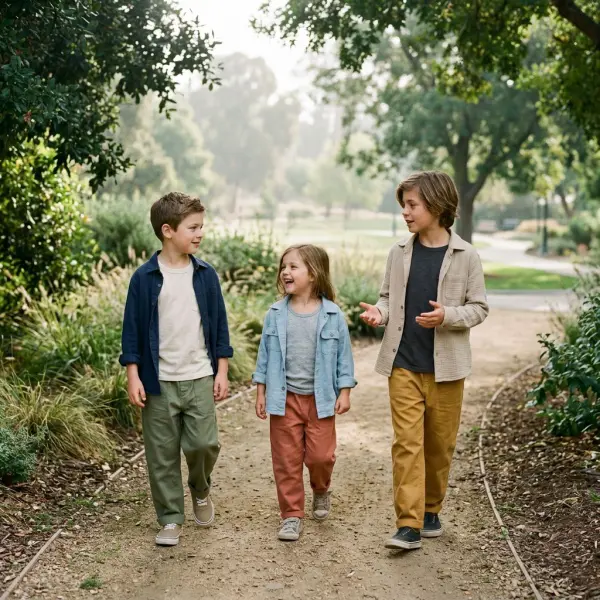
Contemporary kidswear does not follow one dominant design formula. Recent trade coverage has described a mixture of comfort-led dressing, retro styling, coordinated outfits, and greater flexibility around traditional boys' and girls' design conventions.
For example, 2025 reporting in Impressions identified mini-me matching, casual comfort, nostalgic influences, and gender-inclusive styles among commercial childrenswear directions. These are documented industry observations rather than a statistically representative ranking of global customer preferences.
1. Relaxed Everyday Outfits With a Contemporary Look
Relaxed silhouettes offer a useful connection between children's everyday needs and broader casual fashion aesthetics. Joggers, sweatshirts, loose-fitting T-shirts, soft trousers, and uncomplicated layering pieces can be styled as coordinated outfits without requiring formal construction.
The appeal is partly visual. Matching tops and bottoms, consistent color palettes, and simple styling give ordinary casual garments a more intentional appearance. For retailers, this can support set merchandising and outfit suggestions instead of presenting every garment as an isolated product.
Yet relaxed does not mean oversized without limits. Excessively long sleeves, dragging hems, or poorly positioned pockets can interfere with ordinary activities. Fashion brands need to develop age-appropriate proportions rather than simply scaling down adult oversized patterns.
Commercially, relaxed essentials can function as repeatable core products. Colors and graphics may change from season to season while the underlying fit block remains consistent, provided customer feedback and product testing support it.
2. Retro-Inspired Children's Streetwear
Retro influences appear in kidswear through familiar design references such as varsity jackets, color-blocked tops, striped knits, denim overalls, cargo-inspired trousers, and vintage-style graphics. These garments borrow visual language from earlier fashion eras while adapting it to contemporary children's wardrobes.
For parents, nostalgic styling can create an emotional connection with garments that resemble clothing they remember wearing. For older children, similar pieces may simply feel expressive and current because they resemble casual streetwear seen elsewhere.
The same garment can therefore appeal to different motivations within one household. A parent may appreciate the nostalgic reference, while a child may be attracted to its colors, silhouette, or graphic details.
Fashion brands should distinguish between borrowing a recognizable style and copying adult garment construction without adjustment. A children's utility jacket, for instance, can communicate an outdoor or workwear aesthetic through its silhouette and pocket placement without introducing unnecessary bulk, hardware, or decorative cords.
Retro styling is particularly suitable for selective seasonal capsules. It gives brands room to introduce new graphics or details without requiring every product in the collection to follow a trend.
3. Playful Graphics, Color, and Creative Expression
Minimalist children's clothing and expressive graphics are not mutually exclusive trends. Both appear in contemporary assortments, often serving different customer segments or occasions.
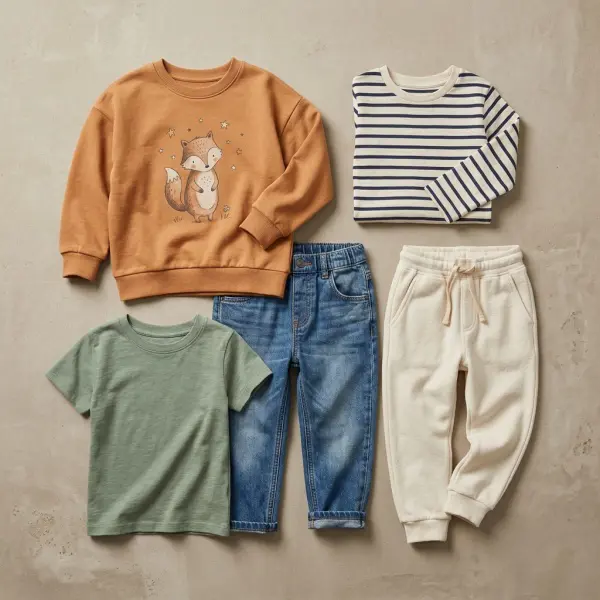
Neutral color palettes can create cohesive wardrobes, while bold stripes, animal illustrations, checkerboard patterns, imaginative motifs, and unexpected color combinations give children more visible opportunities for personal expression.
The trade event Playtime's Autumn–Winter 2025–2026 trend presentation with Fashion Snoops, for example, highlighted expressive colors, prints, and craftsmanship-inspired design directions. Such forecasts provide creative references, although they do not establish how widely particular products will sell.
A commercially balanced collection might use quieter base garments with a smaller assortment of expressive statement pieces. This helps retailers create interesting outfits while avoiding excessive dependence on one particular print or color.
4. More Flexible Styling Beyond Traditional Gender Categories
Some childrenswear collections use versatile silhouettes, shared print stories, and broader color choices that are not restricted to conventional gender-based merchandising. Relaxed shirts, denim, hoodies, knitted layers, and casual shorts are familiar examples.
For families, these options may offer more flexibility in styling and potentially make some garments easier to pass between siblings, depending on fit, preferences, and condition. For businesses, a shared design platform can sometimes simplify fabric selection or reduce unnecessary style duplication.
However, unisex styling does not eliminate differences in individual body proportions, preferred fits, or age-specific needs. It also does not mean every garment must use beige, gray, or another neutral color. Bright and imaginative designs can be just as suitable for broadly inclusive collections.
A practical approach is to prioritize actual garment suitability and flexible merchandising rather than assuming that removing gender labels automatically makes a product appealing to every child.
5. Outdoor-Inspired and Activity-Ready Styling
Outdoor influences can be expressed through light layering, practical pockets, durable-looking fabrics, adaptable waistbands, and designs suited to movement. Even when the clothing is intended primarily for everyday use, these details can communicate an active lifestyle.
Brands may use elements inspired by hiking, recreational sports, or utility clothing, but styling should not be confused with technical performance. A jacket with an outdoor aesthetic is not necessarily waterproof, windproof, or suitable for extreme weather.
Claims about weather protection require appropriate materials and testing. Similarly, clothing intended for playground activities needs suitable detailing and construction, even when the product is designed to look fashionable.
For product development teams, the commercial question is whether these functional elements meaningfully improve the garment or merely introduce additional material costs and manufacturing complexity.
6. Clothing Designed for Continued Use
Children's physical growth creates a distinctive wardrobe challenge. Garments may become too small before they show substantial wear, which makes sizing, garment condition, and potential reuse relevant purchasing considerations.
This supports interest in well-constructed essentials, adjustable features where appropriate, durable fabrics, and garments that are relatively easy to pass on or resell. It does not mean every family prefers secondhand clothing or that all longer-lasting products deliver a better environmental outcome.
The broader resale market provides context. ThredUp's 2026 Resale Report describes continued growth in the United States secondhand apparel market. However, its aggregate apparel figures should not be interpreted as direct measurements of global children's clothing resale demand.
For kidswear businesses, potential opportunities include clear product-condition standards, repairable construction, resale partnerships, and product information that helps a second owner understand the garment's size and care requirements.
How Children's Ages Influence Fashion Preferences and Purchasing Decisions
Kidswear is not a single consumer category. A baby, a preschool child, and a preteen have different clothing requirements, even when brands use similar design themes across their collections.
For younger children, adults generally make most purchasing decisions. As children grow, their preferences can become more visible in the selection process, particularly around colors, graphics, silhouettes, and references to popular culture.
A 2025 Who What Wear children's clothing feature illustrated this distinction through interviews with fashion-oriented parents, some of whom prioritized machine-washable clothing and versatile basics while others described allowing children to select their own outfits. These interviews provide useful qualitative examples, not representative consumer survey findings.
|
Age Segment |
Typical Wardrobe Considerations |
Potential Product Direction |
|
Babies (0–2 years) |
Dressing convenience, suitable fit, frequent clothing changes |
Simple bodysuits, soft layers, practical everyday sets |
|
Preschool (3–5 years) |
Movement, growing independence, varied daily activities |
Easy-dressing separates, playful prints, relaxed outfits |
|
School-age (6–9 years) |
School routines, recreation, developing preferences |
Casual essentials, coordinated separates, graphic clothing |
|
Preteens (10–13 years) |
Greater style awareness, personal preference, social activities |
Sport-inspired pieces, denim, contemporary casualwear |
These are planning categories rather than rigid developmental rules. Different children may develop clothing preferences at different ages, while regional school requirements and family routines can substantially change wardrobe needs.
For apparel brands, segmentation should influence more than the design mood board. It affects garment specifications, size grading, product photography, fit communication, and the way collections are organized online.
How Family Lifestyle Influences Kidswear Purchasing
Parents and caregivers rarely evaluate children's clothing solely through fashion trends. They also consider household schedules, budgets, local weather, social occasions, and the practical effort required to maintain a wardrobe.
These considerations help explain why the same family may purchase inexpensive casual essentials, invest in a more durable outerwear item, and occasionally buy a decorative outfit for a special event.
Everyday Versatility
A versatile children's wardrobe allows garments to work across multiple combinations and occasions. This can make individual purchases more useful without requiring a separate outfit for every activity.
For example, a plain sweatshirt might be paired with joggers for outdoor play, jeans for a casual family visit, or a coordinated skirt for a more polished appearance. Such flexibility may make a garment easier to integrate into an existing wardrobe.
For brands, versatility can become a merchandising advantage when color palettes, garment proportions, and product photography show customers how items can be combined.
This approach relates to the broader concept of wardrobe planning, but childrenswear requires additional consideration because garments may have shorter useful ownership periods as children grow.
Climate and Seasonal Needs
Climate is particularly important when interpreting global kidswear trends. A collection developed for a cold European winter will not automatically suit families living in tropical Southeast Asia or warm coastal regions.
In warmer climates, lighter fabrics, appropriate garment ventilation, and adaptable layering may be more relevant. In colder regions, insulation, layering compatibility, and weather-appropriate outerwear receive greater attention.
A global brand may therefore maintain a recognizable visual identity while adjusting fabric weights, sleeve lengths, layering pieces, and assortment quantities by market. This allows a consistent brand identity to coexist with different practical wardrobe needs.
Family Identity and Coordinated Dressing
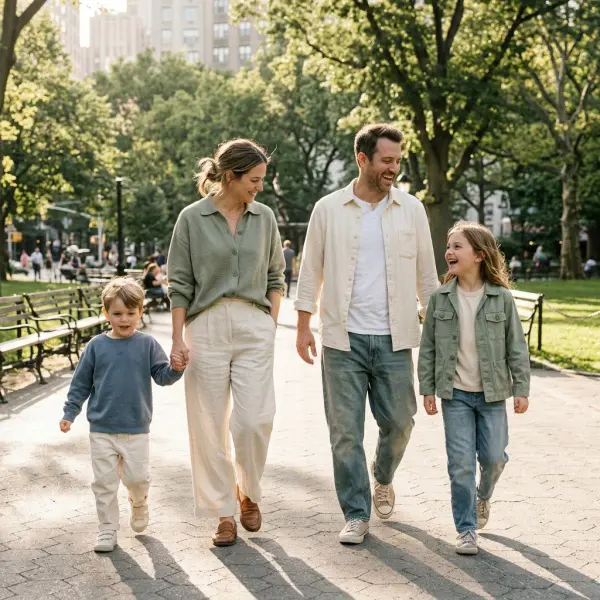
Coordinated family clothing represents another way lifestyle influences kidswear. Some brands translate adult design themes into childrenswear through shared colors, prints, or related silhouettes.
However, matching outfits do not necessarily require identical garments. A child might wear a printed shirt that coordinates with a parent's dress, or a family may choose complementary colors without purchasing matching collections.
This styling direction can be relevant for holidays, celebrations, family photography, and lifestyle campaigns. Its commercial potential depends on whether customers have a meaningful reason to buy coordinated items.
A deeper discussion of cross-generational styling appears in how mini-me styling influences kidswear and family fashion.
How Fashion Brands Can Translate Kidswear Trends Into Commercial Collections
A trend becomes commercially useful only when it can be translated into products that customers understand, retailers can merchandise, and manufacturers can produce consistently.
For a small childrenswear brand, the first decision is not necessarily which seasonal trend looks most exciting. It is determining which products will serve as dependable wardrobe essentials and which will provide seasonal variety.
Build Collections Around Core Products and Seasonal Highlights
One practical assortment model separates products into three functional groups:
- Core essentials: Repeatable products such as T-shirts, leggings, casual trousers, and basic sweatshirts that support continuity in the assortment.
- Seasonal expressions: New prints, colors, fabric treatments, and selected silhouettes that refresh an established product range.
- Occasion or lifestyle capsules: Smaller collections developed for specific uses, such as travel, family celebrations, outdoor activities, or coordinated family dressing.
This framework is a merchandising approach, not a prescribed industry formula. The appropriate assortment balance depends on customer demand, production minimums, price positioning, and retailer performance data.
A brand with reliable demand for everyday knitwear, for instance, might retain established fit blocks while updating graphics and complementary colors. This may reduce some product development complexity, although fabric substitutions and new trims still require appropriate evaluation.
Translate Trends Into Accurate Garment Specifications
A mood board may show a relaxed sweatshirt, but the factory needs much more precise information to manufacture it.
Product development teams must define the garment's intended age range, measurement specifications, fabric properties, neckline, sleeve construction, seam details, closures, tolerances, and labeling requirements.
A children's sweatshirt inspired by adult streetwear should not simply use a proportionally reduced adult pattern. Arm movement, body length, neck opening, and overall balance should be assessed on the intended wearer.
Fit development and production sampling should also consider how the garment changes after laundering. Shrinkage, twisting, print durability, and dimensional stability can affect customer satisfaction even when the original sample looks attractive.
These considerations connect fashion direction with the more detailed requirements discussed inwhy comfort, safety, and easy care matter in children's clothing.
Choose Materials According to Intended Use
Contemporary kidswear can use knitted fabrics, woven textiles, denim, fleece, and technical materials, depending on the garment's purpose.
Cotton jersey may be appropriate for many everyday T-shirts. Cotton-blend fleece can provide a soft casualwear option, while lightweight woven fabrics can support certain shirts, dresses, and layering pieces.
No fiber category guarantees comfort or durability on its own. Fabric weight, yarn construction, finishing, fit, seam quality, and care conditions all influence the garment's performance.
Material selection should therefore follow the intended product rather than a generic trend statement. A brand claiming a garment is especially breathable, durable, or easy to maintain should be able to substantiate that claim through relevant specifications or testing.
Connect Product Design With Sourcing and Production Economics
Small details can materially affect manufacturing costs. Additional colorways may increase material purchasing requirements, while complicated prints, embroidery, decorative panels, and specialized closures introduce extra processes.
A collection featuring six prints and multiple fabric qualities may look attractive in a design presentation but create fragmented purchase orders when order quantities are limited.
Brands should assess fabric consumption, minimum order quantities, production lead times, testing requirements, and expected retail prices before finalizing seasonal assortments.
A simpler collection with coordinated fabrics and selective statement pieces can sometimes provide greater operational flexibility than a broad assortment of unrelated designs.
Retail Strategies for Lifestyle-Oriented Kidswear
The way retailers present childrenswear influences how customers understand the collection. Clear merchandising can help families find products by age, size, garment type, and intended activity without requiring them to understand fashion terminology.
Organize Products Around Real Shopping Needs
Traditional website categories such as Tops, Bottoms, Dresses, and Outerwear remain useful. Lifestyle categories can complement them by addressing more specific customer intentions.
For example, a retailer might create collections organized around everyday outfits, preschool essentials, travel-ready clothing, family celebrations, or seasonal layering.
These collections should not replace accurate filters for size, material, price, and availability. Lifestyle navigation is most effective when it helps customers discover suitable products without obscuring essential purchasing information.
Use Product Photography That Shows Realistic Movement
Children's clothing often benefits from photography that communicates fit, proportion, and intended use.
A static studio image can help customers inspect garment details. Lifestyle images can show how the clothing behaves while a child walks, sits, plays, or moves through an ordinary environment.
For online retail, both image types serve different purposes. A brand selling relaxed trousers, for example, should show the waistband, leg shape, and garment length clearly rather than relying exclusively on highly styled campaign photographs.
The goal is not to create the most elaborate campaign. It is to reduce uncertainty about what the customer is purchasing.
Improve Size Information and Product Descriptions
Generic age labels are convenient but insufficient for every purchasing decision because children of the same age may have different proportions.
Brands can support purchasing decisions by providing garment measurements, relevant body-size guidance, fabric descriptions, care instructions, and fit notes where appropriate.
A clear description might explain that trousers have an elastic waistband, relaxed legs, and a particular inseam measurement. Those details are more useful than relying entirely on phrases such as premium comfort or perfect everyday style.
Returns, exchanges, and customer questions can then provide evidence about which information still needs improvement.
What These Trends Mean for Kidswear Brand Positioning
Lifestyle-oriented kidswear offers different positioning opportunities depending on a brand's target customer and commercial capabilities.
A value-focused retailer might emphasize coordinated everyday essentials at accessible prices. A mid-market label could differentiate through fit consistency, distinctive prints, and practical garment construction. A premium brand might focus on original design, selected materials, and more specialized product presentation.
None of these positions is automatically stronger than another. Each requires the product, price, and brand promise to align with customer expectations.
|
Brand Positioning |
Possible Product Emphasis |
Key Commercial Challenge |
|
Value-oriented |
Everyday essentials and accessible coordinated outfits |
Maintaining acceptable quality while controlling costs |
|
Mid-market lifestyle |
Distinctive styling, versatile separates, consistent fit |
Differentiating products without excessive assortment complexity |
|
Premium childrenswear |
Original design, selected materials, specialized finishing |
Demonstrating value beyond appearance |
|
Activity-focused |
Garments for defined recreational or outdoor uses |
Substantiating functional and performance claims |
|
Family-coordination specialist |
Complementary adult and children's collections |
Managing additional sizes and inventory complexity |
For smaller brands, a well-defined niche may be more manageable than trying to compete across every style direction.
A label specializing in playful everyday knitwear, for example, can establish recognizable colors, prints, and silhouettes before expanding into outerwear or occasionwear. Such a strategy provides focus without preventing future collection development.
Common Mistakes When Fashion Brands Follow Kidswear Trends
Trend-led collections can become commercially weak when visual inspiration takes priority over customer needs and product execution.
Copying Adult Fashion Too Literally
A design that works for adults may require substantial modification before it is suitable for children. Oversized sleeves, heavy decorative hardware, restrictive silhouettes, or complicated fastenings may interfere with intended activities or introduce avoidable risks.
The better approach is to preserve the visual character of the inspiration while developing proportions, construction, and details for the specific children's age group.
Treating All Children as One Customer Segment
A preschool-focused collection and a preteen assortment may require very different visual identities, sizing strategies, and marketing approaches. Combining them into one undifferentiated collection can make product development and merchandising less effective.
Brands should define age-related segments according to actual customer behavior rather than assuming that a single design direction will appeal equally across childhood.
Launching Too Many Seasonal Variations
Trend forecasts can inspire extensive assortments, but additional colors, prints, and silhouettes also create inventory commitments. When demand is uncertain, this can increase the risk of slow-selling sizes and leftover seasonal stock.
A more controlled strategy is to test selected designs, monitor sales by size and color, and expand only when demand signals are sufficiently reliable.
Making Sustainability Claims Without Product Evidence
Organic fibers, recycled content, durability, and secondhand suitability are different product attributes. Using one of these attributes does not automatically establish that a garment is environmentally superior overall.
Brands should explain what can actually be verified, such as certified fiber content, tested characteristics, or documented production practices, rather than making broad environmental promises without supporting evidence.
Focusing on Campaign Aesthetics Instead of Shopping Information
Attractive photography may generate interest, but it cannot replace useful sizing, material, and construction details. A customer who cannot determine whether a product fits or suits the intended use may hesitate to purchase, regardless of how appealing the campaign looks.
Strong lifestyle communication should therefore be accompanied by informative product pages, clear photography, and realistic descriptions.
What Brands Should Verify Before Acting on Kidswear Trends
Fashion trend reports are useful sources of creative direction, but they should not be treated as guarantees of commercial performance.
Before committing to an assortment, a brand needs to distinguish between a visually attractive style, a meaningful customer need, and measurable demand.
A practical product development review should address the following questions:
- Customer fit: Which age group, household budget, climate, and lifestyle does the product serve?
- Product suitability: Is the garment appropriate for its intended use and age group?
- Market evidence: Do actual sales, relevant customer feedback, or comparable products support the design direction?
- Production feasibility: Can the manufacturer deliver consistent fit, construction, and finishing at the required quantity?
- Commercial viability: Do projected costs, pricing, inventory commitments, and margins support the product?
- Compliance: Have applicable safety, testing, labeling, and market-entry requirements been identified?
Compliance is especially important because children's apparel may face requirements that do not apply in the same way to comparable adult products.
For example, the U.S. Consumer Product Safety Commission identifies certain drawstrings on children's upper outerwear as substantial product hazards. Its official drawstring safety guidance explains size-specific restrictions. Children's sleepwear is also subject to particular flammability requirements, with defined exemptions for qualifying infant garments and tight-fitting designs.
Testing and certification claims also need precise interpretation. OEKO-TEX STANDARD 100, for instance, concerns textiles tested for harmful substances. It is not, by itself, comprehensive proof of garment mechanical safety, environmental sustainability, or suitability for every use.
For global brands, regulatory requirements must be reviewed in each target market rather than assuming that compliance in one country establishes compliance everywhere.
The strategic priority is to treat trend research, product development, quality assurance, and commercial planning as connected activities.
Frequently Asked Questions About Kidswear Trends
What Are the Most Relevant Kidswear Fashion Trends for Modern Families?
Relevant contemporary kidswear directions include relaxed casualwear, playful graphics, retro-inspired garments, versatile everyday basics, coordinated family looks, and designs influenced by outdoor or activity-based lifestyles.
Their relevance depends on the children's age range, local climate, and household purchasing priorities. A retailer serving preschool families may find practical separates more relevant than streetwear-inspired collections, while a brand targeting preteens may need greater emphasis on self-expression and contemporary silhouettes.
Rather than treating every trend as essential, brands should identify the directions that match their customers and can be translated into products with realistic quality, price, and manufacturing requirements.
Is Minimalist or Colorful Kidswear More Popular?
There is no reliable basis for declaring either minimalist or colorful kidswear universally more popular across all markets, age groups, and price segments.
Minimalist collections can appeal to customers seeking coordinated wardrobes and understated styling. More expressive collections may appeal to families interested in distinctive prints, playful colors, and individual expression.
The two directions can also coexist within one assortment. A neutral sweatshirt might be paired with brightly patterned trousers, while a statement graphic top can be combined with simple denim.
For retailers, sales performance by color, print, age range, and market is more useful than relying on broad aesthetic assumptions.
How Is Modern Kidswear Different From Adult Fashion?
Modern kidswear may borrow adult fashion influences, including streetwear, retro aesthetics, casual tailoring, and coordinated collections. The important difference is that these styles must be adapted to children's proportions, activities, and product safety requirements.
A children's version of a fashionable jacket may use similar colors and visual details but require different pattern engineering, closures, and materials.
Adult fashion also places different emphasis on garment longevity and seasonal purchasing. Children may outgrow otherwise usable garments, making accurate sizing and potential reuse more relevant.
For fashion businesses, successful adaptation means translating design language without treating children as simply smaller adult consumers.
Can Small Fashion Brands Compete in the Kidswear Market?
Small fashion brands can compete by serving a clearly defined customer segment rather than attempting to match the assortment breadth of large retailers.
A focused brand might specialize in everyday organic-cotton knitwear, distinctive graphic clothing, occasionwear, or coordinated family outfits. The commercial viability of any such niche still depends on demand, suitable pricing, production capability, and customer acquisition costs.
Small assortments may also allow brands to concentrate on fit development and quality control. However, limited production quantities can result in higher unit costs or restricted fabric choices.
Before expanding, brands should validate repeat demand, evaluate returns, and establish whether customers recognize a compelling difference in their products.
Are Gender-Neutral Children's Clothes Automatically More Practical?
Not necessarily. Gender-neutral styling can make certain products more versatile, but actual practicality depends on fit, construction, material performance, and the intended activity.
A simple sweatshirt may be suitable for a wide range of children, while a poorly fitted garment does not become more useful because it is marketed as unisex.
Similarly, neutral colors are not a requirement for inclusive design. Bold graphics, colorful patterns, and expressive silhouettes can also be offered without restrictive gender-based styling.
For retailers, the most useful approach is to evaluate garments according to their actual characteristics and make product discovery flexible without hiding relevant size or fit information.
How Can Brands Test a Kidswear Trend Before Launching a Full Collection?
Brands can begin with a limited assortment using established garment blocks and a controlled number of new colors, graphics, or styling details.
Testing should include customer feedback, sample evaluation, expected production costs, and analysis of comparable products. Once launched, brands can monitor sell-through, size-level demand, return reasons, and customer comments.
Early sales should be interpreted carefully because promotions, limited availability, seasonality, and marketing activity can distort apparent demand.
A trend that performs well in campaign engagement may not generate profitable purchases. Conversely, a simple everyday product may produce stronger repeat sales than a highly visible statement design.
The goal is to validate commercial demand before committing to a broader inventory position.
Conclusion: Kidswear Is Becoming More Closely Connected to Everyday Family Life
Modern kidswear reflects a broader relationship between clothing, childhood activities, family purchasing priorities, and individual style.
Relaxed casualwear, expressive prints, nostalgic influences, flexible styling, and coordinated family collections offer brands different ways to develop distinctive products. Yet none of these directions removes the need for appropriate garment design, dependable quality, accurate sizing, and commercially realistic pricing.
For families, the most useful children's wardrobes are often those that accommodate changing routines without making every outfit unnecessarily complicated. For fashion businesses, that creates opportunities to build collections around recognizable needs rather than relying exclusively on seasonal novelty.
The strongest long-term opportunity is not necessarily to introduce more styles. It is to understand which designs customers find useful, which products children genuinely want to wear, and which assortments a business can consistently deliver.
As children's fashion continues to borrow ideas from broader apparel trends, brands that balance creative identity with practical product development will be better positioned to evaluate new opportunities without losing sight of the people who actually wear their clothes.




Comments 0
Leave a CommentSend Comment
Anda harus Login terlebih dahulu untuk dapat memberikan komentar.