

How Sewing Automation Improves Speed, Consistency, and Production Control
In apparel manufacturing, sewing productivity depends on more than how quickly a needle moves through fabric. A production line can operate with high-speed industrial machines and still experience delays caused by fabric positioning, thread trimming, uneven workloads, machine adjustments, quality defects, and the movement of garment components between workstations.
Sewing automation addresses selected parts of these inefficiencies by reducing repetitive manual actions, controlling machine parameters, and making certain operations more predictable. When combined with production monitoring and effective line balancing, automated sewing equipment can help manufacturers improve processing time, maintain more consistent stitching, and identify disruptions earlier.
However, automation does not guarantee faster garment production. Its operational value depends on where the technology is applied, how it interacts with surrounding workstations, and whether the entire production process is organized to benefit from the change.
For garment manufacturers, fashion brands, and sourcing teams, the important question is not simply whether automated sewing machines are faster. It is how automation affects total production time, acceptable-quality output, workflow stability, and the ability to control manufacturing performance.
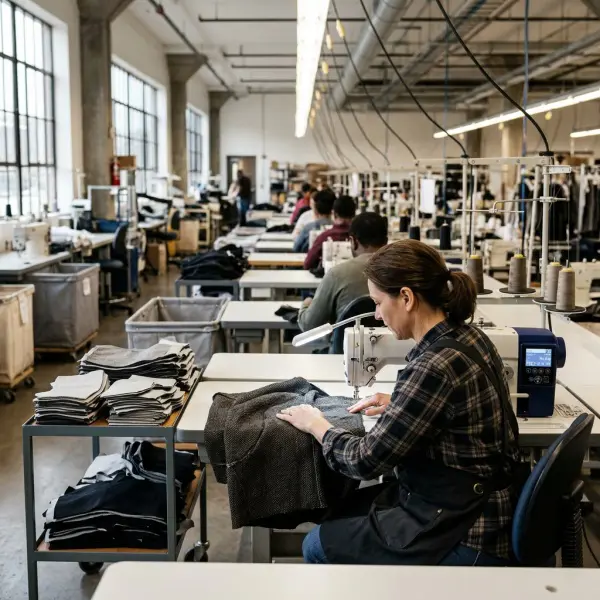
Quick Answer: How Does Sewing Automation Improve Production?
Sewing automation can improve apparel manufacturing by shortening selected operation cycles, reproducing approved stitching parameters, and providing more reliable information about machine activity and production progress. The resulting benefits may include reduced handling time, fewer repetitive adjustments, more consistent seam construction, and earlier identification of production bottlenecks.
Speed improvements typically come from automating tasks such as thread trimming, backtacking, programmed stitch sequences, and selected material-handling movements. Consistency improves when suitable machine settings and stitch paths can be reproduced across repeated operations. Production control becomes stronger when connected equipment helps supervisors monitor activity, downtime, output, and quality-related records.
These effects are related but not interchangeable. A machine can complete its stitching cycle more quickly without increasing finished garments per hour if another workstation limits output. Likewise, identical programmed settings do not guarantee acceptable seam quality when fabric characteristics or handling conditions vary.
The greatest practical value comes when automation is integrated with appropriate work methods, skilled operators, quality standards, and balanced production workflows. Manufacturers should therefore measure improvement at both the individual operation and complete production-line levels.
Why Sewing Speed and Production Efficiency Are Not the Same
Machine speed is commonly expressed in stitches per minute, but apparel production efficiency depends on the entire time required to complete an operation. That time includes sewing as well as positioning, loading, adjusting, unloading, and other necessary activities.
A machine may be capable of thousands of stitches per minute while spending only part of the working cycle actively sewing. The rest of the time may involve handling material, preparing the next component, or waiting for work from another station.
Understanding the Complete Sewing Cycle
Consider a workstation attaching a reinforcement detail to a pair of trousers. The operation begins when the component is received and positioned, continues through the stitching sequence, and ends when the completed piece is released and transferred.
The cycle may include several activities:
- Preparation and loading: Bringing garment components into position.
- Alignment: Placing fabric layers or construction details correctly.
- Machine operation: Performing the required stitch sequence.
- Finishing: Trimming thread, releasing clamps, or completing other machine-related actions.
- Unloading and transfer: Moving the sewn component to the next stage.
Automation might reduce one or several of these activities without affecting the others. Evaluating only the machine's maximum stitching speed would overlook much of the actual production process.
For example, if an operation originally takes 50 seconds—30 seconds of machine activity and 20 seconds of handling—reducing machine activity to 25 seconds brings the total to 45 seconds, assuming handling remains unchanged. That represents a 10% reduction in operation cycle time, not necessarily a 10% increase in finished garments.
This is a hypothetical illustration, not a measured machine-performance claim. Its purpose is to show why total-cycle measurement matters.
The Three Levels of Productivity Improvement
A useful way to evaluate sewing automation is to separate performance at the machine, workstation, and production-line levels.
|
Performance level |
What automation may improve |
What must be measured |
|
Machine |
Programmed stitching, trimming, machine adjustment |
Sewing time, machine availability, technical downtime |
|
Workstation |
Complete operation cycle, handling consistency, accepted output |
Total cycle time, pieces completed, first-pass quality |
|
Production line |
Flow between processes, bottleneck management, throughput |
Finished output, work-in-progress, line efficiency, delivery performance |
These levels explain why an improvement demonstrated on one machine may not translate directly into factory-wide results.
In apparel manufacturing, multiple operations contribute to the completion of each garment. If the improved workstation is not constraining the line, its additional capacity may simply create more waiting inventory at the next stage.
How Automation Reduces Time in Repetitive Sewing Operations
The most direct way sewing automation improves speed is by removing or shortening tasks that operators would otherwise perform manually during a sewing cycle.
These savings may appear small when measured individually. Yet their operational significance can become substantial when the same task is repeated across many garment components, provided the surrounding workflow can absorb the additional capacity.
Automatic Thread Trimming and Backtacking
Automatic thread trimming removes the need for operators to use scissors or perform a separate cutting action at the end of a seam. Programmable backtacking can also reproduce an established reinforcement sequence without requiring the operator to control each reverse-feed movement manually.
JUKI's technical explanation of automatic thread trimming describes how eliminating manual trimming can shorten operation time and reduce interruptions to the sewing workflow. The manufacturer reports that productivity effects vary according to the sewing operation, operator, and material.
For a shirt manufacturer performing numerous short seams, removing repeated trimming actions may improve the continuity of work. However, longer seams with relatively few trimming points may offer smaller time savings from the same feature.
Programmable Stitching and Repetitive Construction Details
Programmable sewing machines can execute a defined stitch pattern without requiring the operator to guide every movement along the stitch path.
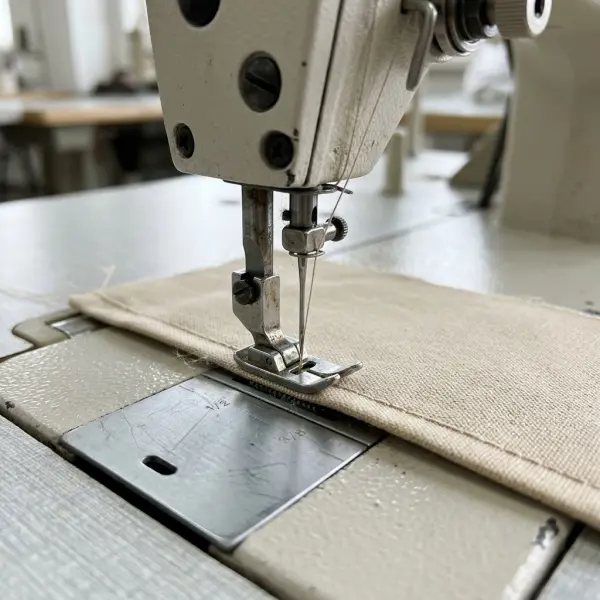
This is useful for operations such as bartacking, buttonhole sewing, label attachment, and localized reinforcement stitching. Once a suitable program and fixture have been established, the machine can repeat the programmed sequence while the operator focuses on loading, positioning, and unloading.
JUKI's computer-controlled sewing equipment range includes bartacking systems designed to shorten complete sewing cycles through control of starting, stopping, thread trimming, and presser-foot movements.
The relevant performance measure is the complete cycle, not simply the maximum needle speed. An automated bartack machine can execute stitching quickly, but poor workpiece positioning or inconvenient loading arrangements can reduce the operational benefit.

Faster Setup Through Digital Machine Settings
Production speed is also affected by preparation between sewing operations. When a factory switches between different materials or garment specifications, technicians may need to adjust machine parameters.
Digitally controlled machines can reduce repeated setup work by allowing approved sewing conditions to be stored and recalled. Depending on the equipment, these may include feed settings, thread tension, presser-foot control, and stitch parameters.
JUKI describes this approach in its digital sewing technology, where approved sewing data can be transferred from sample development to production machines to support consistent adjustment and seam quality.
This capability can be particularly useful for manufacturers managing repeat orders or multiple styles with known sewing requirements.
However, retrieving stored settings should not replace sample testing. Fabric supplier changes, finishing variations, and differences in material thickness can affect the result even when a previously approved program is used.
How Sewing Automation Supports More Consistent Quality
Sewing automation improves consistency by reducing variation in machine-controlled movements and parameters, provided the fabric, setup, and operating conditions remain suitable. It can help manufacturers reproduce approved stitch patterns, reinforcement locations, and selected sewing settings across repeated production cycles.
Consistency is not identical to quality. A machine can repeatedly produce the same defect if the stitching program, material positioning, or technical configuration is incorrect.
For this reason, automation should support—not replace—garment quality assurance.
Repeatable Stitch Patterns and Seam Construction
A programmable system follows a defined stitching sequence, which can help maintain consistent stitch geometry for suitable operations.
For example, a manufacturer producing trousers with bartacked pocket openings can use an approved reinforcement pattern rather than relying entirely on individual operators to reproduce the stitching dimensions manually.
This may reduce variation in stitch position, reinforcement length, and the programmed number of stitches when components are correctly loaded.
The benefit is particularly relevant to visually prominent details and functional reinforcement areas where noticeable variation can affect customer perception or garment performance.
Nevertheless, machine programming does not resolve all possible causes of seam variation. Needle condition, thread characteristics, fabric feed behavior, and workpiece placement remain relevant.
Reproducing Approved Sewing Parameters
Digital control allows certain sewing parameters to be stored as repeatable settings.
For example, a manufacturer developing a woven blouse may determine appropriate feeding behavior, needle-thread tension, and stitch length through sample testing. When supported by the equipment, those settings can be saved for later use on compatible production runs.
This can reduce variation associated with repeated manual adjustments and support more consistent setup between operators or machines.
Still, identical settings do not guarantee identical results across different materials. A lightweight polyester crepe and a tightly woven cotton fabric may respond differently to the same feeding and tension conditions.
Quality control must therefore assess the finished seam rather than assuming that correct program selection automatically produces an acceptable result.
Reducing Rework Through Controlled Processes
One potential advantage of consistent sewing operations is a reduction in defects caused by avoidable variation.
If a factory regularly experiences inconsistent bartack positioning, automated workpiece holding and programmed stitching may help address the positioning problem. If defects originate from unsuitable thread tension, the improvement may instead depend on machine adjustment and material testing.
Rework can consume additional operator time, machine capacity, and production resources. Preventing recurring defects therefore has an operational effect beyond improving appearance.
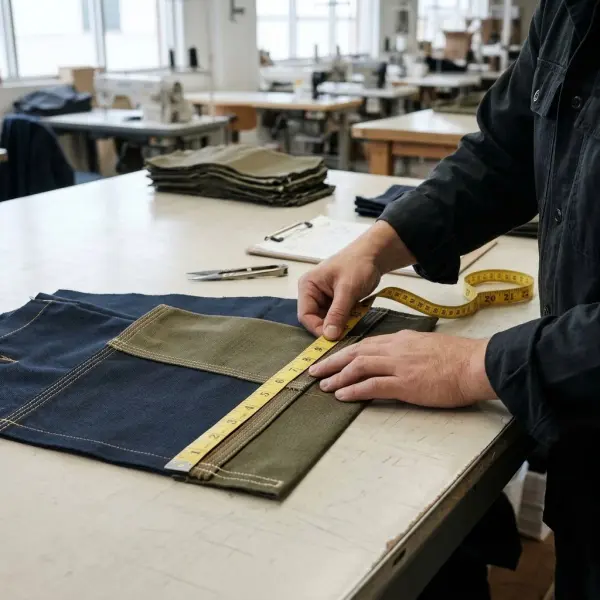
However, attributing lower defect rates specifically to automation requires evidence. A manufacturer should compare the same defect categories, inspection criteria, and production conditions before and after implementation.
How Connected Sewing Equipment Improves Production Control
Production control involves understanding whether work is progressing according to plan, identifying disruptions, and coordinating available capacity across the manufacturing process.
Automated sewing machines contribute to this capability in two ways. The first is predictable machine operation through programmed controls. The second is production visibility through digital data collection, where the equipment supports connectivity.
These functions are related but should not be confused. A programmable sewing machine is not necessarily connected to a factory monitoring system.
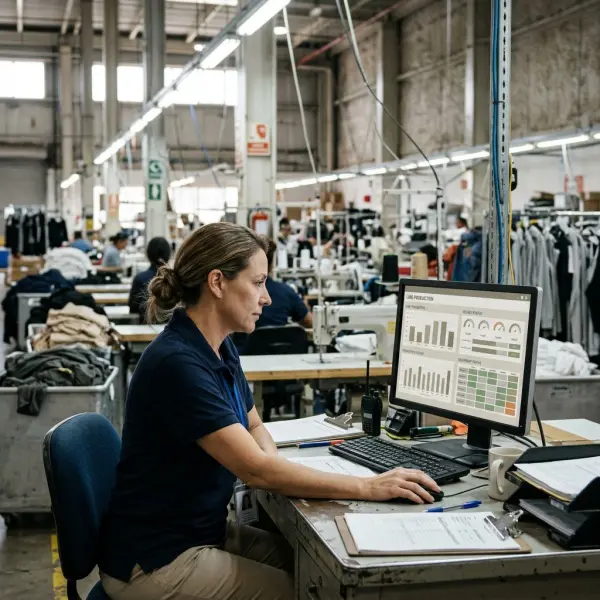
Monitoring Machine Activity and Sewing Output
Connected sewing equipment can make selected operational information available to production supervisors without relying exclusively on handwritten reports.
Depending on the system, manufacturers may collect information about machine activity, needle-running time, downtime, output records, and production progress.
Brother's NEXIO SYSTEM for sewing production monitoring provides an example of this approach. Brother describes automated data collection, real-time monitoring, production analysis, defect-record management, and data-export capabilities.
This information can help supervisors identify workstations experiencing unusually high downtime or differences between planned and actual output.
However, machine activity data must be interpreted carefully. A machine operating for a long period is not necessarily producing an equivalent quantity of acceptable finished components.
Needle-running time is different from accepted output, and neither automatically establishes finished-garment throughput.
Identifying Problems Before They Affect Delivery
Without timely production information, a factory may discover performance problems only after hourly targets are missed or unfinished work accumulates.
Connected monitoring can make some deviations visible earlier. Supervisors may observe that a workstation is producing fewer components than expected, experiencing repeated interruptions, or accumulating more work-in-progress than nearby operations.
This can support operational decisions such as investigating machine condition, checking incoming material availability, reviewing work methods, or reallocating tasks where appropriate.
The system does not necessarily diagnose the underlying cause. A low output figure could result from machine downtime, insufficient components, material defects, operator training requirements, or an incorrectly established production standard.
Production control improves when the available data leads to accurate diagnosis and appropriate corrective action.
Connecting Machine Data With Production Management
Machine-level information becomes more useful when it can be associated with orders, styles, operations, and production targets.
For example, a sewing-line supervisor needs to know not only that a machine is active, but which garment operation is being performed, which order is being processed, and whether output is meeting the required schedule.
Some connected sewing platforms support data exports or application programming interfaces that can exchange information with broader factory systems. Brother's NEXIO documentation, for instance, identifies a web API for retrieving and analyzing production data.
However, data integration requires compatible systems, appropriate configuration, and accurate production records. Machine connectivity by itself does not create a complete manufacturing execution system or guarantee reliable order-level reporting.
Why Line Balancing Determines the Real Benefit of Automation
A sewing line is a sequence of interconnected operations. Increasing the capacity of one workstation does not necessarily increase the output of the complete line.
This is one of the most important operational considerations when implementing sewing automation.
Imagine a trouser production line where an automated machine reduces the time required for belt-loop reinforcement. If waistband attachment or final assembly remains slower than the preceding operations, the additional reinforcement capacity may create work-in-progress rather than more finished trousers.
Understanding Production Bottlenecks
A bottleneck is an operation or resource that constrains the flow of work through a production system.
In apparel manufacturing, bottlenecks may result from complex construction tasks, insufficient machine capacity, uneven work allocation, material shortages, or repeated quality problems.
Automation is most likely to improve line throughput when it addresses a meaningful constraint and the surrounding operations can support the changed production rate.
A 2025 study by Koç and Eryürük in Fibres & Textiles in Eastern Europe examined digital sewing-line balancing using real-time production information. The reported case study found that line efficiency increased from 79.68% to 88.31%, while output per operator rose by 10%. These were results from a digital line-balancing intervention, not evidence that sewing-machine automation alone produces the same improvements. See Optimizing Sewing Line Balancing in Apparel Manufacturing through Digitalization.
The distinction is significant. Improving the management of existing workstations can raise productivity without necessarily changing the underlying sewing mechanism.
Managing Work-in-Progress and Waiting Time
Work-in-progress (WIP) refers to garment components or partially assembled products that have entered production but have not yet been completed.
Excessive WIP may indicate uneven production rates, problems with sequencing, quality interruptions, or other constraints. It can occupy factory space and make it harder to see where work is delayed.
Automating an upstream operation without reviewing downstream capacity may increase WIP. Conversely, improving a genuinely constrained operation can help work move more consistently through the production sequence.
A 2024 Heliyon study of a garment sewing line demonstrated how simulation-based line balancing could improve output, capacity utilization, and waiting conditions. Its findings concerned line balancing rather than automated sewing equipment specifically, reinforcing the importance of evaluating the entire workflow.
Manufacturers should therefore assess automation alongside production layout, material flow, task allocation, and the availability of appropriately trained personnel.
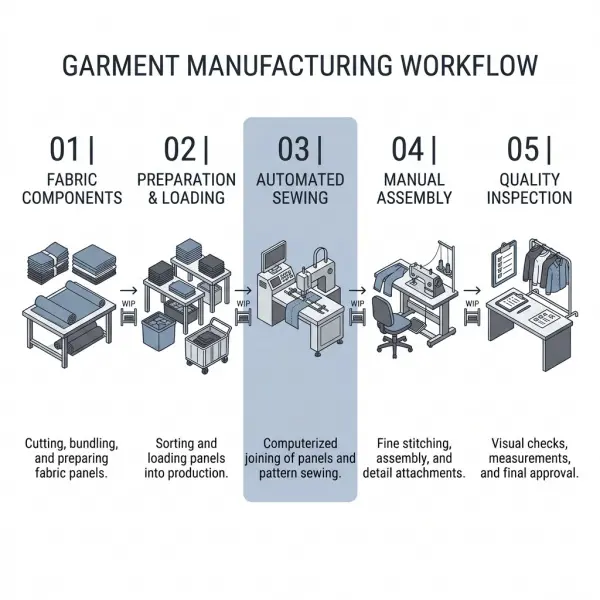
Measuring Whether Sewing Automation Actually Works
Operational improvement should be demonstrated through consistent measurements rather than inferred from machine specifications or supplier demonstrations.
Before introducing automation, manufacturers need baseline information about the relevant sewing process. After implementation, the same measurements should be collected using comparable products, operating conditions, and inspection standards.
The International Labour Organization's 2025 industrial engineering productivity initiative for garment factories emphasizes the importance of measurements such as Standard Minute Value (SMV), throughput time, efficiency, and productivity for apparel operations.
Key Performance Indicators for Sewing Automation
|
KPI |
What it measures |
Why it matters |
|
Operation cycle time |
Actual time needed to complete one operation cycle |
Shows whether the automated task requires less time |
|
Accepted output per hour |
Components passing inspection during a defined period |
Connects production speed with usable output |
|
First-pass yield (FPY) |
Proportion of units passing the defined check without rework |
Indicates process quality at the measured stage |
|
Machine availability |
Proportion of scheduled production time that equipment is available for use |
Reveals the impact of breakdowns and technical interruptions |
|
Downtime by reason |
Time lost to defined causes of stoppage |
Helps identify recurring equipment or workflow problems |
|
Work-in-progress |
Quantity of unfinished work between operations |
Shows possible flow imbalance and accumulation |
|
Line efficiency |
Earned standard minutes relative to available labor minutes, under the factory's defined method |
Assesses overall labor-line performance |
These indicators describe different aspects of the process. No single KPI establishes whether automation is operationally successful.
For instance, a reduction in cycle time may be offset by increased downtime, additional inspection requirements, or higher rework. Similarly, machine availability may improve while finished-garment output remains unchanged because the production constraint lies elsewhere.
Measurement definitions must also remain consistent. FPY measured at an individual sewing operation is not directly interchangeable with final garment first-pass yield.
Comparing Before-and-After Performance
A credible automation evaluation should distinguish the technology's direct effect from other production changes.
If a factory installs an automated sewing unit while simultaneously changing its layout, introducing new operators, and revising production standards, the resulting performance change cannot automatically be attributed to the machine alone.
A practical evaluation should record the product specification, material, production quantity, staffing conditions, machine setup, and inspection requirements.
Where possible, the comparison should use multiple representative production runs rather than a single demonstration. This is particularly important when garments vary by size, fabric behavior, or construction complexity.
The objective is not to demonstrate that automation is beneficial under ideal conditions. It is to determine whether the process improvement remains useful during normal production.
Practical Example: Automating a Repetitive Trouser Operation
Consider a hypothetical garment factory producing standardized work trousers. The production line includes pocket construction, side seams, waistband attachment, belt-loop preparation, bartacking, hemming, and final inspection.
The factory identifies belt-loop reinforcement as an operation with recurring delays and inconsistent stitching positions.
Before changing the process, the industrial engineering team observes that operators spend time aligning loops, positioning fabric, performing reinforcement stitches, trimming threads, and transferring the completed pieces.
A programmable bartacking system may provide a more repeatable stitching sequence. If supported by appropriate clamps or guides, it may also make positioning more consistent.
The expected operational changes can be separated into three areas.
Speed Improvement
Programmed stitching and automatic trimming may reduce the direct operation cycle. The benefit should be measured from loading through unloading, including the time required to position every garment component.
If handling remains the largest portion of the cycle, further improvement may depend on workstation layout or fixture design rather than increasing sewing speed.
Quality Consistency
The programmed reinforcement pattern may help maintain consistent stitch geometry and placement when belt loops are loaded correctly.
The factory should verify whether the resulting stitches satisfy its reinforcement specification and whether defect rates actually decline. Incorrect loop positioning or unsuitable thread settings can still produce unacceptable results.
Production Control
If the automated workstation is connected to a monitoring system, supervisors may be able to review activity and output information.
They can compare its performance with adjacent operations and investigate accumulating WIP or recurring stoppages.
The factory then determines whether the improvement increases finished trousers per shift or simply transfers the bottleneck to another operation.
This example is illustrative rather than a documented factory case study. It demonstrates how the value of automation must be evaluated as part of the complete production process.
Operational Limitations That Can Reduce Automation Benefits
Sewing automation performs best under conditions suited to the machine and operation. Differences in fabric characteristics, component positioning, production variety, and technical support can limit its effectiveness.
Fabric Variation and Material Handling
Textiles behave differently under mechanical feeding, clamping, and stitching.
A stable woven fabric may be easier to position consistently than a lightweight stretch material that deforms during handling. Seam intersections, bulky layers, and surface finishes can also affect feeding behavior.
An automated program developed for one fabric may therefore require adjustment before being used with another. Without adequate testing, higher processing speed can increase the number of defective pieces produced before a problem is detected.
Style Changes and Production Interruptions
Factories producing diverse garment styles may need to change machine programs, fixtures, sewing guides, or technical settings frequently.
These changeovers consume time and can reduce the net operating benefit of specialized automation.
A machine may be productive during a long repeat run but less efficient when switching frequently between small batches with different construction requirements.
This does not make automation unsuitable for short-run production. It means setup time, changeover procedures, and product compatibility must be included in the evaluation.
Maintenance and Operator Capability
Automated sewing equipment contains mechanical and electronic components that require suitable maintenance and technical support.
Incorrect calibration, worn needles, damaged clamps, or malfunctioning trimming mechanisms can create quality problems or unplanned stoppages.
Technicians and operators also need to understand program selection, workpiece loading, normal machine behavior, and procedures for responding to faults.
The machine's repeatability is only useful when the complete operating process remains controlled.
Worker Training and Production Organization
Automation does not eliminate the importance of skilled production teams.
Operators still need to prepare materials, recognize defects, respond to equipment problems, and maintain safe working practices. Supervisors need to interpret performance information rather than treating every production delay as an operator problem.
The International Labour Organization's research on garment production also demonstrates that supervisory capability and working conditions influence manufacturing performance. Its 2025 assessment of a management training program in Bangladesh found efficiency improvements on lines managed by trained supervisors, illustrating that organizational improvements can matter independently of equipment automation.
An effective automation program should therefore include training and process improvement, not only equipment installation.
How Fashion Businesses Can Apply These Insights
Understanding sewing automation is useful for businesses that own factories and for fashion brands purchasing finished apparel from manufacturing partners.
The application differs according to whether the business controls the production equipment directly.
Garment Manufacturers: Start With Measurable Production Problems
Manufacturers should identify operations where repetitive manual work, inconsistent results, or recurring bottlenecks create measurable production losses.
The initial analysis should focus on the work being performed rather than selecting equipment solely because it offers advanced features.
A practical evaluation can follow these steps:
- Document the operation sequence and establish baseline performance.
- Identify recurring time losses and quality problems.
- Determine which tasks can reasonably be automated.
- Test the equipment using actual production materials.
- Measure total-cycle performance and accepted output.
- Review effects on adjacent workstations and overall line flow.
The final decision should consider whether the measured improvement remains useful during routine manufacturing conditions.
For businesses that are still exploring available technology, automated sewing technology and its industrial applications provides a foundation for distinguishing digitally controlled machines, programmable sewing systems, and robotic fabric handling.
Fashion Brands: Evaluate Manufacturing Performance, Not Machine Labels
Fashion brands should avoid treating automated equipment as an automatic indicator of superior manufacturing capability.
A factory using specialized machines may perform certain construction operations consistently, but overall garment quality depends on specifications, material handling, operator skills, inspection, and production management.
When evaluating suppliers, brands should ask how automation supports the actual garment being sourced. Evidence may include approved samples, documented quality standards, production performance records, and a clear explanation of which operations use automated equipment.
Brands can also evaluate whether the factory manages style changes effectively. A technically capable production system may still struggle with delivery if orders are poorly scheduled or materials arrive late.
For sourcing teams, a supplier's production discipline matters as much as the sophistication of its machines.
Product Development Teams: Support Consistent Manufacturing Requirements
Product developers influence automation outcomes through garment specifications and construction decisions.
Clear stitch requirements, component dimensions, tolerances, and approved construction details make it easier for factories to establish repeatable sewing operations.
For example, changing the dimensions of a pocket or reinforcement detail may require a different sewing program or positioning fixture. If these changes are communicated late, production setup can become more complicated.
Development teams should therefore understand the effect of construction changes on manufacturing methods, especially for repeat products.
Better communication between design, technical development, and production can support more predictable automation without unnecessarily restricting creative decisions.
Business Owners: Separate Operational Benefits From Investment Decisions
Faster operation cycles and more consistent stitching are operational benefits. Whether they justify investment is a separate commercial question.
The financial outcome depends on equipment utilization, actual throughput improvement, labor allocation, maintenance, training, and the ability to use the machine across future orders.
A detailed assessment belongs in the next cluster article, What Fashion Businesses Should Know Before Using Automated Sewing Machines.
For the current discussion, the main principle is that operating performance should be measured before it is translated into commercial expectations.
Common Mistakes That Prevent Sewing Automation From Delivering Results
Even suitable equipment can produce disappointing results when manufacturers implement automation without understanding the surrounding production system.
Mistake 1: Prioritizing Maximum Machine Speed Over Total Cycle Time
A manufacturer may select equipment based on its advertised sewing speed without measuring loading, alignment, trimming, and unloading time.
This can produce an unrealistic expectation of how many components the workstation will complete per hour. The better approach is to evaluate the entire operation using representative production materials and normal working conditions.
Mistake 2: Automating an Operation That Is Not the Production Constraint
Improving a workstation that already has sufficient capacity may create additional WIP without increasing finished output.
This mistake often occurs when equipment selection is separated from industrial engineering analysis. Manufacturers should identify production constraints and evaluate whether the proposed automation will improve the flow of completed garments.
Mistake 3: Assuming Programmed Settings Guarantee Good Quality
A programmed stitching pattern can reproduce an incorrect construction detail just as consistently as a correct one.
Without approved samples, appropriate material testing, and routine inspection, automation may allow defects to be repeated across many components. Factories should treat machine programming as part of process control, with quality acceptance based on the resulting garment.
Mistake 4: Collecting Production Data Without Acting on It
Connected machines may generate information about output, activity, and stoppages. But dashboards do not improve manufacturing performance unless the data is interpreted and linked to corrective action.
Supervisors need reliable definitions, appropriate reporting procedures, and clear responsibility for investigating deviations. A smaller set of useful indicators is often more practical than collecting large amounts of information without a defined operational purpose.
Mistake 5: Ignoring Changeovers, Training, and Maintenance
A machine may perform well during a demonstration but experience lower utilization when installed in a factory with frequent style changes or insufficient technical support.
The effective production capacity depends on the complete operating schedule, including program preparation, changeovers, routine maintenance, and unexpected stoppages.
Manufacturers should measure these activities rather than treating them as negligible interruptions.
What Performance Claims Should Manufacturers Verify?
Automation suppliers may describe benefits such as improved productivity, consistent quality, reduced labor requirements, or real-time production visibility.
These are plausible benefits for suitable applications, but they are not universal outcomes.
Before relying on a claim, the buyer should establish the conditions under which it was demonstrated.
A useful verification framework includes:
- Reference operation: Was the equipment tested on the same garment construction?
- Material compatibility: Were actual production fabrics, threads, and trims used?
- Measurement scope: Does the result describe needle-running time, total cycle time, accepted component output, or complete line throughput?
- Production duration: Was performance measured during a demonstration or sustained production?
- Quality requirements: Were defects and rework included in the result?
- Implementation changes: Did the improvement also involve line balancing, staffing changes, or new work methods?
Published productivity improvements from one machine or factory should not automatically be applied to another operating environment.
For example, a system that reduces time spent collecting production information may improve supervision and decision-making, but that is different from physically shortening the sewing cycle. Likewise, improved line balancing may increase overall output without any increase in machine stitching speed.
Keeping these effects separate makes performance assessment more credible and avoids overstating the contribution of automation.
Frequently Asked Questions About Sewing Automation and Production Efficiency
1. Does sewing automation always increase garment production speed?
No. Sewing automation can shorten selected operations, but complete garment output depends on how those operations fit into the production line.
A programmable bartacking machine may complete its assigned stitching cycle more quickly than a manually controlled process. However, if the next workstation operates more slowly, finished-garment output may remain unchanged.
The benefit should therefore be measured at both workstation and line levels. Manufacturers should compare complete operation cycle times, accepted output, and downstream work-in-progress under representative production conditions. Higher sewing speed is useful only when it contributes to better overall production performance.
2. How does automated sewing improve stitch consistency?
Automated sewing can improve stitch consistency by repeating programmed stitch paths and approved machine settings with less dependence on manual adjustment.
For operations such as bartacking or buttonhole sewing, the machine may control stitch geometry and certain sewing parameters more consistently across repeated cycles. This can help manufacturers maintain stable construction details when materials and positioning conditions are suitable.
However, fabric movement, incorrect loading, worn needles, unsuitable thread tension, and machine maintenance problems can still affect the finished seam. Consistency should be verified through inspection and technical testing rather than assumed from the presence of electronic controls.
3. Can sewing automation reduce garment defects and rework?
Yes, sewing automation can reduce certain defects when those defects arise from inconsistent manual movements, repeatable positioning errors, or inappropriate variation in machine settings.
For example, a controlled reinforcement pattern may help reduce stitching-position variation when garments are loaded accurately. Stored machine parameters may also improve setup repeatability for compatible fabrics.
However, automation does not automatically detect or prevent every defect. Incorrect programs, fabric deformation, thread problems, or poor material preparation can still produce defective components. Manufacturers should compare first-pass quality and rework records before and after implementation to establish whether the technology actually improves production quality.
4. What production data can connected sewing machines collect?
Connected sewing systems may collect machine status, sewing activity, operational downtime, output-related information, and other records supported by the equipment and software.
Some platforms also allow production teams to record quality defects, associate information with orders, and export data for analysis. The exact capabilities depend on sensors, machine interfaces, connectivity, and software configuration.
Importantly, machine-generated data does not automatically equal verified finished-garment output. Quality approval, order attribution, and other production records may require additional systems or operator input. Factories should confirm how each metric is generated before using it for production decisions or performance evaluation.





Comments 0
Leave a CommentSend Comment
Anda harus Login terlebih dahulu untuk dapat memberikan komentar.