

AI-First Development: Moving Beyond “Just Using AI Tools” | Insights from PowerGate Software
AI is rapidly becoming part of modern software development. Developers use AI assistants to generate code, designers explore interface ideas with AI tools, and product teams rely on AI for research or documentation. In many organizations, these tools have already improved speed and efficiency.
However, using AI tools is not the same as adopting an AI-first development approach. Many teams still treat AI as a productivity helper rather than a core part of their workflow. A developer may generate a function with AI, or a tester may ask AI to review code, but these activities often remain isolated.
In other words, the team is using AI as a tool rather than building a system around it. As AI continues to reshape the software industry, this distinction is becoming increasingly important.
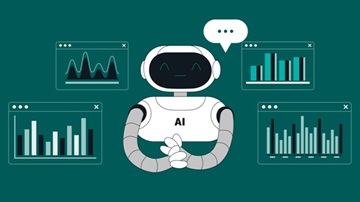
1. The difference between tool users and system builders
Most organizations experimenting with AI today fall into what can be called the tool-user stage. Teams adopt popular AI applications individually. Developers may use coding assistants such as GitHub Copilot. Product managers might use generative AI to draft documentation. Designers experiment with AI image or layout tools.
These tools provide short-term productivity gains, but the workflow itself remains largely unchanged. The development lifecycle still depends heavily on manual coordination between teams. AI simply helps individuals perform tasks a little faster.
An AI-first organization, in contrast, redesigns its entire development process around AI capabilities. Instead of asking “Which AI tool should we use?” the question becomes “How should AI support each step of our workflow?” In this model, AI is embedded across the product lifecycle, from idea generation to deployment and maintenance.
This shift from isolated usage to system integration is what separates tool users from system builders.

2. Why AI-first workflows matter
When AI becomes part of the development system rather than a standalone tool, its impact expands significantly.
Across the software industry, research on AI-assisted development shows clear benefits. AI coding assistants can help developers generate code 20-30% faster, while code completion tools may provide suggestions with 25-35% accuracy, reducing repetitive typing and allowing engineers to focus on more complex tasks.
AI also contributes to better software quality. Automated code analysis and AI-powered testing tools can reduce certain types of bugs by 20-30%, while advanced security testing systems can detect a large share of critical vulnerabilities earlier in the development cycle.
Another key advantage is consistency. AI-powered formatting, documentation support, and code review tools help enforce coding standards and improve maintainability across large projects.
When these capabilities are integrated across the development lifecycle, their overall impact becomes greater. Studies suggest that organizations adopting AI-supported workflows may achieve 20-25% improvements in team productivity, as engineers spend less time on repetitive tasks such as debugging, manual testing, or documentation.
These benefits are most visible when AI is embedded across the development lifecycle rather than used in isolated tasks.
This idea is reflected in the AI-first approach adopted by PowerGate Software, an AI-first software product studio that integrates AI into multiple stages of product development. Instead of treating AI as a standalone tool, the company focuses on embedding it into workflows across engineering, design, testing, and project management.
By doing so, teams can automate routine work, reduce friction between roles, and allow engineers to focus more on product innovation and architecture decisions.
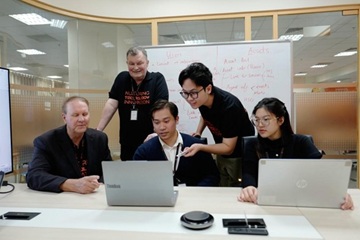
PowerGate Software is an AI-first software product studio
3. What an AI-powered development workflow looks like
An AI-first workflow connects multiple roles within a software team.
Developers use AI for code generation, debugging, and optimization. Designers rely on AI to automate interface exploration and analyze user feedback. Business analysts can apply AI to accelerate requirement gathering and competitive research.
Quality assurance teams also benefit from AI systems that help generate and maintain test cases, detect bugs earlier, and support continuous testing. Meanwhile, project managers can use AI-powered planning tools to estimate timelines, predict risks, and monitor performance throughout the project.
When these capabilities are integrated, the development process becomes more coordinated and data-driven. AI acts as a shared layer that supports collaboration across engineering, design, testing, and product management.
AI is becoming a standard component of modern software development. Yet the real transformation comes not from simply using AI tools, but from redesigning how teams work with AI across the entire development lifecycle. Organizations that move beyond isolated tool usage toward an AI-first model can accelerate innovation, improve product quality, and operate more efficiently. This is the direction PowerGate Software is exploring, integrating AI across multiple stages of product development to help teams automate routine work and build software more effectively.
About PowerGate Software - AI-first software product studio
- Website: https://powergatesoftware.com/
- Services: https://powergatesoftware.com/services/
- Email: contact@powergatesoftware.com





Comments 0
Leave a CommentSend Comment
Anda harus Login terlebih dahulu untuk dapat memberikan komentar.