

The Wolverine Stack and Tesamorelin: What the Research Shows, and What It Doesn't
Spend enough time in fitness forums or gym group chats and you'll eventually hear about peptides. Two names have come up a lot this year. In September 2025, US searches for "wolverine stack" ran at about 8,100 a month. By August 2026 they had reached 49,500, according to DataForSEO keyword data. Searches for tesamorelin more than doubled over the same period.
Interest is rising much faster than understanding. This guide covers what these compounds are, how strong the evidence behind them is, what changed in regulation in 2026, and what anyone interested in health and performance should know before treating online claims as fact.
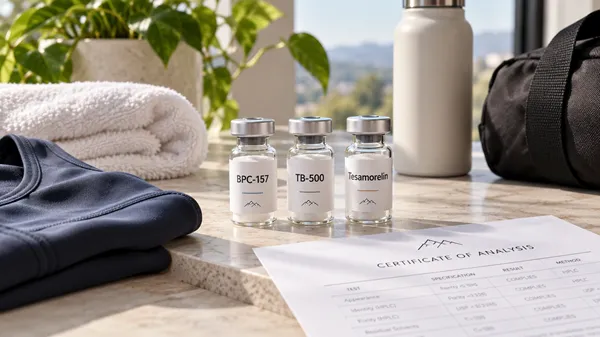
What "Wolverine Stack" Actually Means
"Wolverine stack" is a nickname, not a medical term. It refers to two separate peptides sold together: BPC-157 and TB-500. In fitness circles the name suggests fast healing, but that reputation comes from much less evidence than people tend to assume.
BPC-157 is a chain of 15 amino acids, originally derived from a protein found in human gastric juice. Its formula is C62H98N16O22 and its molar mass is about 1419.6 g/mol. Most of the published research on it comes from animal studies. When ABC News covered the FDA advisory vote in July 2026, it noted that most studies so far have been in rodents. Results in rats can be a reason for further research, but they don't show that something works or is safe in people.
TB-500 is a short synthetic fragment of thymosin beta-4, a 43 amino acid protein the body makes naturally. BSCG, a sport testing organization, describes TB-500 as residues 17 to 23 of that protein. It has no FDA approval for any use.
Blends raise a practical quality question. Because a combined vial holds two different molecules, its certificate of analysis should identify and measure each one separately; a single purity figure says little about either. The published lab report for GMR Peptides' BPC-157 + TB-500 (Wolverine Blend), for example, lists a measured amount for each peptide, along with the testing method and lot number. Knowing what that kind of document should contain is one of the most useful skills for anyone trying to judge claims about peptide quality.

Tesamorelin: A Peptide With an Approved Drug Behind It
Tesamorelin is in a different category. It's a 44 amino acid analog of growth hormone releasing hormone, with a small chemical group (trans-3-hexenoic acid) attached at one end. Unlike BPC-157 and TB-500, it has a clinical track record. Theratechnologies sells it as Egrifta, which the FDA first approved in 2010 for HIV-associated lipodystrophy.
That approval is specific. Tesamorelin was tested and approved for one medical condition, under medical supervision. It wasn't approved for fat loss, muscle building, or general wellness, and the clinical data doesn't transfer to those uses. It's also worth separating the approved medicine from research-grade tesamorelin, which is supplied for laboratory work only. Research material is not Egrifta, hasn't been through the same approval process, and isn't a substitute for a prescribed medicine.
The approved drug does have a well-documented structure: a molecular weight of 5135.86 g/mol and the CAS number 218949-48-5. That gives laboratories a clear reference point. A credible lab report should confirm a mass close to that figure, name the testing lab, and carry a lot number that matches the vial.
What the 2026 Headlines Did and Didn't Change
On July 23, 2026, the FDA's Pharmacy Compounding Advisory Committee voted 8 to 6, with one abstention, to recommend adding BPC-157 and TB-500 to the list of substances pharmacies may use in compounding, according to PharmExec. The panel backed six peptides in total over two days, even though FDA staff had recommended against all of them. Many people read the vote as approval. It wasn't. The vote is non-binding, the FDA doesn't have to follow it, and nothing changes until the agency completes formal rulemaking with a public comment period. An attorney quoted by PharmExec estimated that process could take eight to twelve months. As of mid-October 2026, the FDA had not published a proposed rule, so neither peptide is on the compounding list, and neither is an approved drug.
A month after the vote, on August 24, the FDA issued warning letters to several online peptide sellers. According to the law firm Sheppard Mullin, the letters cited website claims about weight loss, metabolism, sexual function and growth hormone signaling. For consumers, that's a useful signal: a seller promising results from an unapproved compound is making claims the regulator has objected to.
A Note for Athletes
The World Anti-Doping Agency's prohibited list has included tesamorelin and TB-500 since at least 2020, and BPC-157 was added in 2022. If you compete in a tested sport at any level, all three are banned, whatever a product's label says.
How to Think About Peptide Claims
- Check where the evidence comes from. Animal and lab studies are early-stage. They aren't proof of benefit in people.
- Know the regulatory status. "Recommended by an advisory committee" is not the same as "approved."
- Be skeptical of results-based marketing. Promises about fat loss, recovery or hormones attached to research compounds are a warning sign.
- Talk to a qualified professional before making any health decision based on something you read online.
The Short Version
The Wolverine stack is two research peptides whose evidence comes mostly from animal studies. Tesamorelin has an approved drug behind it, but only for one specific medical condition. Neither became an approved wellness product in 2026, whatever the search trends suggest.
This article was provided by GMR Peptides and contains sponsored links. GMR Peptides supplies material intended for laboratory research only, not for human or veterinary use. Nothing here is medical advice. Regulatory information is current as of October 2026.





Comments 0
Leave a CommentSend Comment
Anda harus Login terlebih dahulu untuk dapat memberikan komentar.