

Digital Sampling vs Physical Samples: When Should Fashion Brands Use Each?
Introduction
In today’s fashion industry, product development is no longer just about fabric and stitching—it’s increasingly about data, speed, and digital workflows. As brands face shorter trend cycles, rising production costs, and pressure to reduce waste, the traditional reliance on physical samples is being challenged by digital sampling technologies.
However, the decision is not binary. Digital sampling and physical samples serve different roles across the product lifecycle. Misusing either can lead to costly delays, inaccurate products, or missed market opportunities.
For fashion brands, garment manufacturers, and sourcing teams, the real question is not which one is better, but when and where each method should be applied to maximize efficiency and product quality.

Quick Answer
Digital sampling should be used in the early stages of product development—such as concept design, prototyping, and internal approvals—because it is faster, more cost-efficient, and allows rapid iteration without material waste. It is particularly valuable for visualizing designs, testing variations, and aligning teams before committing to production.
Physical samples, on the other hand, remain essential in the final stages, including fit validation, material testing, quality control, and pre-production approval. They provide real-world accuracy in fabric behavior, construction, and wearability that digital tools cannot fully replicate.
In practice, the most effective approach is a hybrid workflow: use digital sampling to reduce the number of physical samples, then rely on physical samples only when tactile validation is critical. This approach improves speed-to-market, reduces costs, and supports more sustainable product development.
What Is Digital Sampling in Fashion Product Development?
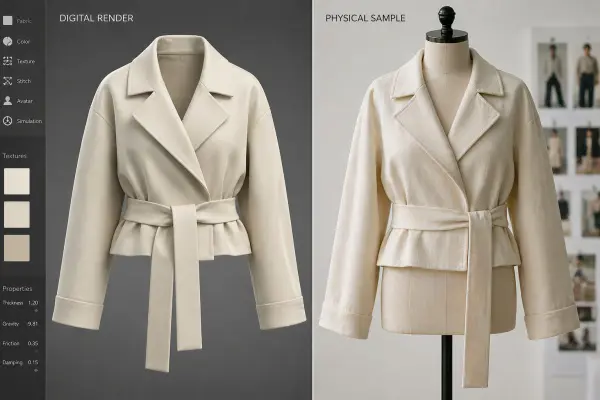
Digital sampling refers to the use of 3D design software and virtual prototyping tools to create realistic garment simulations without producing physical samples. Tools such as CLO 3D, Browzwear, and Optitex allow designers to visualize garments on digital avatars, simulate fabric drape, and test multiple design variations quickly.
At a conceptual level, digital sampling transforms the traditional sampling process from a material-based workflow into a data-driven workflow. Instead of cutting fabric and sewing prototypes, designers manipulate digital patterns, textures, and parameters in real time.

From a business perspective, this has significant implications. Digital sampling reduces dependency on physical resources, shortens development timelines, and enables global teams to collaborate without shipping samples across regions. This is especially relevant for brands working with offshore manufacturers or distributed design teams.
For example, a DTC fashion startup launching a seasonal collection can create 10–15 design variations digitally, review them internally, and narrow down to 3–5 styles before producing a single physical sample. This dramatically reduces sampling costs and development cycles.
However, digital sampling has limitations. Fabric simulation accuracy depends on data input, and subtle elements like hand feel, stretch recovery, or real-world wear behavior are difficult to replicate perfectly.
Takeaway: Digital sampling is best positioned as a decision acceleration tool in early-stage product development, not a complete replacement for physical validation.
What Are Physical Samples and Why Do They Still Matter?
Physical samples are tangible garment prototypes produced using actual fabrics, trims, and construction techniques. They have been the backbone of fashion product development for decades, serving as the primary method for validating design, fit, and quality.
Unlike digital samples, physical samples provide multi-sensory validation—touch, weight, movement, and real-world wear. This is critical for ensuring that the final product meets both brand standards and customer expectations.
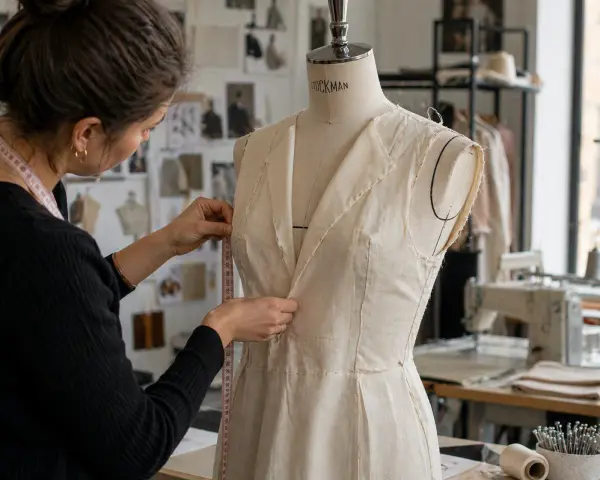
From a business standpoint, physical samples are essential for risk mitigation. They allow teams to identify issues such as incorrect sizing, poor fabric performance, construction flaws, or finishing inconsistencies before mass production begins.
For instance, a premium fashion brand developing tailored outerwear cannot rely solely on digital simulations. The structure, interlining, and fabric stiffness must be physically tested to ensure proper fit and silhouette.
Additionally, physical samples are often required for external stakeholders. Buyers, retail partners, and quality control teams typically need physical garments for approval, especially in wholesale or large-scale production environments.
The downside is clear: physical sampling is time-consuming, expensive, and resource-intensive. Each iteration requires materials, labor, and logistics, which can slow down development and increase costs.
Takeaway: Physical samples are indispensable for final validation and risk control, especially when product quality and customer experience are critical.

Key Differences Between Digital and Physical Sampling
Understanding the operational differences between digital and physical sampling is crucial for making informed decisions in fashion product development.
Digital sampling excels in speed and scalability. Designers can create, modify, and share designs instantly, enabling rapid iteration and faster decision-making. This is particularly valuable in fast fashion or trend-driven segments where timing is critical.
Physical sampling, in contrast, excels in accuracy and realism. It captures the true behavior of materials and construction, ensuring that the final product performs as expected in real-world conditions.
From a cost perspective, digital sampling significantly reduces expenses related to materials, shipping, and labor during the early stages. However, it requires investment in software, training, and digital infrastructure.
A practical scenario illustrates this difference: a global fashion brand developing a new denim line can use digital sampling to finalize design details, washes, and silhouettes. But before production, physical samples are necessary to test fabric weight, stretch, and finishing techniques.
The key insight is that these two methods are not competing—they are complementary. Each addresses different risks and requirements within the product lifecycle.
Takeaway: Digital sampling optimizes speed and cost, while physical sampling ensures accuracy and product integrity.
When Should Fashion Brands Use Digital Sampling?
Digital sampling is most effective in the early and iterative phases of product development. This includes concept development, design exploration, and internal approvals.
During the design phase, teams often need to test multiple variations—colors, silhouettes, trims, and proportions. Digital tools allow this to happen quickly without incurring additional costs. This enables brands to explore more creative options while maintaining efficiency.
In global operations, digital sampling also enhances collaboration. Design teams in one country can share 3D models with manufacturers or stakeholders in another, reducing the need for physical shipments and speeding up communication.
Another critical use case is merchandising and planning. Brands can use digital samples to create virtual line sheets, conduct internal reviews, and even test market reactions before production begins.
For example, a fashion startup launching on e-commerce platforms can use digital renders for pre-launch marketing or pre-order campaigns, validating demand before committing to inventory.
However, brands must ensure that their digital assets are accurate and consistent. Poorly calibrated fabric data or unrealistic simulations can lead to incorrect decisions.
Takeaway: Use digital sampling when the goal is exploration, speed, and alignment before committing to production.
When Should Fashion Brands Use Physical Samples?
Physical samples become critical in the later stages of product development, where precision and validation are non-negotiable.
Fit testing is one of the most important use cases. Even the most advanced digital tools cannot fully replicate how a garment interacts with different body types in real life. Physical fittings allow designers to refine proportions, comfort, and movement.
Material validation is another key area. Fabrics behave differently under real conditions—stretch, shrinkage, and durability must be tested physically to avoid production issues.
Quality control and pre-production approval also rely heavily on physical samples. Brands need to ensure that manufacturing processes meet their standards before scaling production.
For example, a luxury brand preparing for a global retail launch will produce pre-production samples to verify every detail—from stitching consistency to finishing quality—before approving bulk manufacturing.
Physical samples are also essential for external presentations, such as buyer meetings, trade shows, and retail displays, where tangible products are required.
Takeaway: Use physical samples when the goal is validation, accuracy, and risk reduction before production and market launch.
Comparison Table: Digital Sampling vs Physical Samples
|
Aspect |
Digital Sampling |
Physical Samples |
|
Speed |
Very fast (instant iteration) |
Slow (requires production time) |
|
Cost |
Low per iteration |
High per sample |
|
Accuracy |
Moderate (depends on simulation) |
High (real-world validation) |
|
Collaboration |
Easy (digital sharing) |
Limited (requires shipping) |
|
Sustainability |
Low material waste |
High material usage |
|
Best Stage |
Early development |
Final validation |
|
Risk Coverage |
Design alignment |
Product quality assurance |
Practical Application for Fashion Brands
The most effective approach is a hybrid sampling strategy.
Start with digital sampling to explore designs, align teams, and reduce unnecessary iterations. Limit physical samples to key milestones such as fit approval, material testing, and final validation.

Brands should also invest in building digital capabilities—training teams, standardizing fabric data, and integrating digital workflows with production systems.
For example, a mid-sized fashion brand can reduce its sampling costs by 30–50% by shifting 70% of early-stage iterations to digital while maintaining physical validation at critical stages.
Common Mistakes to Avoid
One common mistake is treating digital sampling as a complete replacement for physical samples. This often leads to product issues during production because critical validations are skipped.

Another mistake is using physical samples too early in the process, resulting in unnecessary costs and delays. Many iterations can be resolved digitally before producing any garments.
Brands also underestimate the importance of accurate digital data. Poor fabric simulation leads to misleading results and incorrect decisions.
Finally, lack of integration between design and production teams can reduce the effectiveness of both methods.
FAQ
1. Can digital sampling completely replace physical samples?
No, digital sampling cannot fully replace physical samples. While it is highly effective for design exploration and early-stage decision-making, it cannot replicate all real-world variables such as fabric feel, stretch behavior, and construction accuracy. Physical samples remain essential for fit testing, quality validation, and final approvals before production.
2. Is digital sampling suitable for small fashion brands?
Yes, digital sampling is increasingly accessible to small and mid-sized brands. While there is an initial investment in software and training, the long-term savings in sampling costs and faster development cycles can be significant. It is especially useful for startups that need to move بسرعة and validate designs before committing resources.
3. What types of products benefit most from digital sampling?
Products with high design variation, such as casualwear, streetwear, and fast fashion items, benefit the most from digital sampling. These categories require frequent iteration and rapid decision-making. However, highly technical garments like tailoring or performance wear still require strong physical validation.
4. How does digital sampling support sustainability?
Digital sampling reduces the need for multiple physical prototypes, which lowers fabric waste, energy consumption, and shipping emissions. By minimizing unnecessary samples, brands can significantly reduce their environmental footprint during product development.
5. When should the first physical sample be created?
The first physical sample should typically be created after design decisions are finalized digitally. This ensures that only validated concepts move to physical production, reducing waste and cost. It is usually done at the stage where fit and material validation become necessary.
6. How can brands transition to digital sampling effectively?
Brands should start by adopting digital tools for specific stages, such as design visualization or internal reviews. Gradually, they can expand usage across teams and integrate digital workflows into their product development process. Training, data accuracy, and cross-team collaboration are key success factors.
Conclusion
Digital sampling and physical samples are not competing solutions—they are strategic tools that serve different purposes within the fashion product lifecycle. The brands that gain a competitive advantage are those that understand how to balance speed with accuracy.
Digital sampling accelerates creativity and decision-making. Physical samples ensure product integrity and customer satisfaction. When used together in a structured workflow, they enable brands to move faster, reduce costs, and maintain quality.
In a market where speed-to-market and sustainability are becoming critical differentiators, mastering this balance is no longer optional—it is a strategic necessity.





Comments 0
Leave a CommentSend Comment
Anda harus Login terlebih dahulu untuk dapat memberikan komentar.